
Moving from Oklahoma to Alaska
Relocating from Oklahoma to Alaska is one of the most dramatic moves you can make—trading Sooner State plains for mountain wilderness, midnight sun, and frontier living. Whether you're headed to Anchorage for work, Fairbanks for adventure, or the Mat-Su Valley for homesteading, this move requires specialized logistics that few moving companies understand.
Best Alaska & Hawaii Movers, powered by UShip Van Lines, coordinates the entire journey from your Oklahoma doorstep through Tacoma's marine terminal to your final Alaska destination. Our Alaska-specialist team handles overland transport, marine freight, customs paperwork, and last-mile delivery—so you can focus on preparing for life in America's largest state. Request your customized quote today to lock in your move timeline.
Route overview
The Oklahoma-to-Alaska Route: Overland Meets Marine Freight
Your household goods travel approximately 3,400 miles from Oklahoma to Alaska via a carefully coordinated intermodal journey. First, a long-haul truck picks up your belongings anywhere in Oklahoma—Oklahoma City, Tulsa, Norman, Broken Arrow, or rural towns—and drives them northwest to Tacoma, Washington, roughly 1,800 miles. This overland leg typically takes 3–5 days depending on pickup location and weather.
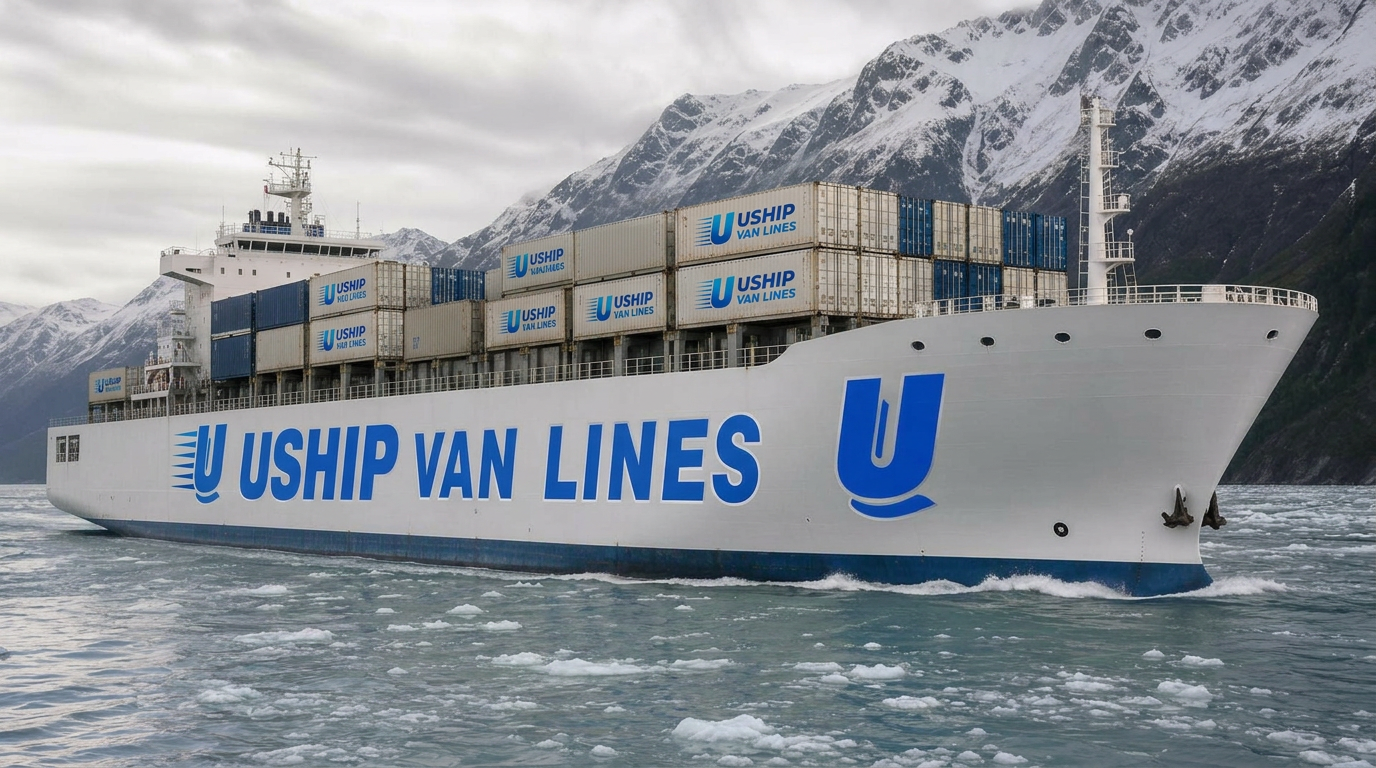
In Tacoma, your shipment transfers to a barge terminal where containers are loaded for the 1,600-nautical-mile voyage to Alaska's Port of Anchorage. Multiple carriers service this route weekly during peak season (May–September), with reduced schedules in winter. Ocean transit alone takes 5–8 days, followed by customs clearance and final delivery within the Railbelt (Anchorage, Fairbanks, Mat-Su, Kenai Peninsula) or bush communities via smaller vessels or air freight.
This route is weather-dependent, especially October through April when storms in the Gulf of Alaska can delay sailings. Unlike a simple interstate move, Alaska relocations require marine freight expertise, Jones Act compliance, and coordination with Alaska-based delivery agents—capabilities that generic moving companies simply don't possess.
How the moving process works
How Your Oklahoma-to-Alaska Move Works: Step-by-Step
-
Free Virtual or In-Home Survey — We assess your inventory via video walkthrough or in-person visit in Oklahoma, providing a detailed cost estimate based on cubic feet, special items (vehicles, pianos, ATVs), and final Alaska destination.
-
Overland Pickup in Oklahoma — Our professional crew loads your household goods into a 53-foot container truck at your Oklahoma residence, securing items for the cross-country highway journey to Tacoma, Washington.
-
Tacoma Marine Terminal Transfer — In Tacoma, your goods transfer into a 20-foot, 40-foot, or 53-foot marine container (depending on shipment size), sealed and prepared for ocean transport with proper moisture barriers and tie-downs.
-
Barge Voyage to Port of Anchorage — Your container sails north through the Inside Passage and Gulf of Alaska to the Port of Anchorage, typically 5–8 days at sea, where it clears U.S. Customs (Alaska is domestic but requires agricultural inspection).
-
Alaska Last-Mile Delivery — Once cleared, our Alaska-based delivery partners transport your container to your final address—whether that's a downtown Anchorage condo, a Fairbanks cabin, a Mat-Su homestead, or a Kenai Peninsula property accessible by road.
-
Unloading and Placement — Our crew unloads your belongings, places furniture in rooms, and removes packing materials, completing your door-to-door service.
-
Post-Move Support — We follow up to ensure everything arrived intact and address any claims or questions about your Alaska transition.
Estimated moving costs
What Does It Cost to Move from Oklahoma to Alaska?
A typical 2–3 bedroom household moving from Oklahoma to Alaska costs $6,800–$13,500 for full-service door-to-door transport. This wide range reflects variables like exact cubic footage, final Alaska destination, time of year, and service level (standard vs. expedited barge, unpacking services, vehicle shipping).
Key cost drivers include:
- Shipment volume — Charged per cubic foot or container size; a 2-bedroom apartment averages 700–1,000 cubic feet ($6,800–$9,200), while a 3-bedroom home can reach 1,200–1,600 cubic feet ($10,000–$13,500)
- Final destination — Anchorage and Wasilla are less expensive than Fairbanks (additional 350+ miles) or off-road-system communities requiring air freight or secondary barge
- Season — Summer peak season (June–August) commands 15–25% premiums due to high Alaska relocation demand and limited barge capacity
- Vehicle shipping — Driving a vehicle separately to Alaska costs $2,000+ in fuel and wear; adding it to your shipment costs $1,800–$3,200 depending on size
- Packing services — Full professional packing adds $800–$1,800 but protects fragile items during the rough Gulf of Alaska crossing
- Insurance — Basic coverage is included; full-value replacement protection costs 1–2% of declared shipment value
We never guarantee prices without a detailed inventory. Costs fluctuate based on fuel surcharges, barge line rates, and Alaska port fees. Request a binding quote with transparent line-item pricing—no hidden terminal fees or surprise charges.
Estimated transit times
How Long Does Moving from Oklahoma to Alaska Take?
Door-to-door transit from Oklahoma to Alaska typically requires 14–28 days, with significant seasonal variation:
Timeline breakdown:
- Pickup to Tacoma terminal: 3–5 days (overland highway transport)
- Tacoma terminal processing: 1–3 days (container stuffing, customs pre-clearance)
- Ocean voyage to Anchorage: 5–8 days (direct sailing; add 2–4 days for weather delays in winter)
- Port clearance and deconsolidation: 2–4 days (customs inspection, container unloading)
- Final delivery in Alaska: 1–7 days (Anchorage same-day possible; Fairbanks/Kenai 2–3 days; bush communities variable)
Peak summer season (May–September): Expect the faster end of this range due to frequent barge sailings and cooperative weather—often 14–18 days total for Anchorage/Mat-Su deliveries.
Off-season (October–April): Winter storms, reduced sailing schedules, and ice conditions can extend transit to 21–28 days or more. Some barge lines reduce Alaska service to every 10–14 days instead of twice-weekly.
Critical timing consideration: Book 4–8 weeks ahead for summer moves to secure your preferred barge sailing. Last-minute summer bookings may face 2–3 week delays waiting for container space. Winter moves offer more flexibility but less schedule predictability.
Regional logistics
Alaska-Specific Logistics: What Oklahoma Movers Need to Know
Barge Terminals and Routing Your shipment consolidates in Tacoma, Washington, the primary departure port for Alaska-bound freight. From there, Totem Ocean Trailer Express (TOTE), Alaska Marine Lines, and other Jones Act carriers sail to the Port of Anchorage. Secondary destinations like the Kenai Peninsula may require additional barge transfer or truck transport from Anchorage. Bush Alaska communities (Bethel, Nome, Kotzebue, etc.) require air freight for most household goods—dramatically increasing costs.
Vehicle Shipping Considerations Driving your vehicle from Oklahoma to Alaska is a 4,000+ mile journey through Canada requiring temporary vehicle importation paperwork, $2,000+ in fuel, and 7–10 days. Most customers add their vehicle to the household goods shipment for $1,800–$3,200. Vehicles ship in the same marine container or on RORO (roll-on/roll-off) vessel decks. Important: Vehicles must be cleaned (no soil/debris) to pass agricultural inspection, and fuel tanks must be under ¼ full for maritime safety.
Customs and Agricultural Inspection While Alaska is a U.S. state, all marine freight undergoes agricultural inspection to prevent invasive species. USDA inspectors may examine wooden furniture, potted plants (most prohibited), and food items (processed foods okay; fresh produce/meat usually prohibited). This adds 1–2 days to port clearance but rarely causes issues for standard household goods.
Last-Mile Delivery Challenges The Alaska road system serves only 20% of the state's geography. Anchorage, Wasilla/Palmer (Mat-Su), Fairbanks, Kenai/Soldotna, and the highway-connected communities are straightforward. Off-road-system destinations require air freight (extremely expensive), seasonal barge service (summer only), or winter ice road delivery (timing-critical). Confirm accessibility with your moving consultant during the survey phase.
Storage Options If your Alaska housing isn't ready upon arrival, we offer climate-controlled storage in Anchorage at $150–$300/month depending on volume. This is common for military PCS moves, real estate sale/purchase timing mismatches, or seasonal workers arriving before housing opens.
Required Documentation Have ready: government-issued ID, inventory list (we provide), vehicle title and registration (if shipping vehicle), and any special permits for firearms (must be declared and legally owned). Alaska residency isn't required to move household goods, but establishing residency within 90 days unlocks benefits like the Permanent Fund Dividend.
Seasonal considerations
Best Time to Move from Oklahoma to Alaska: Seasonal Guide
Summer (June–August): Peak Season Most Oklahoma-to-Alaska moves happen during Alaska's brief summer. Advantages include frequent barge sailings (sometimes twice weekly), calm Gulf of Alaska waters, easier Alaska delivery on gravel roads, and immediate housing availability. Expect premium pricing (15–25% higher), tight barge capacity requiring early booking, and competition for Alaska unloading crews. Book by April for July/August moves.
Spring (April–May) and Fall (September–October): Shoulder Seasons These months offer the best balance of cost and reliability. Spring brings increasingly frequent sailings as carriers ramp up for summer, while fall has reduced demand but still-decent weather. Prices drop 10–15% compared to peak summer. Risks include late-season snowstorms affecting Oklahoma pickup or early Alaska snow complicating delivery to rural properties.
Winter (November–March): Off-Peak Challenges Winter moves save the most money (20–30% below summer rates) and offer flexible scheduling, but come with significant challenges: reduced barge frequency (sometimes monthly instead of weekly), higher likelihood of storm delays in the Gulf of Alaska, difficult delivery conditions on icy Alaska roads, and potential for frozen ground complicating unloading. Only recommended if you have flexible delivery dates and aren't moving to remote bush locations inaccessible in winter.
Oklahoma departure considerations: Ice storms can strike Oklahoma December–February, potentially delaying pickup. Spring tornado season (April–May) rarely impacts moving schedules but warrants weather monitoring. Summer heat is a non-issue for properly equipped trucks.
Alaska arrival considerations: Plan for 18+ hours of summer daylight (helpful for unloading) versus 5–6 hours of winter daylight in Fairbanks. If moving to rural Alaska, summer is often the only practical option due to road conditions and contractor availability.
Why choose Best Alaska & Hawaii Movers
Why Choose Best Alaska & Hawaii Movers for Your Oklahoma-to-Alaska Move
-
Alaska Logistics Expertise — We specialize exclusively in Alaska and Hawaii moves, understanding barge schedules, port protocols, and last-mile delivery challenges that general movers don't handle. Our Alaska-based delivery partners know every accessible road and community.
-
Transparent, All-Inclusive Pricing — Your quote includes overland pickup, marine freight, port fees, customs clearance, and Alaska delivery—no hidden terminal charges or surprise fuel surcharges. We provide binding estimates after detailed inventory assessment.
-
Single-Point Coordination — One dedicated move coordinator manages your entire journey from Oklahoma loading to Alaska delivery, eliminating the confusion of dealing with separate trucking companies, freight forwarders, and local movers.
-
Comprehensive Insurance Options — Beyond basic coverage, we offer full-value protection and specialized coverage for high-value items making the challenging Gulf of Alaska crossing—backed by our claims support team.
-
Powered by UShip Van Lines — Our partnership with UShip Van Lines combines cutting-edge logistics technology with hands-on service, giving you real-time shipment tracking and a network of vetted, Alaska-experienced carriers.