
Moving from Virginia to Alaska
Moving from Virginia to Alaska is one of the most logistically complex domestic relocations you can undertake. Your household goods will travel over 3,500 miles by truck and barge, crossing the Continental U.S. and the Gulf of Alaska before reaching Anchorage, Fairbanks, or your final destination. Understanding the barge schedules, port requirements, and Alaska-specific regulations is essential for a smooth transition.
Best Alaska & Hawaii Movers, powered by UShip Van Lines, specializes in Virginia-to-Alaska moves with seamless coordination from your Virginia doorstep to your new Alaska home. Whether you're relocating to Anchorage, the Mat-Su Valley, Fairbanks, or remote communities, our team handles every logistics detail. Request your free moving quote today to get started.
Route overview
Virginia to Alaska: The Transcontinental and Marine Route
Your move from Virginia begins with overland transport across the Continental United States to the Port of Tacoma, Washington—the primary gateway for Alaska-bound cargo. This leg covers approximately 2,800 miles through states like West Virginia, Ohio, Indiana, Illinois, Wisconsin, Montana, and Washington, typically taking 5–7 days depending on your exact Virginia origin (Richmond, Virginia Beach, Arlington, or rural areas).
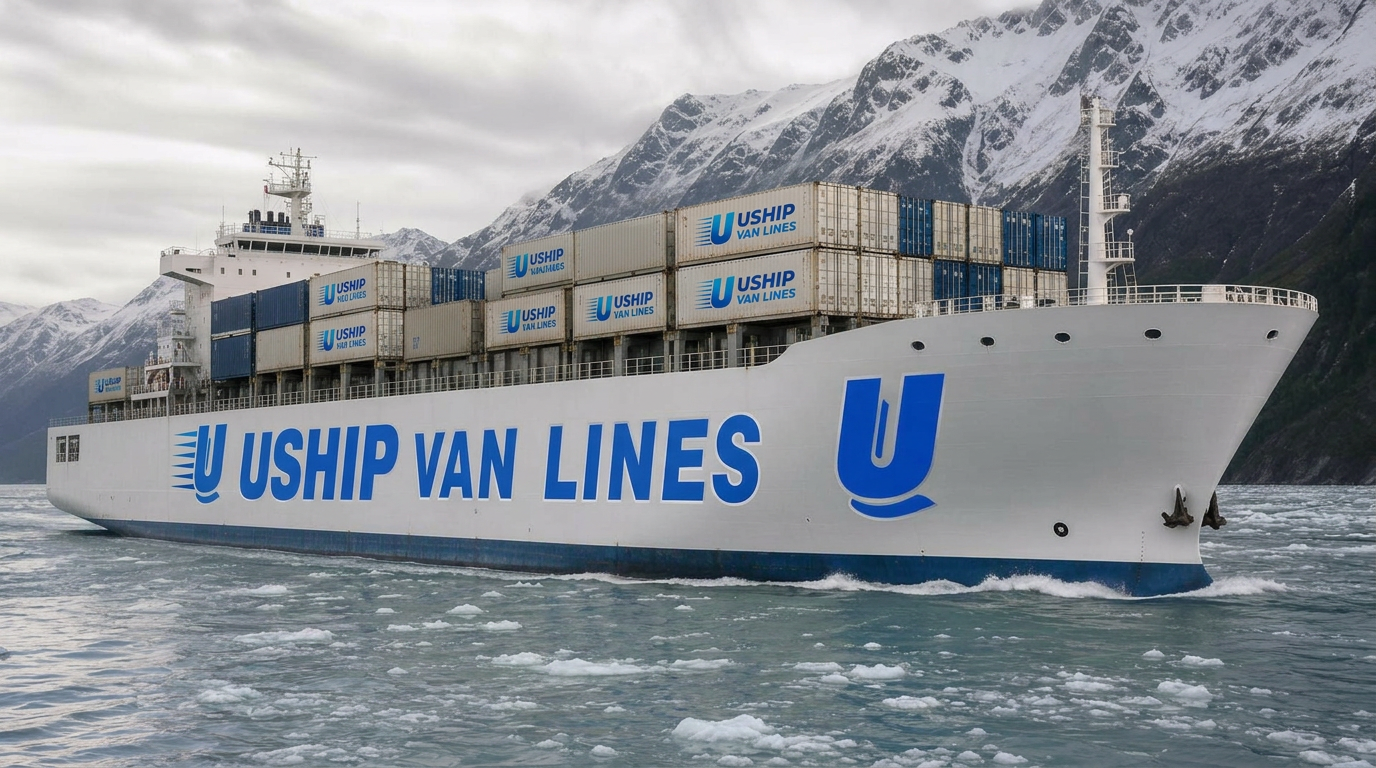
From Tacoma, your belongings are loaded onto commercial barge service operated by carriers like Lynden Transport or Alaska Marine Lines. The ocean voyage through the Inside Passage and across the Gulf of Alaska to the Port of Anchorage takes 7–10 days. Once your shipment clears customs and port inspection in Anchorage, final delivery occurs via truck to your destination—whether that's within Anchorage itself, north to Fairbanks (another 6–8 hours), the Mat-Su communities of Wasilla and Palmer, the Kenai Peninsula, or bush communities requiring additional ferry or air service.
This multi-modal journey requires precise coordination between trucking companies, barge operators, port authorities, and Alaska delivery agents. Weather, barge schedules (which can be weekly or bi-weekly depending on season), and customs clearance all impact your final timeline.
How the moving process works
How Your Virginia to Alaska Move Works: Step by Step
1. Initial Survey and Quote Your move begins with a detailed inventory assessment. We evaluate your household goods volume (typically measured in cubic feet or weight), special items like vehicles, firearms, or temperature-sensitive belongings, and your exact Virginia origin and Alaska destination. This determines your cost estimate and optimal barge schedule.
2. Pre-Move Planning and Documentation Alaska moves require specific documentation including detailed inventory lists for customs, vehicle titles if shipping cars, and possibly firearms permits. We provide a complete checklist 4–6 weeks before your scheduled move date. You'll also decide whether to ship vehicles separately or with household goods, as vehicle transport has different scheduling and cost structures.
3. Virginia Pickup and Overland Transport to Tacoma Professional movers pack and load your belongings in Virginia, securing everything for the cross-country journey. Your shipment travels west to Tacoma, Washington, typically taking 5–7 days. Items are temporarily warehoused at the port consolidation facility while awaiting the next available barge departure.
4. Barge Loading and Ocean Transit Your goods are containerized or loaded onto pallets and secured aboard the Alaska-bound barge. The vessel departs Tacoma on a fixed schedule (usually weekly in summer, less frequent in winter) and sails approximately 1,500 nautical miles to Anchorage. Transit time is 7–10 days depending on weather and sea conditions.
5. Port of Anchorage Arrival and Customs Clearance Upon arrival, your shipment undergoes customs inspection and port processing. While Alaska is a U.S. state and doesn't require international customs, port authorities verify inventory documentation and check for prohibited items (certain plants, soil, fresh produce). This clearance typically takes 1–2 business days.
6. Last-Mile Delivery to Your Alaska Home Once cleared, your belongings are loaded onto Alaska delivery trucks. If you're in Anchorage, delivery happens within 1–3 days. Fairbanks destinations add 1–2 days for the 358-mile drive north. Remote locations on the Kenai Peninsula, Mat-Su Valley, or bush communities may require additional ferry service, small aircraft, or seasonal ice road access.
7. Unpacking and Move Completion Delivery crews unload and place items in your new home according to your instructions. We recommend inspecting all boxes and furniture immediately and documenting any damage for insurance claims. Your move is complete once you sign the final delivery paperwork.
Estimated moving costs
What Does a Virginia to Alaska Move Cost?
Moving a 2–3 bedroom household from Virginia to Alaska typically ranges from $7,500 to $14,000 depending on volume, services, season, and final destination. These figures reflect the multi-modal complexity of combining overland trucking, barge freight, and Alaska last-mile delivery.
Key Cost Drivers:
- Shipment Volume: Measured in cubic feet or weight. A 2-bedroom apartment (approximately 500–700 cubic feet) costs significantly less than a 3-bedroom house with garage and basement (1,200–1,500 cubic feet).
- Origin and Destination Specifics: Northern Virginia (Arlington, Alexandria) has more frequent service than rural Southwest Virginia. Similarly, Anchorage delivery is cheaper than Fairbanks, Kenai, or off-road-system communities.
- Barge Schedules and Season: Summer moves (May–September) have more frequent barge departures but higher demand pricing. Winter moves may offer lower rates but face schedule delays and weather risks.
- Vehicle Shipping: Adding a vehicle typically adds $2,000–$3,500 depending on vehicle size and whether you choose enclosed or roll-on/roll-off (RORO) barge transport.
- Special Items: Pianos, gun safes, hot tubs, and other heavy/bulky items incur surcharges. Temperature-sensitive items may require climate-controlled container space.
- Packing Services: Full-service packing adds $800–$2,000 but ensures proper protection for the long journey and simplifies insurance claims if needed.
- Storage: If your Alaska home isn't ready upon arrival, Anchorage storage facilities charge $150–$400 per month depending on volume.
We provide transparent, itemized quotes with no hidden fees. Request your free estimate to get pricing specific to your move details.
Estimated transit times
How Long Does Virginia to Alaska Moving Take?
Expect a 14–21 day door-to-door timeline for most Virginia to Alaska moves, though several factors influence your specific schedule.
Timeline Breakdown:
- Virginia Pickup to Tacoma Port: 5–7 days for overland trucking across the Continental U.S.
- Port Consolidation and Barge Wait: 1–5 days depending on when your shipment arrives relative to the next scheduled barge departure. Summer sailings are more frequent (often weekly), while winter may have 10–14 day gaps.
- Tacoma to Anchorage Ocean Transit: 7–10 days via barge through the Inside Passage and Gulf of Alaska.
- Anchorage Port Processing: 1–2 business days for customs clearance and offloading.
- Final Alaska Delivery: 1–3 days for Anchorage-area delivery; 2–4 days for Fairbanks; 3–7 days for Kenai Peninsula, Mat-Su, or communities requiring ferry connections.
Factors That Extend Timelines:
- Weather Delays: Gulf of Alaska storms (especially October–March) can delay barges by 2–5 days.
- Winter Road Conditions: Heavy snow on the Richardson Highway to Fairbanks or Seward Highway to Kenai may slow last-mile delivery.
- Barge Schedule Gaps: Missing a barge departure by one day can mean waiting a full week or more for the next sailing.
- Remote Destinations: Bush Alaska communities accessible only by ferry (like Kodiak) or seasonal ice roads add 5–14 days to standard timelines.
We provide real-time tracking updates throughout your move and proactively communicate any schedule changes.
Regional logistics
Alaska-Specific Moving Logistics from Virginia
Port and Barge Operations Your shipment routes through the Port of Tacoma, Washington, where Alaska-bound cargo is consolidated. Lynden Transport and Alaska Marine Lines are the primary barge carriers. Barges arrive at the Port of Anchorage (officially the Port of Alaska), where all shipments undergo inspection and clearance. Understanding barge schedules is critical—missing a sailing can delay your entire move by 7–14 days.
Vehicle Shipping Considerations Most Virginia-to-Alaska movers ship at least one vehicle. Options include:
- Household Goods Container: Small vehicles can sometimes ship in the same container as furniture, saving costs.
- RORO (Roll-On/Roll-Off) Barge: Dedicated vehicle barge service; your car drives on in Tacoma and drives off in Anchorage. Cost: $1,800–$2,800.
- Enclosed Container: Premium protection for luxury or classic vehicles; adds $800–$1,200 to RORO pricing.
Vehicles must be cleaned (free of soil and organic matter) and have less than 1/4 tank of fuel for barge transport. You'll need your vehicle title and registration paperwork.
Alaska Customs and Inspection Requirements While Alaska is a U.S. state, port authorities inspect for prohibited items including:
- Live plants with soil (bare-root plants are allowed)
- Fresh fruits and vegetables
- Firewood or untreated wood products
- Certain invasive plant species
Households arriving from the Lower 48 rarely face issues, but detailed inventory lists prevent clearance delays.
Firearms and Ammunition Transport Alaska is firearm-friendly, and you can legally transport guns and ammunition. Requirements:
- Firearms must be unloaded and secured in locked hard-sided cases
- Ammunition should be in original packaging (not loose)
- Declare all firearms on your inventory list
- No special permits required for standard firearms (rifles, shotguns, handguns)
Fully automatic weapons and some NFA items have additional ATF requirements for interstate transport.
Last-Mile Delivery Challenges Alaska's road system is limited. Anchorage, Fairbanks, Wasilla/Palmer, Kenai, and Soldotna are accessible year-round via paved highways. However:
- Bush Alaska: Communities like Bethel, Nome, Kotzebue, and Barrow require additional air freight or seasonal barge service to Western Alaska (different routes than Tacoma-Anchorage).
- Island Communities: Kodiak requires Alaska Marine Highway ferry from Homer or Seward. Sitka and Ketchikan (Southeast Alaska) are actually closer to Seattle-area barge service.
- Military Bases: Joint Base Elmendorf-Richardson (JBER) near Anchorage and Eielson AFB near Fairbanks have specific access and delivery protocols.
Storage Solutions If your Alaska housing isn't ready, we coordinate Anchorage-area storage. Climate-controlled units are recommended for electronics, furniture, and musical instruments during winter months. Storage extends your move timeline but prevents housing-related stress.
Utility and Address Setup Alaska addresses can be complex. Rural areas use mile-marker systems (e.g., "Mile 42.5 Parks Highway"). Post office boxes are common for mail delivery. Coordinate with your moving specialist to ensure your delivery address is accurately specified and accessible by truck.
Seasonal considerations
Best Times to Move from Virginia to Alaska
Summer (May–September): Peak Season Summer offers the most frequent barge schedules, best weather for Gulf of Alaska crossings, and easiest road access throughout Alaska. However, this is peak moving season with higher costs and less flexibility. Book 8–12 weeks in advance. June–August is ideal for families moving with school-age children. The midnight sun provides extra daylight for unpacking in your new home.
Fall (October–November): Shoulder Season Early fall still has reasonable barge frequency and moderate pricing, but weather becomes unpredictable by late October. Gulf storms increase, and Alaska sees early snow in higher elevations. This is a good value window if you have flexible timing. Avoid moves scheduled to arrive after mid-November if possible, as winter conditions complicate delivery.
Winter (December–March): Off-Peak with Challenges Winter moves offer the lowest rates—sometimes 15–25% below summer pricing—but come with significant logistics challenges. Barge schedules reduce to every 10–14 days or longer. Gulf of Alaska storms can delay sailings by a week. Fairbanks temperatures drop to -20°F to -40°F, requiring special precautions for electronics, musical instruments, and plants. Roads may be impassable for days after storms. Only recommended for flexible, cost-conscious movers willing to accept delays.
Spring (April–Early May): Transition Period Spring sees improving weather and increasing barge frequency as carriers prepare for summer. Costs begin rising but remain below peak. Ice breakup can temporarily disrupt some rural routes in early April, but conditions improve rapidly by late April. A good compromise between cost and reliability.
Alaska-Specific Timing Considerations:
- Military PCS Moves: If you're military, coordinate with your orders. Summer PCS season (May–August) is extremely busy; book as early as your orders allow.
- Employment Start Dates: Many Alaska employers hire for summer tourism season (May) or fall oil field rotations (August–September). Plan your move arrival 2–3 weeks before your start date to allow for housing setup and vehicle registration.
- Housing Market: Alaska's rental market is tightest in May–August. Secure housing before scheduling your move if possible.
Why choose Best Alaska & Hawaii Movers
Why Choose Best Alaska & Hawaii Movers for Your Virginia to Alaska Move
-
Alaska Specialists: We focus exclusively on Alaska and Hawaii moves, meaning we understand barge schedules, port requirements, weather impacts, and Alaska last-mile logistics better than general long-distance movers. Our team has successfully coordinated hundreds of Virginia-to-Alaska relocations.
-
Single-Point Coordination: Rather than managing separate contracts with trucking companies, barge lines, and Alaska delivery agents, you have one point of contact. We handle all logistics from your Virginia pickup through final Alaska delivery.
-
Transparent Pricing: Our quotes include all costs—Virginia pickup, overland trucking to Tacoma, barge freight, port fees, and Alaska delivery. No surprise charges or hidden fees. We explain exactly what you're paying for and why.
-
Real-Time Tracking and Communication: You receive updates at every stage—when your shipment leaves Virginia, arrives in Tacoma, loads onto the barge, reaches Anchorage, and begins final delivery. We proactively communicate any weather delays or schedule changes.
-
Powered by UShip Van Lines: Our operational backbone connects you with vetted, licensed carriers and Alaska delivery agents. This network ensures quality service and accountability throughout your multi-modal move.
-
Flexible Scheduling: We work with your timeline, whether you need rush summer delivery or cost-saving winter transport. Our team helps you choose the optimal barge schedule and advises on seasonal considerations specific to your situation.