
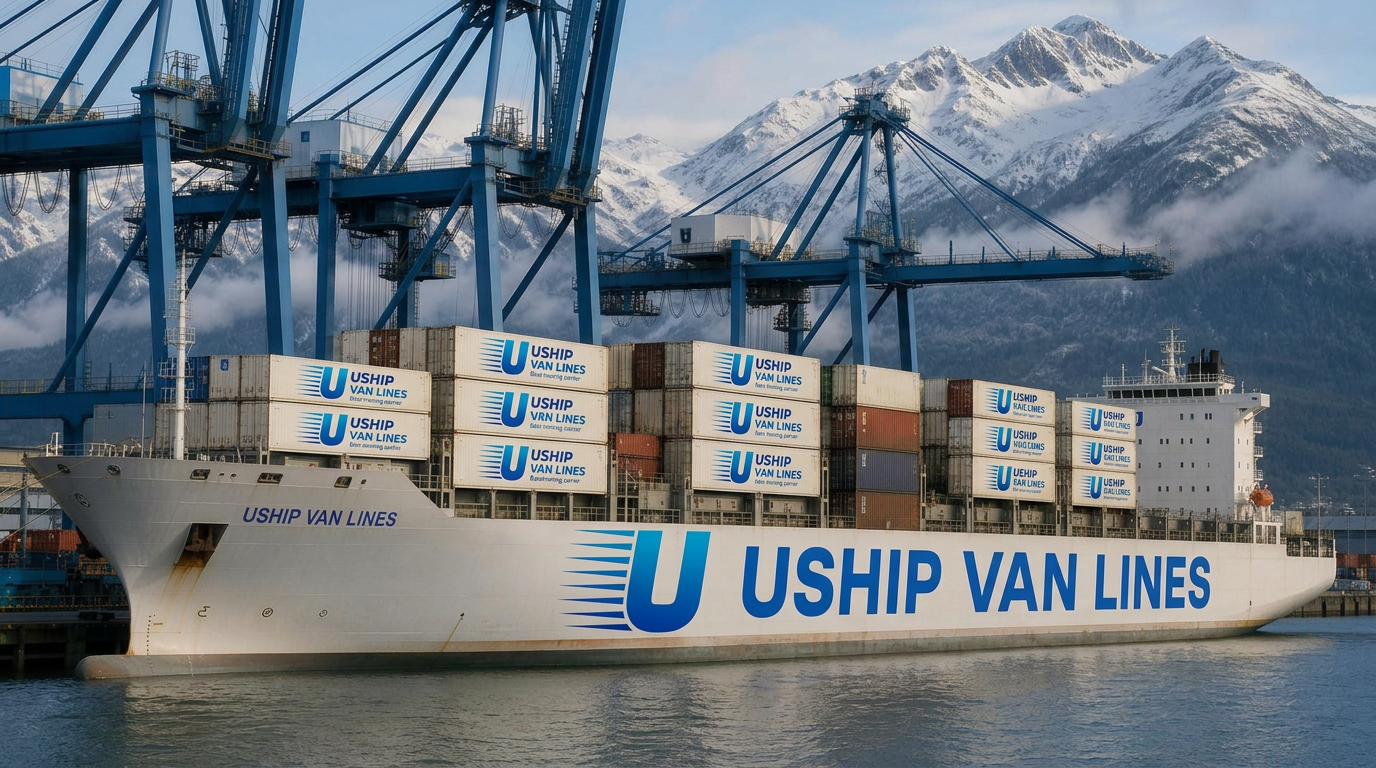
Moving from United States to United States
Moving to or from Alaska and Hawaii requires more than standard cross-country logistics—it demands specialized knowledge of maritime shipping, port coordination, seasonal weather windows, and remote-access logistics. Best Alaska & Hawaii Movers, powered by UShip Van Lines, handles the unique challenges of non-contiguous state relocations with precision and transparency.
Whether you're shipping household goods via barge to Anchorage, coordinating vehicle transport to Honolulu, or managing last-mile delivery to bush Alaska communities, we provide end-to-end service tailored to your timeline and budget. Ready to start planning your move? Request your free quote today and speak with a specialist who understands Alaska and Hawaii logistics inside and out.
Route overview
Moving Between Alaska, Hawaii, and the Continental U.S.
Long-distance moves involving Alaska or Hawaii operate on fundamentally different timelines and cost structures than traditional over-the-road relocations. Alaska-bound shipments typically travel by truck from your origin city to the Port of Tacoma, then by barge to the Port of Anchorage, followed by ground transport to your final destination—whether that's Anchorage, Fairbanks, the Mat-Su Valley, the Kenai Peninsula, or a bush community accessible only by air or seasonal ice road. Hawaii moves follow similar maritime patterns, with consolidation in West Coast ports before ocean freight to Honolulu, Hilo, or neighbor island ports.
These routes require coordination across multiple carriers, strict adherence to barge sailing schedules (which vary by season), and careful planning around Alaska's abbreviated construction season and Hawaii's tropical storm patterns. The logistics are complex, but the process becomes straightforward when you work with a carrier that specializes in these lanes. Our team manages every handoff—from initial pickup through port transfer, ocean transit, customs clearance (for Hawaii agriculture inspections), and final delivery—so you experience a single point of contact throughout your move.
Understanding the unique requirements of Alaska and Hawaii relocations is essential for avoiding delays, surprise costs, and logistical dead-ends. That's why we focus exclusively on these routes, building relationships with barge lines, Alaska bush carriers, and island-based delivery teams to ensure your belongings arrive on schedule and intact.
How the moving process works
How Your Alaska or Hawaii Move Works: Step by Step
-
Initial consultation and route planning – We assess your origin, destination, inventory volume, vehicle shipping needs, and timeline constraints. Alaska moves require barge schedule alignment; Hawaii moves require agriculture compliance planning. We provide a detailed quote covering all legs of your journey.
-
Pre-move preparation and documentation – You'll receive a comprehensive moving checklist, including guidance on items prohibited by barge carriers (hazmat, flammables, perishables) and Hawaii agriculture restrictions (soil, certain plants, wood items). We coordinate pickup dates that align with barge sailing windows, typically 1–3 weeks before departure.
-
Pickup and consolidation – Professional movers load your household goods at your origin address. Items are transported by truck to our consolidation facility or directly to the Port of Tacoma (for Alaska) or West Coast ports like Oakland or Long Beach (for Hawaii). Your shipment is inventoried, wrapped, and staged for maritime loading.
-
Ocean freight via barge or container ship – Alaska-bound cargo sails from Tacoma to Anchorage on a 5–7 day voyage (weather permitting). Hawaii shipments sail from California ports in 5–14 days depending on island destination. We track your shipment in real time and provide updates at each milestone.
-
Port arrival, clearance, and unloading – Upon arrival in Alaska or Hawaii, your cargo clears port inspections. Hawaii shipments undergo mandatory agriculture inspection; Alaska shipments are processed through standard customs (for certain goods). We handle all paperwork and coordination with port authorities.
-
Last-mile delivery to your new home – In Alaska, ground carriers deliver to Anchorage, Fairbanks, Mat-Su, Kenai, and accessible road-system communities. Bush destinations (Bethel, Barrow, Nome, Kotzebue, etc.) require air freight or seasonal barge/ice road service. In Hawaii, we deliver to all major islands and arrange inter-island shipping as needed. Delivery windows are confirmed 24–48 hours in advance.
-
Unloading, assembly, and post-move support – Our delivery team unloads and places items in your new home. We offer unpacking services, furniture reassembly, and debris removal. Any claims or damage reports are handled promptly through our support team, and we follow up to ensure your satisfaction.
Estimated moving costs
What Does a Long-Distance Alaska or Hawaii Move Cost?
For a typical 2–3 bedroom household (approximately 5,000–8,000 lbs), expect to budget $6,500–$14,000 for a full-service move to or from Alaska or Hawaii. Costs vary significantly based on origin/destination pair, seasonality, and service level. A move from Seattle to Anchorage will fall on the lower end; a winter relocation from Miami to a bush Alaska village will be substantially higher.
Key cost drivers include:
- Distance and origin city – Moves originating farther from West Coast ports incur higher over-the-road trucking costs to reach consolidation points. East Coast to Alaska moves cost more than Pacific Northwest origins.
- Barge vs. container shipping – Alaska barge freight is typically billed per cubic foot or weight; Hawaii container shipping is often quoted per container (20' or 40'). Full container loads can be cost-effective for larger households.
- Seasonal demand – Summer (May–September) is peak moving season for Alaska due to favorable weather and school calendars. Expect 15–25% higher rates. Off-season moves (October–April) offer savings but face weather delays and reduced barge frequency.
- Last-mile complexity – Road-accessible Alaska destinations (Anchorage, Fairbanks, Wasilla, Soldotna) cost less than bush villages requiring air freight. Hawaii neighbor island delivery adds inter-island barge or air costs.
- Vehicle shipping – Shipping a car to Alaska adds $1,500–$3,000; to Hawaii, $1,200–$2,500. Oversized vehicles, boats, and ATVs incur additional charges.
- Packing and specialty items – Full-service packing adds $800–$2,500. Pianos, gun safes, hot tubs, and fragile antiques require custom crating.
- Storage and flexible delivery – If your new home isn't ready, short-term storage in Anchorage or Honolulu costs $150–$400/month for a typical household.
We never quote a final price without understanding your specific inventory and timeline. Request a detailed estimate to see exactly what's included—no hidden fees, no surprise surcharges.
Estimated transit times
How Long Does an Alaska or Hawaii Move Take?
Door-to-door transit times for Alaska and Hawaii relocations range from 2–6 weeks, depending on route, season, and service level. Unlike over-the-road moves that deliver in days, non-contiguous moves are governed by barge sailing schedules and weather windows.
Typical timeline breakdown:
- Pickup to port consolidation: 3–10 days (varies by origin distance from West Coast ports)
- Barge/ocean freight sailing time: 5–14 days (Alaska barge from Tacoma: 5–7 days; Hawaii from California: 5–14 days depending on island)
- Port clearance and processing: 1–3 days (agriculture inspection in Hawaii can add time if issues arise)
- Last-mile delivery: 1–7 days (road-system Alaska: 1–3 days; bush Alaska: 1–2 weeks; Hawaii neighbor islands: 3–7 days)
Alaska-specific timing: Summer barge schedules offer weekly or bi-weekly sailings from Tacoma to Anchorage. Winter schedules are reduced, with some weeks having no sailings due to ice or storms. Bush Alaska destinations often require summer-only barge service (June–September) or year-round air freight (expensive). Plan for 3–5 weeks total for road-system moves, 4–8 weeks for bush locations.
Hawaii-specific timing: Contiguous weekly sailings from West Coast ports to Honolulu provide reliable 2–3 week timelines. Neighbor island delivery adds another week for inter-island barge. Hurricane season (June–November) can cause delays; winter months (December–February) see fewer weather disruptions but higher holiday-season demand.
We provide a custom timeline projection based on your specific move dates and destination. Booking 4–8 weeks in advance ensures you secure your preferred barge sailing and avoid rush fees.
Regional logistics
Alaska & Hawaii Moving Logistics: What You Need to Know
Port operations and barge schedules: Alaska-bound freight consolidates at the Port of Tacoma and sails to the Port of Anchorage (primary hub) or Whittier (seasonal). Barge lines like Totem Ocean Trailer Express (TOTE) and Alaska Marine Lines operate on published schedules—missing a sailing can delay your move by 1–2 weeks. Hawaii freight departs from Oakland, Long Beach, or other West Coast ports, arriving in Honolulu (Oahu), Hilo (Big Island), Kahului (Maui), or Nawiliwili (Kauai). We coordinate your pickup to align perfectly with sailing dates.
Vehicle shipping: Vehicles ship separately from household goods, typically via roll-on/roll-off (RoRo) vessels. Alaska vehicle shipping from Seattle/Tacoma takes 5–7 days; Hawaii from California takes 7–14 days. Vehicles must be clean (Alaska requires undercarriage wash to prevent invasive species), operable, and contain no personal items. We arrange pickup, port delivery, and final delivery to your new address. Boats, RVs, and ATVs require custom quotes.
Alaska-specific paperwork and inspections: No customs clearance is required for moves between U.S. states, but Alaska moves may involve carrier-specific documentation for hazmat compliance and weight verification. Bush Alaska destinations require coordination with air cargo carriers (Everts Air, Alaska Airlines Cargo, etc.) and strict weight/dimension limits. We handle all paperwork and ensure your shipment meets carrier requirements.
Hawaii agriculture restrictions: Hawaii enforces strict agriculture inspections to prevent invasive species. Prohibited items include soil, certain plants (potted plants with soil), fresh produce, untreated wood, and some seeds. All shipments are inspected upon arrival; non-compliant items are confiscated and destroyed (no reimbursement). We provide a detailed prohibited-items list during planning and ensure your shipment is compliant.
Last-mile delivery challenges: Alaska road-system communities (Anchorage, Fairbanks, Wasilla, Palmer, Soldotna, Homer, Seward) are accessible year-round by truck. Bush communities (Bethel, Nome, Kotzebue, Barrow, Dillingham, etc.) require air freight or seasonal barge/ice road service. Winter ice roads (January–March) offer cheaper access to some villages but are weather-dependent. Hawaii last-mile is straightforward on Oahu; neighbor islands require inter-island barge or air freight for final delivery.
Storage options: If your new home isn't ready or you're relocating in stages, we offer secure storage in Anchorage and Honolulu. Climate-controlled warehouses protect your belongings from Alaska's extreme cold and Hawaii's humidity. Storage is billed monthly; we can deliver when you're ready, often within 48 hours' notice.
Seasonal considerations
Best Times to Move to Alaska or Hawaii (and When to Avoid)
Spring (March–May): Alaska: Barge schedules ramp up in late April and May as ice clears. Good rates and availability before peak summer rush. Breakup season (late April–May) can make unpaved Alaska roads impassable—confirm last-mile access with your carrier. Hawaii: Pleasant weather, lower demand than summer. Good value season.
Summer (June–August): Alaska: Peak moving season. Weekly barge sailings, best weather, school calendar transitions. Expect 20–30% higher rates and limited availability—book 6–8 weeks ahead. Road construction can delay deliveries in remote areas. Bush Alaska communities accessible via seasonal barge (cheaper than air freight). Hawaii: High tourist and moving demand. Book early. Hurricane season begins in June; monitor forecasts.
Fall (September–November): Alaska: Shoulder season with moderate rates. Barge frequency decreases in late October. First snow typically arrives in Anchorage/Fairbanks by mid-October; bush communities earlier. Freeze-up closes seasonal barge routes. Hawaii: Hurricane season continues through November. September–October can see delays due to storms. Post-Labor Day sees reduced demand and better pricing.
Winter (December–February): Alaska: Off-peak season with lowest rates (15–25% below summer). Barge sailings reduced to every 10–14 days or longer. Severe weather can delay port operations and last-mile delivery. Ice roads open to some bush communities (alternative to air freight). Not recommended for time-sensitive moves. Hawaii: Best weather season (dry, mild). Holiday moving (late Dec) is expensive; January–February offer excellent value and reliability.
Pro tip: If your move timeline is flexible, targeting shoulder seasons (April–May or September–October) balances cost savings with reliable service. Avoid booking Alaska moves in late October through March unless you accept extended timelines and weather risk.
Why choose Best Alaska & Hawaii Movers
Why Best Alaska & Hawaii Movers Is Your Best Choice
-
Exclusive focus on Alaska and Hawaii routes – We don't dabble in these markets; we specialize in them. Our team knows barge schedules, port contacts, bush carrier networks, and seasonal logistics inside and out. You're working with experts, not a general mover trying to figure it out.
-
Transparent, all-inclusive pricing – Our quotes include every leg of your move: origin pickup, over-the-road transport, port handling, barge/ocean freight, port clearance, and last-mile delivery. No hidden fees, no surprise fuel surcharges, no ambiguous "port charges." You'll know exactly what you're paying for before you commit.
-
Single point of contact, start to finish – Alaska and Hawaii moves involve multiple carriers (trucking, barge, last-mile), but you'll never have to juggle phone calls and emails across vendors. Your dedicated move coordinator manages every handoff and keeps you updated at every milestone.
-
Proven bush Alaska and neighbor island capabilities – Need delivery to Kotzebue, Dillingham, or a remote Hawaii homestead? We've done it. Our network includes bush air cargo carriers, inter-island barge partners, and local delivery teams who know how to navigate Alaska's rugged terrain and Hawaii's island geography.
-
Powered by UShip Van Lines' trusted network – Best Alaska & Hawaii Movers operates under the UShip Van Lines umbrella, giving you access to a nationwide network of vetted carriers, comprehensive insurance options, and 24/7 customer support. We combine boutique specialization with big-network reliability.