
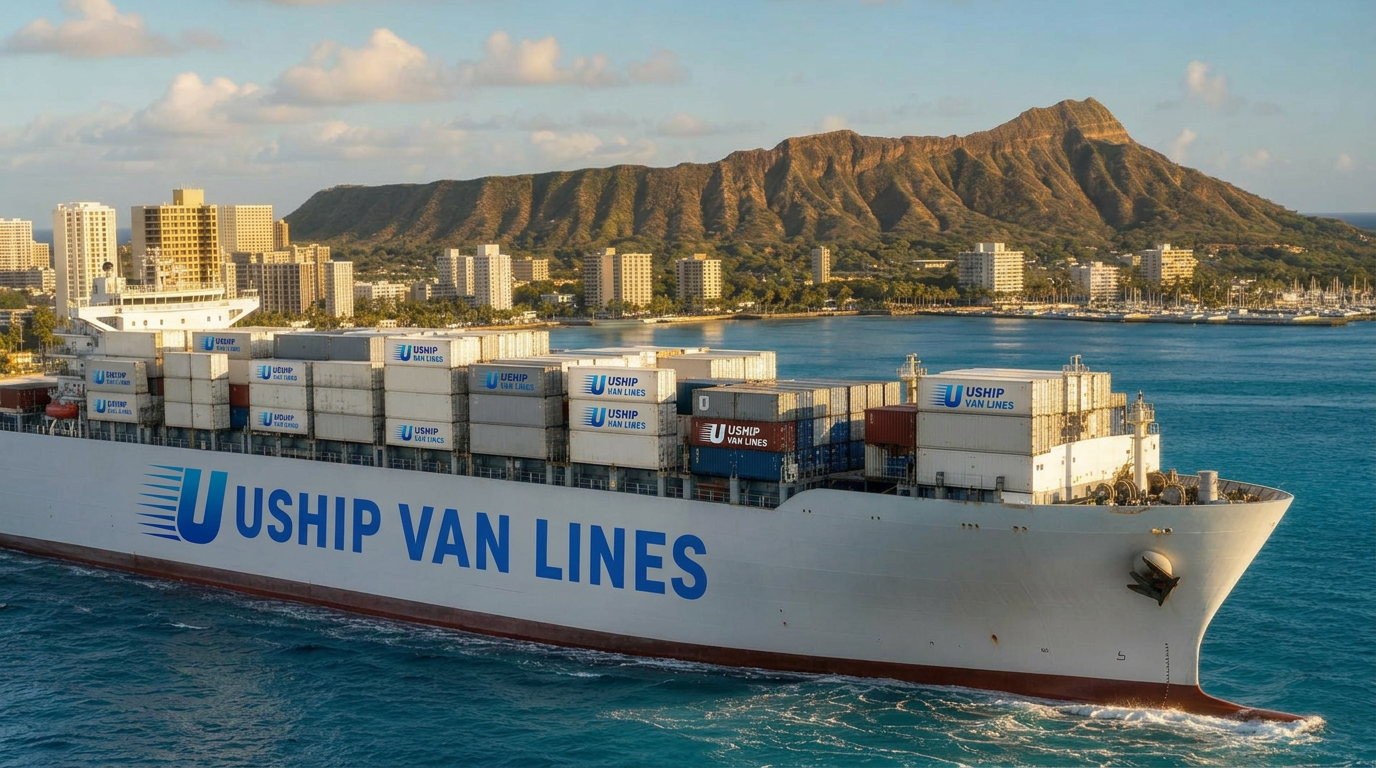
Moving from United States to Hawaii
Moving to Hawaii requires specialized logistics that most traditional moving companies don't handle. Your household goods travel by ocean container from West Coast ports—typically Long Beach or Oakland—to Honolulu, with additional inter-island connections to Maui, Kauai, or the Big Island. The process involves port scheduling, containerization, marine transit, customs clearance, and final delivery to your new island home.
Best Alaska & Hawaii Movers, powered by UShip Van Lines, coordinates every step of your Hawaii move with transparent pricing and realistic timelines. Whether you're relocating to Oahu, Maui, or another island, we'll walk you through the ocean shipping process and deliver your belongings safely. Request your customized quote today to see exactly what your move will cost and when your items will arrive.
Route overview
How Your Belongings Get to Hawaii
Hawaii moves follow a three-leg journey: ground transportation from your current home to a West Coast port (Long Beach or Oakland), ocean container shipping via Matson or Pasha to Honolulu, and final delivery to your island address. If you're moving to a neighbor island, your container transfers to inter-island barge service for the additional hop to Maui, Kauai, Hilo, or Kona.
The ocean leg typically takes 5–7 days from California to Honolulu, with weekly sailings from major carriers. Inter-island transfers add 3–5 days depending on barge schedules. Most households ship in 20-foot or 40-foot containers—smaller moves may consolidate with other shipments to reduce costs. Port congestion, especially during summer peak season, can extend timelines by several days.
Your move coordinator schedules pickup windows around vessel departure dates to minimize storage fees at the port. Understanding these logistics upfront helps you plan arrival dates, temporary housing, and essential-item packing for carry-on luggage during your own flight to the islands.
How the moving process works
Your Hawaii Move: Step-by-Step Process
-
Initial survey and quote — Your move coordinator conducts a virtual or in-home inventory assessment, calculates cubic footage, and provides a binding or not-to-exceed quote based on container size and service level. You'll receive a detailed breakdown of ground transport, ocean freight, and island delivery costs.
-
Pre-move preparation — Review Hawaii's agricultural restrictions (no soil on outdoor items, restrictions on certain plants and foods). Declutter and donate items that aren't worth shipping across the Pacific. Schedule your preferred pickup window at least 2–4 weeks before your planned arrival date to account for vessel schedules.
-
Packing and loading — Professional crews pack fragile items, disassemble furniture, and load your belongings into the truck. Items are transported to the West Coast port facility where they're loaded into ocean containers. You receive documentation with container number and vessel name for tracking.
-
Ocean transit — Your container sails from Long Beach or Oakland to Honolulu on scheduled Matson or Pasha vessels. Transit time is typically 5–7 days. You can track vessel position online through carrier websites during the crossing.
-
Port clearance and inter-island transfer — Upon arrival in Honolulu, containers clear customs and agricultural inspection (usually 1–2 days). If you're moving to a neighbor island, your container transfers to inter-island barge service, adding 3–5 days depending on destination and schedule.
-
Final delivery and unpacking — Local island crews deliver your container to your new address during your scheduled window. Full-service moves include unloading, furniture reassembly, and debris removal. You inspect items and sign the delivery inventory.
-
Claims window — You have a specific period (typically 9 months for interstate moves) to report any damage or missing items. Document everything during delivery and file claims promptly with photos and descriptions.
Estimated moving costs
What Hawaii Moves Actually Cost
A typical 2-bedroom household move from the continental United States to Hawaii ranges from $6,500 to $12,000, while 3-bedroom homes usually cost $10,000 to $18,000. These figures reflect ground transport to West Coast ports, ocean container shipping, and final island delivery. Your actual cost depends on origin distance from California ports, total cubic footage, service level (full-pack vs. self-pack), and destination island.
Key cost drivers include container size (20-foot vs. 40-foot), packing services (professional packing adds $800–$2,500), insurance coverage (typically 0.6%–1.5% of declared value), and inter-island transfer fees ($800–$2,000 to neighbor islands). Moving from East Coast states costs more due to longer ground haul to California ports—expect to add $2,000–$4,000 for cross-country transport. Peak summer season may carry surcharges of 10%–15%.
Port storage fees accrue if your container sits longer than the included free time (usually 5–7 days), typically $75–$150 per day. Vehicle shipping adds separately—cars cost $1,200–$1,800 from West Coast ports to Hawaii. We never guarantee prices without a detailed inventory, but these ranges help you budget realistically. Request a binding quote to lock in your exact costs before committing.
Estimated transit times
Realistic Timelines for Hawaii Moves
Door-to-door transit from the continental U.S. to Hawaii typically takes 14–28 days, broken into distinct legs. Ground transportation from your current home to West Coast ports takes 1–7 days depending on origin (California moves may load directly at port, while East Coast moves require cross-country haul). Your container then waits for the next scheduled vessel departure—weekly sailings mean potential 2–7 day wait at port.
The ocean crossing from Long Beach or Oakland to Honolulu takes 5–7 days with normal weather and sea conditions. Upon Honolulu arrival, customs and agricultural clearance adds 1–3 days. If you're moving to Oahu, final delivery can occur within 2–3 days of port clearance. Neighbor island moves (Maui, Kauai, Big Island) add 3–5 days for inter-island barge transfer, plus 1–2 days for local delivery scheduling.
Summer peak season (May–August) may extend timelines due to port congestion and vessel capacity. Hurricane season (June–November) rarely delays moves but can cause 2–5 day holds if storms approach shipping lanes. Winter months (December–February) typically offer the fastest transits with less port congestion. Plan temporary housing for at least 10–14 days after your own arrival in Hawaii to accommodate scheduling variables and delivery windows.
Regional logistics
Hawaii-Specific Moving Logistics
Port operations and scheduling: Most Hawaii moves route through Port of Long Beach or Port of Oakland, with Matson Navigation and Pasha Hawaii operating regular container service. Vessels depart weekly on fixed schedules—your pickup date coordinates backward from the next available sailing. Missing your vessel window means waiting another week and potentially incurring storage fees. Your container receives a booking number that allows online tracking throughout the ocean crossing.
Agricultural restrictions and inspections: Hawaii has the strictest agricultural import rules in the United States. You cannot ship potted plants with soil, outdoor furniture with soil residue, certain seeds, fresh produce, or live plants on the restricted list. Inspectors in Honolulu examine containers for prohibited items—violations result in quarantine fees, disposal costs, and delays. Clean all outdoor items thoroughly before packing. Your move coordinator provides the current restriction list, but check the Hawaii Department of Agriculture website for updates.
Vehicle shipping considerations: Cars ship separately from household goods, typically in roll-on/roll-off (RoRo) vessels. Vehicles must be empty except for factory-installed equipment—no personal items allowed. You'll need to arrange separate pickup (usually 3–5 days before vessel sailing) and delivery in Hawaii. Vehicle shipping costs $1,200–$1,800 from West Coast ports and takes 7–14 days door-to-door. Register your vehicle with Hawaii DMV within 30 days of arrival.
Inter-island logistics: If you're moving to Maui, Kauai, Hilo, or Kona, your container transfers from Honolulu to inter-island barge service (Young Brothers Limited or Aloha Marine Lines). Barge schedules vary by island—Maui receives near-daily service, while Big Island ports may have 2–3 sailings weekly. This adds 3–5 days plus potential barge wait time. Some carriers offer direct neighbor island service from the mainland during peak season, eliminating the Honolulu transfer.
Delivery access and island challenges: Many Hawaii properties have narrow roads, steep driveways, or limited truck access. Multi-story condos in Honolulu may require freight elevator reservations and building management approval weeks in advance. Rural Big Island and Kauai addresses might need shuttle trucks for final delivery. Discuss your destination property's access limitations during the initial survey—additional shuttle fees range from $300–$800 for difficult access. Some remote areas charge per-mile delivery fees beyond standard service zones.
Seasonal considerations
Best Times to Move to Hawaii
Spring (March–May) offers ideal moving conditions with moderate port traffic and calm seas. Vessel schedules run reliably, and you'll avoid summer peak pricing. Book 4–6 weeks ahead to secure preferred dates. This window works well for families moving before the school year ends.
Summer (June–August) is peak moving season with highest demand, premium pricing, and longer port wait times. Hurricane season officially begins June 1st, though storms rarely impact shipping lanes. Expect surcharges of 10%–15% and book 6–8 weeks in advance. Port congestion in Long Beach and Oakland can add 3–5 days to your timeline.
Fall (September–November) brings lower demand and better pricing after Labor Day. Hurricane season continues through November—while direct hits on shipping lanes are uncommon, tropical storms can cause 2–5 day delays if vessels hold in port. September and October offer good weather and availability.
Winter (December–February) provides the calmest ocean conditions and least port congestion. Pricing drops 10%–20% compared to summer peaks. Holiday season (mid-December through early January) creates brief booking surges, but January and February are excellent value months. North Pacific winter storms rarely affect Hawaii-bound vessels but can delay departures from Oakland in heavy weather.
Regardless of season, agricultural inspection requirements remain constant. Avoid moving right before major holidays when port operations run limited schedules, potentially adding 5–7 days to your timeline.
Why choose Best Alaska & Hawaii Movers
Why Best Alaska & Hawaii Movers for Your Island Move
-
Hawaii specialists, not generalists — We coordinate ocean container moves daily, working directly with Matson and Pasha sailing schedules. Most mainland brokers treat Hawaii as an afterthought; we build every quote around vessel departures, port clearance realities, and inter-island logistics specific to your destination island.
-
Transparent pricing and realistic timelines — You'll receive detailed breakdowns of every cost component: ground transport, ocean freight, port fees, inter-island transfer, and delivery. We quote realistic 14–28 day timelines, not optimistic ranges that ignore port congestion and barge schedules. No surprises, no hidden surcharges.
-
End-to-end move coordination — One point of contact manages your entire move from mainland pickup through final island delivery. We track your container across the Pacific, coordinate agricultural inspections, and communicate proactively about any delays. You're never left wondering where your belongings are or when they'll arrive.
-
Agricultural compliance expertise — We know Hawaii's import restrictions inside and out. Your crew receives pre-move guidance on prohibited items, and we clean outdoor furniture and equipment to pass inspection. This prevents costly quarantine fees and multi-day delays at Honolulu port.
-
Flexible service levels — Choose full-service packing for white-glove convenience or self-pack options to control costs. We offer partial container consolidation for smaller moves, dedicated 40-foot containers for large households, and storage solutions if your new home isn't ready when your container arrives.