
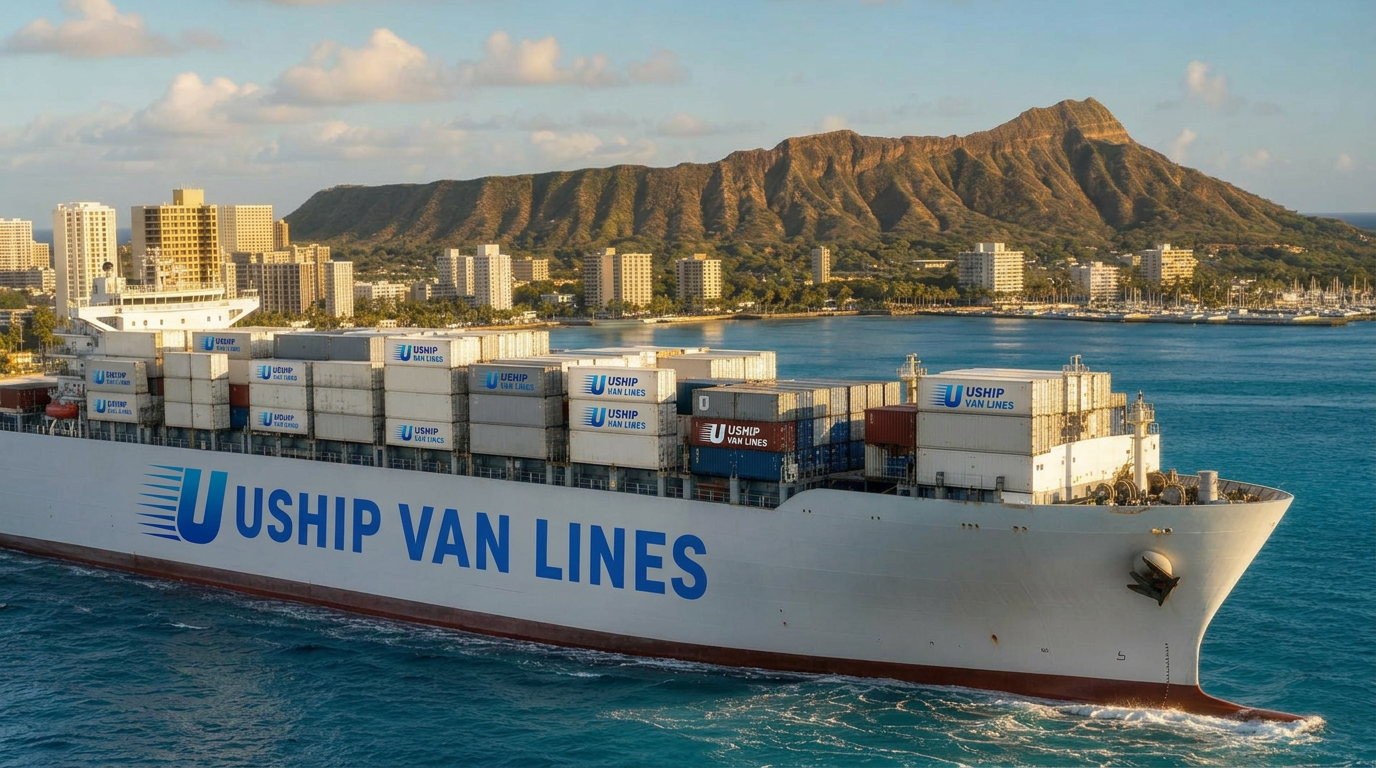
Moving from Kansas to Hawaii
Moving from the heartland of Kansas to the tropical islands of Hawaii is one of the most dramatic relocations you can make. You'll trade wheat fields and tornado warnings for ocean breezes and volcanic landscapes, but the logistics require careful planning. Unlike a typical cross-country move, your household goods will travel by truck to a West Coast port, then by ocean container to Honolulu, and potentially via inter-island barge to Maui, Kauai, or the Big Island.
Best Alaska & Hawaii Movers, powered by UShip Van Lines, specializes in these complex multi-leg moves. We coordinate every step—from pick-up in Wichita, Topeka, or Overland Park to final delivery on your island destination. Ready to start planning your island relocation? Request a free quote today to get a detailed breakdown tailored to your inventory and timeline.
Route overview
Understanding the Kansas to Hawaii Moving Route
Your belongings begin their journey with a transcontinental truck haul of approximately 1,500–1,700 miles from Kansas to Long Beach or Oakland, California. This leg typically takes 3–5 days, depending on your exact Kansas origin city and whether the carrier makes other pickups en route. Your items are then transferred into a 20-foot or 40-foot ocean container at the port.
From the West Coast, Matson Navigation or Pasha Hawaii operates regular sailings to Honolulu, with transit times of 5–7 days across the Pacific. If you're moving to a neighbor island—Maui, Kauai, or the Big Island—your container is offloaded in Honolulu and reloaded onto an inter-island barge operated by Young Brothers, adding another 1–3 days. The entire door-to-door timeline ranges from 14 to 28 days, factoring in port processing, customs clearance, and final delivery scheduling.
This route demands coordination between trucking companies, ocean carriers, and island delivery teams. Working with a mover experienced in Hawaii logistics ensures smooth handoffs, proper documentation, and realistic expectations at every stage.
How the moving process works
Step-by-Step: How Your Kansas to Hawaii Move Works
-
In-Home or Virtual Survey: A moving specialist evaluates your inventory via video call or in-person visit in Kansas. You'll discuss what to ship, what to leave behind, and any special items like vehicles, pianos, or antiques. This survey drives your accurate cost estimate.
-
Transcontinental Truck Pick-Up: Professional movers load your belongings in Kansas and transport them to Long Beach or Oakland. Depending on your shipment size, you may share truck space with other customers (consolidated) or get exclusive use (dedicated). Transit typically takes 3–5 days.
-
Port Consolidation and Container Loading: At the West Coast port, your items are inventoried and loaded into a weatherproof ocean container. Containers are sealed and prepared for ocean transit, with detailed manifests submitted to both the carrier and Hawaiian agriculture inspectors.
-
Ocean Voyage to Honolulu: Matson or Pasha sailings depart weekly, with 5–7 days at sea. Your container is secured on deck or below, protected from salt spray and monitored throughout the journey.
-
Customs and Agriculture Inspection: Upon arrival in Honolulu, all containers undergo USDA and Hawaii Department of Agriculture inspection. Prohibited items (certain plants, soil, untreated wood) are flagged. Proper pre-move preparation minimizes delays here.
-
Inter-Island Barge (If Applicable): Moving to Maui, Kauai, or the Big Island? Your container is transferred to a Young Brothers barge for 1–3 additional days of transit to your destination island port.
-
Final Delivery and Unload: Island-based delivery crews bring your container to your new home, unload your items, and remove packing materials. You inspect your shipment and sign off on delivery, completing your cross-Pacific move.
Estimated moving costs
What a Kansas to Hawaii Move Costs
A typical 2–3 bedroom household moving from Kansas to Hawaii runs $6,500–$12,000, with variation driven by shipment volume, destination island, and service level. A small 1-bedroom apartment or studio may cost $4,000–$6,000, while a large 4-bedroom home can exceed $15,000.
Key cost drivers include:
- Shipment volume: Priced per cubic foot or by container size (20-foot shared vs. dedicated 40-foot).
- Destination island: Honolulu is least expensive; neighbor islands add $800–$2,000 for inter-island barge and additional delivery.
- Packing services: Full-service packing adds $800–$2,500, but reduces damage risk for fragile items.
- Vehicle shipping: Cars ship separately via roll-on/roll-off carrier, typically $1,200–$1,800 from the West Coast (trucking from Kansas to the port is extra).
- Insurance: Basic coverage is included; full-value protection costs 1–2% of declared shipment value.
- Seasonal demand: Summer months (June–August) and holiday periods see higher rates due to increased volume.
We never guarantee prices without a detailed inventory review. Request a personalized quote to understand your specific costs and explore options that fit your budget.
Estimated transit times
Realistic Timelines for Kansas to Hawaii Moves
Door-to-door transit from Kansas to Hawaii typically takes 14–28 days, broken down as follows:
- Kansas to West Coast port: 3–5 days by truck
- Port processing and container loading: 2–5 days (varies by carrier schedule and consolidation needs)
- Ocean transit to Honolulu: 5–7 days
- Customs/agriculture inspection: 1–2 days
- Inter-island barge (if applicable): 1–3 days to Maui, Kauai, or Big Island
- Final delivery scheduling: 1–3 days from port to your home
Summer moves often experience slight delays due to port congestion and peak shipping season. Hurricane season (June–November) can occasionally disrupt sailing schedules, though carriers maintain regular service except during active storms.
For time-sensitive moves—job starts, school enrollment, housing lease dates—build in a 4-week buffer. Expedited options may shave a few days off inland trucking but cannot accelerate ocean sailing schedules. Plan your temporary housing and essential-items strategy accordingly.
Regional logistics
Hawaii-Specific Moving Logistics from Kansas
Port Operations: Your shipment routes through Long Beach or Oakland, determined by carrier schedules and your mover's consolidation patterns. Matson and Pasha maintain weekly sailings; your mover books space 2–4 weeks before your desired ship date.
Agriculture Restrictions: Hawaii strictly prohibits certain plants, seeds, soil, and untreated wood to protect island ecosystems. Pack potted plants separately for inspection or plan to leave them behind. Wooden furniture is allowed if commercially manufactured; raw lumber or driftwood may be rejected. Your mover provides a detailed prohibited-items list during your survey.
Vehicle Shipping: Cars, motorcycles, and boats ship separately via Matson or Pasha auto carriers. Vehicles must be driven or towed to Long Beach or Oakland (trucking from Kansas costs $600–$1,100). The ocean leg runs $1,200–$1,800 for a standard sedan. Vehicles arrive 7–10 days after drop-off at the port.
Inter-Island Logistics: Moving to Maui's Kahului, Kauai's Nawiliwili, or Hilo/Kona on the Big Island? Your container transfers in Honolulu to Young Brothers barges, which sail 2–4 times weekly per island. Delivery trucks on neighbor islands are smaller; steep driveways or narrow roads may require shuttle fees ($200–$500).
Documentation: You'll complete a Hawaii State General Excise Tax form and provide photo ID for customs. Your mover handles carrier manifests and agricultural declarations. Keep copies of your inventory list and insurance certificate accessible throughout the move.
Seasonal considerations
Timing Your Move: Seasonal Factors for Hawaii
Summer (June–August): Peak moving season coincides with school breaks and optimal weather. Expect higher rates, fuller sailing schedules, and potential 2–3 day delays at West Coast ports due to volume. Book 8–10 weeks in advance to secure your preferred dates.
Fall (September–November): Hurricane season runs through November, though major storms affecting shipping are rare. Carriers monitor forecasts and may delay sailings 1–2 days if a system approaches. Rates begin to soften after Labor Day, offering moderate savings.
Winter (December–February): Lowest demand and best pricing, with 10–15% savings versus summer. Honolulu weather remains pleasant (70s–80s°F), making this ideal for budget-conscious moves. Holiday weeks (Christmas, New Year) see skeleton port crews; avoid pick-ups during these windows.
Spring (March–May): Rates begin climbing as demand increases. Weather is excellent both in Kansas (post-winter thaw) and Hawaii (dry season). Book early—by late April, summer pricing takes effect.
Year-round, Wednesday and Thursday deliveries are easiest to schedule. Avoid Friday pick-ups in Kansas if possible, as weekend port closures can add 2–3 days to your timeline.
Why choose Best Alaska & Hawaii Movers
Why Best Alaska & Hawaii Movers for Your Kansas to Hawaii Move
- Hawaii Specialists: We focus exclusively on Alaska and Hawaii moves, navigating ocean shipping, agriculture rules, and inter-island logistics daily—not as an occasional side service.
- Transparent Pricing: Detailed, line-item estimates with no hidden port fees or surprise surcharges. You'll understand every cost before you commit.
- Powered by UShip Van Lines: Access to a nationwide network of vetted carriers for your Kansas pick-up, combined with our deep relationships with Matson, Pasha, and island delivery teams.
- End-to-End Coordination: One point of contact manages your transcontinental truck, ocean container, customs clearance, and final delivery. No hand-offs, no confusion.
- Realistic Timelines: We set honest expectations based on current port conditions and sailing schedules, so you can plan temporary housing and travel with confidence.
- Insurance Options: Flexible coverage from basic carrier liability to full-value protection, with clear explanations of what each tier covers for your Pacific crossing.