
Moving from Kansas to Alaska
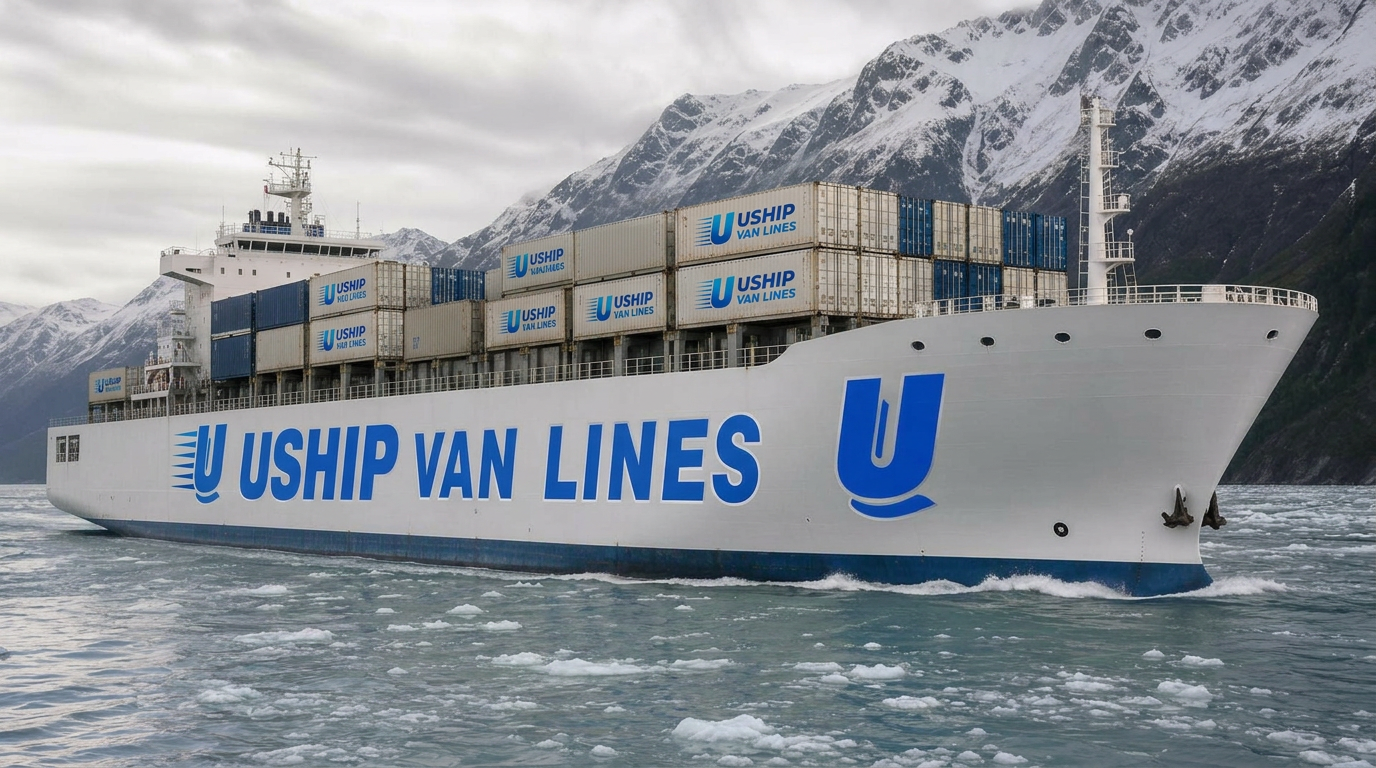
Moving from the heartland of Kansas to the Last Frontier involves more than just distance—it requires specialized logistics that few moving companies can handle. Your household goods will travel by truck to the West Coast, board a barge to Alaska, then complete the final journey to your new home in Anchorage, Fairbanks, or beyond.
Best Alaska & Hawaii Movers, powered by UShip Van Lines, coordinates every step of this complex journey. From Kansas pickup through barge transit and Alaska delivery, we manage the entire process so you don't have to juggle multiple carriers. Request a free quote today to get accurate pricing for your specific move.
Route overview
Understanding the Kansas to Alaska Moving Route
The Kansas to Alaska corridor presents unique logistical challenges that distinguish it from typical continental moves. Your belongings will first travel approximately 1,400–1,700 miles by truck from your Kansas location to the Port of Tacoma in Washington state. This overland portion typically takes 3–5 days depending on your exact origin city—whether you're leaving Wichita, Overland Park, Kansas City, Topeka, or smaller communities across the state.
Once consolidated at the Tacoma port facility, your shipment joins a scheduled Alaska Marine Lines or TOTE Maritime barge departure. The ocean voyage from Tacoma to the Port of Anchorage covers roughly 1,430 nautical miles and runs 5–7 days depending on weather and vessel schedule. After clearing the port, your goods travel by truck to final destinations throughout South-central Alaska, Interior Alaska, or—with additional coordination—Southeast Alaska and remote communities.
This multimodal route requires careful timing coordination. Missing a barge sailing can add 7–14 days to your total transit, which is why working with an experienced Alaska moving specialist matters. Best Alaska & Hawaii Movers synchronizes truck schedules with confirmed barge space, reducing the risk of costly delays and ensuring your household arrives as planned.
How the moving process works
How Your Kansas to Alaska Move Works: Step by Step
-
Free Consultation and Detailed Inventory — We start with a comprehensive assessment of your household goods, either virtually or in-person in Kansas. This inventory determines cubic footage, identifies items requiring special handling (firearms, wine collections, artwork), and establishes whether vehicle shipping is needed. You'll receive a transparent quote based on actual volume, not inflated estimates.
-
Kansas Pickup and Packing — Professional movers arrive at your Kansas home on the scheduled date, carefully packing and loading your belongings into a truck bound for the West Coast. We offer full-service packing, partial packing, or labor-only options depending on your budget and preferences. All items are inventoried and photographed for insurance purposes.
-
Overland Transport to Port of Tacoma — Your shipment travels by truck across the Great Plains, Rockies, and Cascades to our consolidation facility near the Port of Tacoma. This leg takes 3–5 days. Your goods are transferred from the road truck into ocean-worthy containers or secured aboard barge trailers designed for maritime transport.
-
Barge Transit to Alaska — Your containerized shipment boards a scheduled Alaska Marine Lines or TOTE Maritime barge. The 5–7 day ocean voyage navigates the Inside Passage, one of the most scenic shipping routes in North America. Barge schedules typically run weekly during peak season (April–September) and every 10–14 days during winter months.
-
Port of Anchorage Clearance and Processing — Upon arrival at the Port of Anchorage, your shipment clears U.S. Customs (a formality for domestic moves, but required documentation). Container devanning and transfer to Alaska delivery trucks typically adds 1–2 days. If you're moving firearms, ammunition, or controlled items, additional inspections may apply.
-
Final Alaska Delivery — Your belongings travel by truck from the port to your final destination. Anchorage and Mat-Su Valley deliveries typically occur within 24–48 hours of port clearance. Fairbanks and Interior Alaska add 1–2 days. Remote communities accessible only by air or water require specialized arrangements coordinated well in advance.
-
Unpacking and Inspection — Upon delivery, you'll inspect your shipment and note any concerns on the delivery paperwork. Our team can provide unpacking services if arranged in advance. We follow up within 48 hours to ensure satisfaction and address any claims quickly.
Estimated moving costs
What a Kansas to Alaska Move Actually Costs
A typical 2–3 bedroom household moving from Kansas to Alaska generally costs $6,500–$11,500 for a full-service move covering packing, loading, barge transport, and Alaska delivery. Studio or 1-bedroom moves may range $3,800–$6,200, while larger 4-bedroom homes can reach $13,000–$18,000 or more. These are estimates based on industry averages—your actual cost depends on specific factors unique to your situation.
Key cost drivers include:
-
Volume and weight — Alaska moves are typically priced by cubic feet (not weight alone). A 3-bedroom home averages 1,200–1,600 cubic feet. Dense items like book collections, tools, or furniture significantly impact pricing.
-
Packing services — Full-service packing adds $800–$2,200 depending on home size and fragility of contents. DIY packing saves money but requires skill with Alaska-grade packing materials to survive barge transit.
-
Access challenges — Difficult pickup or delivery locations (rural Kansas properties, gravel roads, Alaska bush communities) may incur additional charges for shuttle trucks or specialized equipment.
-
Timing and seasonality — Summer moves (May–August) command premium pricing due to high demand and more frequent barge sailings. Off-season moves (October–March) can save 15–25% but involve longer transit times and weather risks.
-
Vehicle shipping — Adding a car or truck to your move costs an additional $1,400–$2,800 depending on vehicle size and whether it's driven onto the barge or containerized.
-
Storage needs — If your Alaska housing isn't ready upon arrival, warehouse storage in Anchorage runs $150–$350 per month for a typical household.
-
Insurance coverage — Basic carrier liability covers $0.60 per pound per article. Full-value protection costs approximately 1–2% of your shipment's declared value and is strongly recommended for Alaska moves.
Best Alaska & Hawaii Movers provides binding estimates—not low-ball quotes that balloon at delivery. Request your free quote to get accurate pricing based on your actual inventory and specific Kansas origin point.
Estimated transit times
Realistic Transit Times from Kansas to Alaska
Door-to-door transit from Kansas to Alaska typically requires 14–24 days under normal conditions. This timeline includes all legs of the journey, but understanding the breakdown helps you plan effectively:
Overland to Tacoma: 3–5 days from Kansas pickup to Port of Tacoma arrival. Distance and weather (particularly winter storms in the Rockies) affect this leg.
Port consolidation: 2–4 days for container loading, customs documentation, and barge scheduling. Summer peak season typically means faster turnover; winter may extend this window.
Barge transit: 5–7 days on the water from Tacoma to Anchorage. Weather rarely causes significant delays, but mechanical issues or port congestion occasionally add 1–2 days.
Alaska port processing: 1–3 days for customs clearance, container devanning, and transfer to local delivery trucks.
Final delivery: Same day to 3 days depending on destination. Anchorage and Wasilla/Palmer deliveries occur quickly. Fairbanks adds 1–2 days. Kenai Peninsula, Southeast Alaska, or bush communities require additional coordination.
Plan for contingencies. Weather delays in Kansas or the Rockies, missed barge sailings, or Alaska port congestion can extend timelines by 5–10 days. If you have firm housing move-in dates, book your move with sufficient buffer. Many customers ship essential items separately via air freight (costly but fast) while their main household travels by barge.
Regional logistics
Alaska-Specific Logistics You Need to Know
Port operations and documentation: All Kansas to Alaska household goods shipments route through the Port of Anchorage (the primary deep-water port serving South-central and Interior Alaska). While this is a domestic move not requiring international customs, you'll complete a U.S. Customs Form 3299 for goods entering Alaska by sea. Your moving company handles this paperwork, but you'll need to provide a detailed inventory and sign off on declarations. Firearms require special attention—Alaska is firearm-friendly, but maritime transport involves strict documentation and secure packing requirements.
Vehicle shipping considerations: Many Kansas residents ship a vehicle alongside household goods. Cars and trucks can be driven onto the barge (roll-on/roll-off) or containerized. RORO is more affordable but exposes vehicles to salt air; containers provide full protection but cost more. Your vehicle must be clean (no soil, no excess personal items inside), and fuel tanks below 1/4 full. Alaska requires vehicle registration within 30 days of establishing residency—bring your Kansas title, current registration, and proof of insurance.
Last-mile Alaska delivery challenges: Anchorage, Wasilla, Palmer, and Eagle River are straightforward delivery destinations with good road access year-round. Fairbanks adds distance but remains truck-accessible. Kenai Peninsula communities (Soldotna, Homer, Seward) require additional coordination and sometimes weather-dependent scheduling. Southeast Alaska destinations (Juneau, Ketchikan, Sitka) necessitate additional barge or ferry segments. True bush communities accessible only by air or water require freight forwarding to local carriers—arrange this well in advance.
Alaska housing timing: Many Alaska rentals and home purchases have flexible move-in dates due to the realities of shipping logistics. Communicate your estimated arrival window (not a specific date) with landlords and real estate agents. If your housing isn't ready when your shipment arrives, short-term storage in Anchorage is available but adds cost. Some customers opt to have critical items (beds, kitchen essentials) delivered first with the bulk shipment held briefly in storage.
Prohibited and restricted items: Alaska bans or restricts certain items. Hazardous materials (propane tanks, gasoline, ammunition in bulk, certain cleaning chemicals) cannot travel by barge. Fresh plants face agriculture inspection requirements. Some prescription medications require documentation. Communicate special items with your moving consultant early to avoid last-minute surprises.
Seasonal considerations
Timing Your Kansas to Alaska Move: Seasonal Realities
Spring (April–May): The most popular moving season begins as Alaska thaws and Kansas weather stabilizes. Barge sailings increase to weekly frequency, and transit times are predictable. Book 6–8 weeks in advance as capacity fills quickly with military relocations and seasonal workers heading north. Rates begin climbing in May.
Summer (June–August): Peak season brings maximum barge frequency, optimal weather, and the easiest Alaska deliveries—but also highest prices and tightest capacity. If you're moving in summer, secure your booking 8–12 weeks ahead. The trade-off: reliable schedules, minimal weather delays, and the best chance of hitting your target delivery date. Summer is ideal if you have school-age children or firm job start dates.
Fall (September–October): Shoulder season offers a sweet spot for Kansas to Alaska moves. Demand drops after Labor Day, bringing lower rates (10–20% savings) while weather remains generally cooperative. Barge frequency begins decreasing to every 10–12 days by late October. Book 4–6 weeks out. Be aware that early winter storms can hit the Rockies by late October, potentially delaying the overland leg.
Winter (November–March): Off-season moves deliver the deepest discounts (20–30% below peak) but come with challenges. Barge sailings run every 10–14 days. Winter storms can delay Kansas pickups, complicate Rockies crossings, and make Alaska deliveries more difficult (icy roads, limited daylight). Transit times often stretch to 25–35 days. If you're moving in winter, build extra buffer into your timeline and consider temporary housing flexibility. Despite challenges, many Alaskans successfully relocate in winter—just go in with realistic expectations.
Why choose Best Alaska & Hawaii Movers
Why Kansas Residents Trust Best Alaska & Hawaii Movers
-
Specialized Alaska expertise — Unlike general long-distance movers who occasionally handle Alaska shipments, we exclusively focus on Alaska and Hawaii routes. We know the barge schedules, port procedures, and Alaska delivery challenges that trip up inexperienced carriers. Our team coordinates every handoff so nothing falls through the cracks between Kansas and your Alaska doorstep.
-
Transparent, binding estimates — We provide detailed quotes based on actual inventory—never inflated cubic footage or hidden fees. Your quote is binding, meaning the price we agree on is the price you pay (barring changes you request). No surprise charges at delivery time.
-
Single-point coordination powered by UShip Van Lines — Rather than juggling multiple carriers for pickup, barge booking, and Alaska delivery, you work with one dedicated move coordinator from start to finish. We manage all logistics, communications, and scheduling across the entire multimodal journey.
-
Flexible service levels — Whether you need full-service packing and white-glove handling or a budget-friendly partial pack with DIY elements, we customize service to your needs and budget. We also accommodate vehicle shipping, specialty item handling (pianos, antiques, gun safes), and storage solutions.
-
Real support during your transition — Moving to Alaska represents a major life change. Our team provides Alaska-specific guidance on everything from vehicle registration to winterization tips for your new home. We're invested in your successful transition, not just your shipment.