
Moving from North Dakota to Alaska
Moving from North Dakota to Alaska represents one of the most logistically complex domestic relocations in the United States. Unlike continental moves, your household goods travel overland to the Pacific Northwest, transfer to ocean barge, and complete a final delivery leg across Alaska's vast geography. Understanding this multi-modal process helps you plan timing, budget appropriately, and avoid costly surprises.
Best Alaska & Hawaii Movers, powered by UShip Van Lines, specializes in North Dakota-to-Alaska relocations with full-service coordination from pickup through final delivery. Whether you're relocating to Anchorage, Fairbanks, the Matanuska-Susitna Valley, or remote communities, we handle every leg of your move with transparent pricing and realistic timelines. Request your free quote today to start planning your Alaska adventure.
Route overview
Understanding the North Dakota to Alaska Moving Route
Your belongings travel approximately 2,400–2,800 miles depending on your North Dakota origin city (Fargo, Bismarck, Grand Forks, Minot). The journey begins with overland trucking across Montana, Idaho, and Washington to reach the Port of Tacoma—the primary consolidation point for Alaska-bound shipments. This first leg typically takes 3–5 days depending on weather and route conditions.
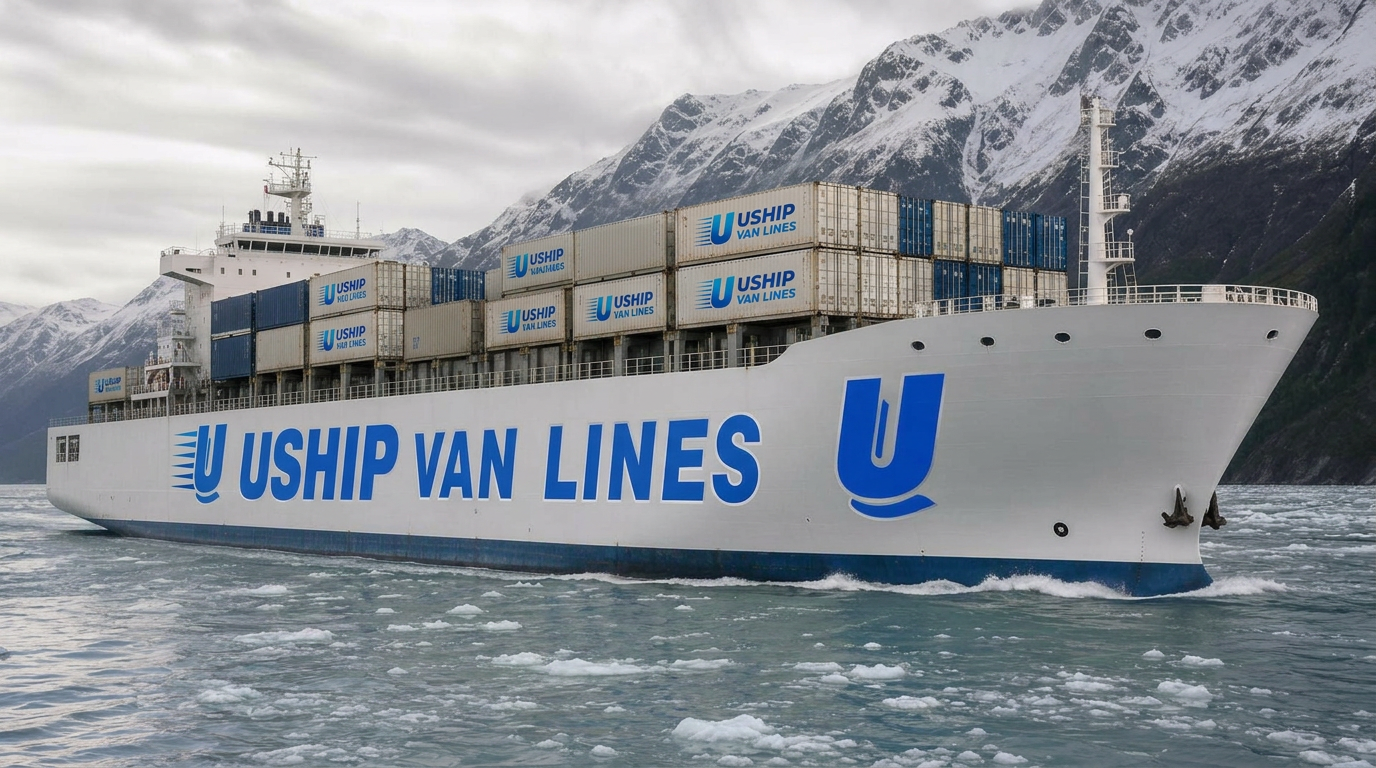
From Tacoma, your goods load onto oceangoing barges operated by carriers like TOTE Maritime or Alaska Marine Lines. The barge voyage to the Port of Anchorage takes 5–7 days under normal conditions. Once containers arrive in Alaska, last-mile delivery begins—ranging from same-day service in Anchorage to 1–3 additional days for Fairbanks, Mat-Su communities like Wasilla and Palmer, Kenai Peninsula destinations, or longer for bush communities requiring air or smaller vessel transfers.
This route differs fundamentally from Lower 48 moves. Your household goods never travel by continuous truck. Instead, they're containerized for secure barge transport, which protects items from the handling damage common in traditional long-haul moves but adds scheduling complexity around weekly barge departures and Alaska weather patterns.
How the moving process works
How Your North Dakota to Alaska Move Works: Step-by-Step
-
Initial survey and quote: A moving coordinator assesses your inventory (typically via virtual survey), confirms your North Dakota pickup address and Alaska destination, and provides a detailed estimate covering all legs—pickup, overland transport, barge freight, and Alaska delivery.
-
Packing and pickup in North Dakota: Professional movers pack and load your belongings into your home, then transport them to a consolidation facility. Items are inventoried and prepared for containerization. Pickup scheduling is coordinated backward from your desired Alaska delivery window and available barge departure dates.
-
Overland transport to Tacoma: Your goods travel by truck across the northern tier states to the Port of Tacoma. This leg takes 3–5 days and is largely weather-dependent during winter months when mountain passes may experience delays.
-
Container loading and barge departure: At Tacoma, your shipment loads into marine containers (typically shared with other households unless you're shipping a full container). Barges depart on fixed weekly schedules—usually Wednesday or Thursday sailings. Your coordinator confirms your specific sailing date.
-
Ocean voyage to Alaska: The barge travels through protected Inside Passage waters to the Port of Anchorage. Transit takes 5–7 days under normal conditions but may extend during severe weather events (rare but possible in winter).
-
Alaska customs and port processing: Though Alaska is a U.S. state, port processing still occurs. Your shipment clears the port facility, typically within 1 business day of arrival, then transfers to local delivery trucks.
-
Final delivery to your Alaska home: Movers deliver to your new address, unload, and unpack if you've selected full-service options. Delivery timing depends on your location—same-day for Anchorage, 1–2 days for Fairbanks or Mat-Su, potentially longer for remote areas requiring additional logistics.
Estimated moving costs
What Does a North Dakota to Alaska Move Cost?
A typical 2–3 bedroom household move from North Dakota to Alaska ranges from $6,800 to $13,500 depending on volume, services, season, and final destination. A modest 2-bedroom apartment (approximately 5,000–7,000 lbs) typically falls in the $6,800–$9,200 range, while a full 3-bedroom home (10,000–12,000 lbs) often reaches $10,500–$13,500 or higher.
Key cost drivers include:
- Weight and volume: Barge shipping is priced primarily by weight and cubic footage. Alaska moves are significantly more expensive per pound than continental routes due to ocean freight and limited competition.
- Final destination: Anchorage delivery is least expensive. Fairbanks adds $800–$1,500 due to the additional 360-mile overland leg. Kenai Peninsula, Mat-Su Valley, and remote communities add further surcharges based on distance and access challenges.
- Season: Summer peak season (May–September) commands premium pricing due to high demand from families moving before school starts. Winter moves (November–March) may save 15–25% but face weather-related scheduling risks.
- Packing services: Professional packing adds $800–$2,200 depending on household size. Many Alaska movers strongly recommend professional packing for fragile items due to the multi-modal journey.
- Vehicle shipping: Adding a vehicle costs $1,800–$3,200 additional on the same barge. Driving the Alaska Highway from North Dakota is possible but adds significant time (5–7 days minimum) and vehicle wear.
- Storage: If you need temporary storage in Tacoma or Anchorage while coordinating housing, expect $150–$350 per month depending on volume.
We never guarantee prices without a detailed inventory assessment, but these ranges reflect typical 2024 market conditions for North Dakota-Alaska relocations. Request a personalized quote for your specific situation.
Estimated transit times
How Long Does Moving from North Dakota to Alaska Take?
Door-to-door transit typically requires 14–21 days from pickup in North Dakota to delivery in Alaska. This timeline breaks down into distinct legs:
- North Dakota pickup to Tacoma port: 3–5 days for overland trucking across Montana, Idaho, and Washington.
- Tacoma container loading and barge wait: 1–7 days depending on when your shipment arrives relative to the next scheduled barge departure (barges typically sail weekly).
- Barge voyage to Anchorage: 5–7 days of ocean transit through the Inside Passage.
- Port processing in Anchorage: 1–2 business days for container offloading and local transfer.
- Final delivery: Same day for Anchorage addresses; 1–2 days additional for Fairbanks, Wasilla, Palmer, Soldotna, Kenai, or Homer; potentially 3–7 days for remote communities requiring air freight or seasonal barge access.
Winter considerations significantly impact timing. November through March moves face potential delays from:
- Mountain pass closures or chain requirements on the overland leg (particularly Snoqualmie Pass in Washington)
- Reduced barge frequency (some carriers cut to bi-weekly winter schedules)
- Weather holds at the Port of Anchorage during severe storms
- Road conditions affecting final delivery in Alaska, especially to interior or remote locations
Summer moves (May–September) generally hit the shorter end of the timeline range, while winter moves should plan for the longer end or buffer an additional week. Most movers recommend a 3–4 week booking window before your desired delivery date to account for coordination across all legs.
Regional logistics
Critical Alaska Moving Logistics from North Dakota
Port and barge operations: Your shipment routes through the Port of Tacoma, the primary gateway for Alaska freight. Goods transfer from overland trucks into marine containers (20-foot or 40-foot units) that load onto Roll-on/Roll-off (RoRo) barges. Most household moves share container space unless volume justifies a full container (typically 20,000+ lbs). The Port of Anchorage receives the majority of consumer shipments, with some carriers offering direct service to other Alaska ports.
Required documentation: While Alaska is a U.S. state and doesn't require customs clearance, you'll complete a detailed household goods inventory for the moving company and may need additional paperwork for vehicle shipping if combining auto transport. Ensure your Bill of Lading accurately lists all items—this document is essential for insurance claims if needed.
Vehicle shipping considerations: Most North Dakota-to-Alaska movers offer vehicle transport on the same barge as household goods. Vehicles must be clean (Alaska agricultural inspection), contain no personal items (security regulations), and show less than 1/4 tank of fuel. Cost typically runs $1,800–$3,200 per vehicle. Alternatively, driving the Alaska Highway from North Dakota takes 5–7 days minimum (approximately 2,500–2,800 miles depending on route) and subjects your vehicle to significant wear, but allows flexibility and potential sightseeing.
Last-mile delivery challenges: Alaska's geography creates unique final-delivery considerations. Anchorage, Fairbanks, Wasilla, Palmer, and Kenai Peninsula communities have straightforward truck access. However, many Alaska communities lack road connections—these require air freight (extremely expensive), seasonal barge service, or winter ice road access. If you're moving to a remote location, discuss access logistics early in planning. Some communities have seasonal delivery windows (typically June–September) that constrain moving schedules.
Insurance and valuation: Given the multi-modal journey and Alaska's remote nature, comprehensive moving insurance is strongly recommended. Basic carrier liability (typically $0.60 per pound) provides minimal protection. Full-value replacement coverage costs approximately 1–2% of your declared shipment value but protects against the damage, loss, or delay risks inherent in barge shipping. Review coverage options carefully with your moving coordinator.
Storage considerations: Some Alaska moves require temporary storage—either in Tacoma while awaiting barge departure, or in Alaska while finalizing housing. Monthly storage rates run $150–$350 depending on volume. If you're purchasing Alaska housing and closing dates are uncertain, build storage costs into your budget planning.
Seasonal considerations
Best Times to Move from North Dakota to Alaska
Summer (May–September): Peak moving season offers the most reliable schedules and fastest transit. Barge departures run weekly on consistent schedules. Alaska road conditions are optimal for final delivery to all destinations including remote areas. However, demand drives prices 20–30% higher than off-season, and booking windows extend to 4–6 weeks minimum. Families with school-age children overwhelmingly choose summer moves despite premium costs.
Fall (October–November): Shoulder season provides a pricing sweet spot—demand drops after school starts, but weather remains manageable. Barge schedules begin transitioning toward reduced winter frequency, so coordination timing becomes more critical. Early October moves generally proceed smoothly; late November moves face increasing winter weather risks on both ends of the route.
Winter (December–March): Off-season moves offer the lowest prices (15–25% below summer rates) and easiest booking availability. However, winter moves carry significant considerations: potential mountain pass delays on the overland leg, reduced barge frequency (some routes go bi-weekly), occasional weather holds at Alaska ports, and challenging delivery conditions in Alaska's interior and remote areas. Winter moves work well for flexible timelines and Anchorage-area destinations but require substantial buffer time for interior or remote deliveries.
Spring (April–early May): Prices begin rising as demand increases, but weather conditions improve. This transition period offers moderate pricing with increasingly reliable transit. Barge schedules return to full summer frequency by late April. Spring moves often provide the best balance of cost and reliability for those with flexible timing.
Alaska-specific considerations: Barge schedules occasionally experience weather delays during severe Gulf of Alaska storms (most common November–February). Final delivery to remote communities may require seasonal barge access—some smaller ports are inaccessible during winter ice conditions. Bush communities often rely on summer barge delivery or year-round air freight (significantly more expensive). Discuss your specific destination with your moving coordinator to understand seasonal access limitations.
Why choose Best Alaska & Hawaii Movers
Why Choose Best Alaska & Hawaii Movers for Your North Dakota to Alaska Move
-
Alaska-specific expertise: We specialize exclusively in moves to and from Alaska and Hawaii. Unlike general long-distance movers, we understand barge schedules, Alaska delivery logistics, seasonal considerations, and the paperwork required for complex multi-modal shipments.
-
Transparent, all-inclusive pricing: Our quotes include every leg—North Dakota pickup, overland transport, barge freight, port fees, and Alaska delivery to your door. No surprise charges for "barge handling" or "Alaska surcharges" that some movers add later.
-
End-to-end coordination: You work with a single coordinator who manages all legs of your move. We track your shipment from North Dakota pickup through Tacoma consolidation, barge voyage, and final Alaska delivery, providing updates at each transition point.
-
Realistic timelines and proactive communication: We provide honest time estimates that account for barge schedules, seasonal weather, and Alaska delivery challenges. If delays occur, we notify you immediately and work to minimize impact on your plans.
-
Powered by UShip Van Lines infrastructure: Our partnership with UShip Van Lines provides access to established carrier networks, vetted logistics partners, and the technology infrastructure that keeps your move on track across multiple transport modes.
-
Flexible service levels: Whether you need full-service packing and unpacking or prefer to handle packing yourself for budget savings, we accommodate your preferences and provide guidance on what works best for Alaska's unique transit requirements.