
Moving from Minnesota to Alaska
Relocating from Minnesota to Alaska transforms a long-distance move into a true logistics adventure. Unlike a traditional highway move, your household goods will travel by truck to the Port of Tacoma, cross the Gulf of Alaska by barge, and arrive at the Port of Anchorage before completing the final leg to your new home—whether that's Anchorage, Fairbanks, the Mat-Su Valley, or beyond.
Best Alaska & Hawaii Movers, powered by UShip Van Lines, specializes in this exact route. We coordinate every phase—from pickup in Minneapolis, St. Paul, Duluth, or anywhere across Minnesota, through the barge crossing, to final delivery in Alaska. Ready to start planning? Request a free quote today to lock in your move timeline.
Route overview
Understanding the Minnesota to Alaska Moving Route
Moving from Minnesota to Alaska requires multi-modal shipping. Your belongings are loaded onto a truck in Minnesota, transported across the northern tier or through the Pacific Northwest to Tacoma, Washington—the primary consolidation hub for Alaska-bound freight. There, your shipment is transferred to a container and loaded aboard a northbound barge operated by carriers like TOTE Maritime or Alaska Marine Lines.
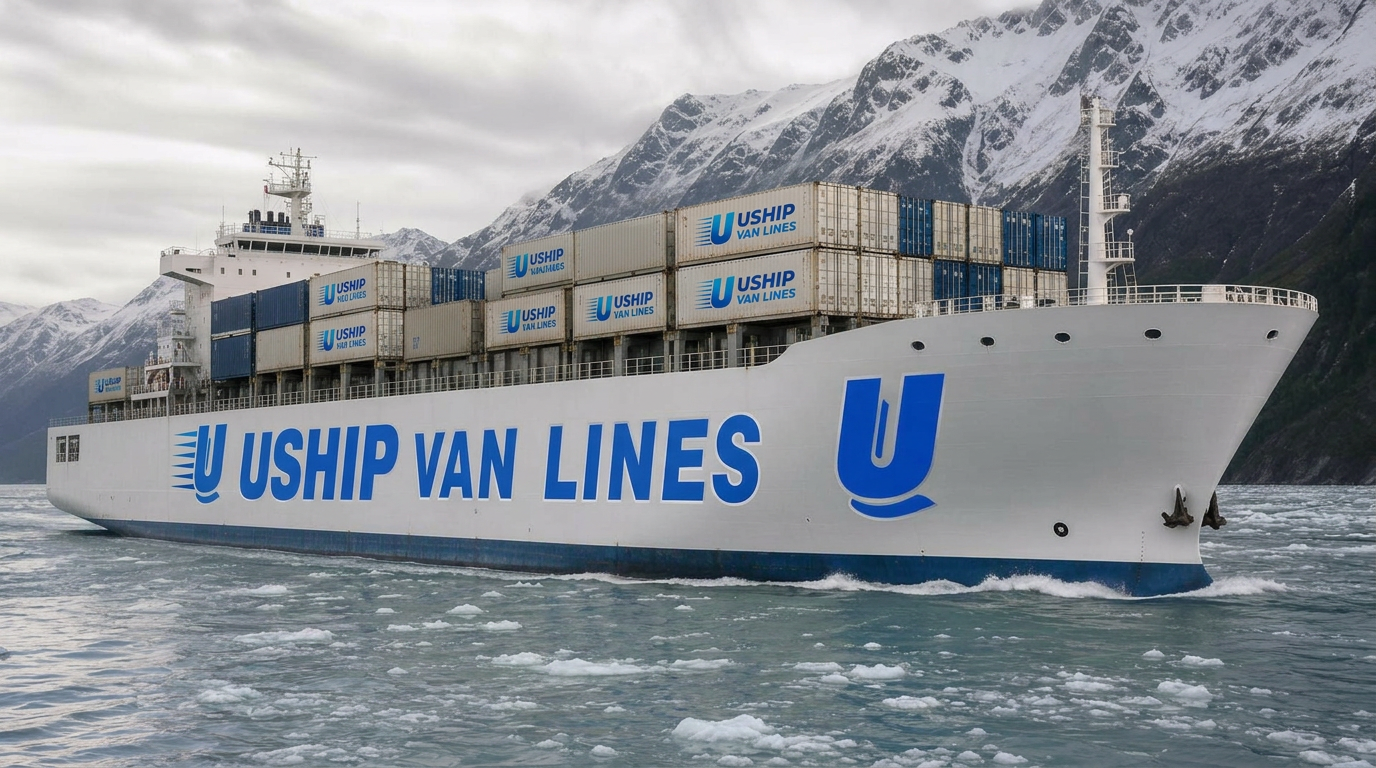
The barge sails approximately 1,400 nautical miles through the Inside Passage and across the Gulf of Alaska to the Port of Anchorage, typically a 3–5 day ocean voyage. Once off-loaded in Anchorage, your container is either delivered locally or trucked north to Fairbanks, west to the Kenai Peninsula, or to Mat-Su communities like Wasilla and Palmer. Remote destinations require additional coordination and may involve smaller carriers or seasonal road access.
This route is well-established and reliable, but timing depends heavily on barge schedules (typically weekly sailings in peak season, less frequent in winter), weather, and coordination between trucking and marine segments. Unlike a direct interstate move, expect 2–4 weeks door-to-door, and plan accordingly for housing transitions.
How the moving process works
How the Minnesota to Alaska Moving Process Works
-
Free Quote and Planning Consultation: Contact Best Alaska & Hawaii Movers for a detailed estimate. We'll assess your inventory, discuss your timeline, and explain barge cut-off dates and seasonal considerations. This is the time to ask about vehicle shipping, storage options, and insurance.
-
Pickup in Minnesota: Our team schedules a pickup window at your Minnesota residence. Professional movers load your household goods into a truck, creating a detailed inventory. Items are secured for the long journey—padding, strapping, and weatherproofing are critical.
-
Overland Transport to Tacoma: Your shipment travels 1,600–1,800 miles to the Port of Tacoma. Transit time is typically 3–5 days, depending on routing and weather. The truck may consolidate with other Alaska-bound loads for efficiency.
-
Container Loading and Barge Scheduling: At Tacoma, your goods are transferred into a 20' or 40' ocean container. The container is loaded onto the next available barge. Peak season (May–September) offers weekly sailings; winter schedules are less frequent. Missing a barge cut-off can delay your move by a week or more.
-
Ocean Voyage to Anchorage: The barge sails north, typically arriving at the Port of Anchorage 3–5 days after departure. Weather can occasionally extend transit, especially in fall and winter when Gulf of Alaska storms are more common.
-
Customs Clearance and Port Off-Load: Though moving within the U.S., Alaska shipments sometimes require documentation checks. The container is off-loaded and either staged for local delivery or reloaded onto a truck for inland destinations.
-
Final Delivery in Alaska: Your goods are delivered to your new home in Anchorage, Fairbanks, the Mat-Su Valley, or other accessible communities. Remote or off-road-system locations may require additional arrangements, including seasonal timing (summer-only access for some bush communities) or smaller local carriers.
Estimated moving costs
What Does It Cost to Move from Minnesota to Alaska?
A typical 2–3 bedroom household moving from Minnesota to Alaska costs between $6,500 and $14,000, depending on volume, services, season, and final destination. A small 1-bedroom apartment or partial load may start around $4,500, while a large 4-bedroom home with vehicle shipping can exceed $16,000.
Key cost drivers include:
- Volume and weight: Barge freight is priced by container space (cubic feet) or weight. A 3-bedroom home typically fills a 20' container or half of a 40' container.
- Distance within Alaska: Delivery to Anchorage is most economical. Fairbanks, Mat-Su, Kenai, or Soldotna add trucking costs. Remote bush destinations require special freight and substantially higher fees.
- Packing services: Professional packing (recommended for fragile items on a multi-leg journey) adds $800–$2,500.
- Vehicle shipping: Shipping a car or truck to Alaska adds $1,500–$3,000, depending on size and destination. Vehicles travel on the same barge system.
- Season: Peak summer season (May–August) sees higher demand and sometimes premium rates. Winter moves may offer lower pricing but reduced scheduling flexibility.
- Insurance: Basic carrier liability is minimal (typically $0.60/lb). Full-value protection costs 1–3% of declared shipment value and is highly recommended for Alaska moves.
- Storage: If your Alaska housing isn't ready, storage in Anchorage costs $150–$400/month for a typical household.
We provide transparent, written estimates with no hidden fees. Pricing is never guaranteed until inventory is confirmed, but our quotes are designed to be accurate and comprehensive.
Estimated transit times
How Long Does a Minnesota to Alaska Move Take?
Door-to-door transit time from Minnesota to Alaska typically ranges from 14 to 28 days (2–4 weeks), depending on scheduling, season, and final destination.
Breakdown by leg:
- Pickup to Tacoma: 3–5 days overland trucking.
- Tacoma staging and container loading: 1–3 days, depending on barge schedule alignment and consolidation.
- Barge sailing (Tacoma to Anchorage): 3–5 days on the water. Weekly sailings in summer; less frequent in winter.
- Port off-load and customs: 1–2 days.
- Final delivery in Alaska: Same-day to 3 days for Anchorage metro. Add 1–3 days for Fairbanks, Mat-Su, or Kenai. Remote destinations can add a week or more, especially if seasonal road conditions apply.
Total minimum: About 2 weeks if everything aligns perfectly (summer season, Anchorage delivery, no delays).
More realistic: 3–4 weeks, allowing for consolidation, weather, and inland trucking.
Winter or remote destinations: 4–5 weeks is common.
Barge schedules are the primary constraint. Missing a sailing by one day can add a full week. We recommend booking 6–8 weeks in advance during peak season to secure your preferred dates.
Regional logistics
Alaska-Specific Moving Logistics from Minnesota
Ports and Routing: The Port of Tacoma is the primary gateway. All Minnesota shipments route through Tacoma for barge consolidation. The Port of Anchorage is the destination for nearly all Alaska household moves. Some freight continues by barge to Kodiak, but this is rare for residential moves.
Paperwork and Documentation: Moving to Alaska from the Lower 48 does not require customs (it's domestic), but carriers may request proof of residence or delivery address. If shipping a vehicle, you'll need the title and registration. USDA restrictions apply to certain plants and agricultural products—check Alaska Department of Natural Resources guidelines.
Vehicle Shipping: Most Minnesota-to-Alaska movers also ship a vehicle. Cars and trucks are loaded into containers or driven onto roll-on/roll-off (RoRo) barges. Container shipping offers better protection; RoRo is more economical. Expect $1,500–$3,000 per vehicle. Vehicles must be clean (no soil, no quarantine risk) and under 1/4 tank of fuel.
Last-Mile Delivery in Alaska: Anchorage and Mat-Su Valley are straightforward. Fairbanks requires an additional 350+ mile truck haul from Anchorage (add 1–2 days and $500–$1,200). Kenai Peninsula communities like Soldotna or Homer add similar time/cost. Bush Alaska (off the road system) requires air freight or seasonal barge to villages—costs skyrocket ($5,000–$15,000+ extra) and timing is restrictive.
Storage Options: If your Alaska home isn't ready, we can arrange storage in Anchorage. Climate-controlled units are available but not always necessary for household goods. Monthly rates: $150–$400 depending on volume.
Partial Loads and Consolidation: If you're moving a small apartment or partial household, your goods will likely share container space with other shipments. This is cost-effective but can add a few days to scheduling as the container fills.
Insurance and Liability: Standard carrier liability is minimal. For a multi-modal move involving ocean transit, we strongly recommend full-value protection insurance. Costs are based on declared value, typically 1–3% of total.
Weight and Restrictions: Barge weight limits are generous for household goods, but extremely heavy items (gun safes, large machinery) require advance notice and may incur surcharges. Hazardous materials (propane, paint, ammunition) cannot be shipped via barge.
Seasonal considerations
Best Time to Move from Minnesota to Alaska
Spring (April–May): The moving season begins as Alaska thaws. Barge schedules ramp up to weekly service. Roads are passable, though spring breakup can create muddy conditions on unpaved routes. Prices begin to rise as demand increases. Good balance of availability and cost.
Summer (June–August): Peak moving season. Most frequent barge sailings (often multiple per week), warmest weather, and best road conditions—including access to remote areas. Highest demand means premium pricing and less scheduling flexibility. Book 8–10 weeks ahead. Ideal for families moving before the school year.
Fall (September–October): Shoulder season. Barge frequency decreases but service remains reliable. Prices moderate. Weather becomes more unpredictable—early snows in interior Alaska, increased storm risk in the Gulf of Alaska. Still a solid window for cost-conscious movers.
Winter (November–March): Off-peak season. Fewer barge sailings (sometimes bi-weekly or less). Lower prices and easier scheduling, but higher risk of weather delays. Harsh conditions in Minnesota and Alaska can complicate pickups and deliveries. Some remote Alaska destinations are inaccessible until spring thaw. Best for flexible schedules and budget priority.
Recommendation: Late spring (May) or early fall (September) offer the best balance of cost, reliability, and weather. Avoid mid-winter unless your timeline and budget are highly flexible.
Why choose Best Alaska & Hawaii Movers
Why Choose Best Alaska & Hawaii Movers for Your Minnesota to Alaska Move
-
Alaska Logistics Expertise: We specialize exclusively in moves to and from Alaska and Hawaii. We know the barge schedules, the Tacoma port procedures, the Anchorage delivery landscape, and the challenges of Alaska's unique geography—experience generic long-distance movers simply don't have.
-
Powered by UShip Van Lines: Our partnership with UShip Van Lines gives you access to a vetted network of carriers, transparent pricing, and comprehensive support. You get the personalized service of a specialist and the reliability of an established logistics platform.
-
Transparent, All-Inclusive Estimates: We provide detailed quotes covering every leg of your move—Minnesota pickup, Tacoma transfer, barge shipping, and Alaska delivery. No surprise fees, no hidden costs. You'll know what to expect from day one.
-
End-to-End Coordination: You get a single point of contact who manages your entire move—from scheduling the Minnesota pickup to confirming delivery in Alaska. We handle trucking, barge bookings, port communications, and final delivery, so you don't have to juggle multiple vendors.
-
Customized Solutions: Whether you're moving a studio apartment to Anchorage, a 4-bedroom house to Fairbanks, or need vehicle shipping and storage, we tailor services to your specific needs. Flexible scheduling, packing assistance, and insurance options ensure your move fits your timeline and budget.