
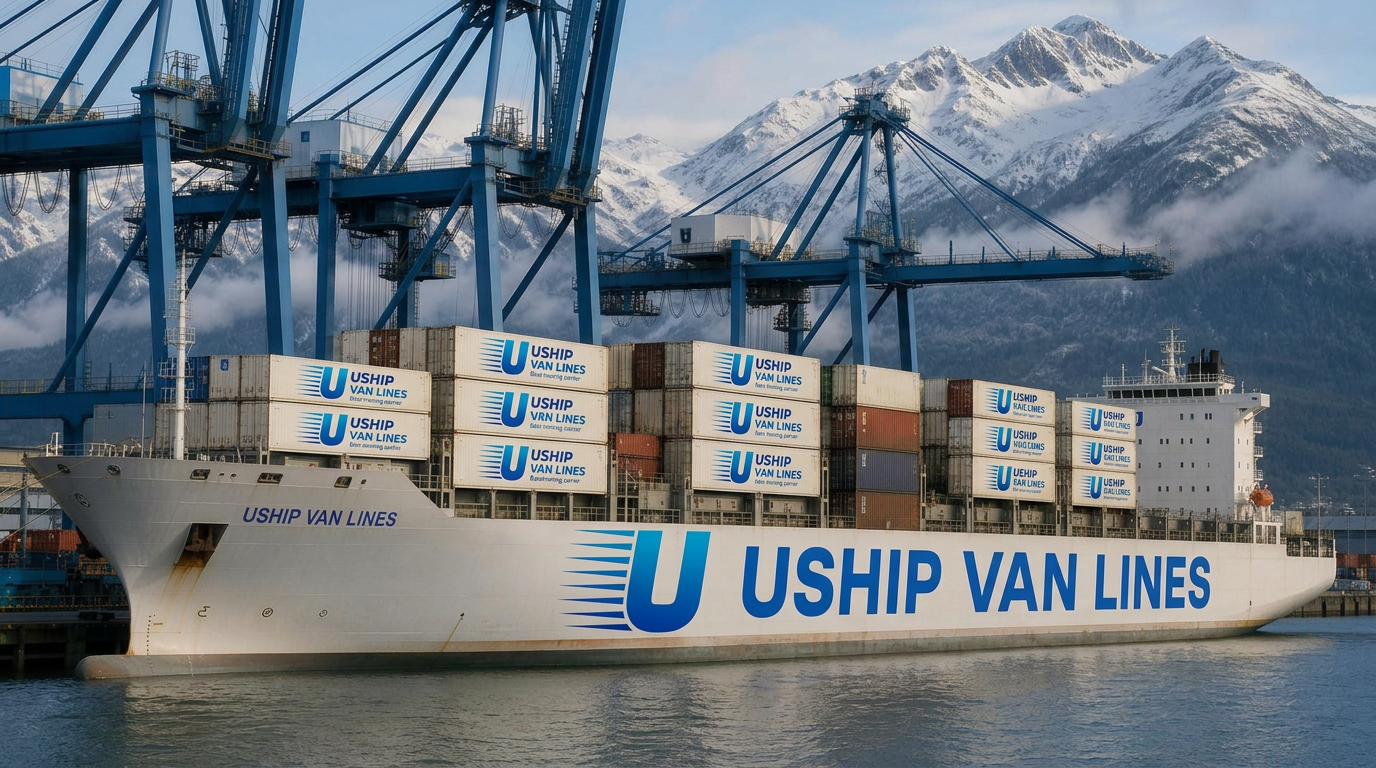
Moving from United States to United States
Moving your vehicle to Alaska or Hawaii requires specialized logistics that most carriers simply don't offer. Whether you're shipping a sedan to Anchorage, a pickup truck to Fairbanks, or an SUV to Honolulu, Best Alaska & Hawaii Movers—powered by UShip Van Lines—handles the entire process from pickup in the Lower 48 to final delivery at your door.
Our barge-based vehicle transport connects seamlessly with last-mile trucking across Alaska's road system and Hawaiian islands. From the initial pickup at your current location to container loading, ocean transit, port clearance, and final delivery, we coordinate every step so your vehicle arrives safely and on schedule. Ready to ship your car, truck, or motorcycle? Request your personalized quote today and we'll walk you through the entire timeline and cost structure.
Route overview
How Alaska & Hawaii Auto Transport Actually Works
Shipping a vehicle to Alaska typically begins with pickup anywhere in the continental U.S., followed by overland transport to the Port of Tacoma in Washington. From there, your vehicle is loaded onto a container barge bound for the Port of Anchorage—the primary entry point for Alaska-bound freight. After clearing customs and port handling, your vehicle is either delivered directly to Anchorage addresses or loaded onto car haulers for last-mile delivery to Fairbanks, the Mat-Su Valley, Kenai Peninsula, or other road-accessible communities. For remote bush locations, additional air or winter ice-road transport may be required.
Hawaii vehicle shipments follow a similar pattern: ground transport to West Coast ports (Los Angeles, Long Beach, or Oakland), container or roll-on/roll-off (RoRo) ocean shipping to Honolulu, and inter-island barge service if your destination is Maui, Kauai, or the Big Island. Transit times and costs vary significantly based on your origin city, destination island or Alaska region, vehicle size, and seasonal shipping schedules.
Unlike standard household moves, auto transport requires specialized carriers with marine shipping capability, proper port partnerships, and knowledge of Alaska Department of Motor Vehicles and Hawaii vehicle registration requirements. Best Alaska & Hawaii Movers coordinates all these moving parts under one contract, eliminating the need to juggle multiple vendors.
How the moving process works
Step-by-Step Auto Transport Process
-
Request a detailed quote — Provide your vehicle make/model, current location, Alaska or Hawaii destination, and preferred timeline. We'll outline the routing, transit schedule, and all-in cost including pickup, ocean freight, port fees, and final delivery.
-
Schedule pickup in the Lower 48 — Our partner carriers collect your vehicle from your driveway, apartment complex, or designated lot. We provide a Bill of Lading documenting the vehicle's condition with photos and signatures.
-
Overland transport to the departure port — Your vehicle travels via enclosed or open car hauler to Tacoma (for Alaska) or a California port (for Hawaii), where it's staged for the next available barge or ship sailing.
-
Container loading and ocean transit — Vehicles are secured inside weatherproof containers (most common for Alaska) or driven onto RoRo vessels (common for Hawaii). Sailing schedules run weekly or bi-weekly depending on season and carrier.
-
Port arrival and customs clearance — Upon arrival at the Port of Anchorage or Honolulu, your vehicle clears U.S. Customs (if applicable) and port authority inspections. This typically adds 1–3 business days.
-
Last-mile delivery to your Alaska or Hawaii address — We arrange pickup from the port and final delivery via car hauler. In Alaska, this may involve additional distance to Fairbanks, Wasilla, Palmer, Soldotna, or other communities. In Hawaii, inter-island barge adds 3–7 days for neighbor islands.
-
Vehicle inspection and handoff — Inspect your vehicle carefully upon delivery, noting any new damage on the delivery receipt. Most shipments arrive without incident, but documentation protects you if claims are necessary.
Estimated moving costs
What You'll Pay to Ship a Vehicle to Alaska or Hawaii
Auto transport costs depend heavily on vehicle size, origin location, destination specificity, and time of year. For a standard sedan or small SUV, expect these approximate ranges:
- Lower 48 to Anchorage: $1,800–$3,200 door-to-door, including pickup, barge freight, and Anchorage delivery
- Lower 48 to Fairbanks or Mat-Su Valley: $2,200–$3,800, adding 300+ miles of Alaska highway transport
- Lower 48 to Kenai Peninsula: $2,400–$4,000, reflecting additional distance and fewer carrier options
- Lower 48 to Honolulu: $1,400–$2,400, typically the most competitive Hawaii route
- Lower 48 to Maui, Kauai, or Big Island: $1,800–$3,000, adding inter-island barge fees
Key cost drivers:
- Vehicle dimensions — Oversized trucks, lifted 4x4s, and large SUVs incur surcharges due to container space and weight
- Origin city distance from ports — Shipping from Florida or Texas costs more in ground transport than from Seattle or California
- Seasonal demand — Summer (May–September) is peak season for Alaska moves; expect 15–25% higher rates and longer lead times
- Delivery location — Bush Alaska locations requiring air freight or winter ice roads add $1,000–$5,000+
- Expedited service — Guaranteed sailing dates and faster delivery windows cost 20–40% more than standard schedules
These are estimated ranges based on typical moves; your specific quote will reflect your exact routing and vehicle details. We never guarantee prices without a formal inspection and route survey.
Estimated transit times
Realistic Door-to-Door Transit Times
Auto transport to Alaska or Hawaii is not fast. Plan for these typical timelines:
To Anchorage:
- Lower 48 pickup to Tacoma staging: 3–7 days
- Tacoma to Anchorage barge sailing: 5–7 days (weekly sailings in summer, less frequent in winter)
- Port clearance and delivery in Anchorage: 2–4 days
- Total: 10–18 days door-to-door
To Fairbanks or Mat-Su:
- Add 2–5 days for last-mile trucking from Anchorage
- Total: 12–23 days door-to-door
To Honolulu:
- Lower 48 pickup to California port: 2–5 days
- California to Honolulu ocean transit: 5–8 days (sailings 2–3x weekly)
- Port clearance and Oahu delivery: 2–4 days
- Total: 9–17 days door-to-door
To neighbor islands (Maui, Kauai, Big Island):
- Add 3–7 days for inter-island barge (runs 1–2x weekly per island)
- Total: 12–24 days door-to-door
Winter and shoulder-season schedules are less predictable. Tacoma–Anchorage sailings may drop to twice monthly November–March. Storms can delay departures by 3–7 days. Always book with buffer time if you need the vehicle by a specific date.
For urgent shipments—job start dates, military PCS orders, or time-sensitive relocations—ask about expedited barge bookings. These cost significantly more but guarantee space on the next available sailing.
Regional logistics
Alaska-Specific Vehicle Shipping Logistics
Port of Anchorage operations: Alaska's primary vehicle entry point handles container and RoRo freight. Port fees ($150–$300) cover stevedoring, terminal handling, and temporary storage. Vehicles typically clear the port within 2–4 business days unless held for inspection.
Alaska DMV requirements: Out-of-state vehicles must be registered within 30 days of establishing residency. You'll need the original title, Bill of Lading, odometer disclosure, and emissions compliance (newer vehicles are exempt; older vehicles may require testing). Some insurance carriers require Alaska-specific coverage before registration.
Last-mile delivery challenges: Alaska's road system is limited. The Alaska Highway, Parks Highway, and Seward Highway connect Anchorage to Fairbanks, Mat-Su, and Kenai—but bush communities like Bethel, Nome, Kotzebue, and Barrow require air freight or seasonal ice roads. These remote deliveries can cost $3,000–$10,000+ and require advance coordination.
Vehicle preparation: Remove all personal items (port security regulations). Ensure your gas tank is no more than ¼ full (barge safety rules). Disable alarms. Document pre-existing damage with photos. Carriers are not responsible for items left inside the vehicle.
Motorcycles, ATVs, and boats: Non-standard vehicles ship in containers or on flatbeds. ATVs and snowmobiles are common Alaska shipments and follow the same barge routing. Boats require specialized marine transport and are typically quoted separately.
Insurance and liability: Confirm your auto insurance covers ocean transit. Carrier liability is typically limited to $0.60 per pound unless you purchase additional coverage. We recommend declared-value insurance for vehicles worth over $15,000.
Hawaii-specific notes: Hawaii has strict quarantine rules for plants and animals—ensure your vehicle is thoroughly cleaned. Oahu deliveries are straightforward; neighbor island deliveries require inter-island barge coordination and tighter timelines.
Seasonal considerations
Best (and Worst) Times to Ship Your Vehicle
Summer (May–September): Peak season for Alaska moves. Barge schedules run weekly, weather is cooperative, and last-mile road conditions are excellent. However, demand is highest—book 4–6 weeks in advance and expect premium pricing. Hawaii shipping is also busy but less seasonal; book 3–4 weeks ahead.
Fall (October–November): Shoulder season offers moderate pricing and good availability. Alaska weather begins to turn; early snowstorms can delay last-mile delivery to interior regions. Barge schedules start to thin out by late November. Ideal window for cost-conscious Hawaii shippers.
Winter (December–March): Off-peak for Alaska. Barge sailings to Anchorage drop to 1–2 per month. Road conditions to Fairbanks and the Kenai can be challenging, with ice, extreme cold, and limited daylight complicating last-mile logistics. However, rates drop 15–25% and you'll have more negotiating room. Hawaii shipping runs year-round with minimal seasonal variation.
Spring (April–early May): Transition period. Alaska barge schedules ramp back up, but breakup season (thawing, muddy roads) can create delivery delays to remote areas. Demand begins climbing as summer movers book ahead. Lock in rates early before peak pricing kicks in.
Pro tip: If your timeline is flexible, shipping October–April to Alaska saves money. If you need guaranteed delivery by a specific date, summer is more reliable despite higher costs.
Why choose Best Alaska & Hawaii Movers
Why Best Alaska & Hawaii Movers for Auto Transport
-
Single-point coordination for complex routes — We manage ground pickup, barge booking, port logistics, and last-mile delivery under one contract, eliminating the hassle of coordinating multiple carriers and freight forwarders.
-
Transparent, all-inclusive pricing — Our quotes include every fee: pickup, ocean freight, port charges, and final delivery. No surprise add-ons, fuel surcharges, or hidden terminal fees.
-
Alaska and Hawaii specialization — Unlike national car shippers who treat these routes as afterthoughts, we focus exclusively on Alaska and Hawaii logistics. We know the barge schedules, port contacts, and delivery networks that make or break your timeline.
-
Real-time tracking and proactive communication — You'll receive sailing confirmations, port arrival notifications, and delivery scheduling updates throughout the process. Our team is available via phone and email to answer questions at every stage.
-
Flexible options for every budget — Whether you need expedited summer delivery to Anchorage or cost-effective winter transport to Honolulu, we tailor solutions to your timeline and budget without sacrificing service quality.