
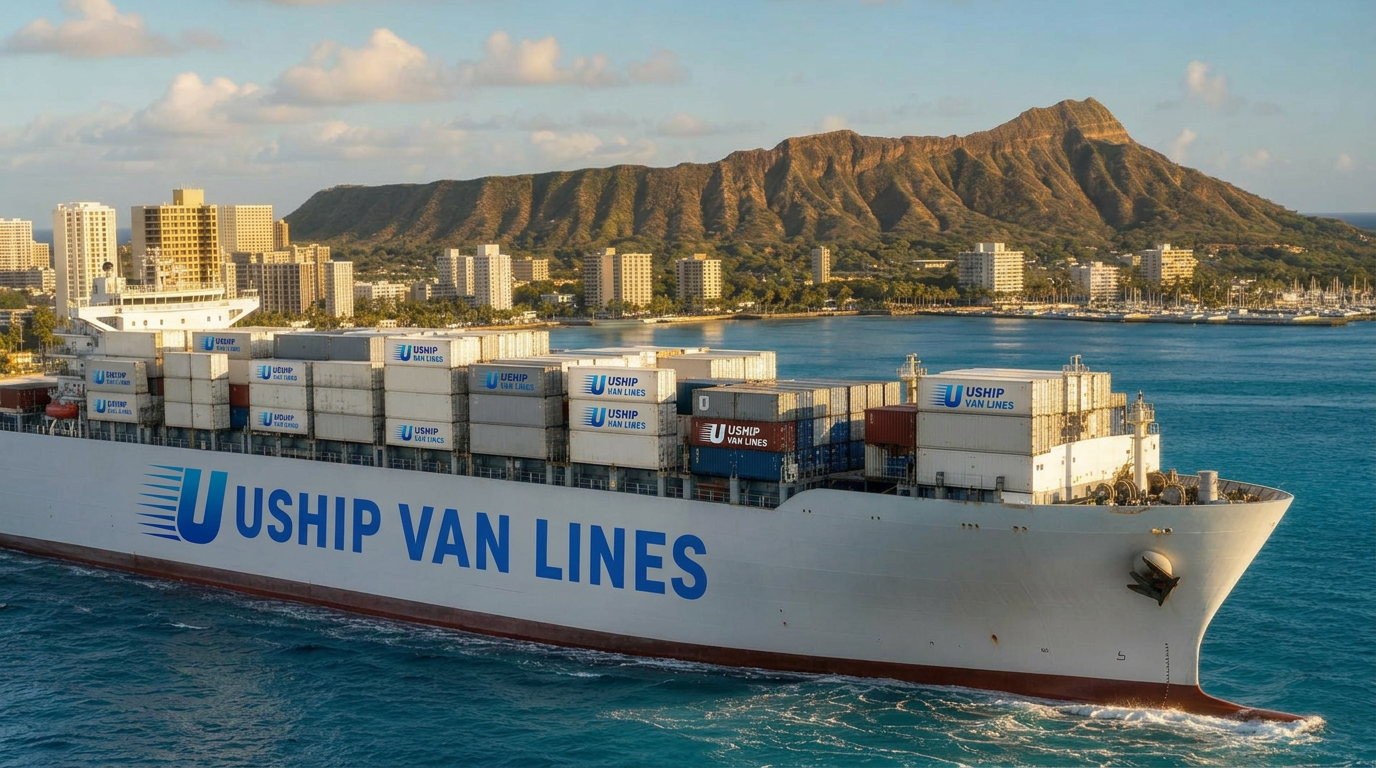
Moving from United States to Hawaii
Moving from the continental United States to Hawaii requires ocean freight coordination, customs documentation, and careful scheduling around port availability. Whether you're relocating to Honolulu, Maui, Kauai, or the Big Island, your household goods travel by container ship from West Coast ports through Matson or Pasha Lines to the islands.
Best Alaska & Hawaii Movers, powered by UShip Van Lines, handles the entire logistics chain—mainland pickup, container loading, ocean transit, island delivery, and even inter-island moves. Request a detailed quote today to understand costs, timelines, and documentation for your island relocation.
Route overview
How Mainland-to-Hawaii Moves Work
All household moves to Hawaii begin with ground transport from your current home to a consolidation warehouse near Long Beach or Oakland, California. Your belongings are loaded into shared or dedicated ocean containers, then shipped via Matson Navigation or Pasha Hawaii on scheduled departures to Honolulu (Oahu). Most sailings take 5–7 days across the Pacific.
Once the container clears customs and port inspection in Honolulu, cargo is either delivered directly to Oahu addresses or transferred to inter-island barges for Maui, Kauai, or Big Island destinations. Door-to-door transit typically runs 14–28 days depending on your mainland origin city, sailing schedule, and final island. Snowbird moves from the Midwest or East Coast add 4–7 days of overland trucking before the ocean leg begins.
The process requires coordination between mainland carriers, ocean freight lines, Hawaii-based delivery teams, and USDA agricultural inspections. Working with a single-point-of-contact mover streamlines documentation, reduces handoff errors, and ensures your furniture arrives intact on island time.
How the moving process works
Step-by-Step Moving Process from United States to Hawaii
-
Initial Survey & Quote — Schedule a virtual or in-home walkthrough to inventory furniture, fragile items, and specialty goods (vehicles, motorcycles, artwork). Receive a binding or not-to-exceed estimate covering mainland pickup, ocean freight, Hawaii delivery, and optional services like packing or vehicle shipping.
-
Mainland Pickup & Consolidation — Professional movers load your belongings at your current residence and transport them to a California consolidation hub. Items are inventoried, wrapped, and staged for container loading, typically 3–7 days before the scheduled sailing.
-
Container Loading & Port Drayage — Your shipment is loaded into a 20-foot or 40-foot ocean container (shared or dedicated, depending on volume). The sealed container moves to Long Beach or Oakland port, clears export documentation, and is positioned for vessel loading.
-
Ocean Transit to Honolulu — Matson or Pasha container ships depart weekly on fixed schedules. Sailing time averages 5–7 days. You receive a bill of lading and tracking number to monitor vessel arrival.
-
Customs & USDA Inspection — Upon arrival in Honolulu, containers clear U.S. Customs (typically fast for domestic moves) and USDA agricultural inspection. Restricted items (certain plants, soil, untreated wood) may be held or destroyed. This clearance adds 1–3 business days.
-
Island Delivery or Inter-Island Barge — Oahu deliveries proceed directly from port to your home. Neighbor island shipments transfer to Young Brothers or Pasha inter-island barges (2–5 additional days to Maui/Kauai/Big Island), then to island-based delivery crews.
-
Final Delivery & Setup — Movers deliver to your new Hawaii address, unload, and place furniture in designated rooms. Inspect for damage, confirm inventory counts, and sign off. Unpacking and debris removal services are available on request.
Estimated moving costs
What Does It Cost to Move from the Mainland to Hawaii?
A typical 2–3 bedroom household relocation from the West Coast (California, Oregon, Washington) to Oahu averages $4,500–$8,500 for a shared container shipment. Dedicated 20-foot containers run $7,000–$11,000, while full 40-foot containers for larger homes cost $10,000–$16,000 or more.
Moves originating from the Midwest (Colorado, Arizona, Texas) add $800–$1,800 in overland trucking to reach California ports. East Coast or Southeast origins (Florida, Alabama, Georgia) can add $1,500–$3,200 for cross-country ground transport before the ocean leg.
Key cost drivers:
- Distance to West Coast port — Overland miles from your pickup city to Long Beach/Oakland.
- Shipment volume — Cubic feet or container size (shared vs. dedicated) directly impacts ocean freight charges.
- Destination island — Oahu is cheapest; Maui, Kauai, and Big Island incur inter-island barge fees ($600–$1,400 extra).
- Packing services — Professional packing of fragile items, kitchens, and artwork adds $800–$2,000.
- Vehicle shipping — Cars ship separately via roll-on/roll-off vessel ($1,200–$1,800 per vehicle, Matson or Pasha).
- Seasonality — Summer (June–August) sees 10–20% premium pricing due to high military and family relocation demand.
- Storage — Warehouse holding before sailing or after arrival runs $150–$350/month.
We never guarantee final prices until a detailed inventory is complete. Request a custom quote to receive a binding or not-to-exceed estimate based on your specific household and timeline.
Estimated transit times
How Long Does a Mainland-to-Hawaii Move Take?
Door-to-door transit from the continental U.S. to Hawaii typically requires 14–28 days, broken down as follows:
- Mainland pickup to California port: 1–7 days (same-day for CA origins; 3–7 days from Midwest/East Coast).
- Consolidation & container loading: 2–4 days at the warehouse before scheduled sailing.
- Ocean transit (Long Beach/Oakland to Honolulu): 5–7 days, depending on vessel and weather.
- Customs & USDA clearance: 1–3 business days in Honolulu port.
- Inter-island barge (if Maui/Kauai/Big Island): 2–5 additional days for neighbor island delivery.
- Final island delivery: Scheduled within 3–7 days of container arrival, based on crew availability and your delivery window.
Example timelines:
- Los Angeles to Honolulu (Oahu): 12–18 days total.
- Seattle to Maui: 16–24 days (includes inter-island leg).
- Denver to Kauai: 18–26 days (overland to CA + inter-island).
- Miami to Big Island: 24–32 days (cross-country trucking + full ocean/island chain).
Sailing schedules are fixed and weekly, but missing a departure can delay your shipment 7–10 days. Book 4–6 weeks in advance during peak summer season to secure preferred sailing dates and avoid warehouse storage fees.
Regional logistics
Hawaii-Specific Moving Logistics You Must Know
Ports & Carriers: All Hawaii household shipments route through Matson Navigation or Pasha Hawaii, the only regular container lines serving the islands. Mainland consolidation happens at Long Beach (Southern CA) or Oakland (Northern CA). Honolulu is the primary receiving port; neighbor islands receive containers via inter-island barge operated by Young Brothers or Pasha.
USDA Agricultural Restrictions: Hawaii enforces strict invasive-species rules. Prohibited items include potted plants with soil, untreated wooden furniture, certain seeds, fresh fruits, and live plants from the mainland. Movers inventory these items pre-load; USDA inspectors may open containers upon arrival and destroy non-compliant goods without compensation. Pressure-treated or kiln-dried wood furniture is generally allowed with proper documentation.
Vehicle Shipping: Cars, trucks, and motorcycles ship separately on Matson or Pasha roll-on/roll-off (RoRo) vessels. Expect $1,200–$1,800 per vehicle (West Coast to Honolulu), with 7–14 day transit. Vehicles must be empty (no household goods inside) and operable. Registration and safety inspection are required within 30 days of Hawaii arrival.
Paperwork & Documentation: Domestic moves to Hawaii do not require customs declarations, but you'll complete a household goods inventory, bill of lading, and USDA compliance form. If shipping vehicles, provide title, registration, and valid insurance. Military members submit PCS orders; civilians need proof of residency (lease, purchase agreement) for expedited port clearance.
Delivery Access: Many Hawaii homes have narrow streets, low-hanging trees, or unpaved driveways. Confirm your delivery address is accessible by 26-foot moving truck. If not, movers may require a shuttle truck (adds $300–$800) or manual carry from street parking. Condos and high-rises often mandate freight elevator reservations and certificate of insurance 7–14 days before delivery.
Storage Options: If your new home isn't ready or you're still house-hunting, request warehouse storage in Honolulu ($150–$350/month) or mainland storage before sailing ($120–$250/month). Some movers offer 30 days free storage with binding quotes; confirm terms upfront.
Inter-Island Moves: Already in Hawaii and relocating between islands? Household goods travel via Young Brothers barge (2–5 days Oahu to neighbor islands). Costs run $1,200–$3,500 for a 2-bedroom load. Vehicle shipping between islands costs $300–$600 per car.
Seasonal considerations
Best (and Worst) Times to Move to Hawaii
Summer (June–August): Peak relocation season. Military PCS moves, mainland families with school-age children, and university arrivals saturate container capacity. Expect 10–20% higher rates, tighter sailing slots, and potential delivery delays. Book 6–8 weeks ahead. Hurricane season begins in June, though major storms rarely disrupt Matson/Pasha schedules.
Fall (September–November): Shoulder season with moderate demand. Hurricane season peaks August–October; while direct hits are rare, tropical storms can delay sailings 2–5 days. Pricing is 5–10% lower than summer, and delivery crews are more flexible. Good window for budget-conscious moves if you can tolerate minor weather uncertainty.
Winter (December–February): Moderate volume driven by snowbirds and retirees. Holiday weeks (Thanksgiving–New Year's) see container backups and skeleton port crews, adding 3–7 days to transit. Avoid moves with delivery windows spanning Christmas or New Year's. Otherwise, winter offers fair pricing and reliable schedules. North Pacific storms occasionally delay sailings 1–2 days.
Spring (March–May): Low season with best pricing (5–15% below summer) and fastest transit. Ports and delivery crews operate at full capacity without summer congestion. Ideal for flexible movers who can schedule around spring break weeks. Weather is calm, and USDA inspections process quickly with lighter cargo volumes.
Pro tip: Request sailing dates 4–6 weeks out in summer/winter, 3–4 weeks in spring/fall. If your move is delayed, negotiate warehouse storage waivers or expedited next-sailing placement.
Why choose Best Alaska & Hawaii Movers
Why Choose Best Alaska & Hawaii Movers for Your Mainland-to-Hawaii Relocation
-
Single-Point Coordination — We manage the entire logistics chain: mainland pickup, California port drayage, ocean container booking, Honolulu clearance, inter-island barge (if needed), and final island delivery. One contact, one invoice, zero handoff confusion.
-
Matson & Pasha Partnerships — Direct relationships with both ocean carriers mean we secure priority sailing slots during peak summer season and negotiate competitive freight rates year-round. You benefit from reliable weekly departures and transparent container tracking.
-
Hawaii-Based Delivery Teams — Our island crews understand Oahu, Maui, Kauai, and Big Island delivery challenges—narrow roads, condo building rules, rural access limitations. We coordinate freight elevators, parking permits, and shuttle logistics before your container arrives.
-
Transparent Pricing & Binding Estimates — Receive detailed, line-item quotes covering every cost: pickup, packing, ocean freight, port fees, island delivery, and optional services. No surprise surcharges on delivery day. Binding estimates available for qualified shipments.
-
USDA Compliance Expertise — We inventory restricted items during the pickup survey, advise on wood furniture treatment documentation, and pre-clear agricultural concerns to minimize customs delays. Our teams know which plants, seeds, and materials trigger USDA holds.