
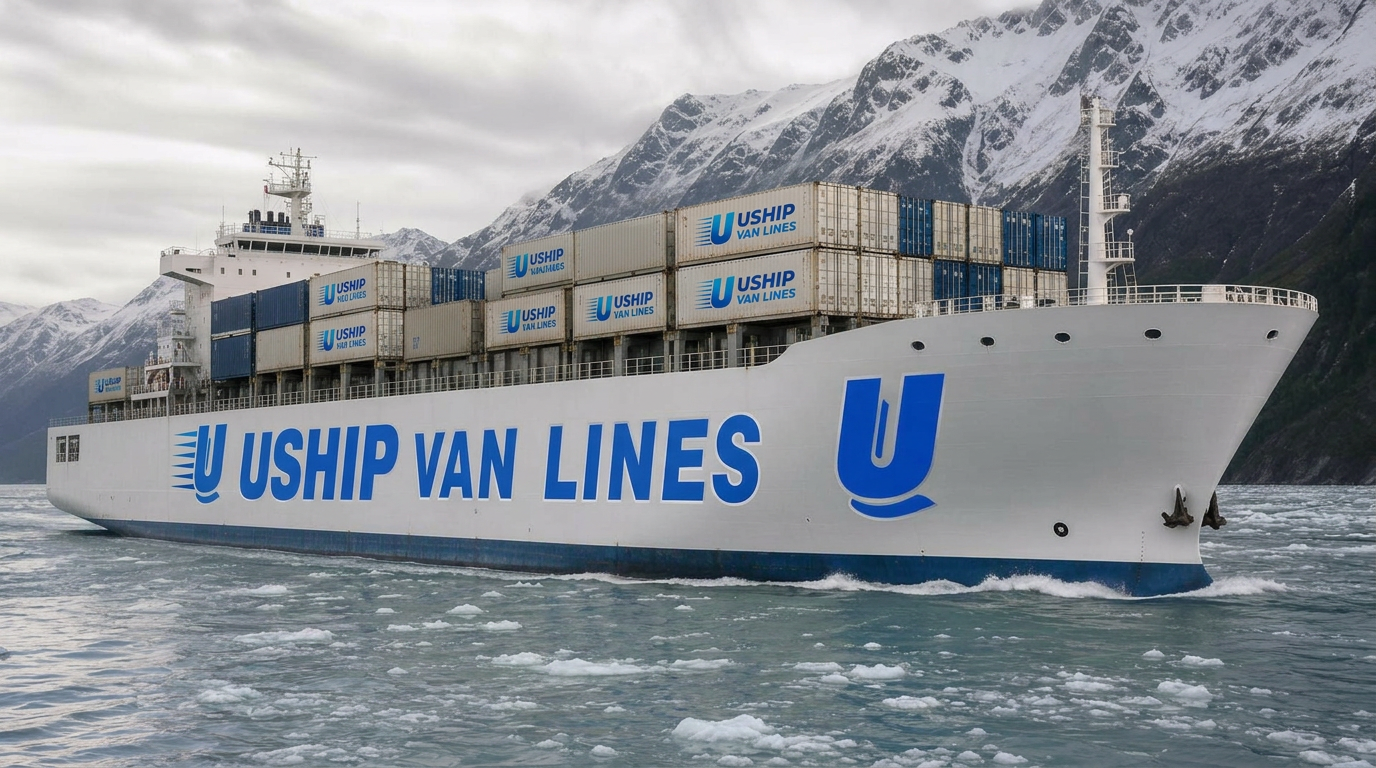
Moving from United States to Alaska
Moving to Alaska from the Lower 48 states is unlike any other domestic relocation. Your household goods travel thousands of miles by truck and barge, crossing the Pacific Northwest before arriving at ports like Anchorage, and the logistics require specialized carriers who understand maritime schedules, customs documentation, and last-mile delivery across the Last Frontier.
Best Alaska & Hawaii Movers, powered by UShip Van Lines, coordinates every step of your continental-to-Alaska move—from pickup anywhere in the contiguous United States through barge loading in Tacoma or Seattle, ocean transit, port clearance, and final delivery to Anchorage, Fairbanks, the Mat-Su Valley, Kenai Peninsula, or even bush communities. Request your free quote to see exactly what your Alaska move will cost and when your belongings will arrive.
Route overview
How Continental U.S. to Alaska Moves Work
Every move from the Lower 48 to Alaska follows a multi-modal path: your goods are loaded into a container or truck at your origin address, transported overland to the Pacific Northwest (typically Tacoma, Washington), transferred to a barge operated by carriers like TOTE Maritime or Alaska Marine Lines, shipped across the Gulf of Alaska (approximately 1,500 nautical miles), unloaded at the Port of Anchorage or other Alaska ports, cleared through documentation, and delivered by truck to your final address. This process requires careful coordination between ground carriers, port terminals, barge operators, and Alaska delivery teams.
The entire journey typically spans 10 to 21 days depending on your origin state, barge schedules (which run weekly during peak season but less frequently in winter), and final destination. Moves to Anchorage or the Mat-Su Valley are straightforward road hauls from the port; Fairbanks adds another 360 miles of highway transit; Kenai Peninsula, Kodiak, or Southeast Alaska communities may require additional barge legs; and bush villages accessible only by air or seasonal ice roads demand specialized freight forwarding.
Understanding these logistics early helps you plan around barge cutoff dates, avoid storage fees at the port, and coordinate housing timelines with realistic delivery windows.
How the moving process works
Step-by-Step: Moving Your Household from the Lower 48 to Alaska
-
Request a Detailed Quote and Book Early
Contact Best Alaska & Hawaii Movers 6–8 weeks before your desired move date. We'll assess your inventory, origin ZIP code, and Alaska destination to provide a binding estimate and reserve container space on the next available barge. Summer slots (May–September) fill quickly. -
Pre-Move Inventory and Restricted Items Review
Alaska barge shipments prohibit hazardous materials (paints, propane, ammonia-based cleaners, aerosols), perishable food, and plants subject to USDA inspection. We'll walk you through what can ship, what must be disposed of, and whether you need separate arrangements for vehicles or specialty items. -
Pack and Load at Your Origin Address
Our partner crew loads your belongings into a 20-foot or 40-foot container (or consolidated truck if you have a smaller load). Full-service packing is available. The container is sealed, labeled, and transported overland to Tacoma or Seattle, typically arriving within 2–5 days depending on your starting state. -
Barge Loading and Ocean Transit
Your container is transferred to the vessel and secured for the 3–5 day voyage across the Gulf of Alaska to the Port of Anchorage (or Whittier for certain sailings). Barge schedules are published months in advance; we coordinate to minimize port dwell time. -
Port Clearance and Documentation
Upon arrival, your shipment clears Alaska port authority inspections. If you're shipping a vehicle in the same container, additional paperwork is required. We handle all terminal communications and notify you of the port release date. -
Last-Mile Delivery to Your Alaska Address
Once cleared, your container is loaded onto a truck for delivery to Anchorage, Fairbanks, Mat-Su, Kenai, or other road-accessible communities. Off-road locations require freight forwarding via bush plane, seasonal barge, or winter ice road—arranged separately and quoted individually. -
Unload, Inspect, and Settle In
Our Alaska delivery team unloads your goods, places furniture in rooms, and collects the signed bill of lading. Inspect for any shipping damage immediately and file claims within the carrier's window (typically 9 months for loss, 120 days for damage).
Estimated moving costs
What Does It Cost to Move from the Lower 48 to Alaska?
A typical 2-bedroom household (approximately 5,000–7,000 pounds) moving from the continental United States to Anchorage generally costs $6,500 to $11,000, while a 3-bedroom home (8,000–12,000 pounds) ranges $9,000 to $16,000. These estimates include pickup, overland transport to the port, barge freight, port handling, and delivery within the Anchorage/Mat-Su area.
Key cost drivers:
- Origin distance to the port: Moves from the West Coast (California, Oregon, Washington) incur lower overland costs than Midwest or East Coast origins, which can add $1,500–$3,500 to the total.
- Volume and weight: Alaska barge freight is priced per cubic foot and by weight. Minimizing bulky, low-value items (old furniture, boxes of books) reduces costs significantly.
- Season and barge availability: Peak summer months (May–August) see higher demand and pricing. Off-season moves (October–March) may offer lower rates but face limited sailings and weather delays.
- Final destination: Delivery to Fairbanks adds approximately $800–$1,500 for the additional 360-mile haul. Kenai Peninsula, Homer, or Soldotna deliveries range $600–$1,200 more. Bush communities require air freight or seasonal barge, often doubling or tripling costs.
- Packing services: Professional packing typically adds $800–$2,000 depending on inventory size and fragility.
- Vehicle shipping: Adding a car to your container (if space permits) costs approximately $1,200–$2,500; driving the Alaska Highway is an alternative but adds 2,500+ miles and significant fuel/lodging costs.
- Storage: If your Alaska housing isn't ready, storage in Anchorage runs $150–$300/month for a typical household.
We provide binding estimates based on your actual inventory and addresses—never surprise fees. Request your free quote to see the exact cost for your move and available barge departure dates.
Estimated transit times
How Long Does a Move from the Lower 48 to Alaska Take?
Door-to-door transit from the continental United States to Alaska typically takes 10 to 21 days, broken down as follows:
- Overland to the port (2–7 days): Depends on your origin. West Coast moves reach Tacoma in 2–3 days; Midwest origins take 4–5 days; East Coast shipments require 6–7 days of truck transit.
- Port staging and barge loading (1–3 days): Containers are staged at the terminal and loaded onto the next scheduled sailing. Weekly sailings during summer mean minimal wait; winter schedules may add several days.
- Ocean transit (3–5 days): The voyage from Tacoma to the Port of Anchorage averages 60–72 hours of sailing time, though weather and sea conditions can extend this by a day.
- Port clearance (1–2 days): Unloading, customs/USDA inspections (if applicable), and documentation release.
- Delivery to final address (same day to 3 days): Anchorage and Mat-Su deliveries occur the same day or next day after port release. Fairbanks adds 1–2 days for the highway haul. Remote locations depend on flight schedules or seasonal barge/ice road access.
Total realistic range: Plan for 2–3 weeks from pickup to delivery for standard Anchorage moves. Add a week of buffer if moving to Fairbanks or off-road communities. Summer moves are faster due to frequent sailings; winter moves can stretch to 4 weeks if barge schedules are sparse or weather delays occur.
We provide a confirmed delivery window once your barge booking is secured and share tracking updates at each leg of the journey.
Regional logistics
Alaska-Specific Moving Logistics You Must Know
Ports and terminals: The Port of Anchorage handles the majority of household goods shipments. Whittier (south of Anchorage) serves some sailings, especially for consolidated freight. Your container clears U.S. Customs formalities even though Alaska is a U.S. state (agricultural inspections apply). Ensure you have a copy of your inventory list and any required USDA forms if shipping plants or raw wood.
Vehicle shipping: You can ship one vehicle in your container (if space allows) or book it separately via roll-on/roll-off barge service. Alternatively, driving the Alaska Highway is popular—roughly 2,500 miles from the Lower 48 border through Canada. If driving, carry proof of insurance, vehicle registration, and passport or enhanced driver's license for Canadian transit. Winter highway travel is challenging; summer is far safer.
Restricted and prohibited items: Alaska barge carriers strictly prohibit hazardous materials (paint, cleaning chemicals, propane tanks, batteries, ammunition), perishables, and many live plants. USDA restricts soil and certain wood products. Dispose of or ship separately any items flagged during the inventory review.
Last-mile challenges: Anchorage, Fairbanks, Mat-Su Valley, Kenai Peninsula, and most highway-connected towns receive standard truck delivery. Kodiak, Sitka, Juneau, Ketchikan, and Southeast Alaska require additional barge legs or air freight. Bush villages (Bethel, Nome, Kotzebue, Barrow/Utqiaġvik) are accessible only by air year-round or by seasonal barge/ice road—these require freight forwarding and significantly higher costs.
Housing coordination: Many Alaska rentals and home purchases close in summer. Time your barge booking so your goods arrive 1–3 days after you have keys. Port storage is available but expensive ($200–$400/month). If delivery is delayed, arrange temporary lodging and pack a suitcase with 2–3 weeks of essentials.
Insurance: Standard carrier liability is $0.60/pound. Full-value protection (replacement cost) is available and strongly recommended for Alaska moves due to the multi-modal journey. We'll explain your options and coverage limits during the quote process.
Seasonal considerations
Best Time to Move to Alaska: Seasonal Logistics
Summer (May–September): Peak moving season. Barge sailings run weekly, weather is stable, and road conditions are excellent for delivery anywhere in Alaska. Expect higher pricing due to demand—book 8–12 weeks ahead to secure container space. Ideal if you're starting a job, enrolling kids in school, or want guaranteed delivery windows.
Fall (October–November): Barge frequency decreases to every 10–14 days. Pricing softens slightly, but weather in the Gulf of Alaska becomes less predictable—storm delays can add 2–4 days. Road conditions to Fairbanks and interior Alaska remain passable through mid-November. Good option if you have flexible timelines and want moderate savings.
Winter (December–March): Barge schedules are minimal (bi-weekly or monthly for some routes), and severe weather can halt sailings or delay port operations. Overland delivery faces snow, ice, and short daylight hours. However, pricing is often 10–20% lower, and if you're relocating for winter employment (oil fields, ski resorts), this matches your timeline. Expect longer lead times and plan for potential storage if delivery is delayed.
Spring (April–early May): Transition period. Barge schedules ramp up, but breakup season (thawing ice, muddy roads) can complicate interior Alaska deliveries. Pricing begins to climb toward summer rates. If you can wait until mid-May, you'll get summer reliability without the peak-season rush.
Pro tip: Coordinate your move date with Alaska housing availability. Many leases and closings in Anchorage occur in summer; booking your move 2–3 months ahead ensures your belongings arrive when you need them, not weeks later in a storage unit.
Why choose Best Alaska & Hawaii Movers
Why Choose Best Alaska & Hawaii Movers (Powered by UShip Van Lines)
- Alaska specialists, not generalists: We coordinate Alaska barge moves daily, understand port schedules, know which carriers serve which routes, and have delivery partners in Anchorage, Fairbanks, Mat-Su, and beyond—experience you won't find with a typical moving broker.
- Transparent, binding estimates: No hidden port fees, no surprise fuel surcharges, no bait-and-switch pricing. You receive a detailed line-item quote and a guaranteed delivery window once your barge is booked.
- End-to-end coordination: One point of contact manages your pickup, overland transport, barge booking, port clearance, and Alaska delivery—no phone tag between multiple vendors.
- Flexible service levels: Choose full-service packing and white-glove delivery, or pack yourself and save. We accommodate partial loads, vehicle shipping, and storage solutions tailored to your timeline and budget.
- Nationwide reach, Alaska focus: Powered by UShip Van Lines' network, we pick up anywhere in the Lower 48 and deliver anywhere in Alaska with the same reliability and care.