
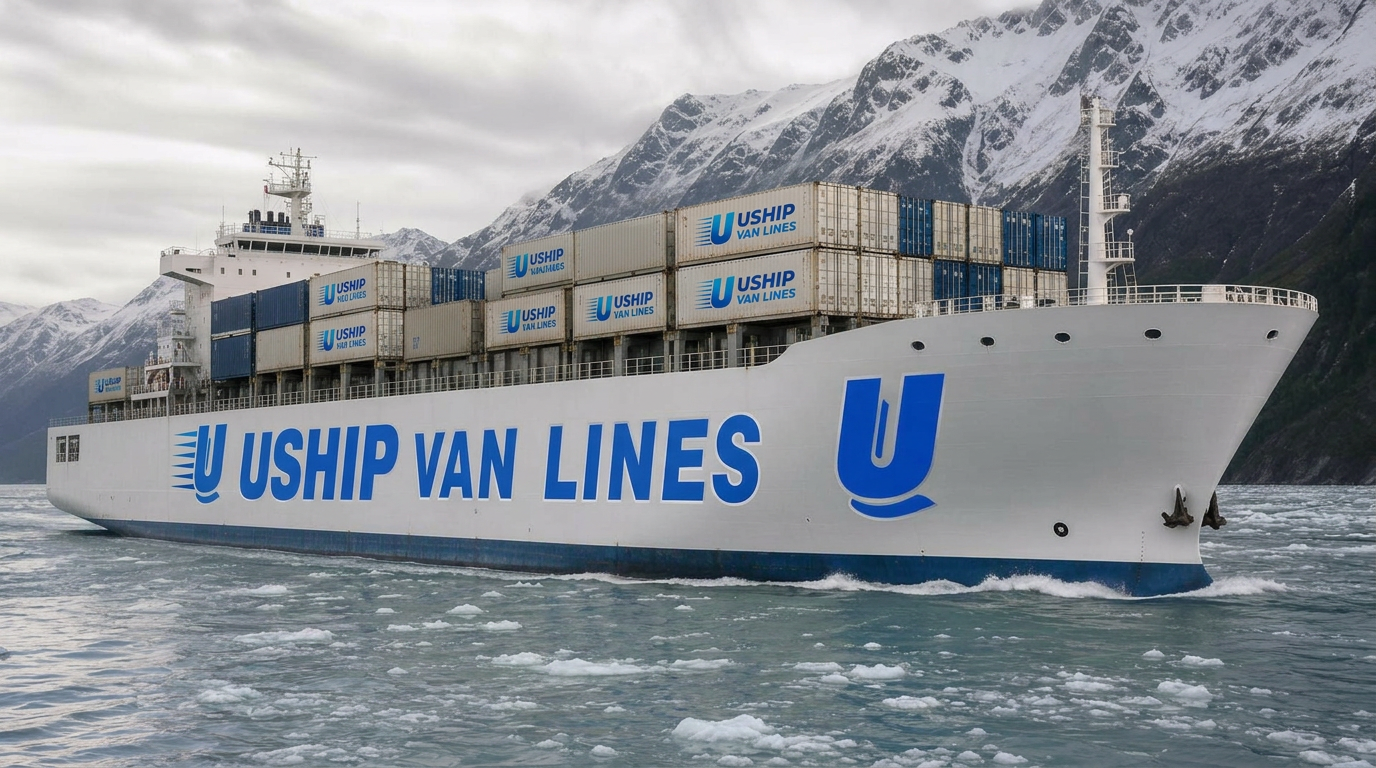
Moving from Montana to Alaska
Moving from Montana to Alaska represents one of the more straightforward continental-to-Alaska relocations, yet it still involves unique logistics that set it apart from standard long-distance moves. Your household goods will travel by truck to Tacoma, Washington, then cross the Gulf of Alaska by barge before reaching Anchorage or other Alaska ports—a journey requiring specialized expertise and careful coordination.
Best Alaska & Hawaii Movers, powered by UShip Van Lines, specializes in this exact route. We manage every step from pickup in Montana through final delivery anywhere in Alaska, whether you're settling in Anchorage, Fairbanks, the Mat-Su Valley, or even remote bush communities. Ready to plan your move north? Request your free, no-obligation quote today.
Route overview
Montana to Alaska: Route and Regional Considerations
The Montana-to-Alaska moving corridor serves families and professionals drawn to Alaska's opportunities, lifestyle, and natural beauty. Most Montana residents moving north originate from Billings, Missoula, Great Falls, Bozeman, or Helena, with trucks following I-90 and I-5 corridors west to the Tacoma consolidation hub. From there, containerized household goods board weekly or bi-weekly barge sailings operated by carriers like TOTE Maritime or Alaska Marine Lines.
Geographically, Montana and Alaska share certain cultural and environmental similarities—rugged terrain, outdoor recreation focus, and lower population density—which often makes this transition feel less jarring than moves from warmer, more urban states. That said, Alaska's infrastructure, cost of living, and winter conditions require thoughtful preparation. Understanding the barge-dependent supply chain is critical, as missed sailings or seasonal weather delays can add weeks to your timeline.
Most Montana-to-Alaska moves deliver to the Anchorage metro area (including Eagle River and Girdwood), the Mat-Su Valley (Wasilla, Palmer), Fairbanks, the Kenai Peninsula, or Southeast Alaska communities like Juneau and Ketchikan. Remote bush destinations accessible only by air or small boat require additional coordination and cost considerations.
How the moving process works
How Your Montana-to-Alaska Move Works: Step-by-Step
-
Initial survey and binding quote: Our team conducts a detailed virtual or in-home inventory assessment, factoring in cubic footage, special items (pianos, artwork, firearms), and your Alaska destination. You receive a transparent quote covering the entire door-to-door journey.
-
Truck pickup in Montana: Professional movers load your belongings into a dedicated truck or shared container at your Montana residence. Items are inventoried, wrapped, and secured for the multi-leg journey.
-
Overland transit to Tacoma, WA: Your shipment travels approximately 800–1,100 miles (depending on Montana origin) to our Tacoma consolidation facility, typically requiring 2–3 days. Goods are staged for containerization.
-
Containerization and barge loading: Your household goods are loaded into 20- or 40-foot ocean containers, palletized, and braced to withstand marine transit. Containers are positioned aboard barges bound for Alaska ports—most commonly Anchorage but also Whittier (for Kenai/Seward access) or Southeast Alaska terminals.
-
Ocean voyage across the Gulf of Alaska: The barge sails north through the Inside Passage or offshore routes, crossing approximately 1,400 nautical miles over 3–5 days depending on weather, route, and port sequence. This is the most weather-sensitive leg of your move.
-
Port discharge and customs clearance (if applicable): Upon arrival in Alaska, containers are offloaded, inspected, and cleared. While no formal customs apply for U.S. domestic moves, Alaska has strict regulations on plants, soil, firewood, and certain foodstuffs—items may be inspected or confiscated.
-
Last-mile delivery in Alaska: A final truck transports your belongings from the port to your new Alaska home. For Anchorage-area deliveries, this is typically same-day. Fairbanks, Mat-Su, Kenai, and remote destinations may require additional days and, in some cases, barge or air charters for true bush locations.
Estimated moving costs
What Does a Montana-to-Alaska Move Cost?
For a typical 2–3 bedroom household (approximately 7,000–10,000 pounds or 800–1,200 cubic feet), expect to invest $6,500–$12,000 for a full-service door-to-door move from Montana to Alaska. Smaller 1-bedroom or studio moves may range $3,500–$6,000, while larger 4+ bedroom homes with vehicles can exceed $15,000–$20,000.
Key cost drivers include:
- Volume and weight: Pricing is primarily based on cubic footage or weight. Downsizing before the move significantly reduces costs.
- Origin and destination specifics: Remote Montana pickup locations or off-road Alaska destinations add mileage and labor charges. Fairbanks deliveries cost more than Anchorage due to the additional 360-mile highway haul.
- Barge scheduling and seasonality: Peak summer months (May–August) see higher demand and potentially higher rates. Off-season moves (September–April) may offer cost savings but face weather-related delays.
- Vehicle shipping: Adding a car or truck typically costs $1,200–$2,500 per vehicle, routed via the same barge or separate auto carrier.
- Packing services: Full-service packing adds $800–$2,500 depending on home size and item fragility.
- Storage: If your Alaska residence isn't ready, Anchorage-area storage runs $150–$400/month; Tacoma storage is slightly less.
- Insurance and valuation: Basic carrier liability is minimal (60 cents/pound). Full-value protection costs 1–3% of declared shipment value but provides comprehensive coverage.
We never guarantee prices without a formal survey. Every move is unique, and factors like access restrictions, special items, and timing influence final costs. Request a detailed quote to receive accurate, binding pricing tailored to your specific situation.
Estimated transit times
Montana to Alaska Transit Time: Realistic Expectations
Door-to-door transit from Montana to Alaska typically requires 10–21 days, with most moves completing in the 14–18 day window. This timeline assumes:
- Montana pickup to Tacoma consolidation: 2–3 days for the 800–1,100 mile overland leg.
- Tacoma staging and containerization: 1–3 days. Your shipment waits for the next available barge sailing, which may depart weekly or bi-weekly depending on season and carrier.
- Barge sailing to Anchorage: 3–5 days on the water, covering roughly 1,400 nautical miles. Weather, sea state, and port call sequences affect duration.
- Alaska port discharge and clearance: 1–2 days for offloading, inspection, and last-mile dispatch.
- Final delivery in Alaska: Same-day for Anchorage metro; 1–2 additional days for Fairbanks, Mat-Su, or Kenai Peninsula; longer for remote bush destinations requiring chartered transport.
Faster options: Expedited or dedicated container service can shorten timelines to 8–12 days but increases costs by 30–50%. Slower periods: Winter weather, especially November–March, can extend transit to 21–28 days due to storms, port closures, or reduced sailing frequency.
We provide tracking updates at each leg and proactive communication if delays occur. Most Montana-to-Alaska moves align with job start dates or lease timelines when booked 4–6 weeks in advance.
Regional logistics
Alaska-Specific Logistics: What Montana Movers Need to Know
Ports and routing: Your shipment will almost certainly transit through Tacoma, WA, before sailing to Alaska. Anchorage (Port of Anchorage) is the primary destination for Southcentral Alaska moves. Whittier serves as an alternative for Kenai Peninsula and Prince William Sound destinations. Southeast Alaska (Juneau, Ketchikan, Sitka) requires different barge routing, often adding time and cost. Fairbanks and Interior deliveries offload in Anchorage, then truck north via the Parks Highway (AK-3).
Vehicle shipping: Most Montana-to-Alaska movers ship at least one vehicle. Cars and trucks travel in the same container as household goods (if space permits) or on dedicated auto carriers. Vehicles must be near-empty (under 1/4 tank fuel, no personal items except floor mats and spare tire). Expect $1,200–$2,500 per vehicle, with enclosed transport available for classics or luxury models.
Prohibited and restricted items: Alaska enforces strict biosecurity. Prohibited: soil, potted plants with soil, firewood, unprocessed wood, certain fruits/vegetables, invasive species. Restricted: firearms (must be declared, unloaded, and packed separately), ammunition (limited quantities), hazardous materials (propane, paint, aerosols), and pets (require separate travel via air). Violations can result in confiscation and fines.
Last-mile challenges: Anchorage deliveries are straightforward. Fairbanks adds a full-day drive. Remote communities like Bethel, Kodiak, Nome, or Aleutian Chain locations require additional barge legs, air freight, or seasonal ice road access—contact us early for these specialized routes. Winter deliveries anywhere outside Anchorage may require snowplowing, 4WD escort, or delayed access due to weather.
Documentation: While not an international move, keep a detailed inventory and photos of valuable items. If shipping vehicles, bring title, registration, and insurance proof. Alaska DMV registration is required within 30 days of establishing residency.
Timing paperwork: Alaska Permanent Fund Dividend (PFD) eligibility requires full-year residency by December 31; many movers time arrivals to maximize first-year qualification.
Seasonal considerations
Best Time to Move from Montana to Alaska
Summer (May–August): Peak moving season. Barge schedules are most frequent, weather is predictable, and Alaska highways are fully accessible. Expect higher demand, premium pricing, and the need to book 6–8 weeks ahead. Ideal for families moving with children (school transitions) or avoiding winter driving conditions.
Fall (September–October): Shoulder season offers moderate weather, good barge availability, and slightly lower pricing. Autumn storms can begin affecting Gulf of Alaska crossings by late October, potentially adding 1–3 days. Fairbanks and Interior Alaska see first snows, requiring winterized delivery planning.
Winter (November–March): Off-peak period with the lowest pricing—sometimes 15–25% below summer rates. However, risks include severe Gulf storms, reduced barge sailings (some carriers pause or reduce frequency), icy Montana/Alaska road conditions, and extended timelines (18–28 days not uncommon). Best for flexible schedules and budget-conscious movers willing to tolerate uncertainty. Vehicle shipments via barge continue year-round but may face delays.
Spring (April–early May): Transition season. Barge schedules ramp up, pricing remains moderate, and weather improves, though breakup (spring thaw) can complicate remote Alaska deliveries. Excellent window for cost-conscious movers wanting reliability without peak-season premiums.
Pro tip: If your employer offers relocation assistance, inquire about timing flexibility. A September move instead of July can save $1,000+ while maintaining reasonable reliability.
Why choose Best Alaska & Hawaii Movers
Why Best Alaska & Hawaii Movers for Your Montana-to-Alaska Move
-
Alaska barge expertise: We've managed hundreds of Montana-to-Alaska moves, navigating every port, seasonal condition, and last-mile challenge from Ketchikan to Barrow. Powered by UShip Van Lines, we coordinate the entire multi-modal journey with precision.
-
Transparent, binding quotes: No hidden fees, no surprise charges. You'll receive a detailed, line-item estimate covering every leg—Montana pickup, Tacoma consolidation, barge freight, and Alaska delivery. What we quote is what you pay, barring only changes you request.
-
Full-service or flexible options: Choose white-glove packing, loading, and unpacking—or save money with hybrid service where you pack and we transport. We accommodate partial loads, vehicle shipping, and storage at Tacoma or Anchorage facilities.
-
Proactive communication: You'll receive updates at each milestone—truck dispatch, Tacoma arrival, barge loading, sailing departure, Alaska port discharge, and delivery scheduling. Track your shipment online and reach a live coordinator anytime.
-
Alaska destination coverage: Whether you're moving to downtown Anchorage, a remote Mat-Su homestead, Fairbanks military housing, or a Kenai Peninsula fishing community, we deliver. For true bush locations, we coordinate charter floatplane or seasonal barge connections—services most moving companies won't touch.
-
Veteran, military, and senior discounts: Ask about available savings for service members, retirees, and senior movers.