
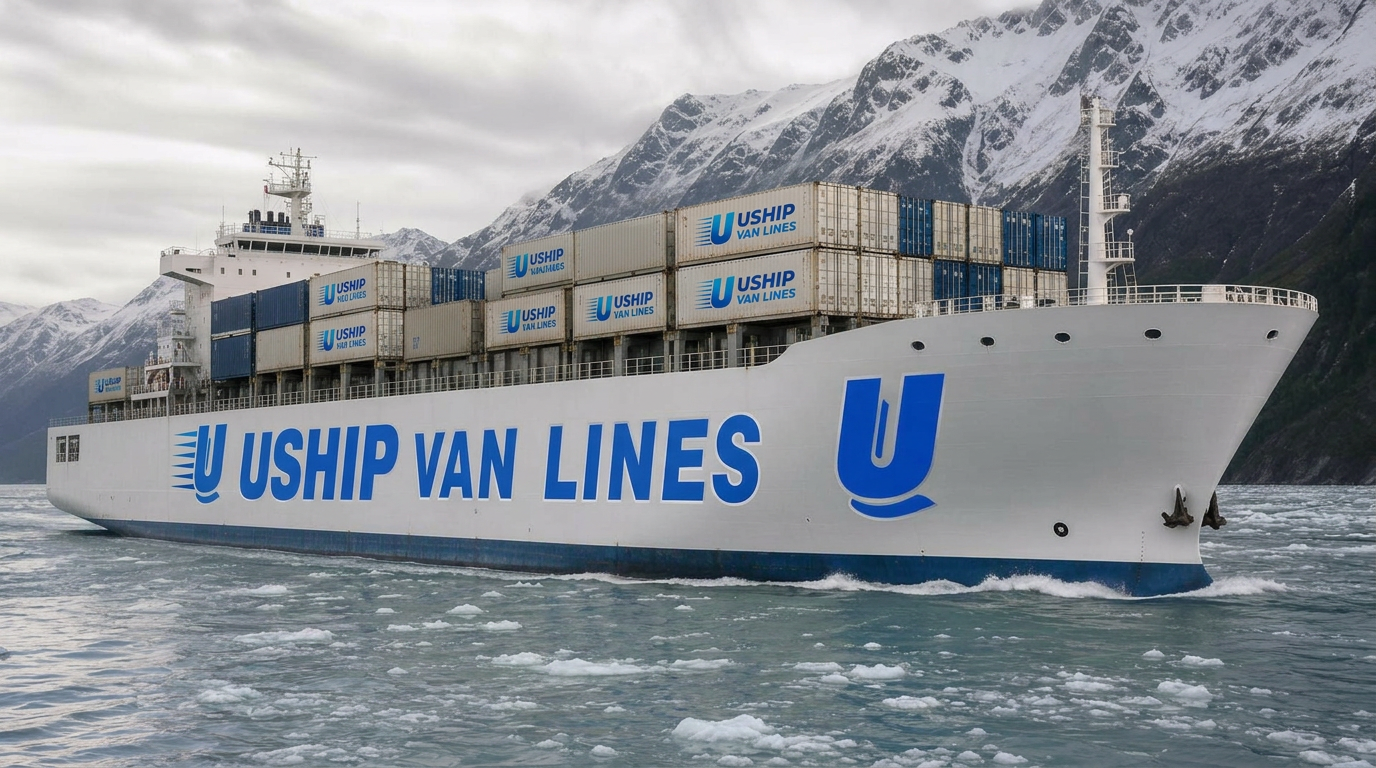
Moving from Alaska to Montana
Moving from Alaska to Montana means coordinating barge transport, cross-country trucking, and tight logistics across two states known for rugged terrain and seasonal weather. Whether you're leaving Anchorage, Fairbanks, or a Mat-Su community for Billings, Missoula, or the wide-open spaces of Big Sky Country, your belongings will travel by sea and land—requiring experienced coordination at every stage.
Best Alaska & Hawaii Movers, powered by UShip Van Lines, specializes in these complex Alaska-to-Lower 48 routes. We handle barge scheduling, port transfers, over-the-road transit, and final delivery to your Montana doorstep. Ready to start planning? Request your free, no-obligation moving quote and let's map out your move.
Route overview
Route Overview: Alaska to Montana
This move begins with containerized barge transport from Alaska to the Port of Tacoma, Washington. Your household goods are packed into a 20' or 40' container in Alaska, trucked to the Anchorage or Whittier port, then loaded onto a barge sailing to Tacoma. Once your container arrives in Washington, it's transferred to an over-the-road truck for delivery across Idaho into Montana.
The entire journey covers roughly 2,200–2,800 miles depending on your specific origin and destination. Alaska departures can originate from Anchorage, Fairbanks (requiring overland haul to the port), Mat-Su communities like Wasilla or Palmer, or Kenai Peninsula towns. Montana destinations range from urban centers like Billings, Missoula, Great Falls, and Bozeman to rural communities in the eastern plains or mountain valleys.
Coordination is critical: barge schedules run 1–2 times per week in summer, less frequently in winter. Port dwell time, customs documentation (though domestic, Alaska moves require detailed manifests), and weather delays all factor into your timeline. This isn't a direct truck route—plan for a multi-modal move that demands careful scheduling and experienced logistics management.
How the moving process works
How Your Alaska to Montana Move Works
-
Free Consultation & Survey
We assess your inventory, origin location in Alaska, and Montana destination. You'll receive a detailed quote covering barge fees, port handling, trucking, and delivery. We discuss packing needs, vehicle shipping, and any special items requiring extra care. -
Container Selection & Packing
You choose between a 20' container (fits a 1–2 bedroom home) or 40' container (3–4 bedrooms). Our team packs and loads your belongings at your Alaska residence, securing everything for the ocean voyage and overland haul. Proper containerization prevents shifting and moisture damage. -
Overland Transport to Alaska Port
If you're outside Anchorage or the Kenai Peninsula, your container is trucked to the Port of Anchorage or Whittier. Fairbanks and Interior Alaska moves require this initial ground leg, adding 1–2 days and distance-based costs. -
Barge Sailing to Tacoma
Your container sails from Alaska to the Port of Tacoma, typically a 3–5 day voyage. Barge schedules vary by season: weekly sailings in summer, bi-weekly or less in winter. We book early to lock in your preferred departure window. -
Port Transfer & Customs Clearance
At Tacoma, your container is offloaded, inspected, and transferred to our trucking partner. Though this is a domestic move, detailed manifests and documentation are required. Port dwell time is usually 1–3 days, weather and volume dependent. -
Over-the-Road Trucking to Montana
A dedicated truck hauls your container east through Washington and Idaho into Montana. Transit time is 2–4 days depending on your destination—Missoula is closer, eastern Montana towns add mileage. Drivers navigate mountain passes and weather, adjusting routes as needed. -
Final Delivery & Unloading
We coordinate delivery to your Montana address, unload your container, and place items in your home. You inspect everything, sign off, and your move is complete. We handle the empty container return, so you're free to settle in.
Estimated moving costs
What Does It Cost to Move from Alaska to Montana?
A typical 2–3 bedroom household moving from Alaska to Montana costs $8,500–$14,000 for full-service door-to-door transport. Studio or 1-bedroom moves may run $5,500–$8,000, while larger 4+ bedroom homes can exceed $16,000. These are estimates—your final cost depends on volume, services, season, and specific locations.
Key cost drivers include:
- Container size: 20' containers cost less than 40' containers. Accurate inventory assessment saves money.
- Barge fees: Vary by season and carrier. Summer peak season commands higher rates than shoulder or winter months.
- Alaska origin logistics: Fairbanks, Mat-Su, or Kenai moves require trucking to the port, adding $800–$2,000. Remote or bush locations may need additional coordination.
- Montana destination: Urban centers like Billings or Missoula are straightforward. Rural or mountain addresses may incur extra delivery fees or require smaller shuttle trucks.
- Packing services: Full-pack adds $1,200–$2,500 but ensures proper containerization and reduces damage risk. DIY packing is cheaper but riskier over this distance.
- Vehicle shipping: Cars and trucks ship separately, often via the same barge route. Budget $1,800–$3,500 per vehicle Alaska to Montana.
- Insurance and valuation: Basic carrier liability is included; full-value replacement coverage adds 1–3% of declared value.
- Storage: If your Montana home isn't ready, storage in Tacoma or Montana costs $150–$400/month for a container.
We never guarantee prices without a detailed survey. Request your free quote for a precise, binding estimate tailored to your move.
Estimated transit times
How Long Does an Alaska to Montana Move Take?
Door-to-door transit from Alaska to Montana typically takes 12–21 days, sometimes longer in winter or for remote origins/destinations. This includes packing, port transit, barge sailing, port transfer, trucking, and final delivery.
Timeline breakdown:
- Packing and Alaska port delivery: 1–3 days. Fairbanks or Interior Alaska origins add 1–2 days for overland haul to Anchorage or Whittier.
- Barge sailing Anchorage/Whittier to Tacoma: 3–5 days on the water. Frequency varies—summer sees 1–2 sailings per week, winter may be bi-weekly or monthly.
- Port dwell and transfer in Tacoma: 1–3 days for offloading, inspection, and truck loading. Holiday weeks or storm delays can extend this.
- Trucking Tacoma to Montana: 2–4 days depending on destination. Missoula or Kalispell are closer; Miles City or eastern Montana add a day.
- Final delivery and unloading: Scheduled within a 1–2 day window. We coordinate closely to meet your availability.
Winter moves (November–March) can stretch to 25+ days due to reduced barge frequency, weather delays in Alaska or Montana mountain passes, and port congestion. Summer moves (May–September) are fastest and most predictable. Always build buffer time into your Montana lease or closing date—Alaska moves rarely run early, but they're manageable with the right partner.
Regional logistics
Alaska-Specific Logistics You Need to Know
Ports and Barge Scheduling:
Most Alaska moves route through the Port of Anchorage or Whittier (Kenai Peninsula access). Fairbanks and Interior Alaska shipments truck to Anchorage first. Barge lines like TOTE Maritime and Alaska Marine Lines operate regular schedules to Tacoma, but frequency drops in winter. We book your container slot early and track sailing dates closely.
Containerization:
Your belongings load into a steel ocean container (20' or 40'), sealed and secured for barge and truck transit. Proper packing—padding, securing tall items, moisture barriers—is essential. Containers face temperature swings and sea motion. We use professional packing techniques to prevent damage.
Vehicle Shipping:
Cars and trucks often ship on the same barge route in a separate roll-on/roll-off (RoRo) section or in a container alongside your goods. Vehicles must be clean (Alaska agriculture inspection), under 1/4 tank fuel, and free of personal items except floor mats and a spare tire. We coordinate vehicle and household goods delivery to arrive together when possible.
Remote Alaska Origins:
Mat-Su communities (Wasilla, Palmer, Big Lake) and Kenai Peninsula towns (Soldotna, Homer, Seward) are accessible by road. Bush locations or off-road-system communities require air freight or seasonal barge to a hub, then containerization—significantly more complex and costly. We assess feasibility during consultation.
Documentation:
While domestic, Alaska moves require detailed inventory manifests, customs-style paperwork, and sometimes USDA agriculture declarations (no soil, certain plants). We handle all documentation, ensuring smooth port transfers.
Last-Mile Delivery in Montana:
Montana's rural roads, gravel driveways, and mountain access can require shuttle trucks or 4WD delivery vehicles. If your address is up a narrow forest road or across a seasonal bridge, flag this early. We arrange appropriate equipment and confirm access before dispatch.
Storage Options:
If timing doesn't align, we can store your container in Tacoma or a Montana facility. This is common when Montana home closings delay or you need flexibility. Monthly storage fees apply, but it's often cheaper than rushing a move and paying overlap rent.
Seasonal considerations
Seasonal Factors: Timing Your Alaska to Montana Move
Summer (May–September):
Peak moving season with the most frequent barge sailings, warmest weather, and easiest logistics. Costs are highest due to demand, but transit times are most predictable. Montana's mountain passes are clear, and delivery is straightforward. Book 6–8 weeks ahead to secure your preferred dates. Ideal for families moving with school-age children.
Fall (October–November):
Shoulder season with moderate costs and decent barge frequency. Early snow can begin in Alaska and Montana by late October. Barge schedules start thinning in November. Good compromise between cost and reliability—book 4–6 weeks out.
Winter (December–March):
Lowest costs but highest complexity. Barge sailings may run bi-weekly or monthly, and weather delays are common. Alaska ports face ice, storms, and reduced operations. Montana mountain passes (I-90 through Lookout Pass, US-93 over Lolo Pass) can close or require chain restrictions, delaying final delivery. Best for flexible timelines and off-season savings. Book 8–10 weeks ahead due to limited capacity.
Spring (April–early May):
Transition season as barge schedules ramp up and weather improves. Breakup season in Alaska (muddy roads, unstable ground) can complicate origin pickups in rural areas. Montana sees spring storms and occasional pass closures. Costs begin rising as summer approaches. Book 5–7 weeks out.
Weather wildcards:
Alaska storms, Tacoma port congestion, and Montana blizzards can delay any leg of your move. Always pad your timeline and avoid hard deadlines if possible. We monitor conditions and keep you updated throughout.
Why choose Best Alaska & Hawaii Movers
Why Choose Best Alaska & Hawaii Movers for Your Alaska to Montana Move
- Alaska Specialists: We handle the unique logistics of Alaska moves daily—barge scheduling, port coordination, remote origins, and weather contingencies. This isn't a side service; it's our core expertise.
- Powered by UShip Van Lines: Our partnership with UShip Van Lines gives you access to a vetted nationwide carrier network, transparent pricing, and reliable over-the-road transport from Tacoma to Montana.
- Single-Point Coordination: One team manages your entire multi-modal move—Alaska pickup, barge booking, port transfer, trucking, and Montana delivery. No handoffs, no confusion, just clear communication.
- Transparent Pricing & No Hidden Fees: We provide detailed, written quotes covering every leg of your move. You'll know what you're paying for and why—no surprise charges at delivery.
- Flexible Service Levels: Choose full-service packing and white-glove delivery, or cost-saving DIY packing with professional loading. We tailor services to your budget and needs, and we're upfront about trade-offs.
- Real-Time Tracking & Updates: From the moment your container loads in Alaska until it's unloaded in Montana, we keep you informed. You'll know when your barge sails, when it docks, and when your truck departs for Montana.