
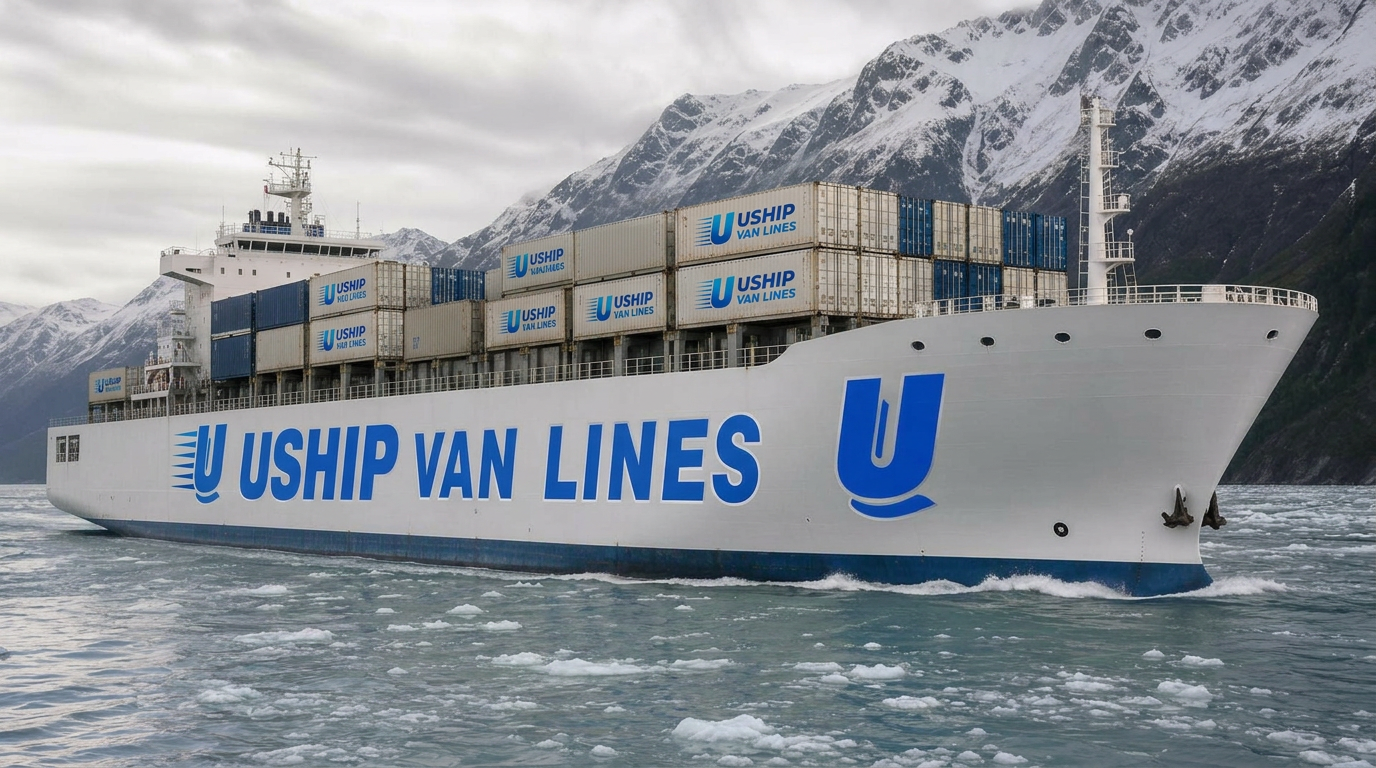
Moving from Oregon to Alaska
Moving from Oregon to Alaska is more than just a change of address—it's a transition to a fundamentally different way of life. Whether you're relocating to Anchorage for work, retiring to the Mat-Su Valley, or starting fresh in Fairbanks, this move requires specialized logistics that standard moving companies simply don't handle. From barge shipping through Tacoma to last-mile delivery across Alaska's challenging terrain, every detail matters.
Best Alaska & Hawaii Movers, powered by UShip Van Lines, specializes exclusively in these non-contiguous routes. We coordinate your household goods from pickup anywhere in Oregon through the Port of Tacoma barge terminal, across the Gulf of Alaska, and to your final destination—whether that's urban Anchorage or a remote bush community. Ready to start planning your Alaska adventure? Request a free, no-obligation quote today.
Route overview
Understanding the Oregon to Alaska Moving Route
Your belongings travel approximately 1,500–2,200 miles depending on your exact Oregon origin and Alaska destination. The journey begins with ground transportation from your Oregon home to the Port of Tacoma consolidation facility in Washington. From there, your shipment joins a weekly barge sailing to the Port of Anchorage—a voyage covering roughly 1,400 nautical miles through the Inside Passage and across the Gulf of Alaska.
Once your container arrives at the Port of Anchorage, the final leg depends entirely on your destination. Anchorage and Mat-Su Valley deliveries happen within days. Fairbanks requires an additional 360-mile truck haul up the Parks Highway. Kenai Peninsula locations involve the Seward Highway route, while bush communities may require air freight, winter ice road delivery, or seasonal barge connections. This complex coordination is why choosing a carrier with deep Alaska experience matters.
Oregon residents benefit from relatively straightforward access to Tacoma—typically a one- or two-day truck run from Portland, Eugene, Bend, or Medford. This proximity gives you more scheduling flexibility than movers from the East Coast or Deep South, though you'll still need to coordinate carefully around barge sailing schedules and Alaska's seasonal weather patterns.
How the moving process works
How Your Oregon to Alaska Move Works: Step by Step
-
Free Consultation and Quote — Contact Best Alaska & Hawaii Movers for a detailed estimate. We'll assess your inventory, discuss your Oregon pickup location, confirm your Alaska destination (including any off-road-system challenges), and provide a transparent cost breakdown covering pickup, barge shipping, and final delivery.
-
Schedule Your Pickup and Barge Sailing — Barges to Alaska sail weekly from Tacoma, but space fills quickly during peak season (May–September). We coordinate your Oregon pickup to arrive at the Tacoma consolidation terminal 2–5 days before your scheduled sailing, allowing time for containerization and port processing.
-
Professional Packing and Loading in Oregon — Our crew arrives at your Oregon home to pack (if you've selected full-service packing), inventory, and load your belongings. Everything is documented with condition notes and photos. Fragile items receive special attention; electronics and valuables may need climate-controlled handling given the marine voyage ahead.
-
Overland Transport to Tacoma — Your shipment travels by truck to our Tacoma consolidation facility, typically arriving within 24–48 hours from anywhere in Oregon. Here, your goods are transferred into a 20-foot or 40-foot ocean container, secured with professional blocking and bracing for the marine crossing.
-
Barge Crossing to Anchorage — The ocean voyage takes 5–7 days depending on weather and sea conditions. Your container rides aboard Alaska Marine Lines or similar carriers specializing in Pacific Northwest-to-Alaska freight. While the barge crossing is generally smooth, proper container loading prevents shifting in rougher Gulf waters.
-
Port Processing and Alaska Customs Clearance — Upon arrival at the Port of Anchorage, containers are offloaded and processed through port operations. Though Alaska is part of the United States, some agricultural inspections may apply. Processing typically takes 1–3 days.
-
Final Delivery to Your Alaska Home — If you're in Anchorage or the Mat-Su Valley, delivery happens within 2–4 days of port arrival. Fairbanks adds another 1–2 days for the highway haul. Remote locations require advance coordination for seasonal access, local barge connections, or air freight. Our team confirms delivery windows once your container clears the port.
-
Unpacking and Inspection — Upon delivery, inspect all items against your original inventory. Document any damage immediately for insurance claims. Many customers opt for unpacking services, especially valuable after a long move—we can arrange professional unpacking in most Alaska communities.
Estimated moving costs
What Does It Cost to Move from Oregon to Alaska?
A typical 2–3 bedroom household moving from Oregon to Alaska generally costs $6,500–$12,000 for door-to-door service. Studio or 1-bedroom moves may run $4,000–$6,500, while large 4+ bedroom homes can exceed $15,000. These figures include Oregon pickup, transport to Tacoma, barge shipping, port fees, and delivery within the Anchorage area or along the road system.
Major cost drivers include:
- Volume and weight — Barge pricing is based on cubic footage or container size. A 20-foot container holds roughly 1,000–1,200 cubic feet; a 40-foot container accommodates larger homes. Fuel surcharges and weight limits also apply.
- Packing services — Self-packing saves $800–$2,000. Professional full-service packing for fragile items, kitchens, and specialty goods adds cost but reduces damage risk on a complex route involving both road and sea transport.
- Final destination — Anchorage and Mat-Su Valley deliveries are most economical. Fairbanks adds $800–$1,500 for the Parks Highway haul. Kenai Peninsula, Kodiak Island, and Southeast Alaska communities add barge or ferry connections. Bush villages require air freight or seasonal ice road delivery, sometimes doubling costs.
- Vehicle shipping — If you're shipping a car or truck, expect $1,400–$2,200 Tacoma-to-Anchorage via roll-on/roll-off barge. Vehicles travel separately from household goods and have their own sailing schedules.
- Season — Peak summer months (May–August) see higher demand and pricing. Winter moves offer better rates but face weather delays and limited access to some communities.
- Storage — If your Alaska housing isn't ready when your shipment arrives, Anchorage storage costs $150–$400 per month depending on volume.
- Insurance — Basic liability coverage is included, but full-value replacement insurance (recommended for Alaska's multi-leg journey) adds 1–3% of declared value.
We never guarantee final pricing without a detailed inventory. Every move is unique. Request a personalized quote to understand your specific costs and options.
Estimated transit times
How Long Does the Oregon to Alaska Move Take?
Door-to-door transit from Oregon to an Alaska destination typically takes 10–21 days, broken down as follows:
- Oregon pickup to Tacoma consolidation: 1–2 days for ground transport from Portland, Eugene, Salem, or Medford. Southern and eastern Oregon locations may add another day.
- Tacoma staging and containerization: 2–5 days to consolidate your shipment with other Alaska-bound freight, load and secure the container, and complete port documentation.
- Barge sailing Tacoma to Anchorage: 5–7 days on the water, depending on weather, sea state, and the vessel's port-of-call schedule. Winter sailings occasionally face delays from Gulf storms.
- Port processing in Anchorage: 1–3 days for offloading, customs/agriculture clearance, and warehouse transfer.
- Final delivery: Anchorage and Mat-Su Valley deliveries occur 1–3 days after port clearance. Fairbanks requires an additional 1–2 days for the 360-mile highway run. Kenai Peninsula and other road-accessible communities add 1–2 days. Remote or off-road-system locations depend on seasonal barge schedules, air freight availability, or winter ice road conditions—potentially adding weeks.
Peak season (May–September) can extend timelines due to high barge demand and port congestion. Winter moves (October–April) offer faster port processing but face weather delays and limited access to some regions. For time-sensitive moves, we recommend booking 4–6 weeks in advance and building buffer time into your Alaska arrival plans.
Regional logistics
Alaska-Specific Logistics You Need to Know
Barge Ports and Terminals: Your shipment consolidates at the Port of Tacoma and sails to the Port of Anchorage (ANC), Alaska's primary freight hub. From there, goods distribute across the state. Tacoma is the most efficient gateway for Oregon movers—closer and more cost-effective than Seattle or other West Coast ports.
Containerization and Marine Transit: Your household goods are loaded into steel ocean containers (20-foot or 40-foot) and secured with blocking, bracing, and strapping to withstand ocean movement. Unlike truck-only moves, marine shipments require extra care for fragile items. Professional packing is strongly recommended for dishes, glassware, artwork, and electronics.
Vehicle Shipping: Cars and trucks ship separately via roll-on/roll-off (RoRo) barge service. Vehicles must be in running condition, with less than a quarter tank of fuel, and empty of personal belongings. Shipping costs run $1,400–$2,200 Tacoma-to-Anchorage. Expect 7–14 days port-to-port, plus processing time on each end. We coordinate household and vehicle shipments to align arrival windows when possible.
Alaska Agricultural and Customs Rules: Alaska enforces strict rules on soil, plants, and certain seeds to protect its fragile ecosystems. Potted plants are generally prohibited. Firewood cannot enter Alaska. Most household goods clear without issue, but be prepared for agricultural inspections at the Port of Anchorage.
Last-Mile Delivery Challenges: Alaska's road system is limited. Anchorage, Fairbanks, Mat-Su Valley, Kenai Peninsula, and a few smaller communities are accessible by truck year-round. Southeast Alaska (Juneau, Ketchikan, Sitka) requires additional barge or ferry connections from Anchorage. Bush communities—from Bethel to Kotzebue to Utqiaġvik—are off the road system entirely, accessible only by air or seasonal barge/ice road. If you're moving to a remote location, we'll coordinate air freight or seasonal delivery well in advance.
Storage Options: If your Alaska home isn't ready when your shipment arrives, we offer short-term and long-term storage in Anchorage. Climate-controlled units are available for sensitive items. Storage is particularly useful for winter moves when rural access is delayed until ice roads open.
Documentation: You'll need a detailed inventory for barge paperwork and insurance. We handle most documentation, but you should keep copies of your bill of lading, inventory list, and insurance policy. Alaska residency documentation (like a new driver's license) isn't required for your move but helps establish services once you arrive.
Seasonal considerations
Seasonal Timing: When to Schedule Your Oregon to Alaska Move
Spring (April–May): Breakup season in Alaska brings mud, road closures, and unpredictable access to rural areas. Barge schedules ramp up after winter, but expect occasional sailing delays. This is a transitional period—good pricing, but plan for weather flexibility.
Summer (June–August): Peak moving season. Barge space fills quickly, and pricing is at its highest. However, you get the most reliable weather, best road conditions, and easiest access to remote communities. If you have school-age children or need to start an Alaska job by a fixed date, summer is your safest bet despite the cost premium. Book 6–8 weeks ahead.
Fall (September–October): Excellent shoulder season. Demand drops after Labor Day, offering better pricing and more flexible scheduling. Weather is still reasonable in September, though October brings freezing temperatures and the first snow. Some bush communities lose barge access after early October, shifting to air freight only.
Winter (November–March): Lowest pricing and fastest port processing, but the most logistically challenging. Gulf of Alaska storms can delay barge sailings by days. Some Alaska communities are accessible only by air or winter ice roads (which don't open until river freeze-up, often December or January). If you have flexibility and are moving to Anchorage or Fairbanks, winter can offer significant savings. Remote moves require expert coordination.
Pro tip: Barge schedules are published months in advance. Coordinate your Oregon lease end date, Alaska housing start date, and sailing schedule early. Last-minute summer bookings are nearly impossible.
Why choose Best Alaska & Hawaii Movers
Why Choose Best Alaska & Hawaii Movers for Your Oregon to Alaska Move
-
Exclusive Alaska & Hawaii Focus — We don't dabble in these routes; we specialize in them. Every shipment we handle involves barge coordination, port logistics, and non-contiguous delivery. Our team knows Tacoma sailing schedules, Port of Anchorage operations, and Alaska last-mile challenges because it's all we do.
-
End-to-End Coordination — From your Oregon front door to your Alaska homestead, we manage every step: packing, loading, Tacoma consolidation, barge booking, port clearance, and final delivery. You get a single point of contact and transparent tracking, not a handoff between multiple carriers.
-
Transparent, Honest Pricing — We provide detailed quotes with no hidden fees. You'll see line items for pickup, barge shipping, port charges, and delivery. We explain seasonal pricing, fuel surcharges, and optional services like packing and storage upfront—no surprises on moving day.
-
Alaska Expertise That Matters — We know the difference between delivering to downtown Anchorage and a fly-in village on the Yukon River. We understand winter ice road schedules, breakup season road closures, and Southeast Alaska's marine highway system. That expertise prevents costly mistakes and delays.
-
Powered by UShip Van Lines — Our operational backbone connects you to a nationwide carrier network for Oregon pickup, while our Alaska partnerships ensure reliable last-mile delivery across the state. You get big-network reliability with small-company service and attention to detail.