
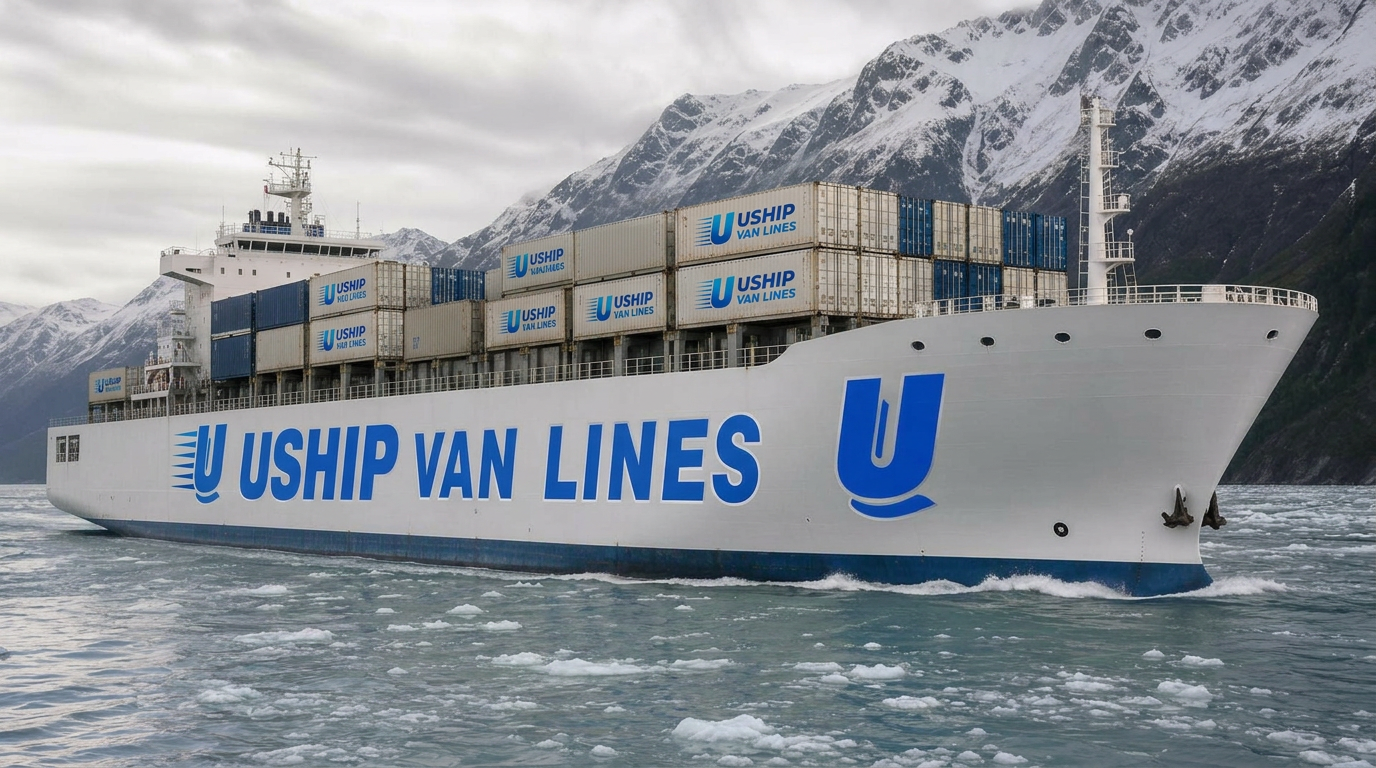
Moving from Washington to Alaska
Moving from Washington to Alaska combines the familiarity of the Pacific Northwest with the unique challenges of reaching America's Last Frontier. Whether you're relocating from Seattle to Anchorage for work, moving your family to the Mat-Su Valley, or heading to Fairbanks for a new adventure, this move requires specialized Alaska logistics that standard moving companies simply can't handle.
Best Alaska & Hawaii Movers (powered by UShip Van Lines) coordinates every aspect of your Washington-to-Alaska relocation—from packing your home in the lower 48 to barge transport via Tacoma, final delivery across Alaska's highways, and even last-mile service to remote communities. Ready to start planning your northbound journey? Request a free, customized quote today.
Route overview
The Washington to Alaska Moving Route
Your household goods begin their journey in Washington—whether that's Seattle, Spokane, Tacoma, Bellingham, or Vancouver—and travel to the Port of Tacoma, the primary departure point for Alaska-bound freight. Most major carriers consolidate shipments here before loading containerized cargo onto northbound barges operated by Totem Ocean Trailer Express (TOTE) or Alaska Marine Lines.
Once at sea, your belongings sail approximately 1,400 nautical miles through the Inside Passage, typically arriving at the Port of Anchorage 5–7 days later. From Anchorage, ground transportation delivers your shipment to final destinations including Fairbanks (358 miles north), the Matanuska-Susitna Borough, the Kenai Peninsula, or even bush communities accessible by seasonal ice roads or air freight.
This route is the most efficient connection between the contiguous United States and Alaska, benefiting from frequent sailing schedules, competitive pricing due to high shipping volume, and excellent infrastructure on both ends. Washington residents often enjoy faster transit times and lower costs compared to moves originating from other states.
How the moving process works
How Your Washington to Alaska Move Works
-
Free Virtual or In-Home Survey: Our team assesses your inventory via video call or on-site visit throughout Washington, providing a detailed weight estimate and identifying items requiring special handling (firearms, ammunition, hazardous materials are prohibited on barges).
-
Customized Move Plan & Booking: We design your move timeline around Alaska Marine Highway sailing schedules, your preferred delivery window, and seasonal considerations. You'll receive transparent pricing with no hidden fees, and we'll reserve your space on the next available barge.
-
Professional Packing & Loading in Washington: Our crew arrives at your Washington home to pack, wrap, and load your belongings into a dedicated container or shared truck space. All items are inventoried and labeled for easy identification at destination.
-
Ground Transport to Port of Tacoma: Your shipment travels by truck to the Port of Tacoma, where it's staged for barge loading. Containers are secured and sealed, then loaded onto the next northbound sailing—typically 2–4 sailings per week during peak season.
-
Barge Transit to Port of Anchorage: Your household goods sail through the Inside Passage, enjoying protected waters and reliable year-round service. Transit time averages 5–7 days, weather permitting.
-
Customs Clearance & Port Processing: While Alaska is a U.S. state (no international customs), port processing includes offloading, container inspection, and coordination with ground carriers. This typically adds 1–2 business days.
-
Final Delivery Across Alaska: Your shipment travels by truck along the Alaska Highway system to Anchorage, Fairbanks, Wasilla, Soldotna, or other road-accessible communities. For remote destinations, we coordinate bush plane or seasonal transport as needed.
-
Unpacking & Placement: Our Alaska-based partners deliver and unpack your belongings, placing furniture and boxes in your designated rooms. We remove packing materials and conduct a final walkthrough to ensure your satisfaction.
Estimated moving costs
What Does a Washington to Alaska Move Cost?
A typical 2–3 bedroom household move from Washington to Alaska ranges from $4,800 to $9,500, depending on volume, services, and final destination. Smaller 1-bedroom apartments or studio moves may cost $2,800–$4,200, while larger 4+ bedroom homes can exceed $12,000.
Key cost drivers include:
- Shipment weight and volume: Charges are typically calculated per pound or per cubic foot. A 3-bedroom home averages 8,000–12,000 pounds.
- Distance from Port of Anchorage: Deliveries to Anchorage proper are least expensive. Fairbanks, Kenai, or Mat-Su Valley destinations add $800–$2,000 in ground transport. Remote bush communities require custom quotes.
- Packing services: Full-service packing adds $800–$2,500 depending on home size and specialty items (china, artwork, antiques).
- Seasonal timing: Summer moves (May–September) cost 15–25% more due to peak demand and Alaska's construction/tourism season.
- Vehicle shipping: Adding a car or truck to your barge shipment costs $1,200–$2,400 each, significantly less than driving the Alaska Highway independently.
- Storage: If your Alaska housing isn't ready, climate-controlled storage in Anchorage runs $150–$400 per month.
- Insurance coverage: Full-value protection (replacement cost) adds 1.5–3% of declared shipment value but provides essential peace of mind.
Best Alaska & Hawaii Movers provides itemized quotes with transparent pricing—no surprise fees, no bait-and-switch tactics. We never claim guaranteed prices until we've assessed your specific inventory and delivery requirements.
Estimated transit times
How Long Does a Washington to Alaska Move Take?
Door-to-door delivery from Washington to Alaska typically requires 10–21 days, broken down as follows:
- Packing and loading in Washington: 1–2 days depending on home size
- Ground transport to Port of Tacoma: Same day to 1 day (most Washington cities are within 200 miles)
- Port staging and barge loading: 1–4 days (varies by sailing schedule)
- Barge transit to Anchorage: 5–7 days on the water
- Port offloading and processing: 1–2 business days
- Final delivery in Alaska: Same day (Anchorage) to 3 days (Fairbanks, Kenai Peninsula, remote areas)
Expedited options are available during peak season (May–September) when TOTE and Alaska Marine Lines run 3–4 sailings per week. Off-season moves (October–April) may require additional wait time for barge consolidation, extending total transit to 3–4 weeks.
Vehicle shipping follows the same timeline if sent via TOTE Fast Ferry, or you can drive the Alaska Highway independently in 4–6 days (road conditions permitting). Many families choose to fly to Alaska while their belongings travel by sea, then rent a vehicle or stay with friends until delivery day.
Regional logistics
Alaska-Specific Moving Logistics from Washington
Port operations: The Port of Tacoma serves as the primary gateway for Alaska-bound freight, with dedicated terminals for TOTE and Alaska Marine Lines. Your shipment is containerized (20-foot or 40-foot containers) or loaded as break-bulk freight, then secured for the multi-day sea voyage. The Port of Anchorage receives 95% of Alaska-bound household goods, offering modern offloading facilities and direct highway access.
Vehicle shipping: You can add cars, trucks, motorcycles, or RVs to your barge shipment for $1,200–$2,400 per vehicle—far cheaper than driving the 2,250-mile Alaska Highway from Seattle (which costs $600–$1,000 in fuel alone, plus wear and tear). Vehicles must be empty of personal belongings, have less than ¼ tank of fuel, and pass inspection. Allow the same 5–7 day ocean transit time.
Prohibited items: Alaska-bound barges prohibit hazardous materials (paint, propane, gasoline, ammunition, cleaning chemicals), perishable foods, and certain plants/seeds due to invasive species concerns. Firearms are allowed if properly declared and packed per ATF regulations. Prescription medications, important documents, and valuables should travel with you personally.
Military and government moves: Active duty service members relocating to Joint Base Elmendorf-Richardson (JBER), Fort Wainwright, or Coast Guard stations qualify for government-contracted moves. We coordinate with USTRANSCOM and military housing offices to ensure compliance with Defense Personal Property System (DPS) requirements.
Remote and bush deliveries: Communities off the road system (Bethel, Nome, Kotzebue, Dillingham, Kodiak Island) require additional coordination via bush plane, winter ice roads, or seasonal barge service. These moves require custom quotes and extended timelines (4–8 weeks) depending on destination accessibility.
Temporary storage: If your Alaska housing isn't ready (common for renters waiting on lease start dates or buyers in escrow), we offer climate-controlled storage in Anchorage at competitive monthly rates. Storage facilities are secure, modern, and equipped to handle Alaska's temperature extremes.
Last-mile delivery: Alaska's highways are well-maintained year-round between major cities, but winter driving requires specialized equipment (studded tires, engine block heaters) and experienced drivers. Our Alaska-based partners know the George Parks Highway to Fairbanks, the Seward Highway to the Kenai Peninsula, and the Glenn Highway to the Mat-Su Valley inside and out.
Seasonal considerations
Best Times to Move from Washington to Alaska
Summer (May–September): Peak moving season coincides with Alaska's mild weather, extended daylight, and ice-free roads. Barge schedules are most frequent (3–4 sailings weekly), and ground transport is fastest and most reliable. However, expect premium pricing (15–25% higher) and book 6–8 weeks in advance to secure your preferred dates. Ideal for families with school-age children timing moves around the academic calendar.
Fall (October–November): Shoulder season offers moderate pricing and good availability. Weather remains relatively stable through October, though snow can arrive in Fairbanks and interior Alaska by mid-month. Barge frequency decreases to 2–3 sailings per week. An excellent choice for budget-conscious movers willing to accept slightly longer transit windows.
Winter (December–March): Off-peak season delivers the lowest rates (20–30% below summer) and maximum scheduling flexibility. However, Alaska winter conditions create challenges: extreme cold complicates loading/unloading, ice roads may be required for remote deliveries, and daylight is severely limited (Fairbanks sees less than 4 hours in December). Barge schedules run 1–2 times weekly. Best for experienced Alaska residents or those moving to Anchorage's urban core.
Spring (April): Transition month when winter rates begin climbing toward summer peaks. Snowmelt creates muddy conditions on unpaved roads, and "breakup" season can delay bush deliveries. Barge frequency increases to 2–3 weekly sailings. Good value if you can accept variable weather conditions and flexible delivery windows.
Pro tip: Book winter moves in November or February (avoiding holidays) for maximum savings. Summer moves should be reserved by March or April to guarantee space during peak migration season.
Why choose Best Alaska & Hawaii Movers
Why Choose Best Alaska & Hawaii Movers for Your Washington to Alaska Relocation
-
Alaska specialists, not generalists: We exclusively handle Alaska and Hawaii moves, giving us deep expertise in barge logistics, port operations, and last-mile delivery across Alaska's unique geography—expertise that national van lines simply don't possess.
-
Transparent, all-inclusive pricing: Our quotes include packing materials, loading, barge transport, port fees, and Alaska delivery. No hidden fuel surcharges, no surprise port charges, no bait-and-switch tactics. You'll know your total cost upfront.
-
Direct barge partnerships: Our relationships with TOTE and Alaska Marine Lines ensure priority booking, competitive freight rates, and real-time shipment tracking. We're not brokers reselling space at markup—we're logistics partners moving volume.
-
Coordinated vehicle shipping: Add your car, truck, or motorcycle to the same barge as your household goods, with synchronized delivery timelines. One point of contact, one bill, zero hassle.
-
Powered by UShip Van Lines infrastructure: We combine Alaska specialization with UShip Van Lines' nationwide network, technology platform, and customer service resources. You get boutique expertise backed by enterprise-grade reliability.
-
Real Alaska experience: Our partners live and work in Anchorage, Fairbanks, and the Mat-Su Valley. They understand permafrost foundations, wildlife encounters during delivery, and the reality of -40°F winter moves. This isn't theoretical—it's our daily business.