
Moving from California to Alaska
Moving from California to Alaska represents one of the most dramatic relocations in North America—leaving the Pacific coast for the Last Frontier. Whether you're headed to Anchorage for career opportunities, Fairbanks for academic pursuits, the Mat-Su Valley for homesteading, or smaller communities across Alaska, this move requires specialized logistics that few moving companies handle well.
Best Alaska & Hawaii Movers, powered by UShip Van Lines, operates the only dedicated California-to-Alaska barge route with weekly sailings from Tacoma. We coordinate pickup anywhere in California, overland transport to our Tacoma consolidation hub, ocean barge to the Port of Anchorage, and final delivery to your Alaska destination—all under one contract. Ready to plan your northbound move? Request your free quote today.
Route overview
The California to Alaska Moving Route
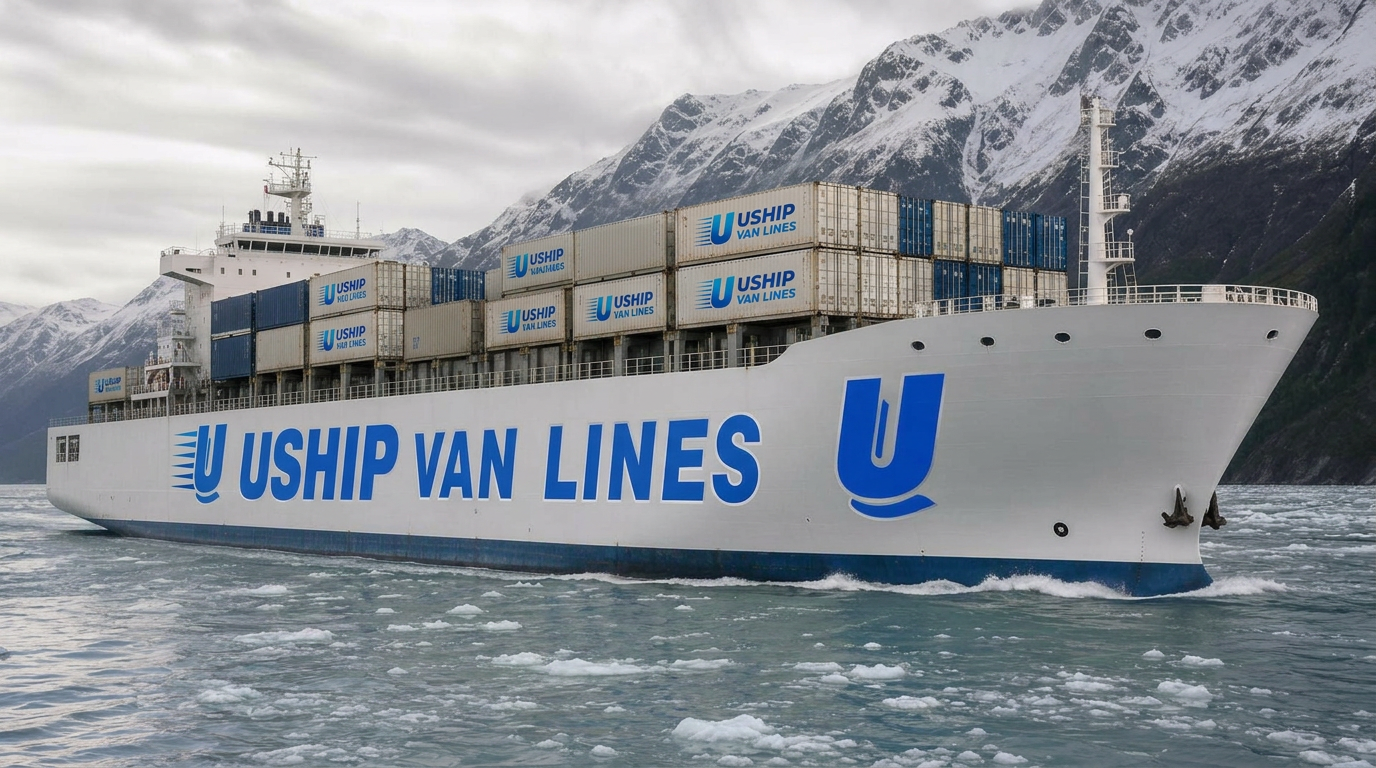
The California-to-Alaska corridor serves thousands of relocating families, military personnel, and remote workers each year. Your household goods travel by truck from anywhere in California—Los Angeles, San Diego, San Francisco, Sacramento, or smaller cities—up Interstate 5 to our Tacoma, Washington consolidation facility. From there, containers are loaded onto barge vessels sailing to the Port of Anchorage, a journey of approximately 1,800 nautical miles through the Inside Passage.
Upon arrival in Anchorage, cargo clears customs and port authority inspection before final delivery. If you're moving to Anchorage or the Mat-Su Valley (Wasilla, Palmer), delivery happens within days. Fairbanks destinations add 360 miles of overland transport on the Parks Highway. Kenai Peninsula, Homer, Soldotna, and Seward routes require additional ferry or highway legs. Remote bush communities—Bethel, Nome, Kotzebue, Dutch Harbor—involve connecting air freight or seasonal barge service, which we coordinate as needed.
This route operates year-round, but seasonal variations significantly affect scheduling. Summer months (May–September) see the highest demand and most frequent sailings. Winter moves (October–April) face reduced barge frequency, weather delays, and higher costs due to ice management and limited daylight hours for port operations.
How the moving process works
How Your California-to-Alaska Move Works
1. Free In-Home or Virtual Survey
We assess your inventory via video walkthrough or in-person visit (available in major California metro areas). You'll receive a detailed estimate based on cubic footage, special items (pianos, gun safes, ATVs), and your exact Alaska destination.
2. Packing and California Pickup
Our crew arrives at your California residence with Alaska-rated packing materials—extra-strength boxes, moisture-barrier wrapping, and padding designed for marine transport. We load a dedicated truck for the 800–1,200 mile drive to Tacoma, typically taking 1–2 days depending on your California origin point.
3. Tacoma Consolidation and Containerization
At our Tacoma facility, your goods are loaded into weatherproof ocean containers. We consolidate multiple households into 20-foot or 40-foot containers to optimize barge space and reduce per-customer costs. Your shipment is sealed, labeled, and staged for the next available sailing.
4. Barge Transit to Anchorage
Containers sail from Tacoma to the Port of Anchorage aboard commercial barge vessels. The 1,800-mile journey takes 5–7 days in summer, 7–10 days in winter when vessels navigate ice floes and slower sea conditions.
5. Port Clearance and Inspection
Upon arrival, U.S. Customs and Border Protection may inspect containers (rare for domestic moves, but Alaska is treated as semi-international due to Canadian airspace/waters). Port fees are assessed per cubic foot and included in your quote.
6. Last-Mile Delivery Across Alaska
We coordinate final delivery by truck to Anchorage-area addresses, long-haul to Fairbanks, or connections to Kenai Peninsula and beyond. Our Alaska-based delivery teams understand winter road conditions, remote access challenges, and community-specific logistics.
7. Unpacking and Setup (Optional)
Full-service customers receive unpacking assistance, furniture reassembly, and debris removal. We ensure your California possessions are road-ready for Alaska living—checking for moisture damage, verifying inventory, and addressing any transit issues before final sign-off.
Estimated moving costs
What Does It Cost to Move from California to Alaska?
A typical 2-bedroom household (approximately 400–600 cubic feet) moving from California to Anchorage costs $6,500–$9,800 for full-service door-to-door transport. A 3-bedroom home (800–1,200 cubic feet) ranges $11,000–$16,500. Larger homes, executive moves, or specialty cargo can exceed $20,000.
Key cost drivers include:
- Origin location in California: Northern California (Sacramento, Bay Area) costs $500–$1,200 less than Southern California (Los Angeles, San Diego) due to shorter Tacoma haul.
- Final Alaska destination: Anchorage and Mat-Su are baseline. Fairbanks adds $1,800–$2,500. Kenai Peninsula adds $1,200–$2,000. Remote bush communities require custom quotes due to air freight or seasonal barge connections.
- Shipment volume: Charged per cubic foot of container space. Downsizing before the move significantly reduces costs.
- Packing services: Full-service packing adds $800–$2,500 depending on home size. Self-pack customers save but assume liability for improper packing.
- Season: Summer moves (May–September) cost 15–25% more due to high demand and fuel surcharges. Winter moves offer discounts but face longer transit times.
- Vehicle shipping: Adding a car or truck costs $1,800–$3,200 via roll-on/roll-off barge service from Tacoma.
- Insurance: Basic coverage (60 cents per pound) is included. Full-value protection costs 1.5–3% of declared shipment value.
We never guarantee final prices without a formal survey. Estimates provided online or by phone are preliminary. Binding quotes require detailed inventory review and written agreement.
Estimated transit times
How Long Does the Move Take?
Door-to-door transit from California to Alaska typically takes 14–28 days, broken down as follows:
California Pickup to Tacoma: 1–3 days depending on your origin. Los Angeles to Tacoma is roughly 1,150 miles; San Francisco to Tacoma is 810 miles. Trucks drive I-5 with minimal stops.
Tacoma Consolidation Window: 2–7 days. We batch shipments for optimal container loading. Summer departures happen weekly; winter departures may be biweekly, adding wait time.
Barge Sailing Time: 5–7 days in good weather (May–September). Winter sailings (October–April) take 7–10 days due to reduced speeds in ice conditions and storms in the Gulf of Alaska.
Port Clearance in Anchorage: 1–3 days for customs inspection, port offloading, and container destuffing. Peak summer congestion can extend this to 5 days.
Final Delivery: Same-day to 5 days depending on destination. Anchorage deliveries happen within 24–48 hours of port release. Fairbanks adds 2–3 days for the 360-mile highway leg. Kenai Peninsula and remote areas add 3–7 days due to road conditions and delivery route consolidation.
Expedited service is available for an additional 25–40% premium, guaranteeing priority loading, next-available sailing, and dedicated delivery trucks. However, even expedited moves rarely complete in under 10 days due to fixed barge schedules.
Winter delays are common. Ice in the Gulf of Alaska, reduced port hours due to limited daylight, and highway closures on the Parks Highway can add 5–14 days to published timelines. We provide real-time tracking and proactive communication throughout.
Regional logistics
Alaska-Specific Moving Logistics
Port of Anchorage Operations
All California-to-Alaska barge cargo arrives at the Port of Anchorage, the state's primary deep-water facility. Port fees (typically $200–$450 per shipment) cover offloading, temporary storage, and inspection. These fees are itemized in your quote. Customers do not visit the port; we handle all coordination.
Vehicle Shipping
Cars, trucks, motorcycles, and ATVs ship via roll-on/roll-off (RoRo) barge service from Tacoma. Vehicles must be clean (Alaska Agricultural inspection), operable, and contain no personal items inside. Cost: $1,800–$3,200 per vehicle. Transit parallels household goods—same barge, same timeline. Vehicles are driven off at the Port of Anchorage and available for pickup within 24–48 hours.
Restricted and Prohibited Items
Alaska enforces strict agricultural and environmental rules. Prohibited: soil or potted plants with soil, firewood, untreated lumber, certain fruits/vegetables, ammunition over 50 pounds (requires separate hazmat shipment). Restricted but allowed: firearms (must be declared, unloaded, and packed in locked cases), propane tanks (must be purged and certified empty), flammable liquids under DOT limits. We provide a full checklist during booking.
Firearms and Ammunition
Alaska is gun-friendly, but federal and port regulations apply. Firearms must be declared on the bill of lading, unloaded, and secured. Ammunition is limited to 50 pounds per household unless shipped separately via licensed carrier. We do not require special permits for legal firearm transport, but you must comply with California export rules if applicable.
Last-Mile Challenges
Fairbanks delivery requires winter-ready trucks with tire chains and engine block heaters. Kenai Peninsula routes cross Turnagain Arm, subject to avalanche and weather closures. Remote communities—Bethel, Kotzebue, Nome, Dillingham—require connecting Alaska Marine Highway ferries or bush air freight (cargo planes). We coordinate these legs but costs increase significantly ($3–$8 per pound for air freight).
Storage Options
If your Alaska housing isn't ready, we offer climate-controlled storage in Anchorage at $150–$350/month depending on volume. Short-term storage (under 30 days) is often included free during delivery coordination windows.
Seasonal considerations
When Should You Move from California to Alaska?
Spring (April–May): Shoulder season offers moderate pricing and improving weather. Barge schedules increase frequency. Snow still lingers in Fairbanks and remote areas, making delivery challenging. Good time to lock in rates before summer rush.
Summer (June–August): Peak moving season. Weekly barge sailings, fastest transit times, and best road conditions for Alaska delivery. Expect 20–30% premium pricing due to high demand. Book 6–8 weeks in advance to secure space. Ideal for families moving with school-age children.
Fall (September–October): Excellent value season. Demand drops after Labor Day; discounts of 10–20% are common. Weather remains favorable through September but deteriorates by late October. Barge frequency begins to decline. Good for flexible movers willing to accept slightly longer windows.
Winter (November–March): Lowest prices—up to 30% below summer rates—but significant trade-offs. Barge sailings reduce to biweekly or less. Ice in the Gulf of Alaska extends transit by 3–7 days. Fairbanks and North Slope deliveries face extreme cold (-40°F or colder) and limited daylight (4 hours in December). Not recommended for time-sensitive moves, but budget-conscious customers save substantially.
Military and corporate relocations often dictate timing, but if you have flexibility, late April–early June and September–early October offer the best balance of cost, speed, and weather reliability.
Why choose Best Alaska & Hawaii Movers
Why Choose Best Alaska & Hawaii Movers for Your California-to-Alaska Move
-
Dedicated Alaska Expertise: We specialize exclusively in Alaska and Hawaii moves—no side hustles, no 48-state distractions. Our team knows Tacoma barge schedules, Port of Anchorage protocols, and every highway mile to Fairbanks, Kenai, and beyond.
-
Single-Contract Simplicity: One estimate, one point of contact, one bill. You're not coordinating between a California mover, a freight forwarder, a barge line, and an Alaska delivery company. We manage the entire chain under one service agreement.
-
Real-Time Tracking and Communication: Receive updates when your shipment leaves California, when it loads in Tacoma, when the barge departs, when it docks in Anchorage, and when delivery is scheduled. No black holes or guesswork.
-
Alaska-Rated Packing Materials: Standard cardboard boxes disintegrate in marine humidity. We use moisture-barrier liners, reinforced cartons, and shrink-wrap designed for ocean transit. Your belongings arrive dry and intact.
-
Transparent Pricing: Detailed estimates include California pickup, Tacoma consolidation, barge freight, port fees, and Alaska delivery—no hidden charges discovered at destination. We explain every line item before you commit.
-
Powered by UShip Van Lines: Our parent company brings nationwide logistics infrastructure, DOT compliance, and cargo insurance backing. You get the personalized service of Alaska specialists with the reliability of a national carrier network.