
Moving from Elizabeth, NJ to Alaska
Moving from Elizabeth, New Jersey to Alaska represents one of the most ambitious relocations in the United States. You're not just changing time zones—you're transitioning from the bustling New York metro area to America's Last Frontier, where rugged wilderness meets modern opportunity. Whether you're relocating for work in Anchorage's energy sector, seeking adventure in Fairbanks, or pursuing a simpler life in the Mat-Su Valley, this cross-continental move requires specialized logistics that standard moving companies simply can't handle.
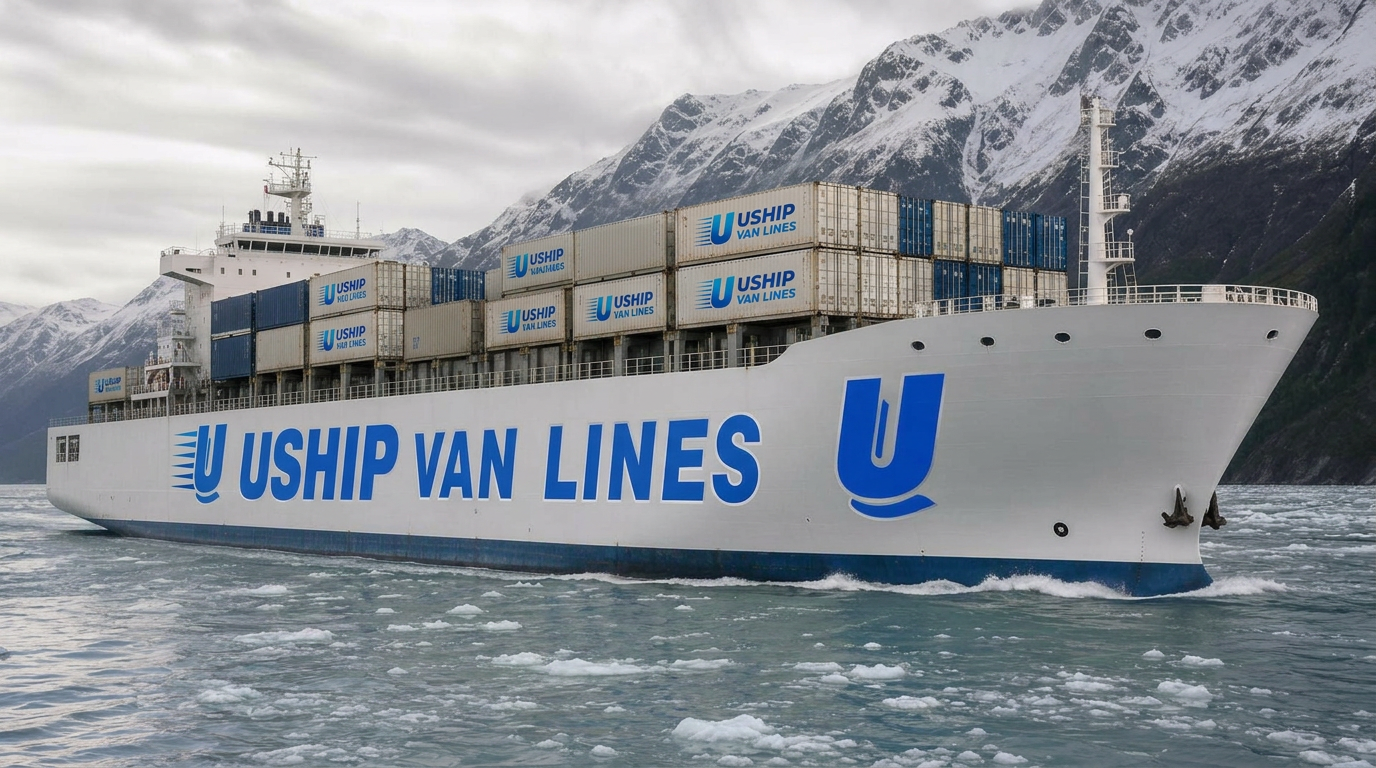
Best Alaska & Hawaii Movers, powered by UShip Van Lines, coordinates the complex journey from Elizabeth's urban neighborhoods to Alaska's remote destinations. We manage the entire route: overland transport across the continental U.S., barge loading at the Port of Tacoma, ocean transit to Anchorage or other Alaska ports, and final delivery to your new home—whether that's in downtown Anchorage or off the road system. Ready to plan your move? Request a detailed quote online and speak with our Alaska specialists today.
Route overview
Route Overview: Elizabeth, NJ to Alaska
The Elizabeth to Alaska route spans approximately 3,500 miles overland to the Port of Tacoma, Washington, followed by 1,400+ nautical miles via barge to Alaska ports. Your household goods travel by truck from Elizabeth—conveniently located near Newark and major highways—westward through Pennsylvania, the Midwest, and over the Rocky Mountains to Washington State. This transcontinental leg typically takes 5–7 days depending on weather and route conditions.
At Tacoma's port facilities, your belongings are loaded into marine shipping containers and placed aboard Alaska Marine Lines or Lynden Transport barges. These vessels make regular runs to Anchorage (the most common destination), with service also available to Whittier, Kodiak, and Southeast Alaska ports. The maritime segment adds 7–10 days for Southcentral Alaska destinations, with scheduling dependent on barge departure dates that typically run weekly during peak season.
Final delivery depends on your specific Alaska destination. Anchorage, Fairbanks, Mat-Su communities (Wasilla, Palmer), and Kenai Peninsula locations receive direct truck delivery. More remote bush communities may require additional coordination with air cargo or seasonal barge service, which we arrange as part of your comprehensive move plan.
How the moving process works
Step-by-Step Moving Process
1. Initial Consultation & Survey Our Alaska moving specialists conduct a virtual or in-person assessment of your Elizabeth home, cataloging items, identifying Alaska-prohibited materials (certain plants, soil, untreated wood), and discussing your specific Alaska destination. We'll explain vehicle shipping options, storage needs, and timing considerations based on your target move date.
2. Packing & Preparation Professional packing services ensure your belongings survive the multi-modal journey. We use reinforced boxes, climate-appropriate materials, and proper labeling for barge transport. Items requiring special handling—firearms, valuable artwork, temperature-sensitive belongings—receive dedicated attention and documentation for customs compliance.
3. Loading & Overland Transport Your household goods are loaded in Elizabeth and transported across the continental United States to our Tacoma consolidation facility. The truck route typically follows I-80 or I-90 west, with real-time tracking available throughout this leg. Transit time averages 5–7 days depending on weather, especially winter conditions in mountain passes.
4. Port Preparation & Containerization At Tacoma, your shipment is transferred into marine shipping containers—typically 20' or 40' units—and staged for barge loading. We handle all port documentation, customs paperwork, and coordinate with Alaska Marine Lines or Lynden Transport for vessel booking. Barge schedules vary by season; summer offers weekly departures while winter may have reduced frequency.
5. Maritime Transit to Alaska The barge journey from Tacoma to Anchorage takes 7–10 days under normal conditions. Vessels travel through the Inside Passage or open Pacific routes depending on destination and weather. Your shipment remains in sealed containers throughout, protected from marine conditions. We provide estimated arrival dates but note that weather can cause delays, particularly September through April.
6. Alaska Port Offloading & Customs Upon arrival at Port of Anchorage (or your designated Alaska port), containers are offloaded and cleared through Alaska agriculture inspection if required. We coordinate all port fees, demurrage charges, and documentation to ensure smooth customs clearance.
7. Final Delivery to Your Alaska Home The last-mile delivery brings your belongings from the port to your new Alaska residence. For Anchorage metro, Wasilla/Palmer, Kenai Peninsula, or Fairbanks locations, our Alaska-based delivery partners complete the final leg. Remote locations may require additional coordination with local carriers, bush planes, or seasonal barge service—all arranged as part of your comprehensive moving plan.
Estimated moving costs
Cost Expectations for Your Move
Moving a 2–3 bedroom household from Elizabeth, NJ to Alaska typically ranges from $8,500 to $16,000 for full-service door-to-door relocation. This substantial investment reflects the unique complexity: transcontinental trucking (3,500+ miles), barge shipping across the Gulf of Alaska, port handling fees, and Alaska last-mile delivery to locations with limited road access.
Primary cost drivers include:
- Volume and weight: Barge shipping charges by cubic footage and weight. A typical 3-bedroom home (8,000–12,000 lbs) fills 800–1,200 cubic feet. Minimizing items reduces costs significantly.
- Packing services: Professional packing adds $1,200–$2,500 but ensures items survive the multi-modal journey. Alaska moves have higher breakage risk without proper packing.
- Vehicle shipping: Adding a car or truck runs $1,800–$3,200 from Elizabeth to Anchorage via Tacoma barge. Many Alaska residents ship vehicles given the impracticality of driving through Canada in winter.
- Seasonal timing: Summer moves (May–August) cost 15–25% more due to peak demand and premium barge space. Winter moves save money but face weather delays and reduced barge frequency.
- Final destination: Anchorage/Wasilla/Palmer deliveries are standard. Fairbanks adds $800–$1,500. Off-road-system communities (Homer, Cordova, bush villages) require custom quotes.
- Storage: If barge schedules don't align with your move-out/move-in dates, short-term storage in Tacoma or Anchorage adds $200–$400 per month.
- Insurance: Full-replacement-value coverage costs 1.5–3% of declared value. Given the journey's complexity, comprehensive insurance is strongly recommended.
These are estimates based on typical moves. Your actual cost depends on exact inventory, services selected, and current fuel/barge rates. Request a detailed quote for binding pricing tailored to your specific move parameters.
Estimated transit times
Realistic Transit Time Expectations
Door-to-door delivery from Elizabeth, NJ to Alaska typically requires 18–28 days under normal conditions, with timing heavily dependent on barge schedules and your specific Alaska destination.
Transit breakdown by leg:
- Elizabeth to Tacoma (overland): 5–7 days via truck across the continental U.S. Winter weather through Wyoming, Montana, or mountain passes can add 1–2 days.
- Tacoma port staging: 2–5 days for container loading, customs paperwork, and barge departure scheduling. This window varies based on barge availability and booking timing.
- Tacoma to Anchorage (barge): 7–10 days for the maritime leg. Summer sailings run more frequently with predictable schedules; winter voyages may encounter storm delays adding 2–4 days.
- Port offloading & clearance: 1–2 days for container offload, agriculture inspection (if applicable), and customs clearance at Port of Anchorage.
- Alaska last-mile delivery: 1–3 days for Anchorage metro area; 3–5 days for Fairbanks, Kenai, or Mat-Su Valley; 7–14+ days for remote bush communities requiring air cargo or seasonal barge connections.
Important timing notes: Barge schedules dictate much of your timeline. Alaska Marine Lines and Lynden Transport run weekly sailings during peak season (May–September) but may reduce frequency October–April. Book your move 6–8 weeks in advance to secure preferred barge departure dates. Weather delays are common September through April—build buffer time into your Alaska move-in date. Rush service is rarely available for Alaska moves due to barge scheduling constraints.
Regional logistics
Alaska-Specific Logistics & Requirements
Port Operations & Barge Scheduling The Port of Tacoma serves as the primary West Coast hub for Alaska-bound shipments. Your goods are containerized in 20' or 40' marine containers—shared with other shipments (consolidated) or dedicated (exclusive use, higher cost). Alaska Marine Lines and Lynden Transport operate regular barge service to Anchorage, Whittier, Kodiak, and Southeast Alaska ports. Barge schedules are published 8–12 weeks in advance; we book your space and monitor departure/arrival dates. Port fees, wharfage charges, and fuel surcharges are included in your quote but subject to change if barge carriers adjust rates.
Alaska Agricultural Restrictions Alaska maintains strict biosecurity rules to protect agriculture and ecosystems. Prohibited items include: potted plants with soil, certain seeds, untreated firewood, hay/straw, and some food products. All shipments may undergo agriculture inspection upon Alaska arrival. We'll review restrictions during your survey and advise on compliant packing. Violations can result in confiscation, fines, or shipment delays—compliance is mandatory and we ensure your move meets all Alaska Department of Natural Resources requirements.
Vehicle Shipping Coordination Most customers ship at least one vehicle given the distance and Canada border-crossing requirements for the Alaska Highway. Vehicles travel separately via Tacoma-Anchorage barge service ($1,800–$3,200 per car). Cars must be clean (no soil/debris, passes agriculture inspection), with less than 1/4 tank fuel for safety. We coordinate vehicle pickup in Elizabeth, transport to Tacoma, and delivery to your Alaska address—typically arriving within 1–3 days of your household goods. Oversized vehicles (RVs, boats, commercial trucks) require custom quotes and may have limited barge availability.
Last-Mile Alaska Delivery Challenges Alaska's limited road network complicates final delivery. Anchorage, Wasilla, Palmer, Kenai/Soldotna, and Fairbanks receive standard truck delivery. Remote locations require specialized handling: Whittier (tunnel access with limited hours), Kodiak (additional barge leg), Cordova (no road connection, barge only), and bush communities (air cargo or seasonal barge, significant additional cost). We partner with Alaska-based carriers experienced in remote delivery, gravel roads, and seasonal access challenges. Discuss your specific Alaska destination during booking to ensure accurate logistics planning and cost estimates.
Temporary Storage Options Timing mismatches between move-out, barge schedules, and Alaska move-in dates often require storage. We offer climate-controlled storage in Tacoma (containerized, awaiting barge departure) or Anchorage (after Alaska arrival, before final delivery). Short-term storage (30–60 days) costs $200–$400 monthly. Extended storage is available but Alaska's high facility costs make long-term storage expensive. Plan your move timeline carefully to minimize storage fees—we'll help coordinate optimal dates during your initial consultation.
Seasonal considerations
Seasonal Moving Considerations for Alaska
Summer (May–August): Peak Season The most popular—and expensive—time for Alaska moves. Barge schedules run weekly, weather is predictable, and Alaska roads are fully accessible. Expect 20–30% premium pricing and book 8–10 weeks ahead for preferred dates. Advantages: minimal weather delays, easier home closings, and full road access to remote areas. Ideal if you have school-age children (summer break) or need to start work by a specific date. Daylight extends to 20+ hours, making delivery scheduling flexible.
Fall (September–October): Shoulder Season Moderate pricing with decreasing barge frequency (typically bi-weekly by October). Early fall offers good weather windows, but late September brings increasing storm risk in the Gulf of Alaska. Advantages: 10–15% savings versus summer, fewer other movers competing for barge space. Risks: weather delays more common, some remote Alaska roads close after first heavy snows. Good option for flexible move dates and cost-conscious relocations.
Winter (November–March): Off-Season Lowest prices—sometimes 25% below summer rates—but significant logistical challenges. Barge sailings reduce to monthly or less, and Gulf of Alaska storms cause frequent delays. The overland leg through mountain passes (Snoqualmie, Stevens) faces snow/ice conditions. Advantages: substantial cost savings, less competition for movers and barge space. Disadvantages: transit times extend to 25–35+ days, weather delays are expected not exceptional, and some remote Alaska locations become inaccessible until spring breakup. Only recommended for extremely flexible schedules or those with Alaska storage options.
Spring (April–May): Transition Season Pricing climbs as summer approaches; barge schedules increase to weekly by mid-May. April remains unpredictable for weather but May offers excellent value before peak rates hit. Advantages: better weather than winter with near-summer barge availability, 10–20% savings versus July. Spring breakup (late April–May) makes some Alaska roads temporarily impassable—confirm accessibility to your specific destination before committing to spring delivery dates.
Why choose Best Alaska & Hawaii Movers
Why Choose Best Alaska & Hawaii Movers
-
Alaska Specialist Expertise: Unlike general moving companies, we focus exclusively on Alaska and Hawaii relocations. Our team understands Tacoma port operations, Alaska barge carriers, seasonal scheduling, and last-mile delivery challenges from Anchorage to the bush. We've coordinated hundreds of Elizabeth-to-Alaska moves and know exactly what works.
-
Transparent, All-Inclusive Pricing: Your quote includes overland transport, barge booking, port fees, Alaska delivery, and coordination—no hidden charges for "Alaska surcharges" discovered mid-move. We break down costs by leg so you understand exactly what you're paying for and can make informed decisions about services.
-
End-to-End Coordination: One point of contact manages your entire move from Elizabeth loading through Alaska delivery. We coordinate with trucking partners, barge carriers, port agents, and Alaska delivery teams so you're never juggling multiple vendors or tracking down shipment status across three transportation modes.
-
Powered by UShip Van Lines Network: Our partnership with UShip Van Lines provides access to a vetted network of interstate carriers, competitive pricing through volume agreements, and backup resources if logistics challenges arise. You get boutique Alaska expertise backed by national infrastructure.
-
Flexible Solutions for Every Budget: Whether you need full-service packing and white-glove delivery or cost-saving partial packing with flexible timing, we tailor services to your needs. Our Alaska specialists help you balance cost, convenience, and timeline to optimize your move within your budget.