
Moving from League City, TX to Alaska
Moving from League City, Texas to Alaska is more than a change of address—it's a complete lifestyle shift from Gulf Coast suburbs to the Last Frontier. Whether you're heading to Anchorage for a job opportunity, relocating to the Mat-Su Valley for homesteading dreams, or answering the call of Alaska's rugged beauty, the logistics are unlike any other move you've made.
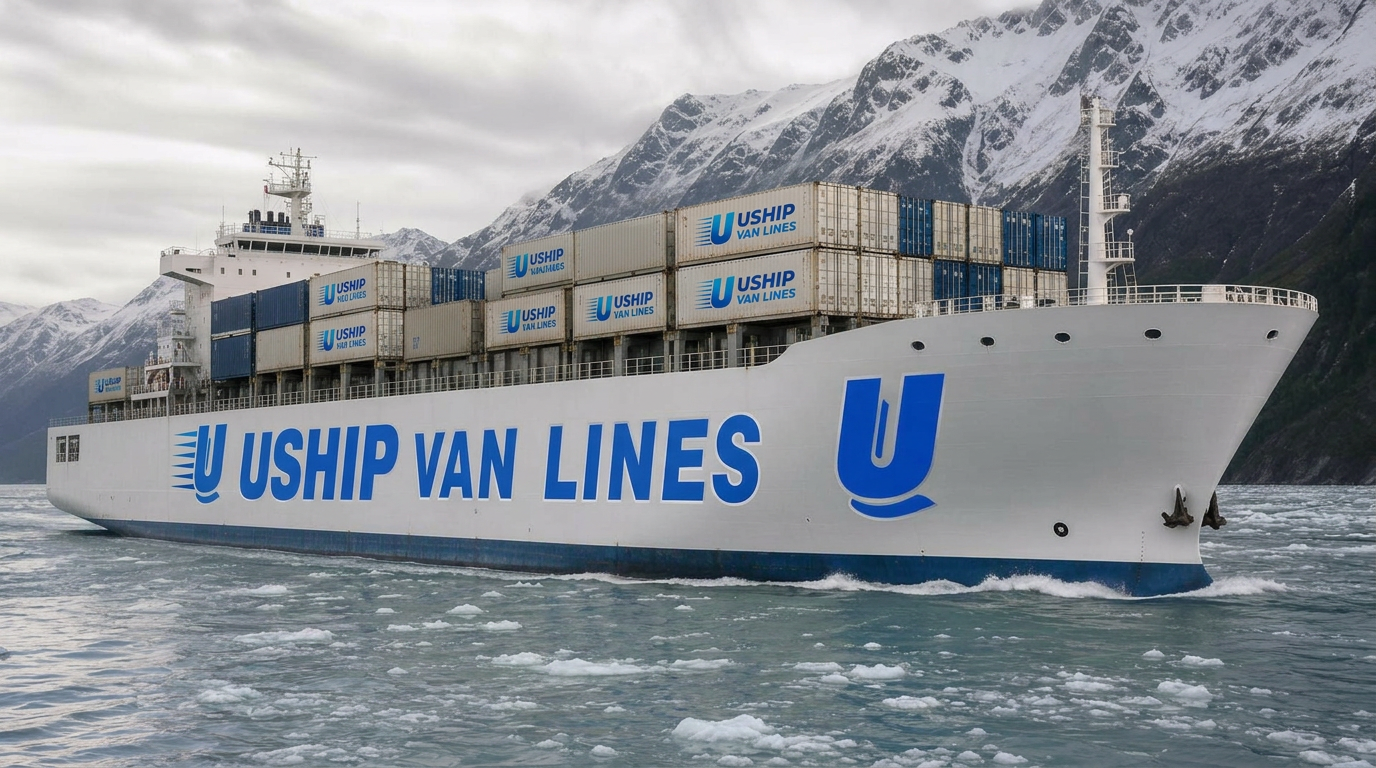
The 3,400+ mile journey involves overland freight to the Pacific Northwest, barge transport across the Gulf of Alaska, and final delivery to your new home—whether that's in a port city or a remote community accessible only by bush plane. Best Alaska & Hawaii Movers, powered by UShip Van Lines, coordinates every step of this multi-modal journey. Ready to start planning? Request a free quote tailored to your specific route and household size.
Route overview
Understanding the League City to Alaska Moving Route
Your household goods travel overland from League City—just south of Houston along Clear Lake—northwest through Texas, across the Great Plains, and up the Pacific Coast to Tacoma, Washington. From there, they're loaded onto ocean barges operated by carriers like TOTE Maritime or Alaska Marine Lines for the approximately 1,500-mile voyage through the Inside Passage to the Port of Anchorage.
Once in Alaska, the logistics split dramatically based on your final destination. Anchorage and nearby communities receive direct delivery from the port terminal. Fairbanks-bound shipments travel an additional 360 miles north via truck on the Parks Highway. Mat-Su Valley destinations (Wasilla, Palmer) are within an hour of the port. Kenai Peninsula communities add 150–200 miles south on the Seward or Sterling Highway.
For those moving to off-road-system communities—Nome, Bethel, Kotzebue, Kodiak Island, Southeast Alaska villages—your freight transfers again to smaller coastal barges, bush planes, or seasonal ice road transport. This multi-leg routing requires careful coordination and realistic timeline expectations that stretch well beyond typical cross-country moves.
How the moving process works
How Your League City to Alaska Move Works: Step by Step
-
Initial Survey & Quote (6–8 Weeks Before Move) — A moving consultant assesses your inventory via virtual or in-home walkthrough. You'll receive a detailed quote covering overland transport, barge fees, Alaska last-mile delivery, and any special handling for vehicles, boats, or off-grid equipment. Booking early is critical; summer barge space fills months ahead.
-
Pre-Move Preparation (4–6 Weeks Out) — Purge items that don't justify the freight cost (old furniture, propane appliances illegal in transit, liquids). Begin collecting Alaska residency documentation if you're establishing domicile. Schedule vehicle shipment if driving separately; many families ship one vehicle and drive another through Canada.
-
Packing & Loading in League City (1–2 Days) — Professional crews pack and load your belongings into the truck at your League City home. High-value items, essential documents, and immediate-need boxes travel with you by car or as checked baggage—never trust critical items to freight that may sit in a port for weeks.
-
Overland Transit to Tacoma (5–7 Days) — Your truck hauls north to the consolidation warehouse near the Port of Tacoma. Freight is transferred to shipping containers, shrink-wrapped pallets, or remains in the trailer depending on carrier and barge line requirements.
-
Barge Sailing to Alaska (7–10 Days at Sea) — Vessels depart Tacoma multiple times weekly during peak season (May–September), less frequently in winter. The voyage navigates through Puget Sound, along the British Columbia coast, and across the Gulf of Alaska to Anchorage. Weather delays are possible, especially October–April.
-
Port Clearance & Alaska Customs (1–3 Days) — Though Alaska is a U.S. state, some shipments transit Canadian waters and may require customs paperwork. The freight clears the Anchorage terminal, where it's sorted for final delivery routes.
-
Last-Mile Delivery to Your Alaska Home (1–7 Days) — Road-system deliveries happen within days of port arrival. Remote deliveries wait for the next scheduled barge run (often monthly or seasonal) or air freight charter, which you'll coordinate and pay for separately. Unloading in Alaska often requires flexibility—winter weather, road conditions, and limited access can delay the final leg.
Estimated moving costs
What Does It Cost to Move from League City, TX to Alaska?
A typical 2–3 bedroom household moving from League City to Anchorage ranges from $7,500 to $14,000 for full-service door-to-door transport. Fairbanks deliveries add $1,200–$2,000 for the additional overland leg. Remote bush communities can double or triple costs due to secondary barge fees, air freight, or specialized logistics.
Key cost drivers include:
- Volume and weight — Barge pricing is often per cubic foot or per container. A 1,200 sq ft home typically fills 1,000–1,400 cubic feet; larger homes may require a full 20' or 40' container.
- Delivery location — Road-system cities are straightforward. Off-road villages require barge-to-barge transfer or air charter at $0.50–$1.50/lb.
- Vehicle shipping — Open-deck barge transport for one vehicle runs $1,800–$2,800 Tacoma to Anchorage. Enclosed shipping or oversized vehicles cost more.
- Season — Summer peak (May–August) commands premium rates and books early. Winter sailings (November–March) offer discounts but face weather risks and limited schedules.
- Packing services — Full professional packing adds $1,000–$2,500 but protects fragile items during multi-modal handling.
- Insurance — Basic released-value coverage ($0.60/lb) is included; full replacement value insurance costs 1–3% of declared value.
Best Alaska & Hawaii Movers provides itemized quotes with no hidden fees. We never guarantee exact pricing without a detailed inventory—beware of lowball estimates that balloon after loading.
Estimated transit times
How Long Does the Move Take?
Door-to-door transit from League City to Anchorage typically takes 18–28 days from the day your truck loads in Texas to delivery in Alaska. Here's the realistic breakdown:
- Overland to Tacoma: 5–7 days drive time, plus 1–3 days warehouse staging
- Barge sailing: 7–10 days at sea, depending on weather and stops
- Port processing in Anchorage: 1–3 days for customs clearance and offloading
- Final delivery: 1–3 days for road-system cities; 7–30+ days for remote villages waiting on connecting barge schedules
Fairbanks adds 1–2 days to the final leg. Kenai Peninsula communities are similar to Anchorage timelines. Southeast Alaska towns (Juneau, Ketchikan, Sitka) may receive shipments on the same barges or require separate Alaska Marine Highway routing, adding a week.
Winter moves (October–April) can stretch to 30–45 days due to reduced barge frequency, weather holds in the Gulf of Alaska, and road closures from snow. Summer moves (May–September) are fastest but require booking 6–8 weeks ahead as capacity fills with the seasonal migration surge.
Regional logistics
Alaska-Specific Moving Logistics You Need to Know
Port & Barge Details
Your freight enters Alaska through the Port of Anchorage, the state's primary deep-water terminal for northbound cargo. TOTE Maritime and Alaska Marine Lines are the dominant carriers, operating roll-on/roll-off (RoRo) vessels and container ships. You'll receive a Bill of Lading tracking your shipment; monitor it closely as barge schedules shift with weather and cargo volume.
Vehicle Shipping
Most families ship one vehicle on the same barge as household goods. Cars must be clean (Alaska agricultural inspections prohibit soil/seeds), under 1/4 tank of fuel, and empty of personal items. If driving the Alaska Highway from League City, budget 7–10 days and prepare for rough gravel sections, limited services through remote Canada, and potential vehicle damage. Winter driving requires serious preparation—many opt to ship all vehicles and fly.
Restricted & Prohibited Items
Alaska bans propane tanks, ammunition over certain quantities, and some flammable liquids in household shipments. Hazardous materials require special handling. Plants are heavily restricted due to invasive species concerns; Hawaii-style quarantines don't apply, but USDA inspections do. Firearms are legal to transport but must be declared and secured per federal regulations.
Off-Road System Deliveries
If you're moving beyond the road network (e.g., Nome, Bethel, Kodiak villages, Southeast Alaska islands), your freight stops in Anchorage and you coordinate the final leg separately. Coastal barge services run monthly to quarterly; air freight is priced per pound and volume. Many remote movers keep a storage unit in Anchorage for items they retrieve on supply runs.
Residency & Documentation
Establishing Alaska residency affects your Permanent Fund Dividend eligibility (typically requires 12 months of physical presence and intent to remain). Keep moving receipts, bills of lading, and arrival dates documented. If you're moving for military or government work, special allowances and reimbursements may apply—consult your relocation office early.
Last-Mile Access
Alaska homes may have narrow driveways, steep grades, or seasonal access issues. Fairbanks and Interior properties might have long gravel driveways impassable in spring mud. Confirm your delivery address is truck-accessible or arrange for a shuttle service. Unloading in sub-zero temperatures requires quick work—hire extra help if your delivery window hits deep winter.
Seasonal considerations
When Should You Move to Alaska from League City?
Summer (May–September): Peak Season
The easiest weather window but the most expensive and congested. Barge sailings run 3–5 times weekly. Roads are clear, daylight is abundant for loading/unloading, and Alaska housing inventory turns over as seasonal workers arrive. Book by March for June–August moves. Expect premium pricing and tight scheduling—flexibility is limited.
Fall (September–October): Shoulder Season
Still favorable weather with lower demand as the summer rush ends. Barge frequency begins tapering in late October. You'll avoid peak pricing but must watch for early snowfall in Interior Alaska (Fairbanks, North Pole) that can complicate deliveries. Good compromise for cost-conscious movers with flexible timelines.
Winter (November–March): Off-Season
The most affordable rates—often 15–25% below summer—but with significant trade-offs. Barge sailings drop to 1–2 per week or less. Gulf of Alaska storms can delay vessels by days. Anchorage and Fairbanks handle winter deliveries routinely, but remote villages may have no barge service until spring breakup. If moving in winter, fly essential items with you and expect delays. Roads are icy, daylight is scarce (Fairbanks gets ~3 hours in December), and you may need to shovel your own unloading path.
Spring (April–May): Transition
Barge schedules ramp up as ice clears and weather improves. April is unpredictable—"breakup season" brings mud, road damage, and lingering snow. By mid-May, conditions stabilize and summer pricing kicks in. A strategic window if you can navigate the mud season logistics.
Why choose Best Alaska & Hawaii Movers
Why Best Alaska & Hawaii Movers for Your League City to Alaska Move
- Alaska Expertise — We specialize exclusively in moves to and from Alaska and Hawaii, managing the complex barge logistics, port coordination, and last-mile delivery that general moving companies subcontract out. Your move is our daily business, not an occasional exception.
- Transparent Pricing — Itemized quotes with clear cost breakdowns for overland, barge, and Alaska delivery. No hidden "port fees" or surprise fuel surcharges. We explain what you're paying for and why.
- End-to-End Coordination — One point of contact from your League City doorstep to your Alaska home. We manage truck dispatch, barge booking, customs paperwork, and final delivery scheduling so you're never chasing down multiple carriers.
- Flexible Scheduling — We book year-round and work with your timeline, whether you're racing a job start date or optimizing for off-season savings. Our carrier network includes multiple barge lines for backup options if schedules shift.
- Powered by UShip Van Lines — Backed by a trusted logistics platform connecting you to vetted, insured carriers with proven Alaska experience. Real accountability, real tracking, real support when weather or port delays require plan adjustments.