
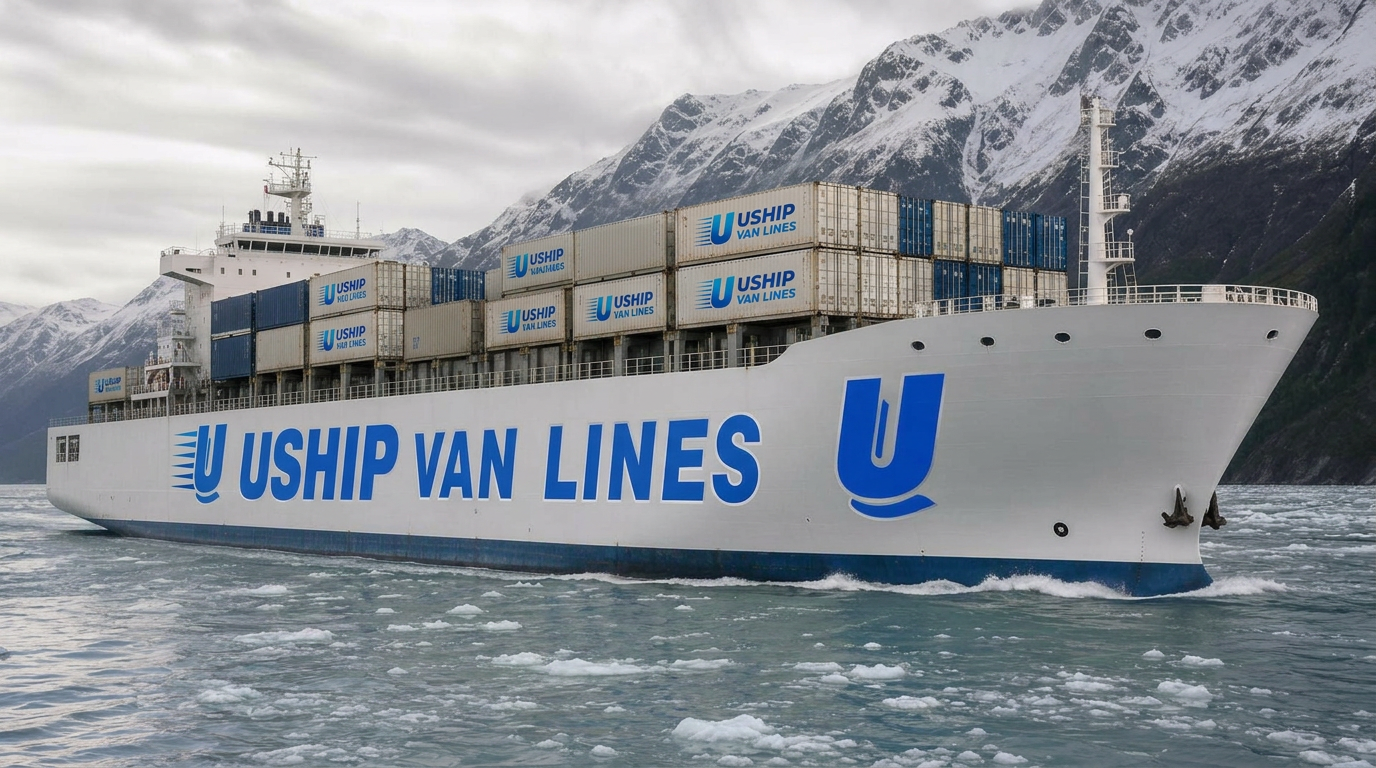
Moving from Utah to Alaska
Relocating from Utah to Alaska means trading the red rock deserts and ski slopes of the Beehive State for the Last Frontier's vast wilderness, midnight sun, and unique lifestyle. Whether you're moving from Salt Lake City, Provo, or St. George to Anchorage, Fairbanks, or the Mat-Su Valley, your household goods will travel thousands of miles—first overland to the Pacific Northwest, then by barge across the Gulf of Alaska.
This route requires specialized carriers experienced in Alaska's maritime and last-mile logistics. Best Alaska & Hawaii Movers, powered by UShip Van Lines, coordinates every leg of your move—from pickup in Utah through barge transit to final delivery anywhere in Alaska. Ready to start planning? Request your free, no-obligation quote today.
Route overview
The Utah to Alaska Moving Route
Your belongings begin their journey with pickup anywhere in Utah—from the Wasatch Front metro areas to southern Utah towns like St. George or Cedar City. The truck hauls your shipment northwest to Tacoma, Washington, the primary consolidation hub for Alaska-bound freight. This overland leg typically covers 1,100–1,300 miles depending on your origin city and takes 2–4 days.
From Tacoma, your household goods transfer to a marine container and board a northbound barge operated by carriers like Totem Ocean Trailer Express or Alaska Marine Lines. The vessel crosses the Gulf of Alaska to the Port of Anchorage, a voyage that runs 5–7 days in summer and up to 10 days during winter weather. Once the barge docks, your container clears customs and port handling, then moves to a local carrier for final delivery to your Alaska address—whether that's Anchorage, Fairbanks, the Kenai Peninsula, or beyond.
Total door-to-door transit typically ranges from 10–21 days, with scheduling heavily influenced by barge frequency and seasonal weather patterns.
How the moving process works
How Your Utah-to-Alaska Move Works: Step by Step
-
Free Quote & Planning Consultation
Contact Best Alaska & Hawaii Movers for a detailed estimate based on your inventory, origin ZIP in Utah, and final Alaska destination. We'll discuss barge schedules, packing options, and any special handling needs. -
Pickup in Utah
A professional moving crew arrives at your Utah home to load your belongings onto a climate-controlled moving truck. We serve all major Utah cities and rural communities statewide. -
Overland Transit to Tacoma
Your shipment travels by truck to our Tacoma consolidation facility, where items are inventoried and loaded into a marine-grade steel or plywood container. -
Barge Loading & Gulf Crossing
The container boards a northbound barge for the 5–10 day voyage to Anchorage. Containers are secured and weather-sealed for the Pacific crossing. -
Port Clearance in Anchorage
Upon arrival, your container clears port inspections and customs paperwork, then transfers to an Alaska-based delivery carrier. -
Last-Mile Delivery
A local driver delivers your container to your new Alaska address. For remote or off-road locations, specialized vehicles and sometimes barges or air freight handle the final leg. -
Unloading & Walkthrough
The crew unloads your items, and you inspect everything against the original inventory before signing off.
Estimated moving costs
What Does a Utah-to-Alaska Move Cost?
For a typical 2–3 bedroom household (roughly 7,000–10,000 pounds), expect to invest $6,500–$12,500 for a full-service move from Utah to Alaska. Studio and 1-bedroom moves often fall in the $4,200–$6,800 range, while larger 4+ bedroom homes can exceed $14,000.
Key cost drivers include:
- Distance & volume: Utah sits far from West Coast ports, adding overland trucking miles. More cubic footage means higher barge fees.
- Barge schedules & fuel surcharges: Marine freight pricing fluctuates with fuel costs and seasonal demand. Summer sailings sometimes carry premium rates.
- Final Alaska destination: Delivery to Anchorage is straightforward; Fairbanks, Kenai, or bush communities require additional trucking or even air/barge segments.
- Packing & special items: Professional packing, custom crating for artwork or electronics, and vehicle shipment all add to the total.
- Season & urgency: Off-season (October–April) can offer slightly lower rates but longer transit windows.
Always request a detailed, binding estimate. Best Alaska & Hawaii Movers provides transparent line-item quotes with no hidden fees—you'll know exactly what you're paying before you commit.
Estimated transit times
How Long Does the Move Take?
Door-to-door transit from Utah to Alaska typically requires 10–21 days, broken down as follows:
- Pickup to Tacoma: 2–4 days for the 1,100–1,300 mile overland haul.
- Consolidation & barge boarding: 1–3 days for container loading, paperwork, and waiting for the next scheduled sailing.
- Barge crossing: 5–7 days in favorable summer conditions; 7–10 days October through April when weather slows vessels or forces routing changes.
- Port clearance in Anchorage: 1–2 days for inspections, customs, and handoff to the local carrier.
- Final delivery: Same-day to 3 days depending on your Alaska destination. Anchorage metro deliveries happen quickly; Fairbanks or remote areas add travel time.
Book early and stay flexible—barge schedules are less frequent than Lower 48 trucking routes, and winter weather can introduce delays. Your move coordinator will provide a realistic delivery window and keep you updated throughout.
Regional logistics
Alaska-Specific Logistics You Need to Know
Ports & Routing: Nearly all Utah-to-Alaska household moves consolidate in Tacoma and sail to the Port of Anchorage. From there, road networks reach most populated areas—Anchorage, Eagle River, Wasilla/Palmer (Mat-Su), Kenai/Soldotna, Fairbanks, and Juneau (via additional barge or air). Bush communities may require smaller planes or seasonal barge service.
Customs & Paperwork: Alaska is a U.S. state, so no international customs. However, port security and agricultural inspections apply—certain plants, soil, and untreated wood are restricted. Your mover will guide you through the Port of Anchorage requirements.
Vehicle Shipping: If you're driving your car from Utah, the Alaska Highway (ALCAN) is a scenic but demanding 3,000+ mile journey. Many customers opt to ship one vehicle on the same barge as household goods. Auto transport costs roughly $1,800–$3,200 Tacoma to Anchorage, depending on vehicle size and season.
Packing for the Marine Environment: Barge containers cross open ocean. Professional packing with moisture barriers, padding, and secure blocking prevents damage from movement and humidity. DIY packing is possible but risky—invest in quality materials and extra wrapping for electronics and furniture.
Last-Mile Challenges: Anchorage and Fairbanks have paved access; remote properties on gravel roads, islands, or off the road system require advance planning. Some locations need tracked vehicles, helicopter lifts, or seasonal ice road access. Communicate your exact address early so your move coordinator can arrange appropriate equipment.
Storage Options: If your Alaska home isn't ready, most carriers offer short-term storage in Anchorage. Rates run $150–$350/month depending on volume. Coordinate storage at booking to avoid rush fees.
Seasonal considerations
Timing Your Utah-to-Alaska Move: Seasonal Factors
Summer (May–September): Peak moving season. Barge sailings run weekly or twice-weekly, and road conditions in Alaska are excellent. Expect higher demand and sometimes premium pricing, but the fastest, most reliable transit times. Ideal if you have school-age children or want to settle in before winter.
Fall (October–November): Shoulder season with moderate rates and still-decent barge frequency (weekly). Weather begins to turn in Alaska, so roads may see early snow by November, especially in Interior regions. A good balance of cost and speed.
Winter (December–March): Off-peak period. Barge schedules drop to every 10–14 days, and Gulf storms can delay sailings or extend crossings. Roads in Alaska require winter tires and may close temporarily. Lower rates offset longer timelines—budget 14–21+ days door-to-door. Best for flexible schedules and cost-conscious movers.
Spring (April–early May): Transitional. Barge frequency increases, but breakup (spring thaw) can make some Alaska roads impassable for a few weeks. Coastal routes remain accessible, but Interior and rural deliveries may face delays. Rates begin climbing toward summer peaks.
No matter the season, Best Alaska & Hawaii Movers monitors weather and adjusts logistics to protect your shipment and keep you informed.
Why choose Best Alaska & Hawaii Movers
Why Choose Best Alaska & Hawaii Movers (Powered by UShip Van Lines)
- Alaska Logistics Expertise: We specialize in Utah-to-Alaska moves, managing barge bookings, port coordination, and last-mile delivery across the state—from Ketchikan to Utqiaġvik.
- Transparent, All-Inclusive Pricing: Receive a detailed, binding estimate covering every leg of your journey. No surprise fees, no hidden fuel surcharges after you've signed.
- End-to-End Coordination: One point of contact from your Utah pickup through final delivery in Alaska. We track your shipment across trucking, barge, and local carriers, keeping you informed at every milestone.
- Flexible Service Levels: Choose full-service packing and white-glove handling, or save with a hybrid approach where you pack and we transport. We tailor solutions to your budget and timeline.
- Proven Partner Network: Powered by UShip Van Lines, we connect you with vetted, licensed carriers experienced in Alaska's unique challenges—weather delays, remote access, and marine freight protocols.
- Customer-First Support: Moving to Alaska is a big life change. Our team answers your questions, adjusts plans when weather intervenes, and ensures your belongings arrive safely in your new frontier home.