
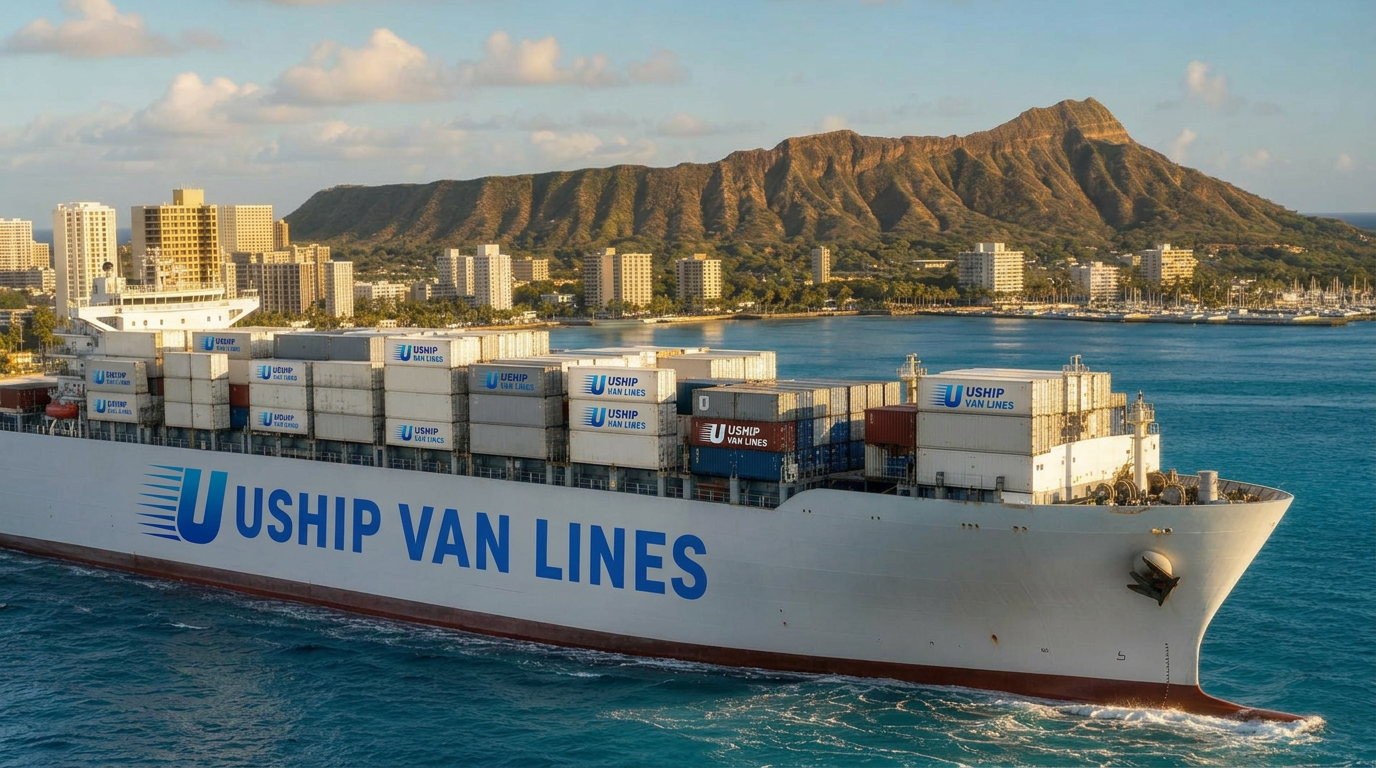
Moving from Utah to Hawaii
Moving from Utah to Hawaii means trading mountain peaks for ocean waves, desert landscapes for tropical beaches, and continental logistics for trans-Pacific shipping. Your household goods will travel by truck from Utah to a West Coast port (Long Beach or Oakland), then by ocean container to Honolulu, with possible inter-island shipping to Maui, Kauai, or the Big Island.
This isn't a standard interstate move—it requires ocean freight coordination, customs paperwork, vehicle shipping, and careful timing around port schedules and Hawaii's unique seasonal patterns. Best Alaska & Hawaii Movers, powered by UShip Van Lines, specializes in these complex routes and can provide a transparent quote tailored to your island destination and moving timeline.
Route overview
Understanding the Utah-to-Hawaii Moving Route
Your belongings follow a two-stage journey: first, ground transportation from your Utah home (Salt Lake City, Provo, St. George, or elsewhere) to the Port of Long Beach or Port of Oakland in California. This leg typically takes 1–2 days of driving. Once consolidated at the port, your goods are loaded into a shared ocean container (LCL) or exclusive container (FCL) operated by Matson Navigation or Pasha Hawaii—the two primary carriers serving the Hawaii trade lane.
The ocean crossing from California to Honolulu takes 5–7 days under normal conditions. After clearing the port in Honolulu, your shipment either reaches its final destination on Oahu or transfers to inter-island barge service for delivery to Maui (Kahului), Kauai (Nawiliwili), or the Big Island (Hilo or Kawaihae). Inter-island adds another 3–5 days, meaning total door-to-door transit can range from 10 days to three weeks depending on schedules, weather, and your specific island.
Unlike Alaska moves that may use rail or barge combinations, Hawaii moves are purely truck-to-ship, with no highway connection. This makes timing and port coordination critical—missing a sailing window can delay your entire shipment by a week or more.
How the moving process works
Step-by-Step: How Your Utah-to-Hawaii Move Works
-
Request a Quote & Choose Your Service Level – Contact Best Alaska & Hawaii Movers for a detailed estimate. You'll choose between full-service (packing, loading, container handling, delivery) or partial service (you pack, we transport). Provide an inventory list, your Utah origin address, and exact Hawaii destination island and zip code.
-
Schedule Your Ground Pickup in Utah – A moving crew will arrive at your Utah home to load your belongings into a truck. If you've chosen full-service packing, this happens the same day or the day before. The truck departs for the West Coast port, typically Long Beach or Oakland, based on sailing schedules.
-
Port Consolidation & Container Loading – Your shipment arrives at the port warehouse, where it's either consolidated into a shared container (LCL) with other Hawaii-bound shipments or loaded into an exclusive container (FCL) if you have a full household. Matson and Pasha sail multiple times per week, so timing is coordinated to minimize warehouse storage.
-
Ocean Transit to Honolulu – The container is loaded onto a cargo vessel for the 5–7 day Pacific crossing. Matson and Pasha both offer reliable weekly service; your shipment is tracked via bill of lading. Weather and port congestion can occasionally extend transit by a day or two.
-
Customs Clearance & Port Processing in Honolulu – All household goods entering Hawaii undergo agricultural inspection to prevent invasive species. Your mover handles the paperwork, but certain items (soil, plants, some foods) are restricted. Clearance typically takes 1–2 business days.
-
Inter-Island Transfer (If Needed) – If your destination is Maui, Kauai, or the Big Island, your container is transferred to a Young Brothers inter-island barge. Barges run several times per week to each island, adding 3–5 days to your timeline. Direct Oahu deliveries skip this step.
-
Final Delivery to Your Hawaii Home – A local delivery crew unloads your container at your new address. Full-service moves include placement of furniture and unpacking of boxes. You inspect your goods, sign the delivery receipt, and settle any remaining balance. If you shipped a vehicle separately, it follows a parallel timeline and is delivered to a designated lot or your home.
Estimated moving costs
What Does It Cost to Move from Utah to Hawaii?
A typical 2–3 bedroom household moving from Utah to Hawaii costs $6,500–$12,000 for full-service door-to-door shipping. Studio or 1-bedroom moves may run $4,000–$6,500, while 4+ bedroom homes with full packing can exceed $15,000. These ranges reflect current ocean freight rates, ground transportation, labor, and insurance—they are estimates, not guaranteed prices, and depend heavily on your specific circumstances.
Key cost drivers include:
- Volume and weight – Hawaii shipping is priced by cubic feet and total weight. A 1,200-cubic-foot load (roughly a 3-bedroom home) is the average baseline.
- Container type – Shared (LCL) is cheaper for smaller loads; exclusive (FCL) offers faster handling and less risk of damage but costs more upfront.
- Destination island – Oahu deliveries are least expensive. Maui, Kauai, and Big Island moves add $800–$1,500 for inter-island barge and delivery.
- Service level – Self-pack and drop-off at the port can cut costs by 30–40%, but you sacrifice convenience and liability protection.
- Vehicle shipping – Cars, trucks, and motorcycles ship separately via roll-on/roll-off (RoRo) service, typically $1,200–$1,800 per vehicle from the West Coast to Hawaii.
- Packing materials and labor – Professional packing adds $500–$1,500 depending on fragile items, artwork, and specialty crating.
- Timing and urgency – Peak summer months and last-minute bookings may incur surcharges; off-season moves (September–November, January–March) often see discounts.
Request a personalized quote to lock in accurate pricing for your move date and destination.
Estimated transit times
How Long Does a Utah-to-Hawaii Move Take?
Door-to-door transit from Utah to Hawaii typically takes 10–21 days, broken down as follows:
- Ground transport (Utah to West Coast port): 1–3 days, depending on pickup location and port scheduling.
- Port processing and container loading: 1–3 days. Shipments arriving just before a scheduled sailing load faster; those missing a cutoff wait for the next departure.
- Ocean crossing (California to Honolulu): 5–7 days under normal conditions. Weather delays are rare but possible, especially November–March.
- Customs and agricultural clearance in Honolulu: 1–2 business days.
- Inter-island barge (if applicable): 3–5 days for Maui, Kauai, or Big Island. Oahu deliveries skip this step.
- Final delivery scheduling: 1–3 days, coordinated with your availability.
Direct Oahu moves often complete in 10–14 days. Neighbor island moves usually take 14–21 days. Booking well in advance (4–6 weeks) and choosing flexible delivery windows help avoid delays. During peak season (May–August) or after port slowdowns, add a buffer of 3–5 extra days.
Regional logistics
Hawaii-Specific Moving Logistics You Need to Know
Ports and carriers: Your shipment will sail via Matson Navigation or Pasha Hawaii from the Port of Long Beach or Port of Oakland. Matson operates the largest Hawaii fleet with multiple weekly sailings; Pasha offers competitive service with slightly fewer departures. Both are reliable, regulated carriers with decades of experience. Your mover coordinates the booking and bill of lading.
Agricultural restrictions: Hawaii enforces strict biosecurity to protect its ecosystems. You cannot bring soil, potted plants, fresh fruits, vegetables, or certain seeds. All shipments undergo inspection by the Hawaii Department of Agriculture. Wooden furniture and boxes are allowed but may be examined for pests. Your mover will provide a prohibited-items list and ensure compliance.
Vehicle shipping: Cars and trucks ship separately via RoRo (roll-on/roll-off) service, departing from the same California ports. Vehicles must be cleaned (no dirt, no personal items inside) and operable. Transit time mirrors household goods (5–7 days ocean, plus ground transport). Matson and Pasha both offer vehicle service; your mover can bundle this into a single quote.
Inter-island delivery: If moving to Maui, Kauai, or the Big Island, your container transfers to a Young Brothers barge in Honolulu. Barges sail multiple times per week to Kahului (Maui), Nawiliwili (Kauai), Hilo, and Kawaihae (Big Island). Delivery trucks meet the barge at the neighbor island port and complete the final mile. Narrow roads and remote addresses (like Hana on Maui or Volcano on the Big Island) may require smaller trucks or shuttle fees.
Paperwork and identification: You'll need a government-issued ID and detailed inventory list. Military members relocating on PCS orders should provide copies to qualify for potential tax exemptions. Customs forms are handled by your mover, but you sign off on the final documents.
Storage options: If your Hawaii home isn't ready, many movers offer short-term storage in Honolulu or on neighbor islands. Container storage at the port warehouse is available but expensive; off-site warehouse storage is more cost-effective for delays beyond a few days.
Seasonal considerations
Best Times to Move from Utah to Hawaii (and Times to Avoid)
Spring (March–May): Moderate demand, reliable weather, and good sailing schedules make this an excellent window. Rates are lower than summer peaks, and port congestion is minimal. Hurricane season hasn't started, so ocean transit is predictable.
Summer (June–August): Peak moving season. Families relocate before the school year, and demand for Hawaii moves spikes. Expect higher rates, longer booking lead times (6–8 weeks recommended), and occasional port congestion in Long Beach and Oakland. Ocean weather is calm, but container availability tightens.
Fall (September–November): Hurricane season (June–November) peaks in August–September, but modern cargo vessels easily navigate storms. This is a smart time to move: lower demand means better pricing and faster port handling. September and October are among the best months for value and speed. November sees Thanksgiving delays; plan around the holiday week.
Winter (December–February): Off-peak pricing and excellent availability. Ocean weather is rougher, occasionally adding a day to transit, but delays are rare. Holiday weeks (Christmas, New Year) slow port operations; avoid mid-December to early January if possible. January–February are the least expensive months and offer the fastest booking-to-delivery times.
Hawaii-specific note: Agricultural inspections are stricter during planting seasons, but this has minimal impact on timelines. Neighbor island barge schedules remain consistent year-round, though rough winter seas may delay inter-island crossings by 1–2 days a few times per season.
Why choose Best Alaska & Hawaii Movers
Why Choose Best Alaska & Hawaii Movers for Your Utah-to-Hawaii Move
- Hawaii specialists, not general movers – We focus exclusively on Alaska and Hawaii routes, so we know the ports, the carriers, the agricultural rules, and the island-specific logistics that general long-distance movers miss.
- Transparent pricing and no hidden fees – You'll receive a detailed, line-item quote covering ground transport, ocean freight, port handling, inter-island barge (if needed), delivery, and insurance. We explain every charge upfront.
- Powered by UShip Van Lines' network – Our partnership with UShip Van Lines gives us access to vetted carriers, competitive container rates, and technology-driven tracking so you know where your shipment is at every stage.
- Full-service or flexible options – Choose white-glove packing and delivery, or save money with partial service. We accommodate your budget and DIY preferences without sacrificing quality.
- Dedicated move coordinator – From quote to final delivery, one point of contact manages your entire move, coordinates sailing schedules, handles customs paperwork, and answers your questions in plain English.
- Insurance and claims support – We offer comprehensive valuation coverage and handle claims processing if the unexpected happens. Your belongings are protected throughout the journey.