
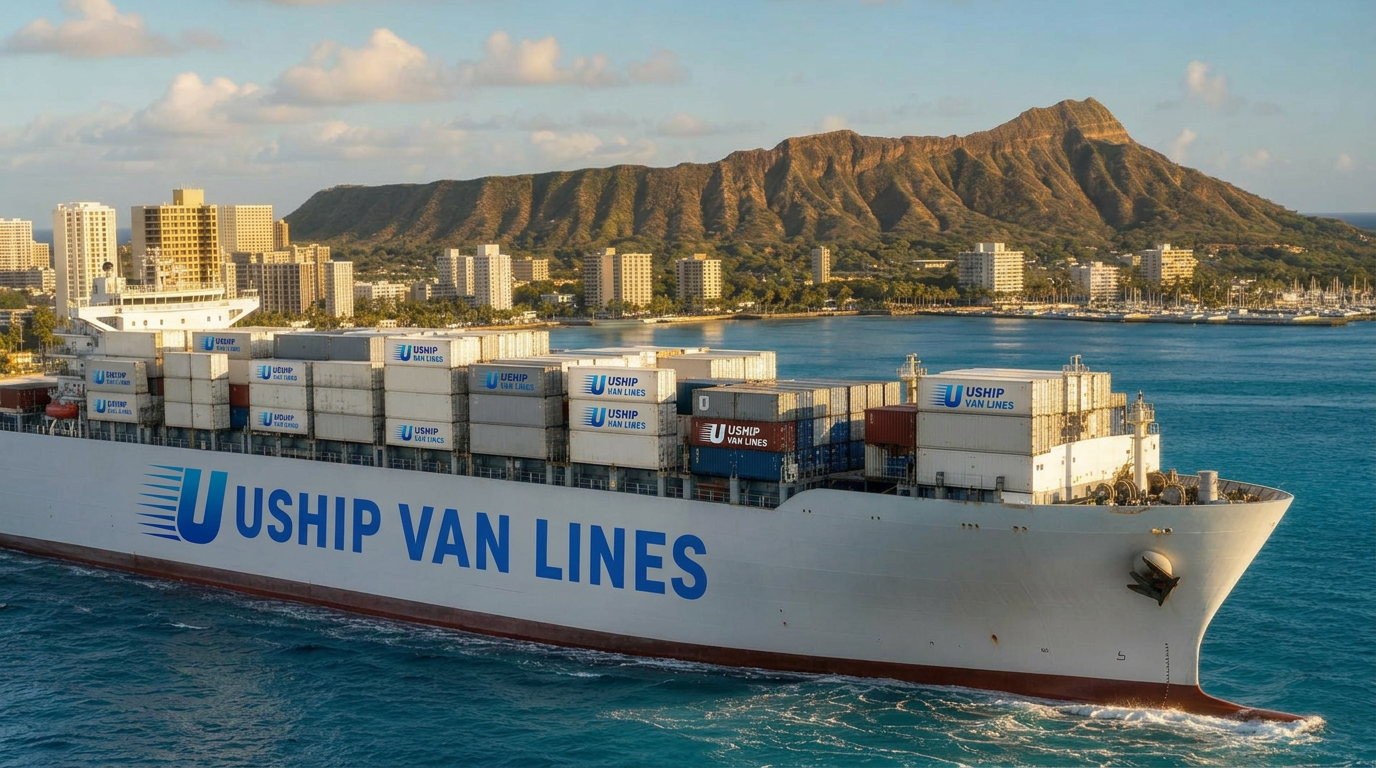
Moving from Hawaii to Utah
Relocating from the Hawaiian Islands to Utah means orchestrating a complex ocean-to-mainland move through West Coast ports, then overland transit to the Beehive State. Whether you're leaving Honolulu for Salt Lake City or trading Maui for Park City, your household goods will travel by ocean container to Long Beach or Oakland, clear customs, then truck across the desert to your new Utah home.
Best Alaska & Hawaii Movers connects you with experienced carriers who specialize in Hawaii-mainland logistics—containerized shipping, port coordination, and final delivery to every Utah zip code. Request your free, no-obligation quote today to compare rates and timelines tailored to your move.
Route overview
Moving from Hawaii to Utah: Route & Logistics Overview
The Hawaii-to-Utah corridor combines maritime and ground freight. Your belongings are packed into a 20' or 40' ocean container (or shared consolidation), shipped via Matson Navigation or Pasha Hawaii from Honolulu to Long Beach or Oakland (approximately 5–7 days at sea), then offloaded, customs-cleared, and transferred to a semi-trailer for the 700–750-mile overland haul to Utah. Door-to-door transit typically spans 14–21 days, depending on consolidation schedules, port dwell time, and destination within Utah.
Salt Lake City, Provo, Ogden, and St. George are the most common endpoints, each with distinct delivery considerations: urban Salt Lake offers easier access and frequent LTL service, while rural southern Utah may require smaller shuttle trucks or extended delivery windows. Utah's high-desert climate and mountain passes (I-80, I-15) are generally navigable year-round, though winter storms in the Wasatch Range can briefly delay final delivery.
This lane sees steady volume from military families (Hill Air Force Base), retirees seeking lower cost of living, and professionals drawn to Utah's tech corridor. Booking 4–6 weeks ahead secures better rates and consolidation slots, especially during Hawaii's peak moving season (May–September).
How the moving process works
How the Hawaii-to-Utah Moving Process Works
-
Request Quotes & Book Early – Contact Best Alaska & Hawaii Movers 4–6 weeks before your desired pack date. Provide a detailed inventory (room-by-room list or video walkthrough) so carriers can estimate container size and costs. Compare binding estimates and transit commitments.
-
Schedule In-Home or Virtual Survey – For accurate pricing, arrange a virtual or in-person survey. The surveyor will assess cubic footage, note bulky items (pianos, artwork, surfboards), and discuss Hawaii-specific packing needs (humidity, salt air).
-
Professional Packing & Container Loading (Hawaii) – Movers arrive at your Hawaii residence, pack belongings in cartons and crates, then load directly into a 20' or 40' ocean container (exclusive) or palletized crates (consolidated). The container is sealed, documented, and trucked to Honolulu Harbor (or Kahului, Hilo, Nawiliwili for neighbor islands, with barge transit to Honolulu).
-
Ocean Transit to California – Matson or Pasha vessels sail from Honolulu to Long Beach or Oakland. Transit time: 5–7 days. Containers remain sealed; no access during voyage. You'll receive a bill of lading and estimated arrival date.
-
Port Clearance & Deconsolidation – At the mainland port, your container is offloaded, customs-inspected (usually straightforward for household goods), and transferred to a trucking terminal. Consolidated shipments are unloaded, re-palletized, and assigned to a long-haul truck bound for Utah.
-
Overland Trucking to Utah – Your freight travels I-15 or I-80 into Utah. Transit from the California port to Salt Lake City takes 1–3 days; southern Utah (St. George) or remote towns may add 1–2 days. Carriers coordinate a delivery window (usually 24–48 hours' notice).
-
Final Delivery & Unpacking – The truck arrives at your Utah address. Movers unload, place furniture, and unpack cartons if contracted. Inspect for damage, note any issues on the delivery receipt, and verify the inventory checklist matches your bill of lading.
Estimated moving costs
What Does It Cost to Move from Hawaii to Utah?
A typical 2–3 bedroom household (8,000–12,000 lbs) moving from Hawaii to Utah costs $6,500–$11,500 for full-service door-to-door transit. This includes packing materials, labor, ocean freight, port handling, overland trucking, and basic valuation coverage.
Key cost drivers:
- Container type – Exclusive 20' container ($5,000–$7,000 ocean leg alone) vs. consolidated/LCL shipment (priced per cubic foot or weight, often $4,500–$6,500 for a 2-BR apartment).
- Origin island – Oahu is cheapest; Maui, Kauai, or Big Island add $800–$1,500 for inter-island barge and handling.
- Packing services – Full professional packing adds $800–$1,800; DIY packing (you provide boxes) saves money but shifts liability.
- Bulky/specialty items – Vehicles (shipped separately via RORO or container), motorcycles, pianos, or gun safes incur surcharges ($300–$1,200 per item).
- Final destination – Salt Lake City metro is standard; deliveries to Park City, Moab, or Cedar City may add $300–$600 for limited-access fees or shuttles.
- Insurance – Basic released-value coverage (60¢/lb/article) is included; full-replacement-value insurance costs 1–2% of declared value (e.g., $200–$400 for $20,000 coverage).
- Peak season – May–September bookings run 10–20% higher due to demand and port congestion.
Never accept a quote without a detailed, binding estimate. Lowball offers often hide port fees, fuel surcharges, or "dock charges." Request an all-in, door-to-door price in writing, and confirm what's covered (packing materials, valuation, delivery to residence vs. curbside).
Estimated transit times
How Long Does a Hawaii-to-Utah Move Take?
Door-to-door transit from Hawaii to Utah averages 14–21 days, broken down as follows:
- Packing & Container Loading (Hawaii): 1–2 days for a full-service pack and load.
- Container Drayage to Honolulu Port: Same day to 1 day (neighbor islands add 1–3 days for inter-island barge).
- Port Dwell & Vessel Departure: 1–4 days (containers batch for weekly sailings).
- Ocean Voyage (Honolulu → Long Beach/Oakland): 5–7 days at sea.
- Port Discharge & Customs: 1–3 days for offload, inspection, and release.
- Overland Trucking (California → Utah): 2–4 days, depending on consolidation and Utah destination.
- Delivery Window Coordination: Carriers provide 24–48 hours' notice; you schedule a 4-hour window.
Fastest scenario: Exclusive container, direct Honolulu-Oakland sailing, immediate truck dispatch to Salt Lake City = 12–14 days.
Typical scenario: Consolidated shipment, 2–3 day port wait, standard LTL trucking = 16–19 days.
Slowest scenario: Neighbor island origin, peak-season port congestion, remote Utah delivery = 21–28 days.
Book early and build 3–5 days of buffer into your move-out/move-in dates. Weather delays (Pacific storms, Utah snowstorms) are rare but possible October–March.
Regional logistics
Hawaii-to-Utah Moving Logistics: What You Need to Know
Ports & Terminals: Nearly all Hawaii-mainland freight departs Honolulu Harbor (Sand Island Container Terminal). Neighbor island shipments (Maui's Kahului, Kauai's Nawiliwili, Big Island's Hilo/Kawaihae) barge to Honolulu first, adding 1–3 days. Mainland discharge is Long Beach (Pier T, Pier J) or Oakland (Matson/SSA terminals). Your mover coordinates drayage and customs; you typically won't interact with the port directly.
Customs & Documentation: Household goods moving U.S. state-to-state are not "imports," but CBP may inspect containers for agricultural/invasive species compliance. Ensure your inventory is accurate and declare any high-value items (jewelry, electronics). Your mover provides a bill of lading and inventory checklist; keep copies for your records.
Vehicle Shipping: Cars, trucks, and motorcycles ship separately via RORO (roll-on/roll-off) vessels—Matson and Pasha offer dedicated auto service (Honolulu → Long Beach/Oakland, $1,100–$1,600 per sedan; delivery to Utah via auto transporter adds $600–$1,000). Alternatively, place a small car in your exclusive 40' container (rare, costly, and reduces household goods capacity). Book auto shipping 3–4 weeks ahead; vehicles must be operable, clean (agricultural inspection), and under ¼ tank of fuel.
Packing for Humidity & Salt Air: Hawaii's tropical climate means moisture in your belongings. Professional movers use moisture barriers, silica packs, and sealed cartons. If DIY packing, avoid cardboard that's been stored in garages (mold risk); use plastic bins for linens and clothing. Clean and dry all items (especially electronics, leather, wood furniture) before packing.
Restricted Items: Ocean carriers prohibit hazardous materials (propane, paint, aerosols, ammunition, gasoline), perishables, and plants (USDA restrictions). Firearms are allowed if declared and packed per ATF/TSA rules (locked case, ammo separate). Lithium batteries (power tools, e-bikes) must be removed or specially packed.
Storage: If your Utah home isn't ready, most movers offer short-term storage at the mainland warehouse (Long Beach, Oakland, or Salt Lake City). Costs run $150–$350/month for a small household; confirm climate control if storing electronics or wood furniture. Hawaii-side storage is available but more expensive ($200–$500/month).
Delivery Access in Utah: Salt Lake City, Provo, and Ogden have good truck access. Mountain towns (Park City, Sundance) and rural areas (Moab, Kane County) may require shuttle trucks (add $300–$600) or flexible delivery windows. Notify your mover if your Utah address has narrow roads, steep grades, or HOA restrictions on truck size.
Seasonal considerations
Best Time to Move from Hawaii to Utah: Seasonal Tips
Spring (March–May): Shoulder season with moderate rates and good availability. Pacific weather is calm; Utah is warming but still sees occasional spring snow in the mountains. Book 4–5 weeks ahead.
Summer (June–August): Peak moving season. Families relocate before school starts; military PCS orders spike. Expect 15–25% higher rates and tighter consolidation schedules. Hurricane season begins in June (Eastern Pacific), though Hawaii impacts are rare; more commonly, summer storms cause brief port delays. Book 6–8 weeks ahead and confirm hurricane contingency clauses in your contract.
Fall (September–November): Excellent window. Rates drop post-Labor Day; port congestion eases. Hurricane season officially ends November 30. Utah weather is mild through October, with snow possible in November at higher elevations. Book 4–6 weeks ahead for best pricing.
Winter (December–February): Off-peak, lowest rates (10–20% below summer). Ocean crossings are occasionally rougher (longer dwell if vessels delay for storms), and Utah's Wasatch Front and I-80 corridor can see snow/ice delays. However, Salt Lake City and I-15 south are generally navigable. Ideal for budget-conscious moves with flexible timelines. Book 3–4 weeks ahead.
Pro tip: Avoid the last week of any month (peak military move-out dates) and major holidays (Thanksgiving, Christmas/New Year's), when port labor and trucking capacity tighten.
Why choose Best Alaska & Hawaii Movers
Why Choose Best Alaska & Hawaii Movers for Your Hawaii-to-Utah Move
- Hawaii-Mainland Specialists: We connect you with carriers who run dedicated Hawaii-to-mainland lanes weekly, ensuring faster consolidation and fewer touchpoints than general-freight brokers.
- Transparent, All-In Pricing: Our partners provide binding, itemized estimates covering ocean freight, port fees, overland trucking, and delivery—no surprise "dock charges" or fuel surcharges at delivery.
- Powered by UShip Van Lines: Leveraging UShip's vetted carrier network and technology, we match your move with licensed, insured movers who specialize in containerized ocean shipping and long-haul ground transit.
- End-to-End Coordination: One point of contact from your Hawaii pack date through Utah delivery. We track your container's ocean voyage, port clearance, and truck dispatch, providing proactive updates.
- Flexible Service Levels: Choose full-service (pack, load, ship, unload, unpack), partial pack (fragile items only), or freight-only (you pack, we ship). Tailor the service to your budget and timeline.
- Risk Management: Our carriers carry $100,000+ cargo insurance and are FMCSA-registered for interstate moves. We offer supplemental full-value protection and help you file claims if needed (rare but possible with ocean transit).