
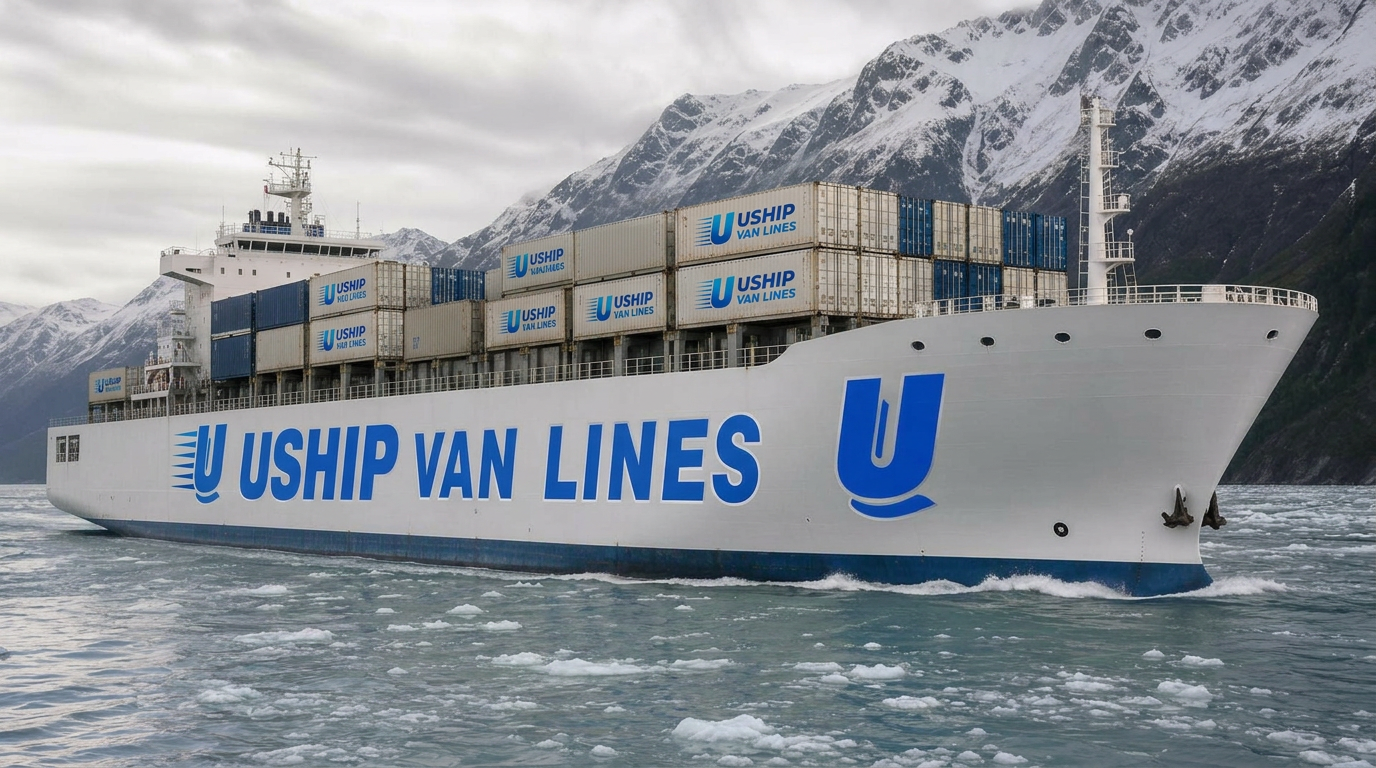
Moving from Durham, NC to Alaska
Moving from Durham, NC to Alaska means crossing more than 3,800 miles and two time zones—plus navigating the unique logistics of Alaska-bound freight. Unlike a standard interstate move, your household goods will travel by truck to the Port of Tacoma, cross the Gulf of Alaska by ocean barge, and arrive at the Port of Anchorage before final delivery to your new home in Anchorage, Fairbanks, the Mat-Su Valley, or beyond.
Best Alaska & Hawaii Movers, powered by UShip Van Lines, specializes in coordinating every leg of this complex journey. From pickup in Durham's Research Triangle neighborhoods to last-mile delivery in Alaska's challenging terrain, we handle the scheduling, documentation, and carrier coordination that make non-contiguous moves successful. Ready to start planning? Request a detailed quote tailored to your inventory and timeline.
Route overview
The Durham to Alaska Moving Route
Your move begins with ground transportation from Durham across approximately 2,700 miles to the Port of Tacoma in Washington State. This continental leg typically takes 5–7 days depending on your pickup date and consolidation schedule. Your belongings share truck space with other Alaska-bound shipments to optimize costs, then transfer to a shipping container at Tacoma's Alaska Marine Lines or TOTE Maritime terminal.
The ocean barge crosses the Gulf of Alaska in 3–5 days, docking at the Port of Anchorage year-round (weather permitting). From Anchorage, last-mile delivery reaches most populated areas within 1–3 days: Anchorage and Eagle River same-day or next-day, Wasilla and Palmer in the Mat-Su Valley within 48 hours, Fairbanks in 2–3 days via the Parks Highway, and Kenai Peninsula communities in 1–2 days. Bush destinations and off-road-system villages require additional coordination via smaller barge, air freight, or winter ice road—adding significant time and cost.
Total door-to-door transit averages 14–21 days during peak summer season (May–September) and can extend to 21–28 days in winter when barge schedules reduce and weather delays are common. Planning around these seasonal rhythms is essential for a smooth Durham-to-Alaska relocation.
How the moving process works
How Your Durham to Alaska Move Works
-
Request a Quote and Schedule Survey – Contact us with your move date, inventory size (typically 2–4 bedrooms), and destination city. We'll provide a detailed estimate based on cubic feet or weight, plus a virtual or in-home survey to assess specialty items like pianos, gun safes, or oversized furniture that require extra handling.
-
Book Your Move 6–8 Weeks in Advance – Alaska barge schedules fill quickly, especially April–August. Early booking guarantees your preferred sail date and locks in pricing. We coordinate your Durham pickup date to align with the next available Tacoma departure, minimizing storage time and cost.
-
Prepare and Pack Your Household – Professional packing services are strongly recommended for Alaska moves due to the multiple handling points (truck, container, barge, final delivery). We use reinforced boxes, custom crating for fragile items, and moisture-resistant wrapping to protect against coastal humidity and temperature swings.
-
Pickup in Durham and Cross-Country Transit – Our contracted carrier loads your goods in Durham, securing them for the 2,700-mile haul to Tacoma. Items are inventoried with detailed condition notes. The truck travels I-40 West to I-84, crossing the Rockies and Cascades before reaching the port.
-
Container Loading and Barge Sailing – At Tacoma, your shipment transfers into a 20-foot or 40-foot ocean container, often consolidated with other households. The container is sealed, loaded onto the barge, and sails north through the Inside Passage and across the Gulf of Alaska to Anchorage.
-
Port Clearance and Alaska Delivery – After docking in Anchorage, containers clear customs (for any international-origin items) and port inspections. Your goods transfer to a local Alaska delivery truck for the final leg to your new address. Delivery windows are confirmed 48–72 hours in advance.
-
Unloading, Inspection, and Settling In – Our Alaska delivery team unloads and places items in your new home. Inspect for any transit damage immediately and note it on the inventory sheet. Most customers report minimal issues when goods are professionally packed and properly containerized.
Estimated moving costs
What a Durham to Alaska Move Costs
A typical 2-bedroom move (approximately 4,000–6,000 pounds or 500–750 cubic feet) from Durham to Anchorage ranges from $6,500 to $10,500. A larger 3-bedroom household (7,000–10,000 pounds or 900–1,300 cubic feet) generally costs $10,500 to $16,000. These estimates include ground transport to Tacoma, ocean barge freight, and last-mile delivery within the Anchorage Bowl.
Key cost drivers include:
- Volume and weight – Alaska moves price by cubic footage or weight, whichever yields higher revenue. Decluttering before your move saves hundreds or thousands.
- Packing services – Professional full-pack adds $1,200–$2,500 but dramatically reduces damage risk across 4,000+ miles and multiple transfers.
- Destination beyond Anchorage – Fairbanks adds $800–$1,500; Kenai Peninsula $400–$800; Kodiak or Southeast Alaska islands $2,000–$4,000+ via additional barge or air.
- Seasonal timing – Summer peak (June–August) commands premium rates due to high demand. Off-season moves (October–March) can save 10–15% but face longer transit and weather delays.
- Vehicle shipping – Adding a car to your move costs $1,800–$2,800 Tacoma-to-Anchorage via roll-on/roll-off barge service.
- Storage – If your Durham move-out and Tacoma sail date don't align, short-term warehouse storage runs $150–$300/month.
We provide binding estimates after inventory review—no surprise charges at delivery. Request your personalized quote to see exact costs for your household size and destination.
Estimated transit times
Durham to Alaska Transit Timeline
Door-to-door moves from Durham to Alaska typically take 14–21 days in summer and 21–28 days in winter. Here's the breakdown:
Durham to Tacoma (5–7 days) – Cross-country truck transit, sometimes including a brief consolidation stop if sharing trailer space. Distance: approximately 2,700 miles.
Port Processing in Tacoma (1–3 days) – Container loading, inspection, and staging for the next scheduled barge sailing. Barges depart Tacoma 1–2 times per week during peak season, less frequently in winter.
Ocean Barge to Anchorage (3–5 days) – The Gulf of Alaska crossing is weather-dependent. Summer sailings are reliable; winter storms can add 1–2 days. Distance: approximately 1,400 nautical miles.
Port Clearance in Anchorage (1–2 days) – Offloading, customs clearance (if applicable), and transfer to local delivery trucks. Peak-season congestion can extend this to 3 days.
Final Delivery (same-day to 3 days) – Anchorage and Eagle River often deliver same-day or next-day after port release. Mat-Su Valley (Wasilla, Palmer) within 1–2 days. Fairbanks 2–3 days. Kenai Peninsula 1–2 days. Remote bush destinations add a week or more.
Pro tip: Book your move to arrive 3–5 days before you need your belongings. Alaska weather and logistics are unpredictable. Never schedule delivery the day before a work start date or lease expiration.
Regional logistics
Alaska-Specific Moving Logistics
Port of Anchorage Operations: All year-round barge freight lands at the Port of Anchorage (Ted Stevens Anchorage International Airport area). Your shipment clears Alaska's agricultural inspection—certain plants, soil, firewood, and untreated wood items are restricted or prohibited. Review Alaska Department of Natural Resources restrictions before packing.
Vehicle Shipping: If driving your car from Durham isn't feasible (4,000+ miles, 7–9 days of hard driving through Canada), ship it. Vehicles travel on the same barge system, loaded in Tacoma and offloaded in Anchorage. Cost: $1,800–$2,800. Your car must be clean (exterior wash required), under ¼ tank of fuel, and contain no personal items except a spare tire and jack. Shipping a vehicle and flying to Alaska is often more cost-effective than a multi-day drive with lodging and meals.
Canadian Transit Considerations: If driving, you'll cross British Columbia and Yukon on the Alaska Highway. Ensure your vehicle insurance is valid in Canada, carry proof of citizenship (passport recommended), and know that U.S. firearms regulations don't apply in Canada—leave guns in your shipped household goods or follow strict Canadian import procedures.
Last-Mile Challenges: Anchorage, Wasilla, Palmer, Fairbanks, Kenai, and Soldotna are served by standard delivery trucks. However, many Alaska homes are on rural properties with long driveways, steep grades, or seasonal access roads. If you're moving to a remote cabin, off-grid homestead, or winter-only ice-road location, discuss access with your moving coordinator. You may need to arrange a shuttle vehicle or snowmobile transfer for the final mile.
Military PCS Moves: Joint Base Elmendorf-Richardson (JBER) near Anchorage and Eielson AFB near Fairbanks generate heavy military traffic May–August. If you're military, your orders determine your entitlements. Civilian customers should book early to avoid getting bumped from peak sailings.
Storage Options: If your new Alaska home isn't ready on delivery day, secure short-term storage in Anchorage (most economical) rather than Tacoma. Local Alaska storage runs $100–$250/month depending on unit size.
Seasonal considerations
Best Times to Move from Durham to Alaska
Spring (April–May): Barge schedules ramp up from winter service. Weather is improving but still unpredictable—late snowstorms in the Rockies can delay trucks, and Gulf storms still occur. Rates start to climb as military PCS season begins. Good balance of availability and cost.
Summer (June–August): Peak moving season. Barge sailings are most frequent (often twice weekly), transit is fastest and most reliable, and Alaska weather is ideal. However, demand is highest—book 8–10 weeks ahead. Expect premium pricing, especially for July moves when families relocate before the school year. If you have flexibility, late August offers slightly better rates as peak tapers.
Fall (September–October): Excellent value window. Rates drop 10–15% after Labor Day, weather is still decent (September is often beautiful in Alaska), and barge schedules remain frequent through mid-October. Roads are clear, and you'll beat the winter freeze. Highly recommended if your timeline allows.
Winter (November–March): Lowest rates and least competition, but significant trade-offs. Barge schedules reduce to weekly or less. Gulf of Alaska storms cause frequent delays—expect the high end of transit estimates. Truck routes face snow closures, especially over mountain passes. Alaska delivery roads can be treacherous (Fairbanks particularly challenging). However, if you're moving for a job with a firm start date and can tolerate 3–4 weeks transit, winter offers real savings. Always build extra buffer time into your move window.
Alaska harvest and fishing seasons: If you're moving to a fishing community (Kenai, Homer, Kodiak), avoid peak salmon season (June–July) when local logistics are strained. For Fairbanks and Interior moves, extreme cold in January–February can complicate delivery.
Why choose Best Alaska & Hawaii Movers
Why Best Alaska & Hawaii Movers for Your Durham-to-Alaska Move?
-
Alaska Barge Expertise – We coordinate Alaska moves daily, managing Tacoma port schedules, containerization, and last-mile delivery across the state. We know which sailing dates offer the best balance of speed and cost, and we build realistic timelines that account for Alaska's unique logistics.
-
End-to-End Coordination – One point of contact from your Durham pickup through Anchorage delivery. We handle carrier contracts, port paperwork, customs documentation, and final-mile scheduling so you don't juggle multiple vendors across 4,000 miles.
-
Transparent Pricing – Binding estimates based on your actual inventory, with every fee explained upfront. No surprise fuel surcharges, port fees, or "extra handling" charges at delivery. You'll know your total cost before committing.
-
Damage Protection – Professional packing services and comprehensive cargo insurance options (Full Value Protection and Released Value) tailored to Alaska's multi-leg journey. Our packing teams use Alaska-grade materials designed for ocean transit and temperature swings.
-
Powered by UShip Van Lines – Access to a nationwide network of licensed, vetted carriers and Alaska-specialist delivery teams. Our technology platform tracks your shipment in real time from Durham to your new Alaska doorstep.