
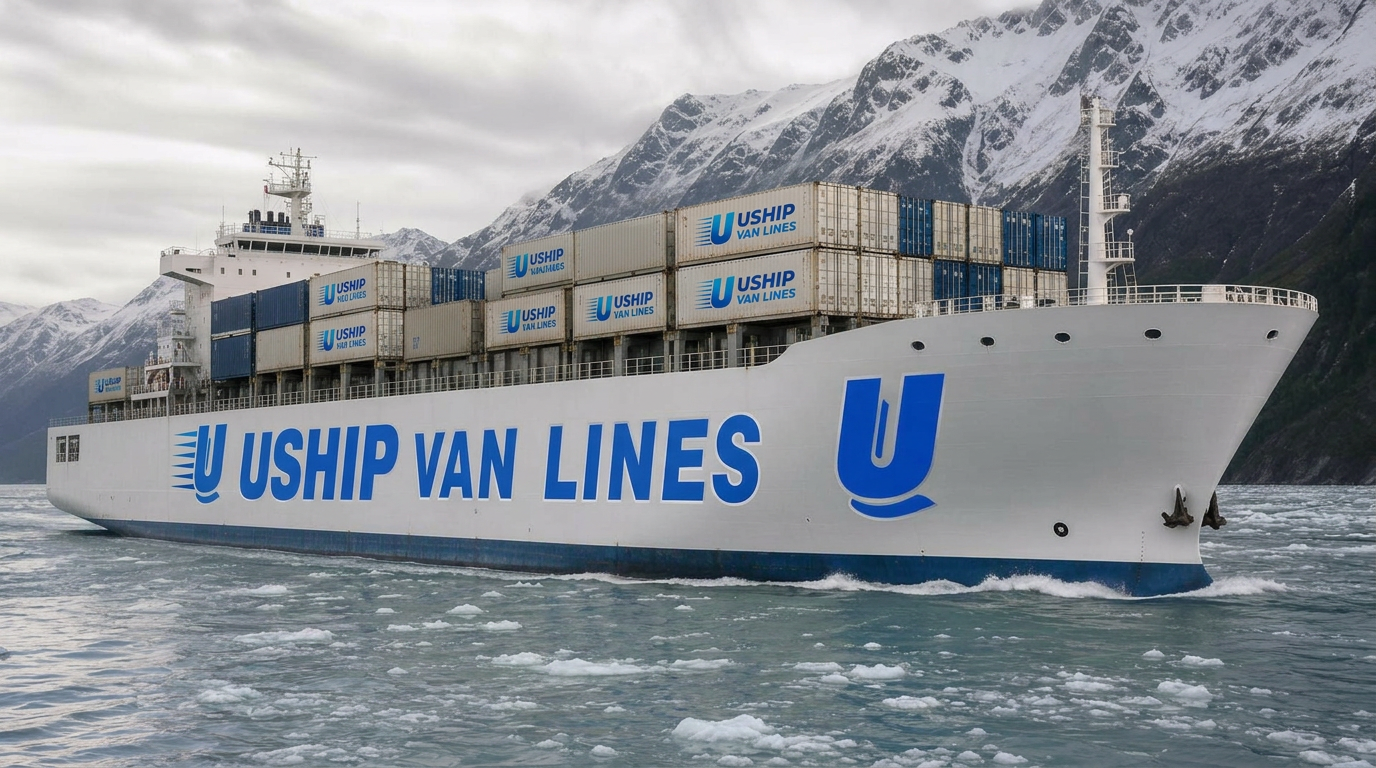
Moving from Alaska to Kansas
Relocating from Alaska to Kansas means coordinating barge shipping, long-haul trucking, and cross-country logistics spanning over 3,000 miles. Whether you're leaving Anchorage for Wichita, Fairbanks for Overland Park, or the Mat-Su Valley for Topeka, your household goods will travel by barge from Alaska to the Port of Tacoma, then overland through the Pacific Northwest and Great Plains to the Sunflower State.
Best Alaska & Hawaii Movers, powered by UShip Van Lines, specializes in Alaska-origin moves requiring barge coordination, customs documentation, and seamless handoffs. Request your free quote today to lock in competitive rates and reserve barge space for your upcoming move.
Route overview
Route Overview: Alaska to Kansas
Your move from Alaska to Kansas follows a multi-modal path. Household goods are picked up at your Alaska residence—whether in Anchorage, Fairbanks, the Kenai Peninsula, or remote bush communities—and containerized for barge transit to the Port of Tacoma, Washington. From Tacoma, your shipment transfers to long-haul trucks that travel east across Washington, Idaho, Montana or Wyoming, South Dakota or Nebraska, and finally into Kansas.
Total distance ranges from 3,200 to 3,800 miles depending on your origin and destination cities. The barge leg alone takes 5–7 days from Anchorage to Tacoma, with weekly sailings operated by carriers like TOTE Maritime and Matson. Overland transit from Tacoma to major Kansas metros—Wichita, Overland Park, Kansas City, Topeka—adds another 7–10 days, accounting for cross-country haul and potential consolidation stops.
Kansas destinations benefit from central U.S. highway access via I-70, I-35, and I-135, making final delivery straightforward. Unlike Alaska's weather-dependent access, Kansas roads are reliably open year-round, though winter ice storms and spring tornadoes can occasionally delay deliveries.
How the moving process works
How Your Alaska-to-Kansas Move Works
-
Free In-Home or Virtual Survey – A moving specialist assesses your inventory, discusses barge schedules, and provides a binding or guaranteed not-to-exceed quote. For remote Alaska locations, virtual surveys via video call are standard.
-
Booking and Barge Reservation – Once you accept the quote, we reserve container space on the next available southbound barge from Alaska to Tacoma. Weekly sailings mean flexible scheduling, but peak summer months (May–August) book quickly.
-
Packing and Container Loading (Alaska) – Professional crews pack, label, and load your belongings into weather-sealed shipping containers at your Alaska residence. Containers are transported to the Port of Anchorage, Whittier, or other departure points.
-
Barge Transit to Tacoma – Your container sails 1,400+ nautical miles to the Port of Tacoma over 5–7 days. Weather delays are rare but possible, especially October–March.
-
Tacoma Transfer and Customs Clearance – Containers are offloaded, inspected if required, and transferred to long-haul trucks. Though Alaska-to-Lower 48 moves don't cross international borders, shipments from certain bush areas may require additional documentation.
-
Overland Trucking to Kansas – Your shipment travels east via I-90, I-80, or I-70 corridors, reaching Kansas in 7–10 days. Consolidation with other shipments may extend transit slightly but reduces cost.
-
Final Delivery and Unpacking – Movers deliver to your Kansas address, unload containers, and offer optional unpacking services. Inspect all items and note any damage on the delivery receipt before the crew departs.
Estimated moving costs
What Does Moving from Alaska to Kansas Cost?
For a typical 2–3 bedroom household (8,000–12,000 pounds), expect to pay $7,500–$14,000 for a full-service move from Alaska to Kansas. Studio and 1-bedroom apartments (3,000–5,000 pounds) range from $4,500–$7,500, while larger 4+ bedroom homes (15,000+ pounds) can exceed $16,000–$22,000.
Key Cost Drivers:
- Barge Freight – The Alaska-to-Tacoma leg accounts for $3,000–$6,000 of your total, based on container size (20-foot vs. 40-foot) and seasonal demand. Summer peak rates run 15–25% higher than winter.
- Overland Distance – Tacoma to Kansas spans 1,800–2,200 miles, adding $2,500–$5,000 in trucking costs depending on fuel prices and route.
- Packing and Labor – Full packing services in Alaska cost $800–$2,000, with higher rates in remote areas like Fairbanks or the Kenai Peninsula due to crew mobilization.
- Access and Terrain – Bush Alaska pickups requiring bush plane or seasonal road access can add $1,000–$3,000 in surcharges. Kansas delivery locations are typically straightforward, with no comparable fees.
- Insurance and Valuation – Basic Released Value Coverage (60¢/lb) is included; Full Value Protection costs 1–2% of declared inventory value and is strongly recommended for high-value items.
- Storage – If your Kansas home isn't ready, Tacoma-area or Kansas storage runs $150–$400/month for a typical household.
These are estimates only. Every move is unique. Request a detailed quote to receive binding pricing tailored to your inventory, dates, and service level.
Estimated transit times
How Long Does an Alaska-to-Kansas Move Take?
Door-to-door transit typically requires 14–21 days from pickup in Alaska to delivery in Kansas, broken down as follows:
- Alaska Pickup to Port Departure: 1–3 days for local transport and container staging in Anchorage, Whittier, or other departure ports.
- Barge Transit (Alaska to Tacoma): 5–7 days on the water, with weekly sailings year-round. Weather delays are uncommon but can add 1–2 days in winter.
- Tacoma Port Processing and Transfer: 1–2 days for offloading, customs clearance (if needed), and transfer to overland carriers.
- Overland Trucking (Tacoma to Kansas): 7–10 days via I-90/I-80/I-70 corridors. Consolidated shipments may take the upper end of this range.
- Final Delivery Window: Carriers typically provide a 2–3 day delivery window once your shipment reaches Kansas.
Remote Alaska Origins: Pickups from Fairbanks, the Kenai Peninsula, or bush communities may add 2–5 days for initial transport to deep-water ports.
Peak Season Considerations: May–August moves can experience scheduling pressure due to high Alaska relocation volume (military PCS season, seasonal workers departing). Book 4–6 weeks ahead to secure preferred dates.
Off-Season Advantage: November–March moves often enjoy faster barge loading/offloading and less trucking congestion, potentially shaving 2–3 days off total transit.
Regional logistics
Alaska-Specific Moving Logistics
Ports and Barge Operations: Most Alaska moves depart from the Port of Anchorage (primary), Whittier (rail-accessible), or seasonal ports in Seward and Kodiak. TOTE Maritime and Matson operate weekly southbound sailings to Tacoma, carrying containerized household goods alongside commercial freight. Containers are weather-sealed 20-foot or 40-foot steel units.
Vehicle Shipping: If you're driving your car from Alaska to Kansas, the Alaska Highway (ALCAN) is your route—a 2,200+ mile journey from Fairbanks through Canada to the Lower 48, requiring 4–7 days of driving. Alternatively, ship your vehicle via Roll-on/Roll-off (RoRo) barge from Alaska to Tacoma ($1,200–$2,200 per standard sedan), then drive or auto-transport from Tacoma to Kansas. Many clients ship their household goods and drive one vehicle, shipping a second if needed.
Customs and Documentation: Alaska-to-Lower 48 moves are domestic and don't require customs clearance in the international sense. However, if your route includes Canadian transit (rare for barge moves, common for self-drives), ensure you have vehicle registration, proof of insurance, and passport/enhanced ID. Household goods on barges are inspected by USDA for prohibited agricultural items (firewood, plants, certain foods).
Last-Mile Alaska Considerations: Fairbanks, Kenai, and Mat-Su Valley pickups require ground transport to Anchorage-area ports, adding 1–2 days. Bush communities (Bethel, Nome, Kotzebue, Juneau, Ketchikan) may require bush plane, seasonal ice road, or separate barge legs, adding significant cost and time.
Kansas Delivery: Kansas destinations—Wichita, Overland Park, Kansas City metro, Topeka, Lawrence—are all truck-accessible via major interstates. No special terrain challenges. Standard residential delivery applies; notify movers if your Kansas home has narrow streets, long driveways, or restricted truck access.
Seasonal considerations
Seasonal Timing for Your Alaska-to-Kansas Move
Summer (May–August): Peak moving season for Alaska. Barge space books quickly due to military PCS cycles and seasonal worker departures. Expect premium rates (15–25% above baseline) and the longest lead times. Weather is ideal—24-hour daylight in Alaska, warm temps in Kansas—but demand is intense. Book 6–8 weeks ahead.
Fall (September–October): Excellent shoulder season. Barge schedules remain frequent, rates drop 10–15%, and Alaska weather is still manageable. Kansas experiences pleasant fall conditions, ideal for settling in. Early October is the sweet spot before winter weather arrives.
Winter (November–March): Off-peak season with the lowest rates—often 20–30% below summer. Barge sailings continue weekly, though winter storms can occasionally delay Alaska port operations by 1–2 days. Overland trucking through Montana and the Dakotas may face ice/snow delays. Kansas winters are mild compared to Alaska, but ice storms can disrupt final delivery. Best for cost-conscious movers with flexible timelines.
Spring (April–May): Transition period. Early April offers low-season pricing; by mid-May, peak rates kick in. Alaska snow melt can make rural road access challenging. Kansas spring weather is volatile (tornado season peaks April–June), though this rarely affects moves directly. Book early April for best balance of cost and conditions.
Bush Alaska Note: Remote pickups are weather-dependent year-round. Ice roads to certain communities are accessible only January–March; others require bush plane access at premium cost.
Why choose Best Alaska & Hawaii Movers
Why Choose Best Alaska & Hawaii Movers for Your Alaska-to-Kansas Move
- Alaska Barge Expertise – We coordinate weekly sailings with TOTE and Matson, manage port logistics, and handle the unique challenges of Alaska-origin moves, from Anchorage to the most remote bush communities.
- Transparent, All-Inclusive Pricing – Your quote covers barge freight, overland trucking, packing, insurance options, and delivery. No hidden fees or surprise surcharges at delivery.
- Powered by UShip Van Lines – Access to a vetted nationwide carrier network ensures reliable overland transport from Tacoma to Kansas, with real-time tracking and proactive communication.
- Flexible Service Levels – Choose full-service packing and unpacking, container loading only, or hybrid solutions that fit your budget and timeline.
- Dedicated Move Coordination – A single point of contact manages your entire move from Alaska pickup through Kansas delivery, so you're never left wondering where your shipment is or who to call.
- Storage Solutions – Need short-term or long-term storage in Tacoma or Kansas? We offer secure, climate-controlled options at competitive rates.