
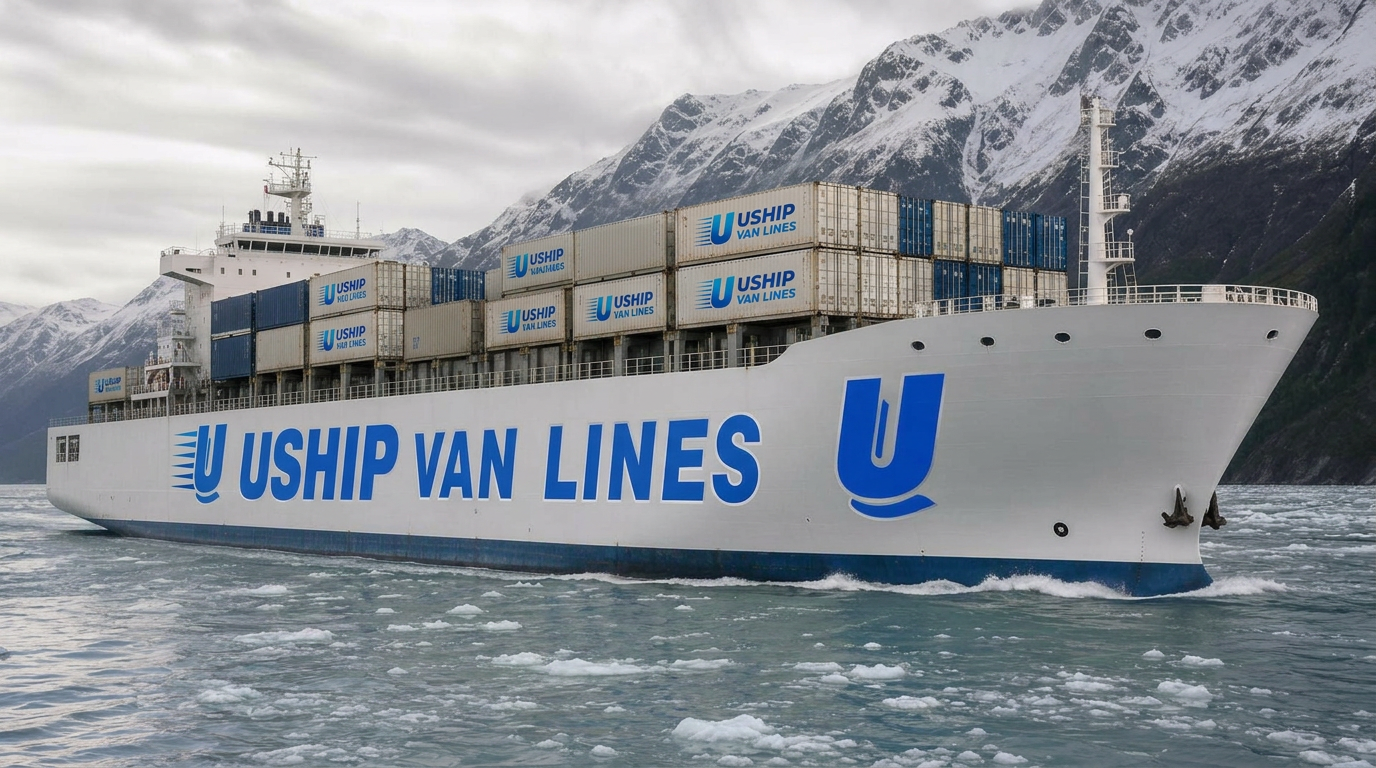
Moving from Missouri to Alaska
Moving from Missouri to Alaska represents one of the most dramatic relocations in the United States—trading the heartland for the Last Frontier. Whether you're drawn by career opportunities in Anchorage, the natural beauty of Mat-Su Valley, or adventure in Fairbanks, this move requires specialized logistics that most moving companies simply can't handle.
Best Alaska & Hawaii Movers, powered by UShip Van Lines, manages every step of your Missouri-to-Alaska relocation. From loading your belongings in Kansas City, St. Louis, Springfield, or Columbia to coordinating barge transport through Tacoma and final delivery to your new Alaska home, we turn this complex interstate move into a streamlined experience. Ready to start your northern adventure? Request your free moving quote today.
Route overview
The Missouri to Alaska Moving Route
Your belongings travel approximately 3,200–3,800 miles depending on your Missouri origin city and Alaska destination. The journey begins with highway transport from Missouri across the northern tier states to the Pacific Northwest consolidation hub in Tacoma, Washington. This overland segment typically covers 1,900–2,200 miles and takes 4–6 days.
From Tacoma, your household goods transfer to ocean barge service bound for Alaska—the only practical method for moving full households to the state. The barge voyage to Anchorage spans roughly 1,500 nautical miles through the Inside Passage and Gulf of Alaska, requiring 5–8 days of sailing time depending on weather and schedule. Once your shipment arrives at the Port of Anchorage, local Alaska carriers complete final delivery to communities throughout the state.
This multimodal route—truck to barge to local delivery—demands precise coordination between carriers, customs documentation (Alaska is still part of the U.S., but has unique agricultural inspections), and careful timing around barge sailing schedules that run weekly during peak season but less frequently in winter months.
How the moving process works
How Your Missouri to Alaska Move Works
-
Free quote and planning consultation – We assess your household size, inventory, and Alaska destination to create a customized moving plan. You'll receive a detailed cost estimate covering all legs of the journey, with no hidden fees.
-
Professional packing and loading in Missouri – Our team arrives at your Missouri home to pack fragile items, disassemble furniture, and load everything into a dedicated truck. We inventory each item for tracking through the entire multimodal journey.
-
Overland transport to Tacoma consolidation facility – Your shipment travels via interstate highway to our Pacific Northwest hub, where Alaska-bound cargo is prepared for barge loading. This leg typically takes 4–6 days.
-
Barge preparation and ocean freight – Your household goods transfer to weatherproof containers or secure barge space. The vessel departs Tacoma on scheduled sailings (weekly in summer, bi-weekly or less in winter) for the 5–8 day voyage to Anchorage.
-
Port clearance and Alaska customs inspection – Upon arrival at the Port of Anchorage, your shipment clears Alaska agricultural inspections (stricter than most states to protect local ecosystems) and customs documentation processes.
-
Last-mile delivery throughout Alaska – Local Alaska carriers retrieve your shipment from the port and complete final delivery to Anchorage, Fairbanks, Wasilla, Palmer, Kenai, Soldotna, or other communities. Bush and remote destinations may require additional logistics.
-
Unpacking and final walkthrough – Delivery teams unload, reassemble furniture, and place items in designated rooms. You inspect and sign off on the completed delivery, closing out your Missouri-to-Alaska moving journey.
Estimated moving costs
What Does Moving from Missouri to Alaska Cost?
A typical 2–3 bedroom household move from Missouri to Alaska ranges from $6,800 to $13,500 for a full-service relocation. Studio and 1-bedroom moves start around $4,200–$6,500, while larger 4+ bedroom homes can exceed $15,000–$22,000.
Key cost factors include:
- Distance and volume – Missouri origins add 1,900–2,200 overland miles before barge transport. Shipment weight/cubic feet directly impacts pricing on both truck and barge segments.
- Barge sailing schedule – Peak summer sailings (May–September) cost more due to demand. Off-season moves may find discounts but have fewer departure options.
- Alaska destination complexity – Anchorage delivery is most straightforward. Fairbanks adds 350+ miles of ground transport. Remote communities, islands, or bush locations require specialized last-mile logistics at premium rates.
- Packing services – Professional packing adds $800–$2,500 depending on household size, but protects belongings during the multi-leg journey and simplifies insurance claims if needed.
- Vehicle shipping – Cars, trucks, and motorcycles ship separately via roll-on/roll-off barge service, adding $1,800–$3,200 per vehicle (Tacoma to Anchorage).
- Storage needs – If your Missouri move-out and Alaska barge schedule don't align, short-term storage in Tacoma runs $150–$400 per month.
- Insurance coverage – Basic carrier liability covers $0.60 per pound. Full-value protection costs 1–2% of declared value but provides comprehensive coverage for this complex route.
We never quote guaranteed prices without assessing your specific inventory and timeline. Request a detailed estimate to understand your exact Missouri-to-Alaska moving costs.
Estimated transit times
How Long Does Moving from Missouri to Alaska Take?
Door-to-door transit from Missouri to Alaska typically requires 14–25 days, though this varies significantly based on barge schedules, Alaska destination, and seasonal factors.
Timeline breakdown:
- Missouri pickup to Tacoma hub: 4–6 days overland transport
- Tacoma consolidation and barge loading: 1–5 days (depends on arrival timing relative to next sailing)
- Barge voyage to Anchorage: 5–8 days on the water
- Port processing and customs clearance: 1–3 days
- Final Alaska delivery: 1–3 days for Anchorage; 2–5 days for Fairbanks, Mat-Su, Kenai Peninsula; longer for remote areas
Summer moves (May–September) benefit from weekly barge departures, tighter schedules, and faster port processing. Winter moves (October–April) face less frequent sailings (sometimes bi-weekly or monthly), weather delays, and extended timelines—occasionally stretching to 30–35 days.
For time-sensitive moves, we recommend shipping a "first-night box" of essentials via express service and planning temporary lodging in Alaska for the arrival window. Most movers provide a 5–7 day delivery window to account for variables in this complex multimodal route.
Regional logistics
Alaska-Specific Moving Logistics
Barge operations and ports: Nearly all Missouri-to-Alaska household goods travel through the Port of Tacoma to the Port of Anchorage. Anchorage serves as Alaska's primary freight gateway, with local carriers distributing cargo throughout the state. Some carriers also use Seattle or other Pacific Northwest ports. Barges operate on published schedules—weekly in summer, less frequently in winter—and you cannot force an off-schedule departure.
Alaska agricultural inspections: Alaska maintains strict rules on importing plants, soil, and certain food items to protect its fragile ecosystems from invasive species. Inspectors at the Port of Anchorage screen all incoming shipments. Prohibited items include live plants, untreated firewood, soil-containing items, and some fresh produce. Your moving company should provide a complete restricted-items list during planning.
Vehicle shipping: Cars must ship separately from household goods via roll-on/roll-off (RORO) barge service. Vehicles travel from Tacoma to Anchorage in 7–12 days. They must be clean (to pass agricultural inspection), operable, and contain no personal items (theft risk). Expect $1,800–$3,200 per vehicle. Winter vehicle shipping faces the same schedule reductions as household goods.
Remote and bush community delivery: Locations not connected to Alaska's limited road system—including hundreds of villages, island communities, and bush areas—require additional logistics. Shipments may transfer to smaller barges, bush planes, or seasonal ice road transport. Costs and timelines increase substantially. Some remote areas only receive freight during specific seasons.
Climate preparation: Alaska's extreme climate demands proper preparation. Electronics, wood furniture, and musical instruments face temperature swings from 80°F Missouri summers through sub-zero truck/barge transit to Alaska's cold. Professional climate-controlled packing and moisture barriers protect sensitive items. Barge containers offer better protection than open-deck freight.
Documentation requirements: While Alaska is a U.S. state requiring no passport or customs forms, you'll need inventory lists for agricultural inspection, insurance documents, and delivery authorization. Keep copies of all paperwork accessible during the 2–3 week transit period. For vehicle shipping, you'll need title/registration copies and signed barge company contracts.
Storage contingencies: Barge schedules and Alaska delivery logistics rarely align perfectly with Missouri move-out dates and Alaska housing availability. Budget for potential storage: short-term in Tacoma if you miss a sailing, or in Alaska if your new home isn't ready when your shipment arrives. Most carriers offer 1–7 days free storage; extended storage runs $150–$400 monthly.
Seasonal considerations
Best Time to Move from Missouri to Alaska
Summer (May–September) is peak Alaska moving season. Weekly barge sailings from Tacoma provide the most scheduling flexibility and fastest transit times. Weather is optimal for ocean freight and last-mile delivery throughout Alaska. However, prices hit their annual high due to demand, and you'll need to book 6–10 weeks ahead to secure preferred dates. Summer is ideal if timeline predictability matters most.
Fall (October–November) offers a sweet spot: rates drop 10–20% from summer peaks, barge schedules remain relatively frequent (though shifting to bi-weekly), and weather is still manageable for most Alaska deliveries. Book by late August for October moves. November introduces early winter weather risks in Alaska's interior and northern regions.
Winter (December–March) brings the lowest rates—sometimes 25–35% below summer—but significant trade-offs. Barge sailings may run monthly rather than weekly, extending timelines. Severe weather can delay ocean crossings and make last-mile delivery to Fairbanks, Mat-Su, and remote areas challenging or temporarily impossible. Road closures, ice conditions, and extreme temperatures require flexible scheduling. Only recommended if you have very flexible timelines and can wait out weather delays.
Spring (April–early May) sees increasing barge frequency as operators ramp up for summer. Rates remain below peak, though climbing weekly. This can be an excellent compromise season—avoiding winter logistics nightmares while capturing some off-season savings. Alaska's snowmelt and breakup season may complicate delivery to certain rural areas in late April.
Regardless of season, book your Missouri-to-Alaska move as early as possible. Summer moves require 8–12 week lead times; off-season moves need 4–6 weeks minimum to coordinate the multimodal logistics.
Why choose Best Alaska & Hawaii Movers
Why Choose Best Alaska & Hawaii Movers for Your Missouri to Alaska Move
-
Alaska-specialized expertise – We focus exclusively on moves to and from Alaska and Hawaii, managing the unique multimodal logistics, barge schedules, and last-mile Alaska delivery that general moving companies avoid or badly mishandle.
-
Powered by UShip Van Lines – Our partnership with UShip Van Lines provides nationwide pickup coverage throughout Missouri (Kansas City, St. Louis, Springfield, Columbia, and all smaller communities) combined with dedicated Alaska delivery networks.
-
Complete transparency – You receive detailed pricing breakdowns covering every leg of your journey, realistic timeline estimates that account for barge schedules and weather variables, and proactive communication throughout the 2–3 week transit period.
-
Single point of contact – One coordinator manages your entire multimodal move from Missouri loading through Tacoma consolidation, barge booking, port clearance, and final Alaska delivery. You never chase multiple companies for status updates.
-
Flexible solutions for every budget – We offer full-service packing and white-glove delivery, partial packing options, or simple freight-only service where you handle packing. Storage solutions in Tacoma and Alaska accommodate scheduling gaps. Vehicle shipping coordination simplifies the separate auto transport process.