
Moving from Indiana to Alaska
Moving from Indiana to Alaska is one of the most logistically complex domestic relocations you can undertake. Your household goods travel over 3,000 miles, transitioning from highway transport across the Lower 48 to ocean barge service via the Port of Tacoma, then final delivery to Anchorage, Fairbanks, the Mat-Su Valley, or even remote bush communities. The journey involves multiple carriers, strict scheduling windows, and weather-dependent timelines that require expert coordination.
Best Alaska & Hawaii Movers, powered by UShip Van Lines, specializes in this exact route. We manage every transition point—from pickup in Indianapolis, Fort Wayne, or South Bend through barge loading in Washington and final delivery anywhere in Alaska. Request a free quote today to secure your spot on the next available sailing and receive transparent pricing tailored to your inventory and destination.
Route overview
The Indiana to Alaska Moving Route
Your belongings begin their journey with ground transportation from your Indiana home to our consolidation hub near the West Coast. Most Indiana shipments depart from cities like Indianapolis, Fort Wayne, Carmel, Bloomington, Evansville, or South Bend, traveling approximately 2,000 miles westward on Interstate 80 or I-90 through Nebraska, Wyoming, and Idaho before reaching Washington State.
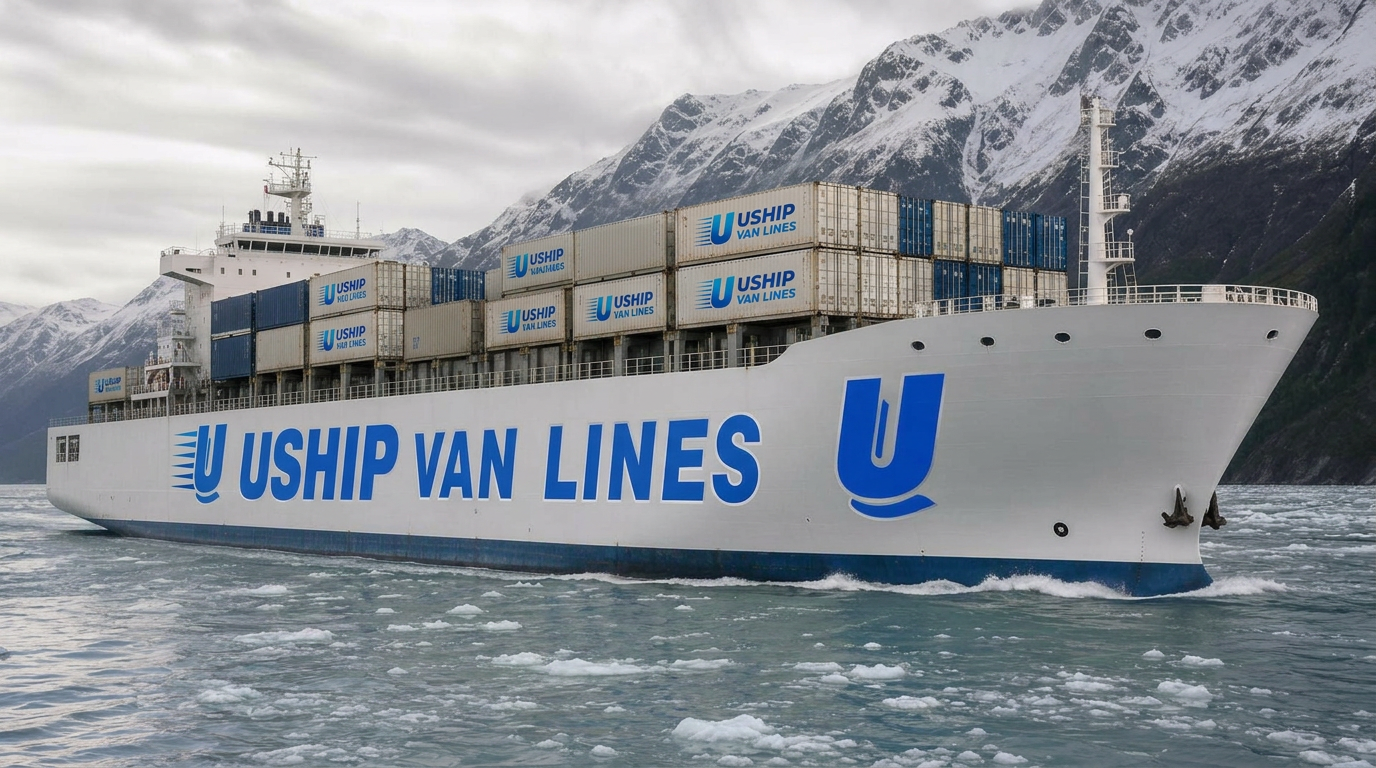
In Tacoma, your shipment transfers to ocean barge service operated by carriers like TOTE Maritime or Alaska Marine Lines. These barges depart on fixed weekly schedules year-round, sailing north through the Inside Passage past British Columbia and Southeast Alaska before reaching the Port of Anchorage. The 1,450-nautical-mile voyage takes 60–72 hours of active sailing, though your cargo remains containerized and climate-controlled throughout.
From Anchorage, final delivery depends on your destination. Anchorage Metro, Eagle River, and Mat-Su Valley locations receive direct truck delivery. Fairbanks, North Pole, and interior communities add 350 miles via the Parks Highway. Kenai Peninsula destinations like Soldotna or Homer require an additional 150–225 miles. Remote or off-road-system communities may need bush plane or winter ice road logistics, adding weeks and significant cost to the final mile.
How the moving process works
How Your Indiana to Alaska Move Works: Step by Step
-
Initial Survey and Quote — We conduct a virtual or in-person walkthrough of your Indiana home to catalog your inventory. You'll receive a binding estimate that includes ground transport, barge fees, Alaska delivery, and any required storage. We discuss timeline constraints, especially if you're relocating for a job start date or school year.
-
Packing and Pickup in Indiana — Professional movers arrive at your Indiana residence to pack, pad, and load your household goods into a dedicated truck or consolidated container. High-value items, fragile electronics, and family heirlooms receive extra protection. Pickup scheduling aligns with the next available barge sailing from Tacoma, typically requiring 5–7 days of overland transit before the sailing date.
-
Overland Transit to Tacoma — Your shipment travels via commercial truck across the northern tier states, passing through Illinois, Iowa, South Dakota, Montana, and into Washington. Drivers navigate mountain passes and weather conditions that can add 1–2 days during winter. Upon arrival in Tacoma, your goods are staged at a secure warehouse near the port.
-
Barge Loading and Sailing — TOTE Maritime barges depart Tacoma every Friday evening (schedules vary slightly by season). Your containerized shipment is loaded 24–48 hours before sailing, sealed, and secured for the ocean voyage. The barge sails north through Puget Sound, the Strait of Juan de Fuca, and along the British Columbia coast before entering Alaskan waters. Weather delays are rare but possible during severe Gulf of Alaska storms.
-
Port Arrival and Customs Clearance — After 3–4 days at sea, the barge docks at the Port of Anchorage. Alaska-bound shipments are offloaded, inspected by USDA for restricted agricultural items (firewood, certain plants, soil), and cleared for inland transport. This process takes 1–2 business days.
-
Final Delivery Across Alaska — A local Alaska carrier picks up your shipment from the port and delivers to your new home. Anchorage-area deliveries often occur within 24–48 hours of port clearance. Fairbanks deliveries add 2–3 days for the drive up the Parks Highway. Remote locations may require scheduling with bush carriers or waiting for seasonal access (ice roads open late January through March; some villages are summer-barge-only).
-
Unpacking and Inspection — Upon delivery, you inspect your goods for any damage, check the inventory list, and note exceptions on the delivery receipt. Full-service unpacking is available for an additional fee, or you can handle it at your own pace. Any insurance claims must be filed within the timeframe specified in your contract, typically 30–90 days.
Estimated moving costs
What Does Moving from Indiana to Alaska Cost?
A full-service move from Indiana to Alaska for a typical 2–3 bedroom household (approximately 7,000–10,000 pounds) generally ranges from $8,500 to $14,500. Studio and one-bedroom apartments (2,000–4,000 pounds) cost approximately $4,500–$7,000, while large 4+ bedroom homes (12,000–16,000 pounds) can reach $16,000–$24,000 or more.
Key cost drivers include:
- Weight and Volume — Alaska barge carriers charge per hundred-weight (CWT) or cubic foot, whichever is greater. Dense items like pianos or safes increase weight-based charges; bulky furniture increases cube-based charges.
- Final Destination — Anchorage deliveries are least expensive. Fairbanks adds $800–$1,500. Kenai Peninsula or Southeast Alaska communities add $1,200–$2,500. Bush villages requiring plane or barge transfer can add $3,000–$8,000.
- Packing Services — Professional packing for a 3-bedroom home costs $1,200–$2,500 depending on the number of fragile items, artwork, and specialty crating needs.
- Storage — If your new Alaska home isn't ready or you miss a barge sailing, warehouse storage in Tacoma or Anchorage costs $150–$400 per month.
- Vehicle Shipping — Adding a car or truck to the same barge costs $1,400–$2,200 from Tacoma to Anchorage (vehicles must be driven to Tacoma or shipped separately from Indiana to Washington).
- Seasonal Demand — Summer moves (May–August) command premium pricing due to high demand from military PCS transfers and family relocations timed to the school year. Off-season moves (October–March) may offer 10–15% discounts but face weather-related delays.
- Insurance — Basic carrier liability covers $0.60 per pound per article. Full-value replacement insurance costs approximately $100–$300 per $10,000 of declared value and is strongly recommended for Alaska's multi-modal journey.
We never guarantee prices without a detailed inventory. Request a binding quote to receive accurate pricing based on your specific belongings, pickup location in Indiana, and final Alaska destination.
Estimated transit times
How Long Does the Move Take?
Door-to-door transit from Indiana to Alaska typically requires 18–26 days under normal conditions. Here's the breakdown:
- Indiana Pickup to Tacoma Staging — 5–7 days for overland truck transport across the northern states. Winter weather in Montana or Wyoming can add 1–2 days.
- Tacoma Warehouse to Barge Departure — 2–4 days for consolidation, loading, and pre-sailing staging. Your shipment must arrive in time for the next scheduled Friday sailing.
- Ocean Transit Tacoma to Anchorage — 3–4 days of sailing time. TOTE Maritime barges are highly reliable; weather delays are uncommon but possible during severe winter storms in the Gulf of Alaska.
- Port Clearance in Anchorage — 1–2 business days for offloading, USDA inspection, and customs paperwork (even though Alaska is part of the U.S., agricultural inspections are mandatory).
- Final Delivery from Port to Home — Same-day to 5 days depending on your location. Anchorage Metro is fastest (24–48 hours). Fairbanks adds 2–3 days. Kenai Peninsula, Southeast Alaska, or bush communities add up to 1–2 weeks depending on weather, seasonal access, and carrier schedules.
If you miss a sailing, you'll wait 7 days for the next barge, extending your total timeline by a full week. Booking 4–6 weeks in advance during summer or 3–4 weeks during winter ensures you secure your preferred departure date.
Regional logistics
Alaska-Specific Logistics You Must Know
Port and Barge Details: Your shipment sails from the Port of Tacoma (not Seattle) aboard TOTE Maritime's M/V Midnight Sun or North Star, or via Alaska Marine Lines vessels. These ro-ro (roll-on/roll-off) barges carry containerized household goods, vehicles, and commercial freight. Your goods travel in sealed 20' or 40' containers (or consolidated with other shipments) to protect against salt air and weather.
Vehicle Shipping: Vehicles must be in drivable condition with less than a half-tank of fuel. You can ship a car on the same barge as your household goods, but the vehicle must arrive at the Tacoma port independently—either driven from Indiana (3–4 days cross-country) or shipped via separate auto transport. Vehicle-only barge service from Tacoma to Anchorage costs $1,400–$2,200. Alternatively, some movers drive vehicles to Alaska via the Alaska-Canada Highway (ALCAN), a 2,250-mile route from the Lower 48 through British Columbia and Yukon Territory, taking 4–6 days and requiring winter driving skills.
Restricted and Prohibited Items: USDA prohibits or restricts soil, firewood, certain plants, fresh fruits/vegetables, and any wood with bark attached. Alaska has strict invasive species laws. Hazardous materials (propane, gasoline, ammunition, paint, cleaning chemicals) cannot travel on barges. Firearms are legal to transport but must be declared and unloaded; some carriers require separate shipping. Marijuana is legal in Alaska but remains federally prohibited for interstate transport—leave it behind.
Last-Mile Challenges: If you're moving to a remote or off-road-system community (Bethel, Kotzebue, Nome, Barrow/Utqiaġvik, Dillingham, Cordova, many Southeast villages), your shipment stops in Anchorage and transfers to bush plane (expensive, weight-limited, often $1.50–$3.00 per pound) or seasonal barge/ice road. Plan for 2–4 additional weeks and $3,000–$10,000+ in extra costs. Confirm access logistics before booking.
Paperwork and Insurance: Although Alaska is a U.S. state, your shipment will be inspected as if crossing a border. Keep your inventory list, bill of lading, and proof of ownership for high-value items accessible. Purchase full-value replacement insurance—basic carrier liability won't cover your losses if a container is damaged at sea or during offloading.
Seasonal considerations
Best Times to Move from Indiana to Alaska
Spring (April–May): Barge schedules ramp up after winter. Roads in both Indiana and Alaska are transitioning from winter conditions—watch for late-season snowstorms in the Rockies and spring breakup (muddy, impassable roads) in rural Alaska mid-April through early May. Demand increases in May as families prepare for summer relocations. Book early.
Summer (June–August): Peak moving season. Military PCS transfers, university relocations, and families moving before the school year create the highest demand and highest prices. Barge sailings are fully booked 6–8 weeks in advance. Weather is optimal: long daylight hours, dry roads, and no seasonal access restrictions. Expect to pay premium rates but enjoy the most predictable timelines.
Fall (September–October): Excellent shoulder season. Demand drops after Labor Day, and pricing becomes more negotiable. Weather remains generally favorable in both Indiana and Alaska, though early snow can arrive in Alaska by mid-October. This is the sweet spot for cost-conscious movers who have flexible timelines.
Winter (November–March): Lowest demand and best pricing, but weather adds complexity. Indiana winter storms can delay pickup. Mountain passes in Montana, Idaho, and Wyoming may close temporarily due to blizzards, adding 1–3 days to overland transit. Alaska winter deliveries face short daylight hours (Fairbanks has only 3–4 hours of daylight in December), icy roads, and extreme cold that requires extra care for temperature-sensitive items like electronics and plants (which often don't survive anyway). Remote Alaska locations accessible only by ice road (Prudhoe Bay, some North Slope villages) are reachable January–March, making winter the only option for some destinations.
Why choose Best Alaska & Hawaii Movers
Why Choose Best Alaska & Hawaii Movers for Your Indiana to Alaska Move
-
Alaska Specialists, Not Generalists — We exclusively handle Alaska and Hawaii moves, powered by UShip Van Lines' nationwide network. We know the Tacoma barge schedules, Alaska port procedures, and last-mile carriers in Fairbanks, Mat-Su, Kenai, and beyond. Most national van lines subcontract Alaska moves; we control the entire process.
-
Transparent, Binding Quotes — No surprise fees. Your quote includes ground transport from Indiana, barge fees, port handling, Alaska delivery, and basic insurance. Optional services (packing, crating, storage, full-value insurance) are itemized separately. You know your total cost before signing.
-
Dedicated Move Coordination — A single point of contact manages your move from Indiana pickup through Alaska delivery. You receive proactive updates at every transition: when your truck departs Indiana, when your shipment is staged in Tacoma, when the barge sails, when it docks in Anchorage, and when the final delivery is scheduled.
-
Flexible Scheduling for Remote Destinations — Moving to Fairbanks, Homer, or a bush village? We coordinate with Alaska's seasonal carriers, bush plane services, and ice road logistics. We've delivered to Prudhoe Bay in February and Adak Island in July—no Alaska location is outside our expertise.
-
Storage Options at Both Ends — If your Indiana home closes before your Alaska home is ready, or if you miss a barge sailing, we offer secure climate-controlled storage in Tacoma and Anchorage at competitive monthly rates. Your belongings stay in our network until you're ready.