
Moving from Alaska to Indiana
Moving from Alaska to Indiana means trading glaciers and midnight sun for Midwest prairies, four distinct seasons, and a significantly lower cost of living. Whether you're relocating from Anchorage to Indianapolis, Fairbanks to Fort Wayne, or the Mat-Su Valley to Bloomington, this long-distance move combines barge transport through the Port of Tacoma with overland trucking across nearly 3,000 miles of North America.
Best Alaska & Hawaii Movers, powered by UShip Van Lines, specializes in Alaska-to-Lower 48 relocations, coordinating every step from port pickup to final delivery. Our team handles the unique challenges of Alaska moves—barge scheduling, vehicle shipping, customs paperwork, and weather-dependent timelines—so you can focus on settling into the Hoosier State. Ready to start planning? Request your free, no-obligation moving quote today.
Route overview
The Alaska to Indiana Moving Route
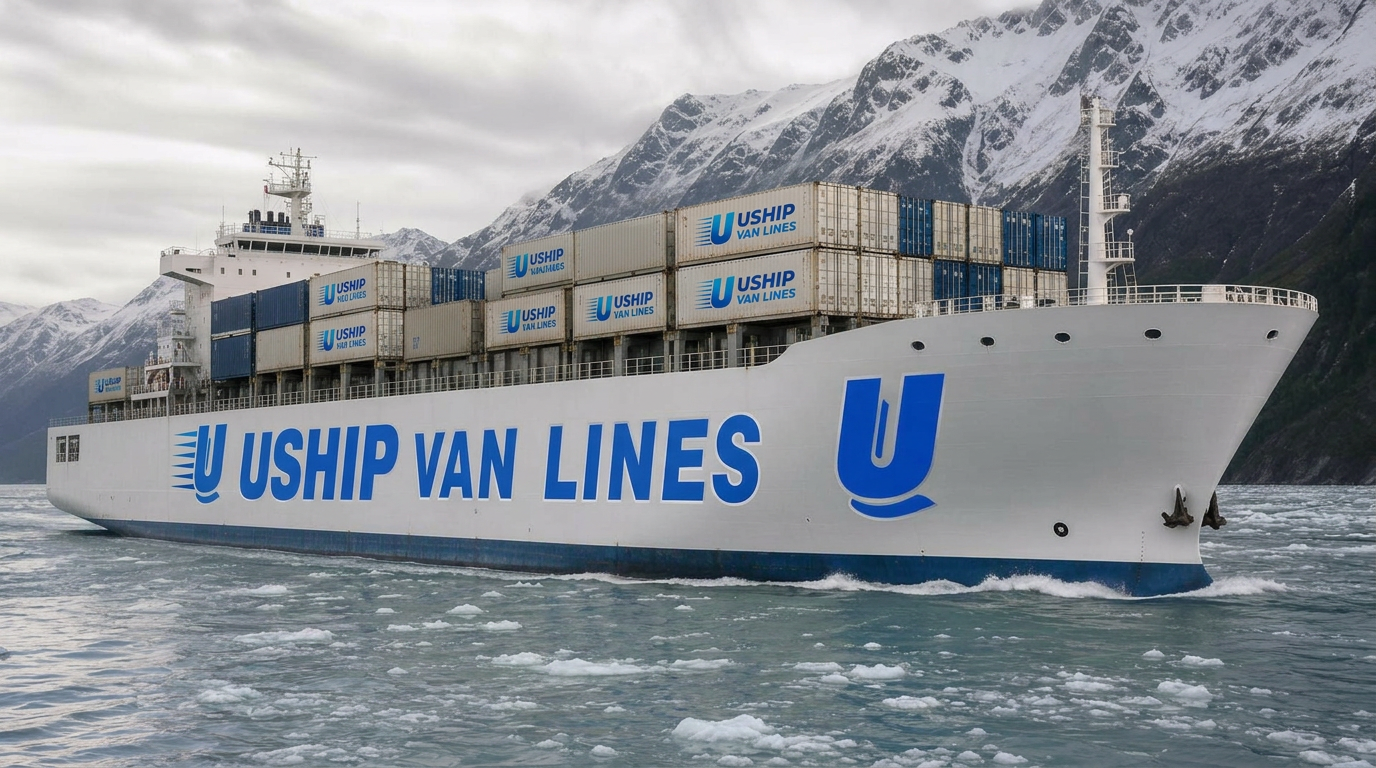
Your household goods begin their journey at your Alaska residence—whether that's in Anchorage, Fairbanks, the Kenai Peninsula, or the Mat-Su Borough—and are transported to the Port of Anchorage or Port of Whittier for barge loading. The marine leg sails approximately 1,450 nautical miles through the Inside Passage and along the Pacific coast to the Port of Tacoma, Washington, taking 5–7 days depending on weather and sailing schedules.
Once offloaded in Tacoma, your shipment is transferred to over-the-road trucks for the continental crossing. The overland route covers roughly 2,200 miles eastward through Washington, Idaho, Montana or Wyoming, South Dakota, and into the Midwest via Iowa or Nebraska before reaching Indiana. This segment typically takes 4–6 days of active driving time, though total elapsed time includes warehouse transfers and logistics coordination.
Indiana destinations range from the Indianapolis metro area (the state's largest city and economic hub) to college towns like Bloomington and West Lafayette, industrial centers such as Fort Wayne and South Bend, and smaller communities throughout the state's 92 counties. Final delivery access is generally straightforward, as Indiana's flat terrain and well-maintained road infrastructure contrast sharply with Alaska's more challenging geography.
How the moving process works
How Your Alaska to Indiana Move Works: Step-by-Step
-
Free Quote & Planning Consultation — Contact Best Alaska & Hawaii Movers for a detailed estimate. We'll assess your inventory (typically via video survey for Alaska clients), discuss any vehicles or specialty items, and explain timing based on current barge schedules. Most customers book 6–10 weeks ahead for optimal scheduling.
-
Barge Reservation & Documentation — We reserve space on the next available southbound barge from Anchorage/Whittier to Tacoma. You'll receive a bill of lading, shipping timeline, and any required customs or port paperwork. If shipping a vehicle separately, we coordinate that alongside your household goods.
-
Alaska Pickup & Port Transport — Our Alaska-based team packs and loads your belongings at your residence, then transports them to the designated port for containerized barge loading. Container loading happens 24–48 hours before the scheduled sailing date.
-
Marine Transit to Tacoma — Your shipment sails south through the Inside Passage. Barge companies provide tracking, though real-time updates are limited at sea. This leg is weather-dependent—winter storms can add 1–2 days.
-
Tacoma Offload & Overland Transfer — Upon arrival at the Port of Tacoma, containers are offloaded, inspected, and transferred to our long-haul partner's truck terminal. This warehouse transfer typically takes 2–3 business days.
-
Cross-Country Trucking to Indiana — Your goods travel via dedicated or consolidated truck across the northern or central U.S. routes. Drivers navigate mountain passes in the Rockies and Cascades before reaching the flatter Midwest terrain.
-
Final Delivery in Indiana — Our delivery team contacts you 24–48 hours before arrival to confirm your delivery window. They unload, place items in designated rooms, and complete a final inventory check. You inspect everything and sign off on the bill of lading.
Estimated moving costs
What Does an Alaska to Indiana Move Cost?
A typical 2-bedroom household (approximately 5,000–7,000 lbs) moving from Alaska to Indiana generally costs $7,500–$12,500 for full-service door-to-door delivery. A 3-bedroom home (8,000–11,000 lbs) typically ranges from $11,000–$16,500. These estimates include packing materials, labor, barge freight, overland trucking, and basic liability coverage.
Key cost drivers include:
- Volume and weight — Alaska barges charge by cubic footage and weight; overland carriers price by weight and mileage
- Barge schedule and season — Summer sailings (May–September) often cost 10–15% more due to peak demand; winter may offer modest savings but carries weather risk
- Packing services — Professional packing adds $800–$2,000 but protects fragile items during the multi-leg journey
- Vehicle shipping — Adding a car or truck to the barge costs $1,500–$2,800 extra (Anchorage to Tacoma leg only; then separate auto transport to Indiana adds $900–$1,400)
- Access challenges — Remote Alaska locations requiring bush plane or ferry access to the road system add significant surcharges
- Storage — If your Indiana home isn't ready, warehouse storage in Tacoma or Indianapolis runs $150–$300/month
- Valuation coverage — Upgrading from basic 60¢/lb liability to full-value protection costs 1–2% of declared inventory value
These are estimates based on typical moves; your actual cost depends on precise inventory, services selected, and current fuel surcharges. We never guarantee prices without a formal quote. Request your personalized estimate to get accurate pricing for your specific situation.
Estimated transit times
How Long Does Moving from Alaska to Indiana Take?
Plan for 18–28 days total from pickup at your Alaska residence to delivery in Indiana. This timeline reflects the multi-modal nature of the route and includes both active transport time and logistics transfers.
Breakdown by segment:
- Alaska pickup to port delivery: 1–2 days (same-day for Anchorage-area moves; up to 3 days for Fairbanks or Kenai Peninsula)
- Port staging and barge loading: 1–2 days before scheduled sailing
- Barge transit Anchorage/Whittier to Tacoma: 5–7 days at sea (weather-dependent; winter storms can add time)
- Tacoma port offload and warehouse transfer: 2–4 days (includes customs clearance if applicable, container devanning, and truck loading)
- Overland trucking Tacoma to Indiana: 5–7 days (active driving time 4–5 days plus warehouse stops)
- Final delivery scheduling: 1–2 days (coordinating your delivery window)
Important timing notes: Barge schedules from Alaska ports run weekly during peak season (May–September) but may be bi-weekly or less frequent October–April. Booking early ensures you catch your preferred sailing. Weather delays are most common November–March, when North Pacific storms can postpone sailings or slow transit by 1–3 days. Once your shipment reaches Tacoma, the overland leg is more predictable, though winter road conditions in mountain passes (Snoqualmie, Lookout, Homestake) can occasionally cause minor delays.
For time-sensitive moves, consider shipping essential items via air freight or driving personal vehicles with immediate-need belongings, while your household goods follow the barge-truck route.
Regional logistics
Alaska-Specific Moving Logistics You Need to Know
Port operations: Most Alaska household goods ship through the Port of Anchorage (serving Southcentral Alaska) or the Port of Whittier (alternative for certain barge lines). Container loading typically happens at portside warehouses 1–2 days before sailing. You won't need to visit the port—professional movers handle all dock interactions.
Vehicle shipping: If bringing a car or truck, it usually rides the same barge in a separate vehicle deck (not inside your household goods container). Vehicle shipping from Alaska to Tacoma costs $1,500–$2,800 and requires you to deliver the vehicle to the port with less than 1/4 tank of gas, no personal items inside, and current registration. From Tacoma to Indiana, you'll need separate auto transport ($900–$1,400) or you can drive it yourself.
Military & government moves: If you're relocating on military PCS orders or federal government relocation, your move may be covered under your agency's contract. We work with DITY/PPM (Personally Procured Move) customers and can provide the documentation you need for reimbursement.
Bush Alaska locations: If you're in a community off the road system (e.g., Nome, Kodiak, Bethel, Southeast Alaska island towns), your goods will first need to travel by small plane, ferry, or local barge to connect with the road system and main Port of Anchorage route. This adds considerable cost and complexity—contact us early for specialized routing.
Customs and border considerations: Alaska to Indiana is a domestic U.S. move with no customs inspections, but barge shipments are still subject to port security protocols. If you're a non-U.S. citizen or permanent resident, ensure your documentation is current.
Items that can't ship on barges: Hazardous materials (propane tanks, ammunition, certain cleaning chemicals, paint, aerosols), perishable foods, plants (regulated by USDA), and flammable items must be disposed of or transported separately. Most movers provide a prohibited items list during your quote.
Insurance and valuation: Standard carrier liability is 60 cents per pound (so a 7,000-lb shipment has $4,200 basic coverage). Given the multi-leg journey, many customers opt for full-value protection, which covers replacement cost but increases your total cost by 1–2% of declared value. Review your homeowner's or renter's policy—some provide limited coverage for belongings in transit.
Storage options: If your Indiana residence isn't ready when your shipment arrives, we can arrange short-term or long-term storage either at our Tacoma hub or at a partner warehouse in Indiana. Monthly rates run $150–$300 depending on volume.
Seasonal considerations
Best Times to Move from Alaska to Indiana
Summer (May–September): Peak moving season offers the most frequent barge sailings (often weekly), favorable weather with minimal storm delays, and easier road access throughout Alaska. However, expect premium pricing (10–15% higher) and book at least 8–10 weeks ahead to secure space. Indiana summers are warm and humid—plan for AC immediately upon arrival. This is ideal timing for families moving before the school year.
Fall (October–November): Shoulder season provides moderate pricing and generally reliable weather, though barge schedules begin to thin (often bi-weekly). Early snow can appear in Alaska by October, and North Pacific storm season begins in earnest by November. Indiana's fall is pleasant, with comfortable temperatures and beautiful foliage—one of the state's best seasons.
Winter (December–March): Off-season offers the lowest rates (potentially 10–20% below summer peaks) but comes with significant weather risk. Barge sailings may run only 1–2 times monthly, and winter storms in the Gulf of Alaska can delay departures or extend transit by 2–4 days. Alaska daylight hours are extremely limited (4–6 hours in December). Indiana winters are cold with snow and ice, particularly in the northern counties. Budget extra time for weather contingencies on both ends.
Spring (April–May): Transition season sees increasing barge frequency as companies ramp up for summer. Weather is improving but still unpredictable—late-season snowstorms can occur in Alaska through April. Pricing begins climbing toward summer rates by mid-May. Indiana spring can be rainy and prone to severe thunderstorms, but temperatures are mild and the landscape is greening up.
Recommendation: For the best balance of reliability, weather, and reasonable cost, aim for late April through early June or September through mid-October. Avoid December–February unless you have flexible timing and are comfortable with potential delays.
Why choose Best Alaska & Hawaii Movers
Why Best Alaska & Hawaii Movers for Your Alaska to Indiana Relocation
-
Alaska & non-contiguous specialist experience — We focus exclusively on moves to and from Alaska and Hawaii, giving us deep expertise in barge logistics, port operations, and the unique challenges of multi-modal long-distance relocations that most Lower 48 movers simply don't understand.
-
Transparent pricing, no hidden fees — We provide detailed, itemized quotes that break down barge costs, trucking, labor, and materials. No surprise charges at delivery. You'll know exactly what you're paying for before you commit.
-
End-to-end coordination powered by UShip Van Lines — From your Alaska doorstep through the Port of Tacoma to your new Indiana home, we manage every transition. You have a single point of contact, not a dozen different vendors to chase down.
-
Real-time tracking and communication — While your shipment is at sea, updates are limited by marine communication, but we provide barge departure/arrival confirmations and truck GPS tracking once your goods hit the road. You're never left wondering where your belongings are.
-
Flexible service levels — Whether you want full-service packing and white-glove delivery or a more budget-friendly consolidated shipment where you pack yourself, we tailor our services to your needs and budget.
-
Customer-first support — Moving from America's Last Frontier to the Midwest is a major life transition. Our team answers your questions, accommodates schedule changes when possible, and works to make a complex, multi-week process as smooth as possible.