
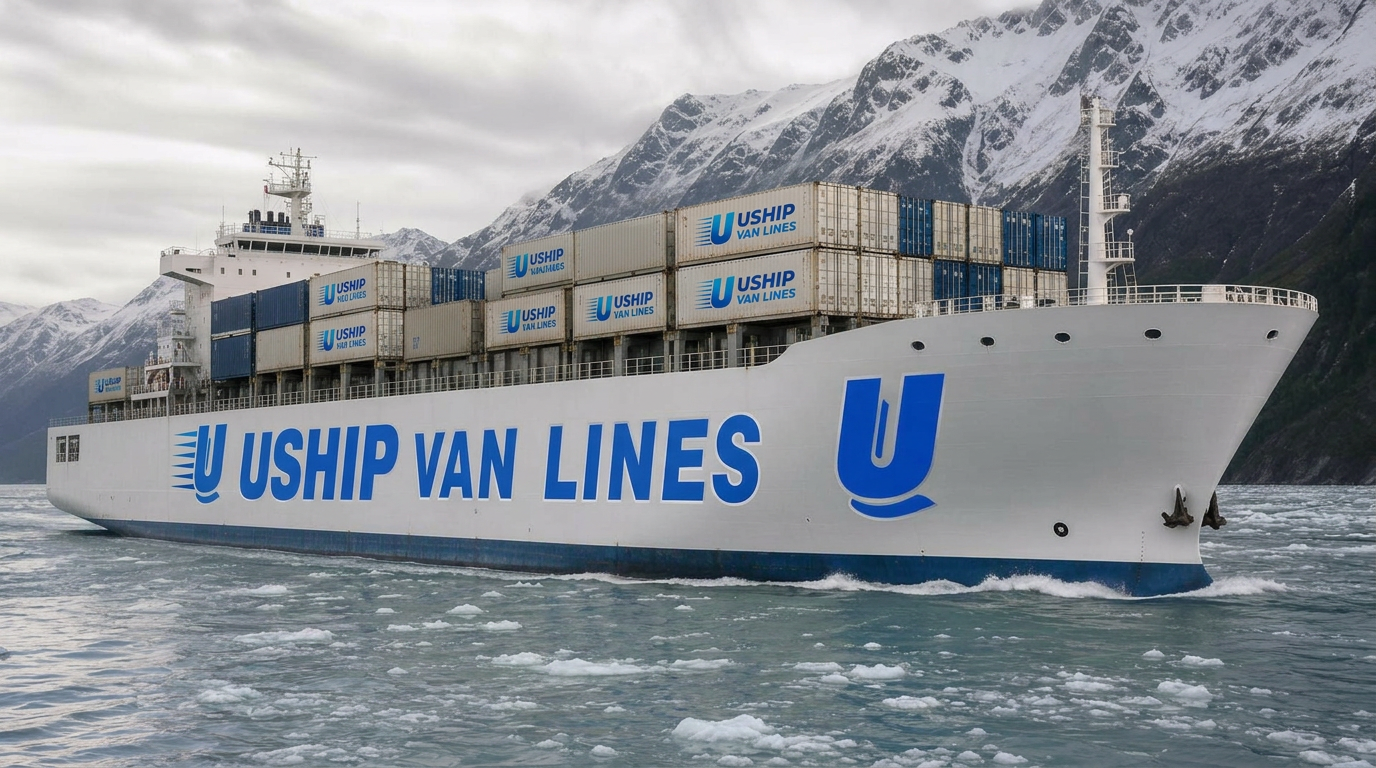
Moving from Alaska to West Virginia
Moving from Alaska to West Virginia means bridging two dramatically different landscapes—from the Last Frontier's rugged mountains and coastlines to the Appalachian hills and river valleys of the Mountain State. Whether you're relocating to Charleston, Morgantown, Huntington, or a smaller community, this cross-country move requires specialized Alaska logistics combined with overland coordination across the Lower 48.
Best Alaska & Hawaii Movers, powered by UShip Van Lines, handles the entire multimodal journey—from pickup at your Alaska home, ocean barge transit to the Pacific Northwest, and highway transport across nearly 3,000 miles to West Virginia. Ready to start planning? Request a free quote today and connect with experienced Alaska moving specialists.
Route overview
Understanding the Alaska to West Virginia Moving Route
This move spans approximately 3,400–3,700 miles depending on your exact Alaska origin and West Virginia destination. Your household goods travel by truck to the Port of Anchorage (or Whittier for some Mat-Su locations), cross the Gulf of Alaska via ocean barge to the Port of Tacoma, then transfer to long-haul trucks for the cross-country journey through Washington, Idaho, Montana, Wyoming, South Dakota, Iowa, Illinois, Indiana, Ohio, and finally into West Virginia.
The route involves multiple handoffs and transport modes, making coordination and timing critical. Alaska barge schedules run weekly during peak season but less frequently in winter. Once goods reach Tacoma, highway transport follows I-90 and I-70/I-79 corridors into West Virginia. The complexity of this lane means lead time and flexible scheduling are essential—this isn't a direct point-to-point truck move.
West Virginia's terrain adds its own considerations. Many communities sit in valleys or hollows with narrow roads, steep grades, and limited turning radius for large trucks. Delivery to rural areas like Pocahontas County or McDowell County may require shuttle trucks or advance coordination with local access routes.
How the moving process works
How Your Alaska to West Virginia Move Works: Step by Step
-
Free Quote and Planning Consultation — Contact Best Alaska & Hawaii Movers for a detailed estimate. We'll assess your inventory, discuss Alaska pickup logistics (especially for remote locations like Kenai, Fairbanks, or bush communities), and explain barge schedules and transit windows.
-
Schedule Your Barge Transit — Your move coordinator books space on the next available Alaska Marine Lines or Totem Ocean Trailer Express barge from Anchorage/Whittier to Tacoma. Peak summer sailings fill quickly; winter schedules are limited. Book 4–8 weeks ahead for best timing.
-
Alaska Pickup and Port Delivery — Our Alaska crew loads your household goods into a shipping container or onto pallets at your home. The container is trucked to the port, inspected, and loaded onto the barge. For bush or off-road-system locations, we coordinate barge-to-barge or air freight connections.
-
Ocean Barge Transit to Tacoma — Your shipment crosses the Gulf of Alaska, typically 5–7 days at sea. Weather delays are possible, especially September–April. Goods remain in sealed containers throughout the voyage.
-
Port Unloading and Overland Transfer — At Tacoma, containers are offloaded, cleared by the receiving warehouse, and transferred to a long-haul semi-trailer. This transfer adds 2–4 days depending on port congestion and inspection schedules.
-
Cross-Country Highway Transport — Your shipment travels I-90 east through the northern tier states, then turns south on I-79 or I-77 into West Virginia. Transit time is 5–7 days once underway, depending on weather and driver hours-of-service regulations.
-
Final Delivery in West Virginia — Our driver contacts you 24–48 hours before arrival. For addresses in mountainous or rural areas, we assess road access and may use a smaller shuttle truck. You inspect and sign for your goods upon delivery.
Total timeline: Typically 3–5 weeks door-to-door, with seasonal and logistical variability. Winter moves can extend to 6–8 weeks due to barge schedules and weather.
Estimated moving costs
What Does It Cost to Move from Alaska to West Virginia?
For a typical 2–3 bedroom household (8,000–12,000 lbs), expect to invest $7,500–$14,000 for full-service door-to-door moving. Studio and 1-bedroom moves may range $4,500–$7,500, while larger 4-bedroom homes can reach $15,000–$22,000 or more.
Key cost drivers include:
- Distance and weight — Alaska barge rates are calculated by cubic feet or linear feet of container space, plus per-pound charges for overland transport across 3,000+ miles.
- Origin and destination accessibility — Remote Alaska pickups (Kenai Peninsula, Fairbanks, Mat-Su Valley, bush communities) add positioning fees. Rural West Virginia deliveries in steep or narrow-road areas may require shuttle charges ($300–$800).
- Barge season — Summer peak (May–September) sees higher demand and pricing. Off-season (October–April) may offer lower rates but fewer sailing options and weather risks.
- Packing and services — Professional packing adds $800–$2,500. Disassembly/reassembly of furniture, crating for fragile items, and specialty handling (pianos, gun safes, antiques) increase costs.
- Insurance coverage — Basic carrier liability is included; full-value protection for high-value shipments adds 1–3% of declared value.
- Storage needs — If your West Virginia home isn't ready or you need to delay delivery, warehousing in Tacoma or West Virginia runs $100–$300/month.
We never guarantee prices without a detailed inventory assessment. Request a free quote for a binding or binding-not-to-exceed estimate tailored to your specific move.
Estimated transit times
How Long Does an Alaska to West Virginia Move Take?
Total door-to-door transit: 3–5 weeks under normal conditions. Here's the breakdown:
- Alaska pickup to port delivery: 1–3 days (longer for Fairbanks, Kenai, or bush locations requiring additional trucking or barge connections).
- Barge transit Anchorage/Whittier to Tacoma: 5–7 days at sea. Weather delays (especially fall/winter storms in the Gulf of Alaska) can add 2–5 days.
- Port offloading and container transfer in Tacoma: 2–4 days for customs paperwork (if applicable), port drayage, and warehouse consolidation.
- Overland truck transport Tacoma to West Virginia: 5–7 days once loaded, following I-90 and I-79/I-77 corridors. Winter weather in the Rockies, northern plains, or Appalachians can add delays.
- Final delivery coordination: 1–2 days for scheduling and possible local shuttle in West Virginia.
Winter moves (October–March) often extend to 5–8 weeks due to reduced barge frequency (sometimes only 2–3 sailings per month) and snow/ice delays on mountain passes. Summer moves (May–September) are fastest but book up quickly. For time-sensitive relocations, plan ahead and build buffer time into your schedule.
Regional logistics
Alaska-Specific Moving Logistics You Need to Know
Ports and Barge Schedules: Most Alaska household goods ship via the Port of Anchorage or Whittier (for Mat-Su and Southcentral locations). Alaska Marine Lines and Totem Ocean Trailer Express operate weekly sailings in summer, biweekly or monthly in winter. Your move coordinator books space in advance; delays happen due to weather or port congestion.
Container Types: Shipments travel in 20' or 40' shipping containers (shared or dedicated) or on palletized flatbeds. Containers protect goods from saltwater spray and weather. Partial loads may be consolidated with other shipments to optimize cost.
Vehicle Shipping: If you're also moving a car or truck, it typically travels on the same barge (or a roll-on/roll-off vessel) to Tacoma, then is driven or trucked to West Virginia. Vehicle shipping adds $1,500–$3,500 depending on size and season. Ensure fuel is under 1/4 tank and no personal items are inside (insurance and customs regulations).
Customs and Paperwork: Alaska is a U.S. state, so no international customs apply. However, detailed inventory lists are required for barge shipping and insurance purposes. Keep copies of your inventory, bill of lading, and insurance documents throughout the move.
Remote and Bush Locations: If you're in a community off the road system (like Bethel, Nome, Kotzebue, or Southeast Alaska islands), goods may require additional barge-to-barge transfers, air freight, or bush plane service. Costs and timelines increase significantly—discuss with your move coordinator early.
West Virginia Delivery Access: Many West Virginia addresses are in hilly or mountainous areas with narrow roads, low bridges, or weight-restricted routes. Large semi-trucks may not be able to access your driveway. In such cases, your goods are transferred to a smaller shuttle truck (26' box truck or smaller) for final delivery. Confirm access with your moving company and consider site visits or Google Street View checks in advance.
Storage Options: If your West Virginia home isn't ready or you need temporary storage, Best Alaska & Hawaii Movers offers warehousing in Tacoma or at West Virginia-area facilities. Short-term storage (30–90 days) is common for lease timing mismatches.
Seasonal considerations
Best Times to Move from Alaska to West Virginia
Summer (May–September): Peak moving season with weekly barge sailings, predictable weather, and fastest transit. Roads are clear in both Alaska and West Virginia, and delivery access to mountain communities is easiest. Expect higher pricing and less flexibility—book 6–8 weeks ahead. Ideal for families moving before the school year.
Fall (October–November): Shoulder season with moderate weather but decreasing barge frequency (often biweekly). Early winter storms can begin in Alaska and the northern Rockies by late October. Pricing may soften slightly. Good balance of cost and reliability if you can be flexible on exact dates.
Winter (December–March): Lowest demand and potentially best rates, but significant challenges. Barge schedules drop to 1–2 sailings per month, and Gulf of Alaska storms cause frequent delays. Overland transport faces snow, ice, and mountain pass closures in Montana, Wyoming, and the Appalachians. West Virginia's winding roads can be treacherous. Only recommended if you have extended flexibility (8–10 weeks) and can tolerate uncertainty.
Spring (April–May): Transition period as barge schedules ramp back to weekly service. Weather improves but lingering snow in high elevations (Alaska highways, northern Rockies, West Virginia mountains) can still cause delays. Pricing begins to rise as summer demand approaches. Good option for those who missed winter discounts but need more certainty than off-season provides.
Pro tip: If moving in winter, ensure your West Virginia destination has clear road access and covered or indoor delivery options. Frozen ground and snow can complicate unloading.
Why choose Best Alaska & Hawaii Movers
Why Choose Best Alaska & Hawaii Movers for Your Alaska to West Virginia Relocation
- Alaska Moving Specialists: We handle the unique logistics of Alaska barge transit, port coordination, and last-mile delivery—whether you're in Anchorage, Fairbanks, Kenai, or a bush community. Our team knows the ports, schedules, and seasonal challenges.
- Single-Source Accountability: Powered by UShip Van Lines, we manage your entire move—Alaska pickup, barge booking, Tacoma transfer, cross-country trucking, and West Virginia delivery. One point of contact, one bill, no handoff confusion.
- Transparent Pricing and Timelines: We provide detailed, written estimates with clear cost breakdowns and realistic transit windows. No surprise fees, no hidden charges. You'll know what to expect at every stage.
- Flexible Scheduling and Storage: We work around barge schedules, your closing dates, and West Virginia delivery constraints. Need storage in Tacoma or West Virginia? We coordinate seamlessly.
- Full-Service or DIY Options: Choose full-service packing, loading, and unpacking—or handle packing yourself and let us manage the heavy lifting and transport. We tailor service levels to your budget and preferences.
- Proven Cross-Country Experience: Moving across 3,000+ miles and multiple time zones requires logistics expertise, carrier partnerships, and contingency planning. We've successfully delivered thousands of Alaska households to the Lower 48.