
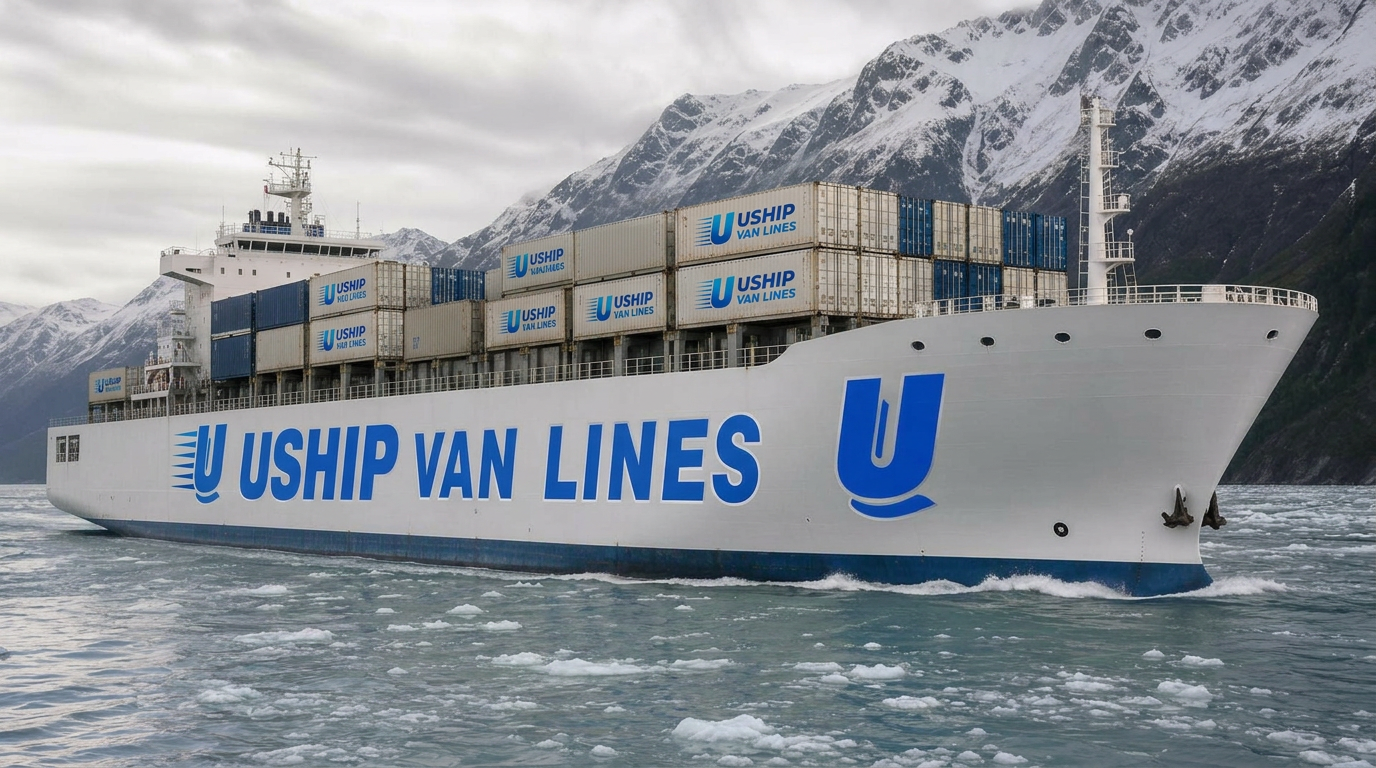
Moving from Alaska to Erie, PA
Relocating from Alaska to Erie, Pennsylvania requires specialized expertise that standard moving companies simply don't possess. Your belongings will travel by ocean barge from Anchorage or other Alaska ports to the Port of Tacoma, then cross 2,300+ miles overland through the Pacific Northwest, Montana, and across the northern tier to reach Pennsylvania's northwest corner on Lake Erie.
Best Alaska & Hawaii Movers, powered by UShip Van Lines, coordinates every step of this complex journey—from initial pickup in Anchorage, Fairbanks, Mat-Su Valley, Kenai Peninsula, or bush communities, through barge scheduling, port-to-port transit, mainland transfer, and final delivery to your Erie home. Request your personalized moving quote to receive a detailed timeline and cost breakdown tailored to your inventory and specific origin point.
Route overview
Understanding the Alaska-to-Erie Moving Corridor
The Alaska-to-Erie route combines maritime shipping with transcontinental ground transport. Most moves originate from Southcentral Alaska (Anchorage, Wasilla, Palmer, Soldotna) or Interior Alaska (Fairbanks, North Pole), with barges departing weekly during peak season from the Port of Anchorage or Whittier. The marine leg covers approximately 1,500 nautical miles to Tacoma, Washington, where your containerized shipment transfers to an over-the-road carrier.
From Tacoma, your household goods travel east through Spokane, across northern Montana and North Dakota, through Minnesota and Wisconsin, skirting the southern shore of Lake Superior before entering Pennsylvania. Erie sits in the state's northwest corner, just 100 miles from Cleveland and 120 miles north of Pittsburgh, making it the final destination after this 2,300-mile overland journey. The entire door-to-door process typically spans 3–5 weeks, with barge schedules and weather being the primary variables.
Erie's location on the Great Lakes and its proximity to major eastern markets makes it an increasingly popular destination for Alaskans seeking lower cost of living, four distinct seasons (including actual spring and fall), and access to East Coast amenities while maintaining a smaller-city lifestyle. Understanding the logistics chain is essential for planning your move timeline and managing expectations around delivery windows.
How the moving process works
Step-by-Step Moving Process from Alaska to Erie
-
Initial Survey and Inventory Assessment – Your move coordinator conducts a virtual or in-person walkthrough of your Alaska residence to catalog items, identify special handling needs (firearms, hunting equipment, cold-weather gear), and determine container requirements. This assessment drives your cost estimate and timeline.
-
Barge Booking and Schedule Coordination – We reserve space on the next available Alaska Marine Lines, Span Alaska, or TOTE Maritime barge sailing from your nearest Alaska port. Peak season (May–September) offers weekly departures; winter sailings run every 10–14 days and may experience weather delays.
-
Professional Packing and Loading – Our Alaska-based crew arrives at your home to pack, pad, and load your belongings into a 20' or 40' shipping container (or shared space in a consolidated container). High-value items receive extra protection; temperature-sensitive belongings are flagged for climate-controlled handling on the mainland leg.
-
Port Delivery and Ocean Transit – The loaded container is transported to Port of Anchorage, Whittier, or your designated departure port, loaded aboard the barge, and secured for the 5–7 day ocean voyage to Tacoma. You receive tracking updates and estimated Tacoma arrival dates.
-
Tacoma Port Transfer and Customs Clearance – Upon arrival at the Port of Tacoma, your container is offloaded, customs paperwork is processed (for any regulated items), and the container is transferred to our mainland partner's secure facility for loading onto an over-the-road truck.
-
Cross-Country Transit to Pennsylvania – Your shipment travels via I-90 corridor through Washington, Idaho, Montana, North Dakota, Minnesota, Wisconsin, and into Pennsylvania—approximately 2,300 miles covered in 5–7 days under normal conditions. Real-time GPS tracking keeps you informed.
-
Final Delivery and Unpacking in Erie – Our delivery crew contacts you 24–48 hours before arrival to schedule a precise delivery window. Upon arrival at your Erie address, they unload, place furniture according to your instructions, and can provide unpacking services if contracted. You inspect and sign off on delivery completion.
Estimated moving costs
What to Expect for Moving Costs
A typical 2-bedroom apartment or small house move from Alaska to Erie, PA ranges from $6,800 to $11,500 for full-service door-to-door transport. A larger 3-bedroom home with 8,000–12,000 pounds of household goods generally runs $10,500 to $16,200. These estimates include professional packing, container loading, barge freight, port handling, overland trucking to Pennsylvania, and final delivery.
Key cost drivers include your specific origin point (Anchorage is less expensive than Fairbanks or bush locations due to distance to port), time of year (summer peak season commands 15–25% premiums over winter), container size requirements, and service level. Exclusive use of a full 40' container costs more than shared/consolidated space but offers faster transit and reduced handling. Vehicle shipping adds $2,200–$3,800 per car, depending on size and season.
Additional expenses to budget: temporary housing if there's a gap between your Alaska lease end and Erie delivery window (common with barge schedules), storage fees if you need to hold goods at either Tacoma or Erie staging facilities, special crating for artwork or fragile heirlooms, and insurance coverage beyond the standard $0.60/lb carrier liability. Always request itemized quotes from multiple Alaska specialists—lowest price rarely means best value on this complex route.
We never guarantee prices without a detailed inventory assessment. Fuel surcharges, port fees, and seasonal demand all influence final costs. Your personalized quote will include all known fees with clear explanations of potential variables.
Estimated transit times
Realistic Timeline for Your Move
Door-to-door delivery from Alaska to Erie typically requires 21–35 days under normal conditions, with three distinct legs driving the overall timeline:
Alaska pickup to barge departure: 2–7 days depending on your location. Anchorage-area pickups can load and deliver to port within 1–2 days. Fairbanks and Interior Alaska require 3–4 days for container loading and trucking to Anchorage port facilities. Mat-Su Valley, Kenai Peninsula, and bush communities add 2–5 days for positioning.
Ocean barge transit Anchorage to Tacoma: 5–7 days for the marine voyage itself, plus 1–3 days for port processing on each end. Total marine leg: 7–12 days. Winter storms can add 1–3 days; summer peak season is highly reliable.
Tacoma to Erie overland: 5–7 days for the 2,300-mile truck journey across seven states. This includes one rest/fuel stop cycle and accounts for normal road conditions. Winter weather through Montana, North Dakota, or around the Great Lakes can add 1–2 days during December–March.
Your moving coordinator provides a detailed timeline with estimated dates for each milestone. Build in buffer time—if you have a firm Erie lease start date or closing, book your Alaska move 6–8 weeks in advance during summer, 4–6 weeks for off-peak moves. Last-minute bookings (under 3 weeks) may require waiting for the next available barge sailing, potentially adding 7–14 days to your timeline.
Regional logistics
Alaska-Specific Moving Logistics
Port Access and Options: Most Southcentral Alaska moves use the Port of Anchorage (primary container terminal) or Whittier (backup during peak season). Fairbanks and Interior shipments truck 350+ miles to Anchorage for barge loading—this positioning adds 2–3 days and $800–$1,400 to your cost. Kenai Peninsula residents can sometimes use the Port of Seward, though service is less frequent. Bush communities accessible only by air require flying goods to Anchorage first, adding significant expense.
Vehicle Shipping: If you're driving the Alaska Highway to the Lower 48 separately, your car travels with you. If shipping your vehicle, it loads onto the same barge as your household goods in a separate vehicle container. Cost runs $2,200–$3,800 from Alaska to Tacoma, where it can either be picked up or transported overland to Erie for an additional $900–$1,500. Ensure fuel tanks are under 1/4 full and vehicles are clean (agriculture inspection requirements).
Firearms and Hunting Equipment: Alaska residents moving to Pennsylvania must comply with both states' firearms regulations. Declare all weapons to your moving company—they'll be inventoried, secured separately, and transported in compliance with federal interstate commerce rules. Pennsylvania requires no special permits for long guns; handgun owners should research Erie County requirements. Hunting and fishing gear ships normally, but check current Pennsylvania Game Commission rules for transporting game mounts or trophies.
Restricted and Prohibited Items: Barges will not transport hazardous materials (fuel, propane, ammunition, certain cleaning chemicals), perishable foods, or live plants. Alaska-harvested fish and game must meet USDA and Pennsylvania Department of Agriculture requirements—vacuum-sealed, frozen items usually clear, but check current regulations. Prescription medications should travel with you personally.
Storage Solutions: If your Erie residence isn't ready when your shipment arrives, we can arrange temporary storage at our Tacoma warehouse or at partner facilities in Erie. Storage runs $150–$300 per month depending on volume. Some customers use this strategically—shipping belongings during cheap winter rates, storing until spring, then scheduling Erie delivery when weather improves.
Paperwork and Documentation: You'll complete a detailed inventory list, standard bill of lading, declared value statement for insurance, and (if applicable) vehicle shipping authorization. If your move is military-related (PCS orders), additional documentation may qualify you for government reimbursement—we can provide the required forms and cost breakdowns.
Seasonal considerations
Seasonal Planning for Alaska-to-Erie Moves
Summer (May–September): Peak moving season offers maximum barge frequency (weekly sailings), most reliable weather, and fastest transits. However, prices increase 20–30% due to demand, and booking windows fill 4–6 weeks ahead. The I-90 corridor across the northern states is in excellent condition. Ideal for families moving before the school year or closing on Erie real estate. Expect the upper end of cost ranges but the lower end of timeline ranges.
Fall (October–November): Shoulder season provides moderate pricing and good availability. Barge schedules reduce to every 7–10 days but remain reliable. Northern route weather becomes variable—early snows in Montana or around Lake Superior can delay the overland leg by 1–2 days. Good value if you have flexible timing. Erie's mild falls make this an attractive arrival window.
Winter (December–March): Off-peak season offers the lowest rates (15–25% below summer) and excellent availability, but comes with tradeoffs. Barge sailings run every 10–14 days, and severe weather in the Gulf of Alaska can delay departures or extend ocean transit by 2–4 days. The I-90 corridor through Montana, North Dakota, and around the Great Lakes frequently faces winter storms requiring slower speeds or brief holds. Budget an extra 3–7 days for weather contingencies. Erie winters are snowy (100+ inches annually from lake effect), so coordinating delivery before major storms is wise.
Spring (April–early May): Transition period with increasing barge frequency and improving weather. Pricing begins climbing toward summer levels but remains 10–15% below peak. Spring breakup in Alaska can make unpaved road access challenging in bush communities. The northern overland route thaws but may face April snowstorms. Good middle-ground option for budget-conscious movers who can handle some weather variability.
Alaska Marine Lines and TOTE Maritime publish seasonal schedules 8–12 weeks in advance. Your moving coordinator will identify the optimal barge sailing for your timeline and budget, then work backward to schedule your Alaska pickup.
Why choose Best Alaska & Hawaii Movers
Why Best Alaska & Hawaii Movers for Your Alaska-to-Erie Move
-
Alaska Logistics Specialists: We handle Alaska's unique challenges daily—barge scheduling, port coordination, last-mile delivery to remote areas, and weather contingency planning. Our Anchorage-based teams know the territory and the timelines.
-
Single-Source Accountability: One coordinator manages your entire move from Alaska pickup through Erie delivery. You're not handed off between multiple companies—we control the container throughout the journey and provide unified tracking and communication.
-
Transparent, Itemized Pricing: Your quote breaks down every cost component—packing labor, container fees, barge freight, port handling, overland trucking, fuel surcharges, and delivery. No hidden fees, no surprise charges at delivery. We explain what drives costs and where you can adjust service levels to fit your budget.
-
Powered by UShip Van Lines' Nationwide Network: Our mainland partnerships ensure your shipment receives professional handling throughout the 2,300-mile overland journey. GPS tracking, climate-controlled options for sensitive items, and vetted carriers on the Pennsylvania delivery.
-
Flexible Scheduling and Storage Options: We work around your timeline—whether you need summer speed or winter savings, whether your Erie home is ready or requires a storage bridge. Custom solutions for every situation, from studio apartments to 4-bedroom houses with vehicles and specialty items.