
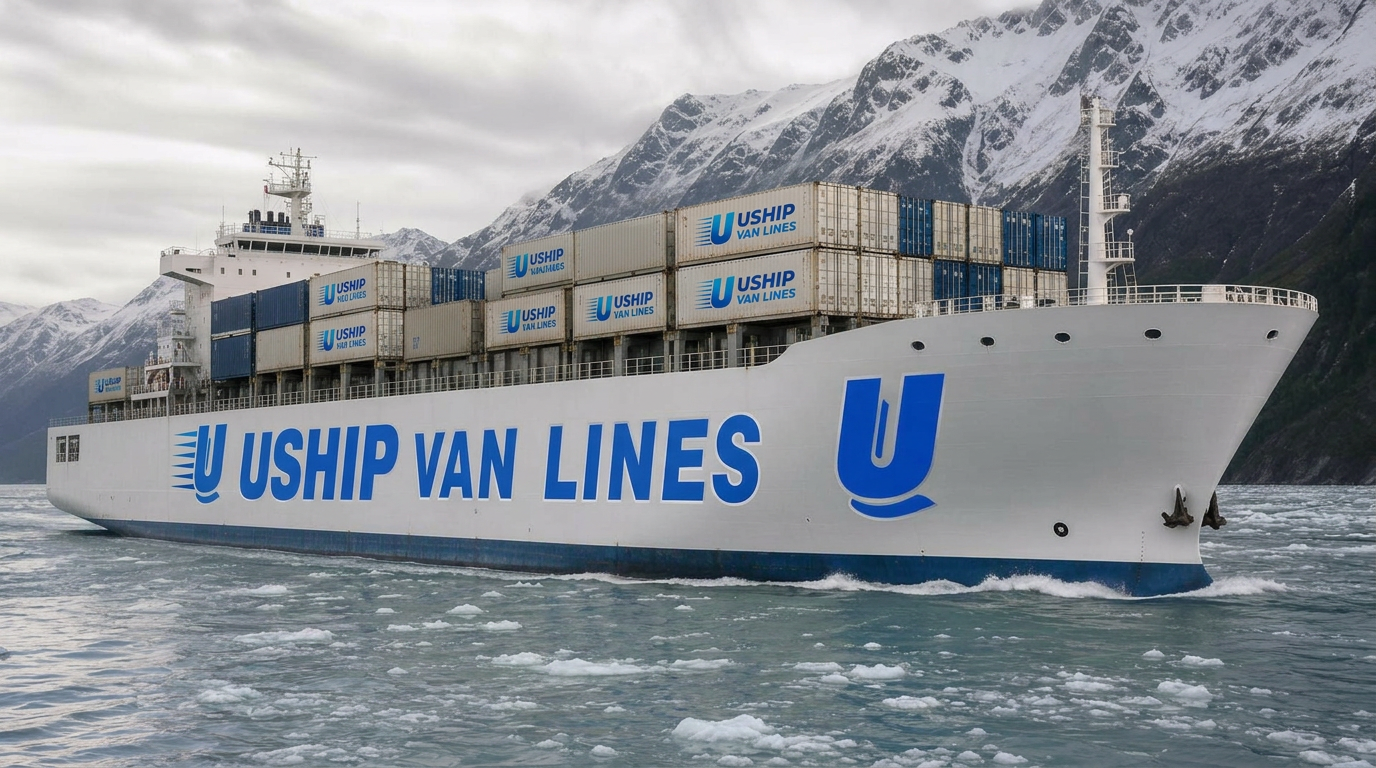
Moving from Alaska to Wisconsin
Moving from Alaska to Wisconsin means orchestrating a complex multimodal journey—barge freight from Alaska ports to the Lower 48, overland trucking through the Midwest, and coordinating timelines that span weeks, not days. Whether you're leaving Anchorage, Fairbanks, or a remote Mat-Su community, this route demands specialized logistics expertise and realistic planning.
Best Alaska & Hawaii Movers, powered by UShip Van Lines, handles every leg of your Alaska-to-Wisconsin move: from last-mile pickup in Alaska, to barge scheduling via Tacoma or Seattle, to final delivery in Milwaukee, Madison, Green Bay, or anywhere across the Badger State. Ready to start planning your move? Request your free, no-obligation quote today.
Route overview
The Alaska-to-Wisconsin Moving Route
This lane combines Alaska's maritime freight infrastructure with Wisconsin's well-connected Midwestern highway network. Most household shipments travel by barge from the Port of Anchorage, Whittier, or other Alaska marine terminals to Tacoma or Seattle, where they're offloaded and transferred to long-haul trucks for the 1,800–2,100-mile journey across the northern plains to Wisconsin.
Unlike straightforward interstate moves, Alaska relocations require advance barge bookings (often weeks ahead), strict cargo documentation, and weather contingencies—especially during fall and winter when storms can delay sailings. The overland leg from the Pacific Northwest to Wisconsin typically follows I-90 or I-94 corridors through Montana, North Dakota, and Minnesota, with final delivery via local Wisconsin routes.
This move suits families, military personnel on PCS orders, retirees seeking lower cost-of-living, and professionals relocating for jobs in Wisconsin's manufacturing, agriculture, healthcare, and education sectors. Expect a door-to-door timeline of 3–5 weeks under normal conditions.
How the moving process works
How Your Alaska-to-Wisconsin Move Works: Step by Step
-
Free Quote & Planning Consultation – Contact Best Alaska & Hawaii Movers for a detailed estimate. We'll assess your inventory (size, weight, special items), pickup location in Alaska, and delivery address in Wisconsin. We'll explain barge schedules, transit windows, and cost drivers so you can plan your budget and timeline.
-
Barge Reservation & Documentation – Once you confirm your move dates, we reserve space on the next available barge sailing from Alaska to Tacoma/Seattle. You'll need to provide a detailed inventory, sign bills of lading, and comply with hazmat restrictions (no propane, certain chemicals, ammunition). Vehicle shipments require separate barge booking and RO/RO (roll-on/roll-off) documentation.
-
Alaska Pickup & Containerization – Our crew picks up your household goods in Alaska—whether you're in Anchorage, Fairbanks, the Mat-Su Valley, Kenai Peninsula, or even bush communities accessible by road or barge. Items are professionally packed, inventoried, and loaded into sealable containers or truck vans for the barge leg.
-
Barge Transit to Tacoma/Seattle (7–14 Days) – Your shipment sails south through the Inside Passage or Gulf of Alaska. Barge schedules vary by season; summer sailings are more frequent, while winter can see delays due to storms. During transit, containers remain sealed and climate-stable.
-
Port Offload & Transfer to Long-Haul Truck – At Tacoma or Seattle, your container is offloaded, cleared through port logistics, and transferred to a semi-truck for the overland journey. This intermodal handoff typically takes 1–3 business days.
-
Cross-Country Trucking to Wisconsin (4–7 Days) – Your shipment crosses Washington, Idaho, Montana, and the Dakotas, entering Wisconsin via I-90 (La Crosse) or I-94 (Hudson/Eau Claire). Drivers navigate winter weather and truck weight restrictions common in the upper Midwest.
-
Final Delivery & Unpacking in Wisconsin – Our delivery team arrives at your Wisconsin address, unloads your goods, and performs a final inventory check. You inspect for damage, sign the delivery receipt, and settle any remaining balance. Optional unpacking and debris removal services are available.
Estimated moving costs
What Does It Cost to Move from Alaska to Wisconsin?
A typical 2–3 bedroom household move from Alaska to Wisconsin ranges from $7,500 to $14,000, depending on shipment weight, distance within Alaska (bush vs. road-connected), barge schedule, and Wisconsin delivery location. Urban-to-urban moves (Anchorage to Madison) cost less than remote-to-rural routes (Kenai Peninsula to northern Wisconsin).
Key cost drivers include:
- Shipment weight and volume – Movers charge by hundredweight (CWT) or cubic feet. A 10,000 lb / 1,000 cu ft load is typical for a 3BR home.
- Alaska pickup logistics – Last-mile access in Alaska adds costs; bush communities requiring air freight or marine transfer cost significantly more.
- Barge fees – Container rates fluctuate by season and fuel surcharges. Peak summer sailings may cost more but offer faster transit.
- Vehicle shipping – Vehicles barge separately via RO/RO service; expect $1,500–$3,500 per car from Alaska to Tacoma, plus overland delivery to Wisconsin.
- Packing services – Professional packing ($800–$2,000) ensures fragile items survive the multimodal journey.
- Insurance (valuation) – Basic carrier liability is $0.60/lb; full-value protection costs extra but highly recommended for Alaska moves.
- Storage – If your Wisconsin home isn't ready, short-term storage in Tacoma or Wisconsin costs $100–$300/month.
- Seasonality – Winter moves may include weather-delay fees; summer demand can raise base rates.
We provide transparent, itemized quotes with no hidden fees. You'll know exactly what you're paying before barge reservation. Request your free estimate today to get precise pricing for your route and timeline.
Estimated transit times
How Long Does an Alaska-to-Wisconsin Move Take?
Plan for a 21–35 day door-to-door timeline from your Alaska pickup to Wisconsin delivery. Unlike Lower 48 moves that complete in days, Alaska relocations involve maritime freight and multi-leg coordination.
Transit breakdown by leg:
- Alaska pickup & containerization: 1–3 days (depending on location and volume)
- Barge transit to Tacoma/Seattle: 7–14 days (varies by route—Anchorage sailings are faster than Whittier or Southeast Alaska)
- Port offload & truck transfer: 1–3 days (customs clearance if applicable, intermodal staging)
- Overland trucking to Wisconsin: 4–7 days (weather, driver hours-of-service, seasonal road conditions)
- Final delivery window: Movers provide a 2–3 day delivery window; you must be available or designate a recipient
Expedited options are limited but possible: air freight from Anchorage to Seattle (for small, high-priority shipments), then expedited LTL trucking to Wisconsin can reduce total time to 10–14 days, at 2–3× the cost.
Delays happen: Storm-canceled barge sailings, port congestion in Tacoma, winter blizzards in the Dakotas, and Wisconsin DOT road restrictions can add days. Book early and build buffer time—especially if your Wisconsin lease or job start date is firm.
Regional logistics
Alaska-Specific Moving Logistics You Need to Know
Ports & Barge Terminals
Most Alaska shipments route through the Port of Anchorage, Whittier (for Southcentral Alaska), or Tacoma/Seattle for Lower 48 connections. Southeast Alaska (Juneau, Ketchikan, Sitka) uses Alaska Marine Highway ferry barges or private freight services. Confirm your pickup location's nearest port and whether last-mile trucking or marine transfer is required.
Vehicle Shipping
Vehicles travel separately via RO/RO barge service (you drive on, they drive off). You must drain fuel to ¼ tank or less, disable alarms, and remove all personal items except the spare tire and jack. Expect 10–21 days for vehicle transit from Alaska to Tacoma, then 5–8 days overland to Wisconsin. Total vehicle shipping cost: $2,000–$4,000 per car.
Prohibited & Restricted Items
Barge regulations ban propane tanks, ammunition, gasoline, lithium batteries in bulk, and certain chemicals. Plants require USDA inspection; pets travel separately via air (Alaska Airlines PetSafe is common). Check our detailed prohibited-items list during your quote consultation.
Weight & Measurement
Alaska movers use certified scales and cube sheets to calculate charges. Overweight containers incur barge surcharges. We recommend a pre-move purge: donate, sell, or discard items that cost more to ship than replace in Wisconsin.
Customs & Documentation
Though Alaska is part of the U.S., some barge lines require detailed inventories and signed declarations for port logistics. Keep copies of your bill of lading and inventory list until delivery is complete.
Last-Mile Access in Alaska
If you're in a bush community accessible only by gravel road, small plane, or boat, last-mile logistics add time and cost. We coordinate air freight or marine freight to the nearest road-accessible hub (e.g., Bethel, Kotzebue, Dillingham), then truck to the port. Plan accordingly.
Wisconsin Delivery Considerations
Wisconsin's rural roads can be narrow and seasonal-weight-restricted in spring. If you're moving to a farm, lakefront property, or town with limited truck access, notify us in advance so we can arrange a shuttle truck or alternative delivery method.
Seasonal considerations
Best Time to Move from Alaska to Wisconsin: Seasonal Guide
Summer (June–August): Peak season, most reliable
Barge schedules are most frequent, weather is stable, and overland trucking faces minimal snow delays. Expect higher prices due to demand from military PCS moves and families relocating before the school year. Book 6–8 weeks in advance. Wisconsin summers are warm and humid—plan for air-conditioned delivery trucks if you have heat-sensitive items.
Fall (September–October): Good weather, moderate costs
Barge sailings remain consistent through early fall. Wisconsin's autumn is mild, but be prepared for early snow in northern counties by late October. Moving companies offer shoulder-season discounts. Excellent window for retirees and flexible-schedule relocations.
Winter (November–March): Lowest cost, highest risk
Barge schedules thin out; Gulf of Alaska storms can delay sailings by days or weeks. Overland trucking faces blizzards, ice, and truck chain-up requirements in Montana and the Dakotas. Wisconsin winters are severe (subzero temps, heavy snow)—delivery crews may face access issues in rural areas. However, rates drop 15–25% due to low demand. Only recommended if you have flexible timelines and can tolerate delays.
Spring (April–May): Transitional, unpredictable
Barge schedules ramp back up, but Alaska spring thaws can create muddy road conditions in bush areas. Wisconsin spring brings rain and late-season snow. Rates are moderate. Good option if you're flexible and can wait out weather windows.
Pro tip: If you're military or on a strict timeline, book summer sailings. If you're cost-conscious and flexible, winter moves save money—just pad your timeline by 1–2 weeks.
Why choose Best Alaska & Hawaii Movers
Why Choose Best Alaska & Hawaii Movers for Your Alaska-to-Wisconsin Move
-
Alaska Logistics Expertise – We specialize in Alaska's unique barge, port, and last-mile challenges. Our team knows Anchorage, Fairbanks, Mat-Su, Kenai, and bush-route logistics inside-out—routes that confuse generic national moving companies.
-
Transparent, All-Inclusive Quotes – No hidden barge fees, no surprise fuel surcharges. You receive a detailed, binding estimate covering pickup, barge, overland trucking, and Wisconsin delivery. We explain every line item so you can budget confidently.
-
UShip Van Lines Network – Powered by UShip Van Lines' vetted carrier network, we match your shipment with licensed, insured trucking companies that meet our quality and safety standards. You get enterprise-level logistics with personalized service.
-
Real-Time Shipment Tracking – Monitor your barge sailing dates, port offload, and truck location via our online portal and SMS updates. You'll never wonder where your belongings are.
-
Dedicated Move Coordination – One point of contact from quote to delivery. Your move coordinator tracks every leg, resolves issues, and keeps you informed—especially critical when delays occur.
-
Licensed & Insured – Our carrier partners hold active USDOT and MC numbers and maintain full cargo insurance. We comply with all federal and Alaska state moving regulations.
Ready to move from Alaska to Wisconsin with confidence? Request your free quote today and let us handle the complexity while you focus on your new chapter in the Midwest.