
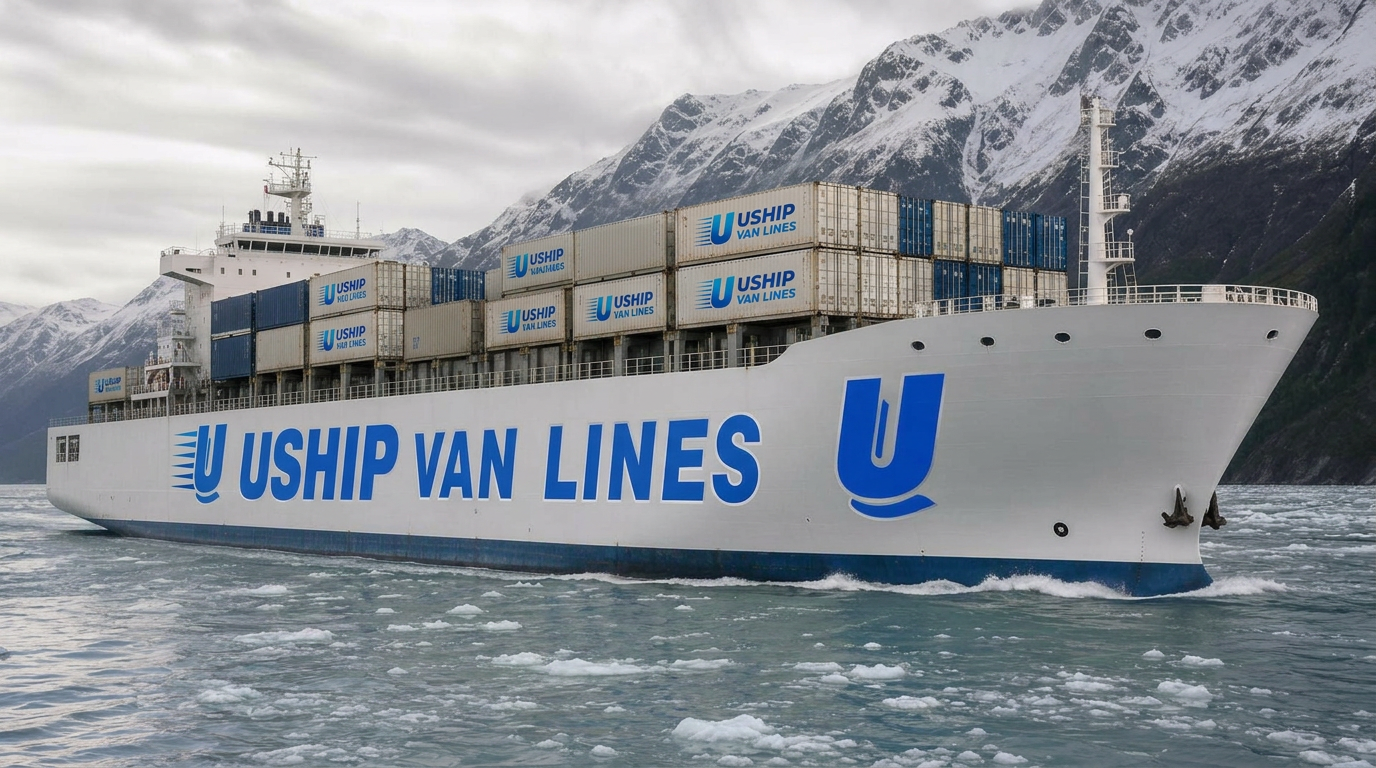
Moving from Alaska to Ohio
Relocating from the Last Frontier to the Buckeye State combines maritime logistics with transcontinental highway transport. Whether you're leaving Anchorage for Columbus, Fairbanks for Cleveland, or the Mat-Su Valley for Cincinnati, this move requires coordination across barge schedules, port handling, and a 3,200+ mile overland journey.
Best Alaska & Hawaii Movers (powered by UShip Van Lines) specializes in Alaska departures, managing every step from door pickup in Alaska through barge transit and final delivery anywhere in Ohio. Request your free, no-obligation moving quote today to see exactly what your relocation will cost and when your belongings can arrive.
Route overview
Alaska to Ohio: Route Fundamentals
Your household goods travel by truck from your Alaska residence to the Port of Anchorage (or Tacoma for certain Southcentral routes), then sail via container barge to Seattle or Tacoma. Once stateside, a long-haul carrier transports your shipment across Idaho, Wyoming or Montana, South Dakota or Nebraska, and into Ohio—typically via I-90 or I-80 corridors depending on your final city.
The entire route spans roughly 3,400–3,800 miles door-to-door, with transit dictated first by weekly barge sailings (typically one departure per week from Anchorage) and second by overland trucking schedules. Ohio's central location and excellent highway infrastructure mean the stateside leg is straightforward once your shipment clears the West Coast port.
This lane serves all major Ohio metro areas—Columbus, Cleveland, Cincinnati, Toledo, Akron—as well as smaller communities. Final delivery timelines adjust slightly for rural or southeastern Ohio addresses, but the bulk of transit time is consumed by the Alaska barge voyage and cross-country haul.
How the moving process works
How Your Alaska-to-Ohio Move Works
-
Free Virtual or In-Home Survey
Our specialist reviews your inventory via video walkthrough or on-site visit (Anchorage, Fairbanks, Wasilla, Kenai Peninsula). You'll receive a binding or not-to-exceed quote covering barge, overland, insurance, and any additional services. -
Booking & Barge Slot Reservation
Once you confirm, we reserve container space on the next available barge sailing from Anchorage (or Tacoma for certain origins). Summer and early fall sailings fill quickly; book 4–6 weeks ahead during peak season. -
Professional Packing & Loading in Alaska
Our Alaska crew packs and loads your belongings into a dedicated container or shared containerized space. Items are secured for ocean motion, labeled, and inventoried. We handle all hazardous-material restrictions (propane, ammunition, chemicals) before sealing the container. -
Barge Transit to Seattle/Tacoma
Your container sails south, typically 5–7 days at sea. Upon arrival at the Lower 48 port, it's offloaded and cleared through our terminal, then transferred to a long-haul truck. -
Overland Freight Across the Continental U.S.
A dedicated or consolidated carrier hauls your shipment eastward via I-90 (northern route through Montana/South Dakota) or I-80 (via Wyoming/Nebraska). This leg takes 4–6 days of road time, plus any scheduled consolidation stops. -
Final Delivery in Ohio
The driver contacts you 24–48 hours before arrival. Our team unloads, places furniture in rooms, reassembles basics, and removes packing debris. You inspect and sign the final inventory. -
Post-Move Support
Any damage claims or missing-item reports are filed within the insurance window (typically 30 days). Our customer care team remains available throughout the claims process.
Estimated moving costs
What You'll Pay: Alaska to Ohio Moving Costs
A typical 2-bedroom apartment or small home (roughly 5,000–7,000 lbs) runs $6,500–$9,500. A 3-bedroom house (9,000–12,000 lbs) generally falls between $10,000–$13,000. Larger homes or estate moves can exceed $15,000.
Key cost drivers:
- Weight and volume – Alaska barge pricing is heavily weight-based; every 1,000 lbs adds approximately $800–$1,200 to the total.
- Barge season – Peak summer sailings (May–September) cost 10–20% more than shoulder or winter slots due to demand.
- Origin accessibility – Anchorage and Mat-Su Valley pickups are standard; Fairbanks, Kenai, or remote areas incur additional trucking to the port.
- Packing services – Full-service packing (materials, labor, crating) adds $1,200–$2,500; partial packing or DIY cuts costs significantly.
- Valuation coverage – Basic liability (60¢/lb) is included; full-value replacement insurance runs 1–2% of declared shipment value.
- Destination delivery – Urban Ohio addresses (Columbus, Cleveland, Cincinnati) are standard; rural or limited-access properties may incur shuttle or long-carry fees.
These are estimates, not guarantees. Your final price depends on exact inventory, services selected, and current fuel/barge surcharges. Request a formal quote for a binding number.
Storage: If your Ohio home isn't ready, we offer 30-day free storage in our climate-controlled Seattle/Tacoma warehouse; extended storage runs $150–$300/month.
Estimated transit times
Timeline: How Long from Alaska to Ohio?
Plan for 10–18 days door-to-door, broken down as follows:
- Alaska pickup to barge departure: 1–3 days (container staging and port drayage)
- Barge sailing (Anchorage to Seattle/Tacoma): 5–7 days at sea
- Port offload and truck dispatch: 1–2 days (customs clearance, intermodal transfer)
- Overland trucking (West Coast to Ohio): 4–7 days, depending on routing and weather
Total: 11–19 days under normal conditions. Winter weather in the Rockies or Midwest can add 1–3 days. Summer barge schedules are more frequent and reliable, often shaving a day or two off the upper range.
Express options are limited—barge transit is fixed—but consolidated LTL (less-than-truckload) can sometimes move faster stateside if your shipment is small and slots are available. Most customers find the standard timeline reasonable given the distance and logistics involved.
Regional logistics
Alaska-Specific Moving Logistics
Ports and Barge Operations:
Most Alaska moves depart via the Port of Anchorage, served by weekly container barge from TOTE Maritime or Alaska Marine Lines. Southcentral customers may truck to Tacoma for consolidated service. Containers are roll-on/roll-off (RoRo) or lift-on/lift-off (LoLo) depending on carrier. All shipments are sealed and inventoried before sailing.
Vehicle Shipping:
Cars, trucks, and SUVs can share the same barge or sail separately via RoRo auto carrier. Expect $1,200–$2,200 per vehicle Alaska-to-Ohio (barge + overland auto transport). Vehicles must be empty (no personal items), under ¼ tank fuel, and have no leaks or alarms. We coordinate both household goods and vehicles on a single timeline when possible.
Restricted and Hazardous Items:
Alaska regulations and maritime law prohibit propane tanks, ammunition, fireworks, opened food, plants, and certain chemicals. Drain all fuel from grills, mowers, and snow machines. We provide a full checklist during booking.
Bush and Remote Pickups:
If you're in Bethel, Kotzebue, Dillingham, or another off-road community, your belongings first move by bush plane or barge to Anchorage, then join the southbound sailing. Add 3–7 days and $1,500–$4,000 depending on location and weight.
Customs and Documentation:
Alaska-to-Lower 48 moves do not cross international borders, so no customs forms are required. However, barge manifests and bill-of-lading must match inventory precisely; our team handles all paperwork.
Delivery Access in Ohio:
Ohio's dense road network serves most addresses easily. Hilly or narrow streets in older Cincinnati or Cleveland neighborhoods may require shuttle trucks. Long-carry fees apply if the truck cannot park within 75 feet of your door.
Seasonal considerations
Best Times to Move from Alaska to Ohio
Spring (April–May): Barge schedules ramp up; weather improves but snowmelt can affect rural Alaska roads. Good balance of availability and cost. Book early to secure Memorial Day weekend slots.
Summer (June–August): Peak season. Weekly sailings, fastest transit, but highest prices (10–20% premium) and tightest capacity. Families moving for school prefer July/August; reserve 6–8 weeks ahead. Ohio summers are humid but roads are clear and deliveries straightforward.
Fall (September–October): Shoulder season with moderate pricing and reliable sailings. Alaska's first snows appear in October; ensure your pickup is scheduled before freeze-up if you're in Interior or remote areas. Ohio autumn weather is mild and ideal for move-in.
Winter (November–March): Lowest prices (15–25% below summer), but fewer barge departures (sometimes bi-weekly). Alaska winter conditions—ice, short daylight, extreme cold—complicate packing and pickup in Fairbanks and North Slope routes. Midwest winter storms (Ohio, Nebraska, Wyoming) can delay the overland leg by days. Only recommend for cost-conscious, flexible customers or those with storage buffers.
Why choose Best Alaska & Hawaii Movers
Why Best Alaska & Hawaii Movers for Your Alaska-to-Ohio Relocation
- Alaska Barge Expertise: We've coordinated hundreds of Alaska departures, managing Port of Anchorage logistics, container loading, and sailing schedules so you don't have to.
- Single-Source Accountability: One contract, one point of contact from Anchorage pickup through Ohio delivery—no handoffs to unknown subcontractors mid-route.
- Transparent, Binding Quotes: Your estimate includes barge fees, overland transport, insurance options, and fuel surcharges. No surprise charges at delivery.
- Comprehensive Insurance Options: Choose from basic carrier liability (60¢/lb) up to full-value replacement coverage underwritten by top-rated insurers.
- Real-Time Tracking: Monitor your shipment's barge departure, stateside arrival, and truck dispatch via our online portal and SMS updates.
- Flexible Storage Solutions: Free 30-day warehousing in Seattle/Tacoma if your Ohio home isn't ready; month-to-month extensions available at competitive rates.