
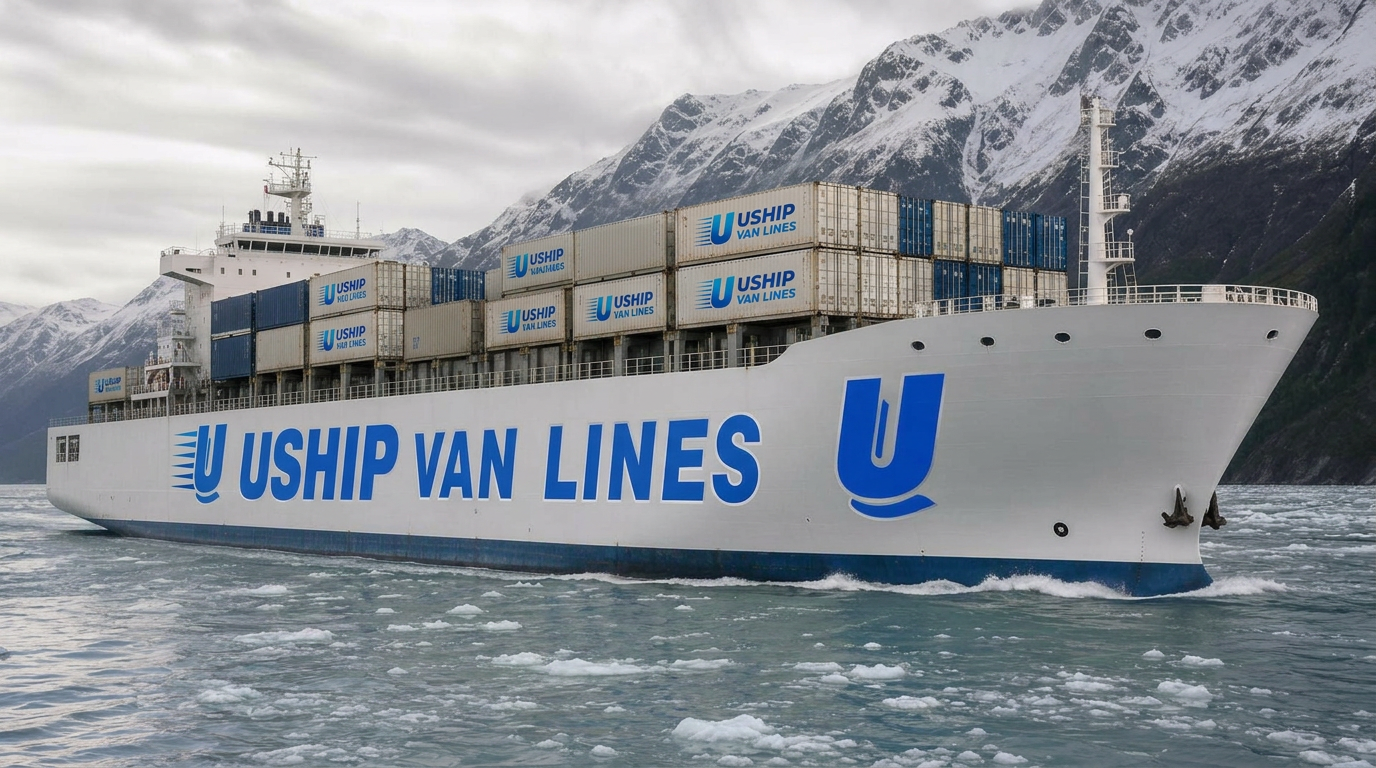
Moving from Alaska to Connecticut
Moving from Alaska to Connecticut means coordinating a multi-modal journey spanning nearly 4,000 miles—from the Last Frontier to Constitution State. Your household goods will travel by barge from Alaska to the Port of Tacoma, then cross the continental United States via secure ground transport to your new Connecticut home, whether you're settling in Hartford, New Haven, Stamford, or a quieter New England town.
This is a complex relocation requiring specialized expertise in Alaska barge logistics, cross-country trucking, and seamless coordination between carriers. Best Alaska & Hawaii Movers, powered by UShip Van Lines, manages every leg of your journey with transparent pricing and real-time tracking. Request your free, no-obligation quote today to see exactly what your Alaska-to-Connecticut move will cost.
Route overview
Understanding the Alaska to Connecticut Route
Your belongings will begin their journey at one of Alaska's major ports—typically Anchorage, Fairbanks (via ground to port), or Mat-Su Valley. If you're in remote areas like Kenai or bush communities, your shipment first travels overland to the nearest barge terminal. The ocean leg connects Alaska to the Port of Tacoma, Washington, a journey of approximately 1,450 nautical miles that typically takes 5–7 days depending on weather and barge schedules.
From Tacoma, your shipment transfers to a long-haul truck for the 2,900-mile cross-country journey to Connecticut. This ground portion traverses Washington, Idaho, Wyoming, Nebraska, Iowa, Illinois, Indiana, Ohio, Pennsylvania, and New York before reaching the Northeast. The total door-to-door timeline ranges from 3–6 weeks, with variations based on consolidation schedules, barge availability, and seasonal demand.
Connecticut's compact geography means delivery anywhere in the state—from coastal communities like Mystic and Old Saybrook to inland cities like Waterbury and Danbury—adds minimal time once your shipment reaches New England. The final leg often involves coordinating street access in historic neighborhoods with narrow roads, a consideration your moving team will address during planning.
How the moving process works
How Your Alaska to Connecticut Move Works
-
Initial survey and quote: Schedule a virtual or in-home assessment where your move coordinator reviews your inventory, discusses packing needs, and explains the multi-modal process. You'll receive a detailed written estimate covering barge fees, ground transport, and any additional services like vehicle shipping or storage.
-
Packing and Alaska pickup: Professional packers arrive at your Alaska residence to carefully wrap, box, and inventory everything. Crews are experienced with Alaska-specific challenges—securing items for barge transport, protecting goods from temperature swings, and managing oversized items common in Alaska homes like fishing gear, outdoor equipment, and bulk storage items.
-
Ground transport to port: If you're outside Anchorage, your shipment travels by truck to the nearest barge terminal. This leg can take 1–3 days depending on your origin point—Fairbanks requires a 350-mile haul south, while Kenai is about 150 miles from Anchorage.
-
Barge loading and ocean transit: Your containerized shipment loads onto a scheduled barge at the Alaska port. The 5–7 day ocean voyage to Tacoma follows established shipping lanes, with vessels designed for North Pacific conditions. Your goods remain in sealed containers throughout the water journey.
-
Tacoma transfer and cross-country haul: At the Port of Tacoma, your container is offloaded and transferred to a long-haul truck. The 2,900-mile journey to Connecticut takes 7–10 days, with your shipment traveling non-stop in climate-controlled conditions on major interstate corridors.
-
Connecticut delivery and setup: Your truck arrives at your Connecticut address on the scheduled delivery window. The crew unloads, places furniture according to your floor plan, and removes packing materials. You'll complete a final walk-through and sign off on delivery.
-
Post-move support: Your coordinator remains available for 30 days after delivery to address any concerns, file claims if needed, and ensure your complete satisfaction with the move.
Estimated moving costs
What Your Alaska to Connecticut Move Costs
A typical 2–3 bedroom household moving from Alaska to Connecticut ranges from $8,500 to $16,000 for full-service door-to-door transport. Studio and 1-bedroom moves start around $5,500–$7,500, while larger 4+ bedroom homes or estates can exceed $20,000 depending on volume and services.
Primary cost drivers include:
- Shipment volume: Charged per cubic foot or by container size (20-foot containers hold roughly 1,000–1,200 cubic feet). A typical 3-bedroom home fills approximately 900–1,100 cubic feet.
- Barge schedule and season: Peak summer months (May–September) command higher rates due to demand. Winter sailings may offer discounts but face weather delays.
- Packing services: Professional packing adds $800–$2,000 depending on home size and whether you choose full-service or partial packing for fragile items only.
- Alaska origin logistics: Remote locations requiring extra ground transport to the port (Fairbanks, Kenai, bush communities) add $500–$2,500 to base costs.
- Connecticut delivery specifics: Difficult access (long carries, stairs, narrow streets in historic areas) may incur additional labor fees of $200–$600.
- Insurance coverage: Basic carrier liability covers $0.60 per pound per item. Full-value protection typically adds 1–2% of declared shipment value.
- Vehicle shipping: Adding a car or truck to your barge shipment costs an additional $2,000–$3,500 from Alaska to the Lower 48.
Request a detailed quote to receive a binding estimate based on your exact inventory and service needs. Best Alaska & Hawaii Movers provides itemized pricing with no hidden fees—what you see is what you pay.
Estimated transit times
Alaska to Connecticut Moving Timeline
Total door-to-door transit: 3–6 weeks
Breakdown by leg:
- Alaska pickup to port: 1–3 days depending on origin (same-day in Anchorage, up to 2–3 days from Fairbanks or remote areas)
- Port staging and barge loading: 2–5 days waiting for next scheduled departure (barge sailings typically run weekly in summer, every 10–14 days in winter)
- Ocean transit to Tacoma: 5–7 days on the water
- Tacoma offload and truck transfer: 2–4 days for container processing and ground carrier assignment
- Cross-country ground transport: 7–10 days covering 2,900 miles via I-90 and I-84 corridors
- Connecticut final delivery: Scheduled within a 2–3 day delivery window upon East Coast arrival
Variables affecting timeline:
Consolidation schedules can add 3–7 days if your shipment needs to wait for sufficient volume to fill a container economically. Summer moves during Alaska's peak season (June–August) often ship faster due to frequent barge departures, while winter months may face delays from weather holds or reduced sailing frequency. Requesting expedited service can reduce total transit by 7–10 days but typically adds 25–35% to base costs.
Your move coordinator provides specific timeline estimates during booking and sends tracking updates at each milestone—port arrival, barge departure, Tacoma offload, truck dispatch, and final delivery appointment.
Regional logistics
Alaska-Specific Moving Logistics
Port operations and barge requirements
Your shipment must meet U.S. Coast Guard and Alaska Marine Highway regulations for barge transport. Items are containerized (typically in 20-foot or 40-foot steel containers) and secured with load bars and strapping. Hazardous materials including propane tanks, ammunition, paint, and certain cleaning chemicals cannot travel by barge and must be disposed of or shipped separately. Your coordinator provides a complete prohibited items list during booking.
Vehicle shipping options
Most Alaska residents moving to Connecticut also ship at least one vehicle. Cars and trucks travel on the same barge as household goods but in separate vehicle carriers or RoRo (roll-on/roll-off) deck space. Vehicles must be clean (no mud, minimal personal items), operable, and under a quarter tank of fuel for barge safety regulations. From Tacoma, vehicles typically ship via car carrier to Connecticut, arriving 10–14 days after the barge docks.
Last-mile Alaska challenges
If you're in Fairbanks, Mat-Su, Kenai Peninsula, or bush communities, your shipment requires ground transport to Anchorage or another barge-accessible port. Winter moves from interior Alaska often involve coordination with ice road schedules or waiting for passable conditions on routes like the Parks Highway. Remote locations may require smaller shuttle trucks to navigate narrow roads before transferring to full-size moving vans.
Documentation and customs
While Alaska is a U.S. state requiring no customs clearance, you'll complete a detailed household goods inventory for barge manifests. This serves as both a shipping record and insurance documentation. Keep copies of this inventory, your bill of lading, and proof of insurance in your personal possession during the move—don't pack these documents with your shipment.
Connecticut delivery considerations
Many Connecticut communities—particularly coastal towns and historic districts—have narrow streets, low-hanging trees, and parking restrictions that prevent large semi-trucks from direct access. Your delivery crew may need to shuttle your belongings from a larger truck parked nearby to your residence using smaller vehicles. Historic buildings in cities like New Haven, Hartford, and Mystic may also have narrow staircases, tight corners, or elevator restrictions requiring extra time and labor for safe delivery.
Seasonal considerations
Best Times to Move from Alaska to Connecticut
Summer (May–September): Peak season
Alaska's warmest, driest months offer the most frequent barge sailings (weekly departures), minimal weather delays, and ideal conditions for loading. However, this is peak moving season—expect premium pricing, less scheduling flexibility, and 4–6 week booking lead times. Ground transport through the Rockies and Great Plains is also straightforward with clear roads.
Fall (October–November): Shoulder season
Barge frequency reduces to every 10–14 days, but rates drop 10–15%. Weather becomes more variable—early season storms can delay sailings by 1–3 days. Cross-country trucking remains reliable through early November, though snow can impact mountain passes by late month. Good value if you can be flexible with exact moving dates.
Winter (December–March): Off-season discounts
Expect the lowest rates (20–30% below summer pricing) but longest timelines and highest weather risk. Barge sailings may run every 2–3 weeks, and rough seas can delay departures. Alaska pickup requires winter-ready crews, and cross-country routes face potential snow delays through Wyoming, Nebraska, and the Midwest. Build extra time into your schedule—add 1–2 weeks to standard estimates.
Spring (April–early May): Transition period
Barge schedules ramp up as ice clears and demand increases. Pricing sits between winter lows and summer peaks. Weather is unpredictable—late season storms or early thaws can affect Alaska roads and sailing conditions. Often the sweet spot for budget-conscious movers who can tolerate some uncertainty.
Recommendation: Book 6–8 weeks in advance for summer moves, 4–6 weeks for shoulder seasons, and 3–4 weeks minimum for winter relocations to secure your preferred dates and ensure container availability.
Why choose Best Alaska & Hawaii Movers
Why Best Alaska & Hawaii Movers for Your Alaska to Connecticut Move
-
Alaska specialists with proven multi-modal expertise: We coordinate barge and ground transport daily, managing the complex handoffs between ocean carriers, port operations, and cross-country truckers so you don't have to.
-
Transparent, all-inclusive pricing: Your quote includes every cost from Alaska pickup through Connecticut delivery—barge fees, ground transport, insurance, fuel surcharges, and standard labor. No surprise charges at delivery.
-
Powered by UShip Van Lines' national network: We leverage a trusted network of licensed, insured carriers for every leg of your journey, with vetted partners specializing in Alaska logistics and long-haul interstate moves.
-
Real-time tracking and dedicated coordination: You'll receive a single point of contact who manages your entire move from quote to delivery, providing milestone updates and 24/7 availability for questions.
-
Comprehensive protection options: Choose from basic carrier liability or full-value insurance, with clear explanations of coverage limits, deductibles, and claims processes before you commit.