
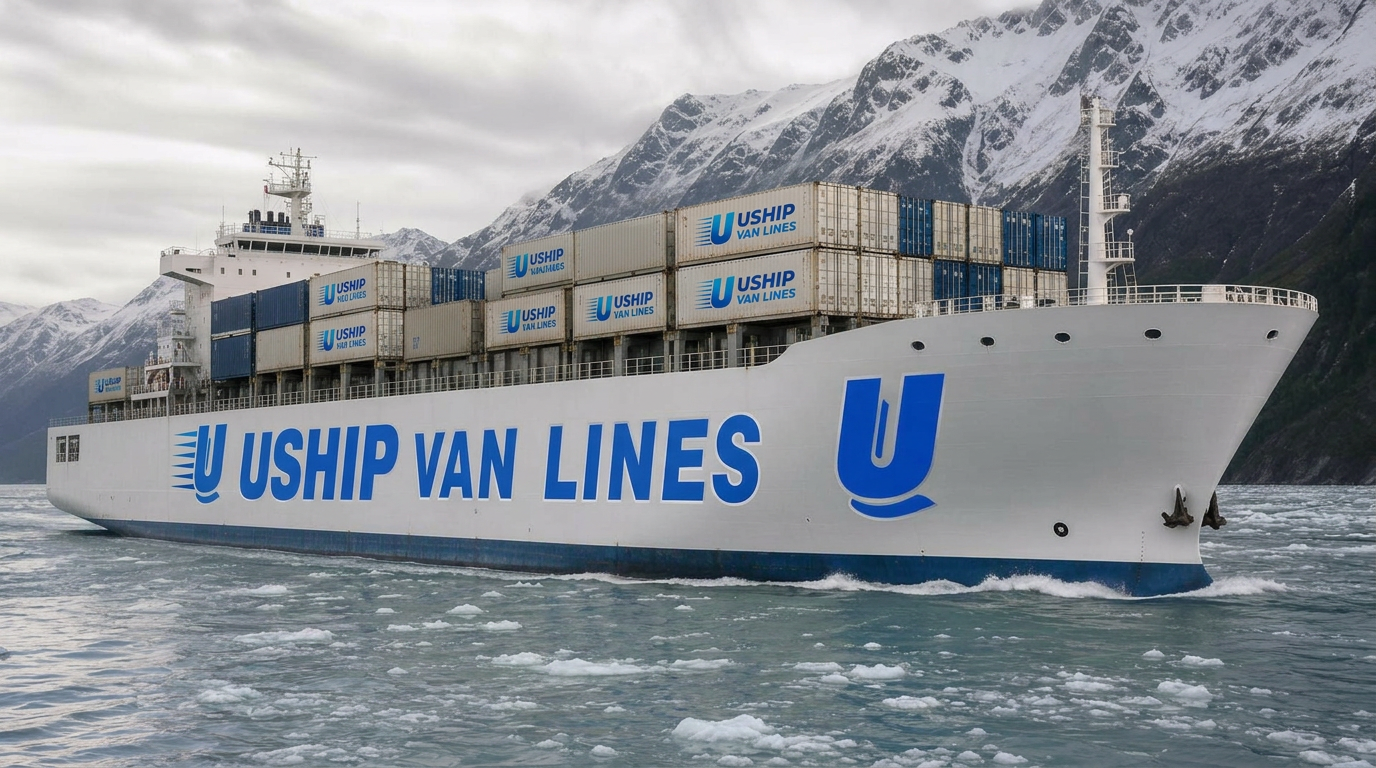
Moving from Alaska to Pearland, TX
Relocating from Alaska to Pearland, TX requires specialized logistics that combine marine freight with over-the-road delivery across 3,400+ miles. Whether you're leaving Anchorage, Fairbanks, the Mat-Su Valley, or remote communities, your household goods will travel by barge to the Port of Tacoma, then continue by truck through the Pacific Northwest and down through the Southwest to the thriving suburbs south of Houston.
Best Alaska & Hawaii Movers, powered by UShip Van Lines, coordinates every leg of this complex journey—from Alaska last-mile pickup through barge loading, port transfer, and final delivery to your Pearland doorstep. Ready to start planning? Request your free, no-obligation moving quote and speak with a coordinator who understands Alaska's unique shipping requirements.
Route overview
The Alaska-to-Pearland Route
Your move from Alaska to Pearland spans one of North America's most logistically challenging corridors. Household goods departing Anchorage, Fairbanks, Kenai, Wasilla, or smaller communities first travel overland to the Port of Anchorage or Whittier for barge loading. The marine leg crosses the Gulf of Alaska to reach Tacoma, Washington—a 5–7 day voyage depending on weather and sailing schedules.
Once your container is offloaded in Tacoma, it transfers to a long-haul semi-truck for the 2,200-mile overland journey through Washington, Oregon, California, Nevada or Arizona, New Mexico, and into Texas. The route terminates in Pearland, a rapidly growing city in Brazoria County just 20 miles south of downtown Houston, known for its master-planned communities, excellent schools, and proximity to the Texas Medical Center and energy sector employment hubs.
This intermodal move requires precise timing coordination between marine carriers, port terminals, trucking companies, and customs (for any regulated items). Working with a carrier experienced in Alaska logistics ensures smooth handoffs, proactive communication, and contingency planning for weather delays or port congestion.
How the moving process works
How Your Alaska-to-Pearland Move Works
-
Initial Survey & Inventory: A moving coordinator conducts a virtual or in-person walkthrough of your Alaska home to catalog belongings, identify special handling items (firearms, hunting trophies, cold-weather equipment), and provide a binding or not-to-exceed quote based on volume and weight.
-
Scheduling Around Barge Sailings: Alaska barge services operate on fixed weekly or bi-weekly schedules, with reduced frequency in winter. Your coordinator books a sailing date that aligns with your move-out timeline and reserves truck capacity for the Tacoma-to-Pearland leg.
-
Packing & Last-Mile Pickup in Alaska: Professional packers arrive at your Alaska residence (whether in Anchorage proper, Eagle River, Fairbanks, or accessible Mat-Su communities) to wrap, box, and load your belongings into a shipping container or onto pallets. If you're in a remote area, last-mile transport to the departure port is arranged via local Alaska carriers.
-
Barge Transit to Tacoma: Your containerized shipment sails from Anchorage or Whittier to the Port of Tacoma. Marine carriers provide container tracking, and your coordinator monitors weather and sailing updates to keep you informed of any schedule changes.
-
Port Transfer & Customs Clearance: Upon arrival in Tacoma, the container is offloaded, inspected, and transferred to the trucking terminal. Any required U.S. Customs documentation (for personal effects returning from Alaska) is processed, and the shipment is loaded onto a long-haul tractor-trailer.
-
Cross-Country Overland Transport: The truck departs Tacoma and travels I-5 south through the Pacific Northwest, then connects to I-10 or southern interstates through California, Arizona or New Mexico, and into Texas. Drivers comply with DOT hours-of-service rules, with typical transit taking 4–6 days depending on routing and weather.
-
Final Delivery in Pearland: The truck arrives at your Pearland address (whether in Silverlake, Shadow Creek Ranch, or other neighborhoods), and the crew unloads, places furniture, and removes packing debris. You inspect the shipment, sign delivery paperwork, and your Alaska-to-Texas move is complete.
Estimated moving costs
What Your Alaska-to-Pearland Move Will Cost
A typical 2–3 bedroom household move from Alaska to Pearland, TX ranges from $6,800 to $11,500, depending on volume, weight, services, and timing. Smaller 1-bedroom or studio apartments may cost $4,200–$6,500, while larger 4+ bedroom homes with full packing and vehicle shipping can exceed $14,000.
Key cost drivers include:
- Volume and weight: Charged per cubic foot or per hundred pounds (CWT). Alaska moves average 800–1,400 cubic feet for a 3BR home.
- Origin location: Pickups in Anchorage or Wasilla cost less than remote Mat-Su communities or Fairbanks, which require additional last-mile transport to the port.
- Packing services: Full-service packing adds $800–$2,000; fragile-only or partial packing reduces costs if you self-pack standard boxes.
- Barge season: Peak summer sailings (May–September) carry higher demand and pricing; fall and winter sailings may offer modest savings but face weather risks.
- Vehicle shipping: Adding a car or truck to the barge increases costs by $1,400–$2,800 for the Alaska-to-Tacoma marine leg, plus $900–$1,400 for Tacoma-to-Pearland overland transport.
- Storage: If your Pearland home isn't ready, storage in Tacoma or Texas adds $150–$350/month for a typical household.
- Insurance: Basic released-value coverage (60¢/lb) is included; full-value protection costs 1–2% of declared shipment value.
Request a detailed quote to receive a breakdown tailored to your inventory, origin ZIP, and preferred move dates. No price is guaranteed until services are confirmed in writing.
Estimated transit times
How Long Your Move Will Take
Door-to-door transit from Alaska to Pearland typically takes 14–24 days, broken down as follows:
- Alaska packing and loading: 1–2 days, depending on home size and packing scope.
- Ground transport to port: Same-day to 2 days for Anchorage-area origins; up to 3–4 days for Fairbanks or remote pickups.
- Barge sailing to Tacoma: 5–7 days on the water, depending on weather, sea conditions, and carrier schedule.
- Port offload and truck loading: 1–3 days for container discharge, customs clearance, and transfer to trucking terminal.
- Overland trucking to Pearland: 4–6 days via I-5 and southern interstates, subject to DOT rest rules and weather.
- Final delivery window: Typically scheduled within a 1–3 day window upon truck arrival in the Houston metro.
Expect longer timelines (18–28 days) during:
- Winter months (November–March), when Gulf of Alaska storms can delay sailings or require rerouting.
- Peak summer moving season (June–August), when barge and truck capacity is constrained.
- Holiday periods (Thanksgiving, Christmas/New Year), when ports and carriers operate on reduced schedules.
Your coordinator provides a detailed timeline at booking and sends tracking updates at each milestone—barge departure, Tacoma arrival, truck dispatch, and delivery ETA.
Regional logistics
Alaska Moving Logistics You Need to Know
Ports and marine terminals: Most Alaska household goods ship via the Port of Anchorage (directly accessible from Anchorage and Mat-Su) or the Port of Whittier (Alaska Railroad connection). Smaller communities may consolidate freight through these hubs or use less frequent Kodiak or Southeast Alaska sailings with Tacoma connections.
Container vs. consolidated shipping: Full container loads (20' or 40') offer faster transit and reduced handling, ideal for 3+ bedroom homes. Smaller shipments may be consolidated with other customers' goods on shared pallets or in shared containers, which can extend port dwell time but reduces cost.
Vehicle shipping: Cars and trucks ride the same barge as household goods, loaded via roll-on/roll-off (RoRo) or inside containers. Vehicles must be cleaned (no soil/mud), operable (or declared inoperable for surcharge), and contain no personal items in the cabin or trunk. Alaska requires a bill of sale or title for customs.
Firearms and hunting equipment: Alaska residents often own firearms and hunting gear. These must be declared, properly packed (unloaded, in locked cases), and documented. Federal law allows interstate transport of personal firearms, but carriers may require separate handling and insurance riders.
Restricted and prohibited items: Hazardous materials (propane, ammunition, gasoline, paint), perishable foods, and plants are prohibited on barges and interstate trucks. Dispose of these before packing or donate to neighbors.
Last-mile access: If you live off the road system (accessible only by plane, boat, or snow machine), coordinate freight forwarding to Anchorage or Fairbanks with a local Alaska carrier before the main move. Best Alaska & Hawaii Movers can recommend trusted bush logistics partners.
Paperwork: You'll complete a detailed inventory list, a bill of lading, and a customer declaration form. Keep digital and paper copies of all documents until delivery is confirmed.
Seasonal considerations
Best Times to Move from Alaska to Pearland
Spring (April–May): Barge schedules increase frequency as winter weather subsides. Mild temperatures in Alaska and Texas make loading and unloading easier. Book early, as summer demand begins building.
Summer (June–August): Peak moving season with the most frequent sailings and longest daylight hours in Alaska. Higher prices and tighter capacity—reserve your move 6–8 weeks in advance. Pearland heat (90–100°F) requires climate-sensitive items (candles, electronics, vinyl records) to be unloaded promptly.
Fall (September–October): Excellent weather window with stable Gulf of Alaska conditions and pleasant Texas temperatures. Pricing moderates as summer peak ends. Ideal for families coordinating with school start dates.
Winter (November–March): Reduced barge frequency (sometimes every 10–14 days instead of weekly) and higher risk of weather delays. Significantly lower demand can mean cost savings of 10–15%, but plan for extended transit buffers. Frozen ground and short daylight in Alaska can complicate rural pickups.
Alaska-specific weather notes: The Port of Anchorage and Port of Whittier remain operational year-round, but ice conditions and severe storms can delay sailings by 1–3 days. Always build a cushion into your move dates if you have firm commitments in Texas.
Why choose Best Alaska & Hawaii Movers
Why Best Alaska & Hawaii Movers for Your Alaska-to-Pearland Move
- Alaska specialists: We coordinate hundreds of Alaska moves annually, managing barge schedules, port logistics, and last-mile challenges that confuse general moving companies.
- Transparent pricing: Detailed, itemized quotes with no hidden fees. You'll know exactly what you're paying for marine freight, trucking, packing, and any optional services.
- Single-point coordination: One dedicated move coordinator manages your entire journey—from Alaska pickup through barge sailing, Tacoma transfer, and Pearland delivery—so you're never handed off between disconnected vendors.
- Proactive communication: Real-time tracking updates at every milestone. If weather delays a barge or a truck is ahead of schedule, you'll know immediately.
- UShip Van Lines backbone: Powered by a nationwide network of vetted carriers, ensuring reliable capacity for the Tacoma-to-Texas overland leg and access to competitive rates.
- Flexible solutions: Need short-term storage in Tacoma or Texas? Shipping a vehicle alongside household goods? Partial packing for fragile items only? We tailor services to your needs and budget.