
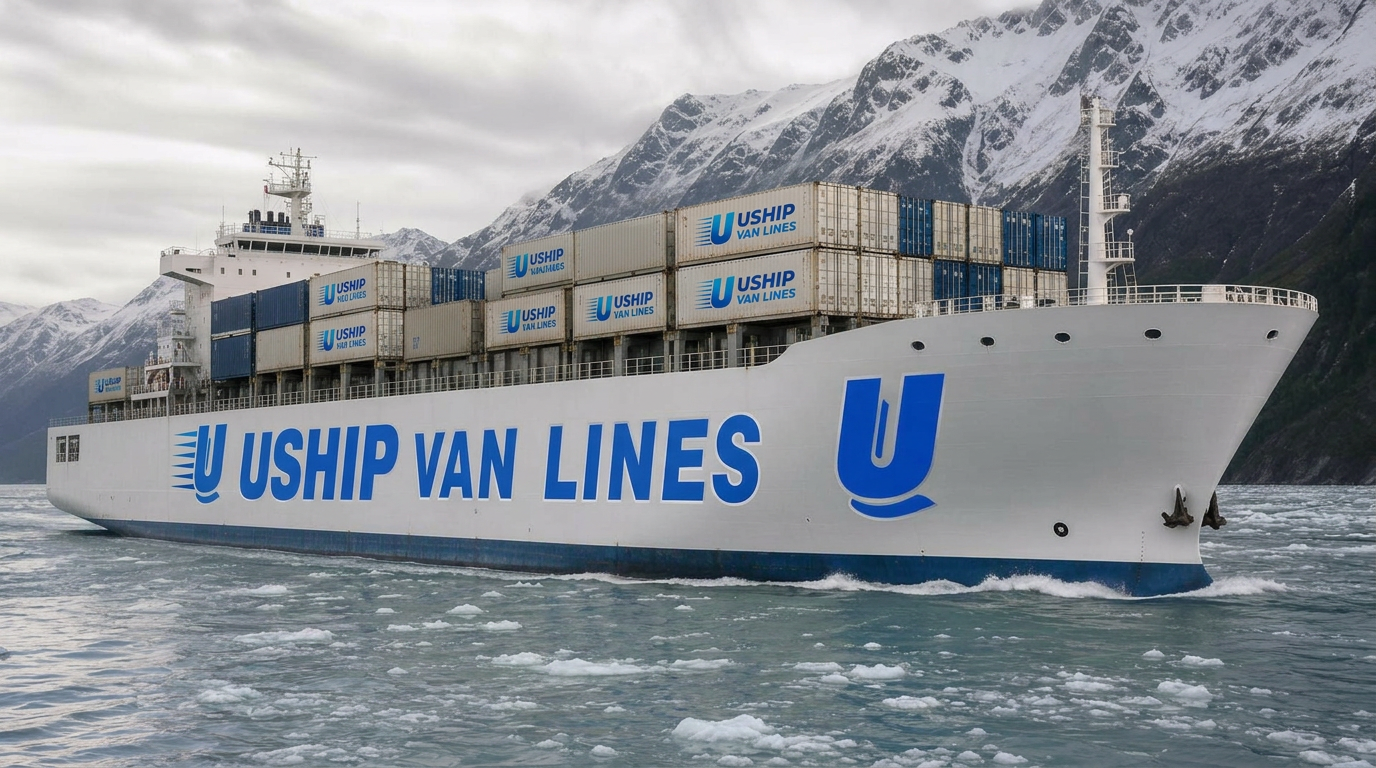
Moving from Connecticut to Alaska
Moving from Connecticut to Alaska represents one of the most significant relocations you can make—spanning over 3,400 miles and requiring coordination across ground transport, ocean barge shipping, and Alaska's unique last-mile delivery network. Whether you're relocating to Anchorage for work, building a life in the Mat-Su Valley, or pursuing adventure in Fairbanks, this move demands specialized expertise that typical moving companies simply don't possess.
Best Alaska & Hawaii Movers, powered by UShip Van Lines, handles every phase of your Connecticut-to-Alaska journey. From pickup anywhere in the Constitution State to final delivery in Alaska's urban centers or remote communities, we coordinate ground transport to Pacific Northwest ports, barge shipping to Alaska, and last-mile delivery tailored to your destination. Ready to start planning? Request your personalized quote today.
Route overview
Understanding the Connecticut to Alaska Moving Route
Your Connecticut move begins with ground transportation across the continental United States. Professional movers will load your household goods in cities like Hartford, New Haven, Stamford, or Bridgeport, then transport them approximately 3,000 miles westward to consolidation facilities near Tacoma, Washington—the primary departure point for Alaska-bound freight.
From Tacoma, your belongings board ocean barges operated by carriers like TOTE Maritime or Alaska Marine Lines. These vessels sail north through the Inside Passage, typically arriving at the Port of Anchorage after 5–7 days at sea. Once cleared through Alaska customs and port operations, your goods transfer to local Alaska carriers for final delivery throughout South-central Alaska, the Interior, Kenai Peninsula, or via air/barge for bush communities.
This multimodal journey requires coordination between long-haul trucking companies, ocean freight forwarders, and Alaska-based delivery specialists. The complexity of managing three distinct transportation legs is precisely why choosing an experienced Alaska moving coordinator makes all the difference in timing, cost control, and peace of mind.
How the moving process works
How Your Connecticut to Alaska Move Works: Step by Step
-
Initial consultation and detailed inventory: Your move coordinator evaluates your complete household inventory, special items (vehicles, boats, ATVs), and destination details. Connecticut homes often include basement storage and attic belongings that increase volume—accurate counts prevent surprises.
-
Ground transportation from Connecticut to Tacoma consolidation hub: Professional movers pack and load your belongings in Connecticut, then transport them cross-country via enclosed trailers. Transit to Tacoma typically takes 5–8 days depending on pickup location and consolidation scheduling.
-
Barge booking and containerization at Tacoma port: Your goods are packed into marine containers (20' or 40' units) or loaded as break-bulk freight. Barge schedules run weekly during peak season (May–September), less frequently in winter. Booking 4–6 weeks ahead secures optimal sailing dates.
-
Ocean transit to Port of Anchorage: Barges sail approximately 1,500 nautical miles through protected waters of the Inside Passage. Transit time averages 5–7 days, though weather and port congestion can add 1–3 days during peak periods.
-
Alaska port operations and customs clearance: After docking, containers are offloaded and processed through port operations. Most household goods clear within 24–48 hours. Alaska imposes agricultural restrictions on certain plants, soil, and untreated wood items.
-
Last-mile delivery throughout Alaska: Local Alaska carriers transport your goods from Anchorage to your final destination. Deliveries to Anchorage, Eagle River, or Wasilla may occur within 2–3 days. Fairbanks adds 1–2 days. Remote locations require coordination with bush plane services or seasonal barge routes.
-
Unpacking and settling into Alaska life: Upon delivery, inspect all items against your inventory list. Report any concerns immediately to activate insurance protocols. Your move coordinator remains available to resolve post-delivery questions.
Estimated moving costs
What Does Moving from Connecticut to Alaska Actually Cost?
A typical 2–3 bedroom household moving from Connecticut to South-central Alaska generally ranges between $8,500 and $14,500 for full-service door-to-door moving. Studio or 1-bedroom moves may start around $5,500–$7,500, while larger 4-bedroom homes with garages can exceed $16,000–$22,000.
Key cost factors include:
- Volume and weight: Alaska moves price primarily by cubic footage or weight. Connecticut's older homes with basements often contain more belongings than expected. A typical 3-bedroom home averages 800–1,200 cubic feet.
- Distance within Connecticut: Pickup from rural Litchfield County or eastern Connecticut adds positioning costs compared to I-95 corridor cities.
- Barge rates and fuel surcharges: Ocean freight represents 40–50% of total cost. Summer peak season (June–August) commands premium rates compared to shoulder seasons.
- Alaska destination specifics: Delivery to Anchorage is baseline. Fairbanks adds $1,200–$2,000. Kenai Peninsula destinations add $800–$1,500. Bush locations requiring air freight add $3–$8 per pound.
- Vehicle shipping: Shipping a car from Connecticut to Alaska runs $2,500–$3,800 via the same barge system. Motorcycles, boats, and ATVs have separate pricing.
- Packing services: Full professional packing adds $1,200–$2,500 but provides insurance coverage and efficiency. Partial packing of fragile items runs $400–$800.
- Storage needs: If timing misaligns between Connecticut home closing and Alaska arrival, storage in Tacoma or Anchorage runs $150–$350 per month per container.
- Insurance coverage: Basic carrier liability covers $0.60 per pound. Full replacement value insurance adds 1–3% of shipment value but protects high-value items.
These figures reflect door-to-door service with experienced Alaska carriers. Budget DIY options exist but require you to coordinate each leg independently—often resulting in delays and unexpected costs that exceed professional service pricing.
Estimated transit times
Realistic Timeline: Connecticut to Alaska Door-to-Door
Total transit time from pickup in Connecticut to delivery in Alaska typically spans 3–5 weeks under normal conditions. Here's how that breaks down:
Ground transport (Connecticut to Tacoma): 5–8 days depending on your Connecticut location and consolidation timing. Interstate corridors like I-84 and I-90 offer reliable routes, but winter weather through the Midwest or Mountain West can add 1–2 days November through March.
Tacoma port operations: 2–5 days for container packing, documentation, and positioning for the next available barge sailing. During peak summer season, consolidation moves faster; winter may require waiting for sufficient freight to justify sailing schedules.
Ocean barge transit: 5–7 days from Tacoma to Anchorage under typical conditions. Storms in the Gulf of Alaska (especially October–March) can delay sailings by 1–3 days. Barges prioritize safety over schedule.
Alaska port and last-mile: 3–7 days from Anchorage port arrival to final delivery. Anchorage-area deliveries are fastest. Fairbanks requires trucking the Parks Highway (6–8 hours). Bush locations depend on connecting barge schedules (monthly or seasonal) or air freight booking.
Seasonal variables: Summer moves (May–August) offer the most frequent barge sailings and fastest overall timelines—often completing in 3 weeks. Winter moves (November–February) face reduced sailing frequency and weather delays, extending timelines to 5–7 weeks.
For time-sensitive relocations, booking 6–8 weeks ahead during summer or 8–12 weeks for winter moves ensures you secure optimal sailing schedules and avoid costly rush fees.
Regional logistics
Alaska-Specific Logistics You Must Understand
Port operations and documentation: All freight entering Alaska processes through federally inspected ports. The Port of Anchorage handles most consumer moves. You'll need a detailed inventory list, proof of residence, and occasionally agricultural declarations. Restrict or leave behind items with soil, untreated wood, or certain plant species—Alaska enforces strict biosecurity.
Vehicle shipping considerations: Most Connecticut residents ship at least one vehicle. Cars travel on the same barges as household goods via roll-on/roll-off service. Vehicles must be empty (less than ¼ tank fuel, no personal items except floor mats and car seats). Shipping runs $2,500–$3,800 per vehicle and takes the same 3–5 weeks. Alternatively, driving the Alaska Highway from Connecticut is a 4,000+ mile adventure taking 7–10 days—possible May through September but challenging with a full household move.
Last-mile delivery challenges: Alaska's road system is limited. Anchorage, Wasilla, Fairbanks, and Kenai are accessible year-round by truck. Communities like Homer, Seward, Valdez, Kodiak, Juneau, and Sitka require additional barge or air connections. Bush Alaska locations (Nome, Bethel, Barrow, Kotzebue) depend on seasonal barge deliveries (summer only) or expensive air freight year-round at $3–$8 per pound.
Climate and packing requirements: Alaska's extreme temperature swings (summer highs of 70°F, winter lows to -40°F Interior) demand proper packing. Electronics, wooden furniture, and musical instruments need climate consideration. Marine-grade containers protect against moisture during barge transit. Connecticut's humidity means items should be dried/aired before packing to prevent mold during the 3-week journey.
Storage and timing buffers: Alaska real estate closings often don't align with barge arrivals. Budget for 2–4 weeks of storage either in Tacoma (before shipping) or Anchorage (after arrival). Storage facilities near Connecticut, Tacoma, and Anchorage can accommodate containers at $150–$350 monthly. This flexibility prevents rushed decisions and expensive re-routing.
Partial loads and consolidation: Full container loads (20' or 40') offer best per-pound pricing but require substantial volume. Most Connecticut households qualify. Smaller moves consolidate with other shipments, which saves money but adds 3–7 days to transit time while waiting for sufficient freight.
Seasonal considerations
Planning Around Alaska's Seasons and Barge Schedules
Summer peak season (May–September): The most popular and reliable window for Connecticut-to-Alaska moves. Barge sailings run weekly, weather is predictable, and Alaska road conditions are optimal for last-mile delivery. Expect premium pricing—book 6–8 weeks ahead. Connecticut's humid summers make climate-controlled storage important if delays occur.
Fall transition (September–October): Excellent rates as demand drops, but weather becomes variable. Early October storms in the Gulf of Alaska can cause 2–4 day delays. Still reliable for South-central Alaska deliveries. Perfect timing if you're selling a Connecticut home in early fall and want to arrive in Alaska for winter setup.
Winter low season (November–March): Significantly reduced barge frequency—often 1–2 sailings monthly instead of weekly. Ocean conditions are roughest, with storm delays common. However, costs drop 15–25% compared to summer, and experienced movers handle winter logistics routinely. Connecticut winter weather can also complicate pickup scheduling, so flexibility is essential. Winter arrivals in Alaska mean navigating snow and cold during unloading—arrange housing with garage access if possible.
Spring ramp-up (April–May): Barge schedules increase as companies prepare for summer demand. Pricing is transitional—lower than summer peaks but rising. Road conditions in both Connecticut (late snow, mud season) and Alaska (breakup season causing mud and road damage) require extra planning. May is often the sweet spot for balancing cost and reliability.
Connecticut-specific timing: Avoid peak moving season around college calendars (late May, late August) when rates for ground transport rise. If you're moving from Connecticut's shoreline towns, summer humidity can affect packing timelines—professional climate-controlled packing protects belongings.
Why choose Best Alaska & Hawaii Movers
Why Connecticut Residents Choose Best Alaska & Hawaii Movers
-
True Alaska specialists, not generalists: We exclusively handle Alaska and Hawaii relocations, powered by UShip Van Lines' network of specialized carriers. Unlike national van lines that treat Alaska as an afterthought, we've refined Connecticut-to-Alaska logistics through hundreds of successful moves.
-
Single-point coordination for three-leg journey: You work with one dedicated move coordinator who manages ground transport from Connecticut, ocean barge booking, and Alaska last-mile delivery. No handoffs between disconnected companies means no communication gaps or finger-pointing when questions arise.
-
Transparent pricing and realistic timelines: We provide detailed written estimates breaking out ground transport, barge fees, and Alaska delivery costs. No surprise fuel surcharges or hidden port fees. Our timeline projections build in real-world buffers for weather and port operations—we under-promise and over-deliver.
-
Flexible service levels matching your budget: Choose full-service packing and white-glove delivery, or save money with partial packing and self-service options. We accommodate both premium and budget-conscious moves without compromising on coordination quality.
-
Alaska delivery expertise from Anchorage to the bush: Our Alaska carrier network includes specialists for Interior deliveries (Fairbanks, North Pole), Kenai Peninsula routes (Homer, Soldotna), and bush coordination (air freight, seasonal barges). We've delivered to locations other companies won't even quote.
-
Real support from booking through delivery: Your move coordinator remains your point of contact from initial quote through final box delivery. Questions about Connecticut pickup timing? Call us. Alaska delivery window updates? We proactively notify you. Post-delivery concerns? We're here to resolve them.