
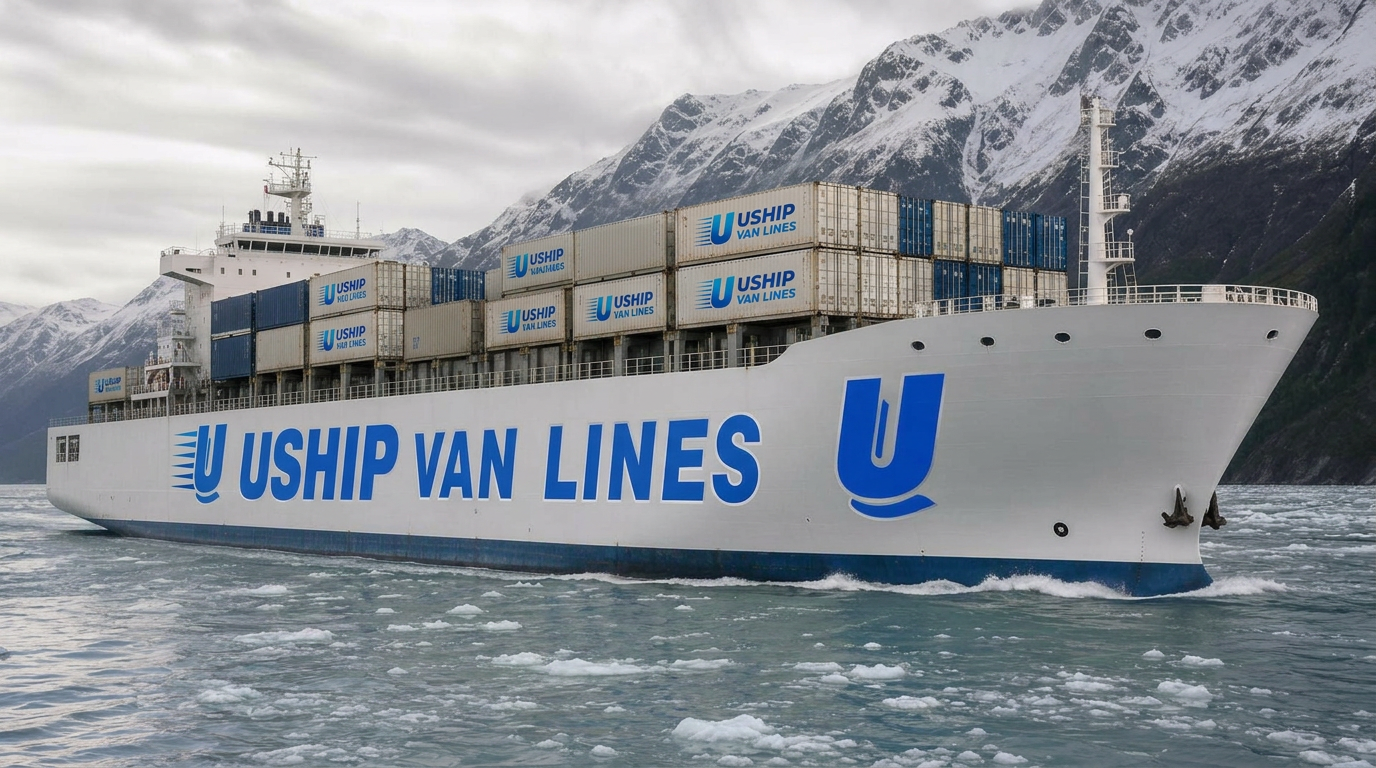
Moving from New York to Alaska
Moving from New York to Alaska is one of the most logistically complex relocations in North America. Your belongings travel over 3,500 miles overland to the Pacific Northwest, load onto a cargo barge bound for Anchorage or another Alaska port, then complete final delivery across some of the most remote terrain in the United States. Understanding barge schedules, seasonal weather windows, and multi-modal coordination is essential to a successful move.
Best Alaska & Hawaii Movers, powered by UShip Van Lines, specializes in New York-to-Alaska relocations. We coordinate every leg—pickup, cross-country transport, barge loading in Tacoma or Seattle, ocean transit, customs clearance, and last-mile delivery to Anchorage, Fairbanks, the Mat-Su Valley, Kenai Peninsula, or bush communities. Request your free quote today to start planning your Alaska relocation.
Route overview
New York to Alaska: Cross-Continent Plus Ocean Transit
This route spans the entire continental United States before crossing the Gulf of Alaska by sea. Your household goods are picked up anywhere in New York State—from Manhattan high-rises to upstate rural homes—and consolidated for cross-country trucking to a West Coast port, typically Tacoma, Washington. Once consolidated with other Alaska-bound freight, your shipment boards a cargo barge operated by carriers like TOTE Maritime Alaska or Matson Navigation, which sail weekly or bi-weekly depending on season.
From the Port of Anchorage (the most common destination), goods clear customs and transfer to local Alaska carriers for final delivery. Deliveries to Fairbanks, Wasilla, Palmer, Soldotna, Kenai, or Juneau add another 1–7 days depending on road conditions and ferry schedules. Bush or off-road-system communities may require additional barge, air freight, or seasonal ice-road delivery, significantly increasing cost and complexity.
This is not a standard long-distance move. Barge sailings run on fixed schedules, weather can delay ocean crossings October through April, and Alaska's brief summer construction season means road access fluctuates. Planning 60–90 days ahead ensures you secure barge space during peak May–September moving months.
How the moving process works
How Your New York to Alaska Move Works (Step-by-Step)
-
Request a Quote and Book Early (60–90 Days Out)
Contact Best Alaska & Hawaii Movers for a detailed inventory and binding estimate. Alaska moves require barge reservations; summer slots (May–September) fill quickly. Provide your desired delivery window, exact Alaska destination, and any vehicle shipping needs. -
In-Home or Virtual Survey
A moving consultant assesses your shipment size, flags non-allowable items (propane, ammunition, perishables), and discusses packing needs. Alaska moves often include vehicles, which ship via roll-on/roll-off barge service and require separate booking. -
Packing and Pickup in New York
Professional packers arrive 1–2 days before load day. Goods are inventoried, wrapped, and loaded into a truck or container. The truck departs for cross-country transit to Tacoma or Seattle—typically a 5–7 day drive. -
Consolidation and Barge Loading at Tacoma Port
Your shipment reaches the Pacific Northwest port facility, where it's consolidated into a shipping container (20-foot or 40-foot) and staged for the next available barge. TOTE Maritime Alaska sails twice weekly in summer; Matson sails weekly. Your container is loaded, secured, and manifested. -
Ocean Transit Across the Gulf of Alaska (5–7 Days)
Barges sail from Tacoma to Anchorage in roughly 60–84 hours of open-ocean transit. Weather, port congestion, and seasonal ice can extend this window in winter months. -
Customs Clearance and Port Unloading in Anchorage
Upon arrival at the Port of Anchorage, containers clear U.S. Customs (Alaska is part of the U.S. but has unique agricultural inspections). Your container is unloaded and transferred to a local Alaska carrier's warehouse. -
Last-Mile Delivery to Your Alaska Home
The Alaska carrier schedules final delivery. Anchorage deliveries may occur within 1–3 days of port clearance. Fairbanks adds 1–2 days via the Parks Highway. Mat-Su Valley (Wasilla, Palmer) is 1 day. Kenai Peninsula (Soldotna, Homer) is 1–2 days. Juneau and Southeast Alaska communities require additional ferry booking and may add 3–7 days.
Estimated moving costs
What Does It Cost to Move from New York to Alaska?
A typical 2–3 bedroom household (8,000–12,000 lbs) moving from New York to Anchorage generally ranges from $8,500 to $14,000, depending on shipment weight, barge schedule, and delivery location. Smaller 1-bedroom or studio loads (3,000–5,000 lbs) may cost $4,500–$7,000. Larger 4-bedroom homes (15,000+ lbs) can exceed $18,000.
Key cost drivers include:
- Distance and multi-modal coordination: Cross-country trucking (3,500+ miles) plus ocean barge and Alaska last-mile delivery.
- Barge freight charges: Charged per cubic foot or container size. Summer peak season (May–September) commands premium rates.
- Weight and volume: Barge space is limited; heavier, bulkier shipments cost significantly more.
- Final destination: Anchorage is the base rate. Fairbanks adds $800–$1,500. Kenai Peninsula, Juneau, or Southeast Alaska add $1,200–$2,500. Bush communities requiring air freight or seasonal barge may add $3,000–$10,000.
- Vehicle shipping: Cars and trucks ship via roll-on/roll-off barge. Expect $1,800–$3,200 per vehicle from Seattle/Tacoma to Anchorage.
- Packing and insurance: Full-service packing adds $800–$2,000. Comprehensive marine insurance is strongly recommended and costs 1.5–3% of declared value.
- Storage: If barge schedules or Alaska housing delays require warehousing, expect $150–$400/month.
Always request a detailed, binding estimate. Costs fluctuate with fuel surcharges, barge availability, and seasonal demand. Best Alaska & Hawaii Movers provides transparent pricing with no hidden fees.
Estimated transit times
How Long Does a New York to Alaska Move Take?
Door-to-door transit from New York to Anchorage typically takes 18–28 days, though winter moves or bush deliveries can extend to 35+ days.
Breakdown by leg:
- New York to Tacoma (cross-country trucking): 5–7 days
- Consolidation and barge staging in Tacoma: 2–7 days (depends on barge sailing schedule)
- Ocean transit Tacoma to Anchorage: 3–5 days (open water)
- Customs clearance and port unloading: 1–2 days
- Last-mile delivery in Anchorage: 1–3 days from port clearance
Extended timelines for other destinations:
- Fairbanks: Add 1–2 days for Parks Highway transit (358 miles north of Anchorage).
- Mat-Su Valley (Wasilla, Palmer): Add 1 day.
- Kenai Peninsula (Soldotna, Homer): Add 1–2 days.
- Juneau and Southeast Alaska: Add 3–7 days; requires Alaska Marine Highway ferry or separate barge booking.
- Bush communities (Bethel, Nome, Kotzebue, Barrow/Utqiaġvik): Add 7–21 days; dependent on seasonal barge or air freight schedules.
Winter moves (October–April) add 3–7 days due to weather delays, reduced barge frequency, and icy road conditions on Alaska highways. Always build buffer time into your Alaska arrival plans.
Regional logistics
Alaska-Specific Moving Logistics You Must Know
Barge Ports and Schedules
Most New York-to-Alaska shipments consolidate in Tacoma, Washington, and sail to the Port of Anchorage. TOTE Maritime Alaska and Matson Navigation operate regular container barge services. Juneau, Sitka, Ketchikan, and other Southeast Alaska ports require Alaska Marine Highway ferry or separate barge arrangements. Bush communities may require seasonal barge (summer only) or year-round air freight at significantly higher cost.
Customs and Agricultural Inspections
Alaska is part of the United States, so no international customs apply for household goods. However, USDA agricultural inspections are strict: no potted plants, soil, certain fruits, or vegetables. Guns and ammunition are legal to transport but must be declared and properly packed (ammunition separate from firearms, in original packaging).
Vehicle Shipping
Most families moving to Alaska ship at least one vehicle. Cars and trucks are driven onto the barge (roll-on/roll-off) in Tacoma and offloaded in Anchorage. Vehicles must be clean (no dirt, no personal items inside), have less than ¼ tank of gas, and be in running condition. Non-running vehicles incur surcharges. Expect $1,800–$3,200 per vehicle, with 7–12 day transit matching your household goods timeline.
Container vs. Loose Load
Most Alaska movers use 20-foot or 40-foot shipping containers (dedicated or shared). Containers protect against saltwater spray and weather better than loose pallet loads. If you have a very small shipment (under 2,000 lbs), you may share container space with other customers to reduce cost.
Last-Mile Challenges
Anchorage, Fairbanks, and Mat-Su Valley have paved road access year-round. Kenai Peninsula roads are paved but subject to winter closures. Juneau is accessible only by ferry or air—no road connection. Bush Alaska (Bethel, Nome, Kotzebue, Barrow) has no road access; goods arrive via seasonal barge (summer only, expensive) or air freight (year-round, extremely expensive). If moving to bush Alaska, consult your mover about timing and whether to ship only essentials.
Storage Options
If your Alaska housing isn't ready or barge schedules don't align, Best Alaska & Hawaii Movers offers climate-controlled warehousing in Tacoma (before barge) and Anchorage (after barge). Rates run $150–$400/month depending on volume.
Seasonal considerations
Best Time to Move from New York to Alaska (Seasonal Guide)
Summer (May–September): Peak Season
The vast majority of Alaska moves occur during these months. Barge sailings are most frequent (twice weekly from Tacoma), roads are clear, and weather is favorable for last-mile delivery. Expect premium pricing and limited availability—book 90 days ahead. June and July are the busiest months due to school calendars and military PCS moves.
Fall (October–November): Shoulder Season
Barge frequency drops to weekly or less. Weather becomes unpredictable in the Gulf of Alaska; ocean crossings may delay 1–3 days due to storms. Alaska roads remain passable, but early snow can close mountain passes. Costs drop 10–15% compared to summer, and availability improves.
Winter (December–March): Off-Season with Risks
Barge sailings are least frequent (sometimes bi-weekly). Ocean weather is severe; expect possible delays of up to a week. Alaska highways require winter tires and chains; black ice and avalanche closures are common on the Seward Highway (Anchorage–Kenai) and Richardson Highway (Anchorage–Fairbanks). Interior Alaska temperatures drop to -30°F or colder, complicating unloading. Costs are lowest, but risk is highest. Only recommended for flexible timelines.
Spring (April): Breakup Season
Alaska's infamous "breakup" brings thawing roads, flooding, and mud. Many rural roads become impassable. Barge schedules start ramping up, but weather is still volatile. Not ideal unless you have no choice.
Bottom line: Move May–September if possible. Book early, expect higher costs, and enjoy reliable service. Off-season moves save money but demand flexibility and contingency planning.
Why choose Best Alaska & Hawaii Movers
Why Choose Best Alaska & Hawaii Movers for Your New York to Alaska Move
- Alaska Barge Expertise: We coordinate weekly sailings with TOTE Maritime Alaska and Matson Navigation, securing container space even during peak summer season. Our Tacoma and Anchorage partners streamline port logistics, customs clearance, and last-mile delivery.
- Single-Point Accountability: You work with one dedicated move coordinator from New York pickup through Alaska delivery. We manage cross-country trucking, barge booking, port transfers, and final delivery—no handoffs to multiple brokers.
- Transparent, Binding Estimates: Our quotes include all legs: cross-country freight, barge charges, port fees, and Alaska last-mile. No surprise surcharges. We explain seasonal pricing and help you choose the most cost-effective sailing window.
- Powered by UShip Van Lines: We leverage UShip's nationwide carrier network for reliable New York pickup and cross-country transport, combined with our deep Alaska and Hawaii specialization for the ocean and last-mile legs.
- Comprehensive Insurance and Tracking: Marine insurance protects against ocean transit risks. Real-time tracking updates keep you informed as your shipment crosses the country, boards the barge, and arrives in Alaska.
- Bush and Off-Road-System Capability: Moving to Juneau, Bethel, or another remote community? We arrange ferry bookings, seasonal barge, or air freight, and provide realistic timelines and costs upfront.