
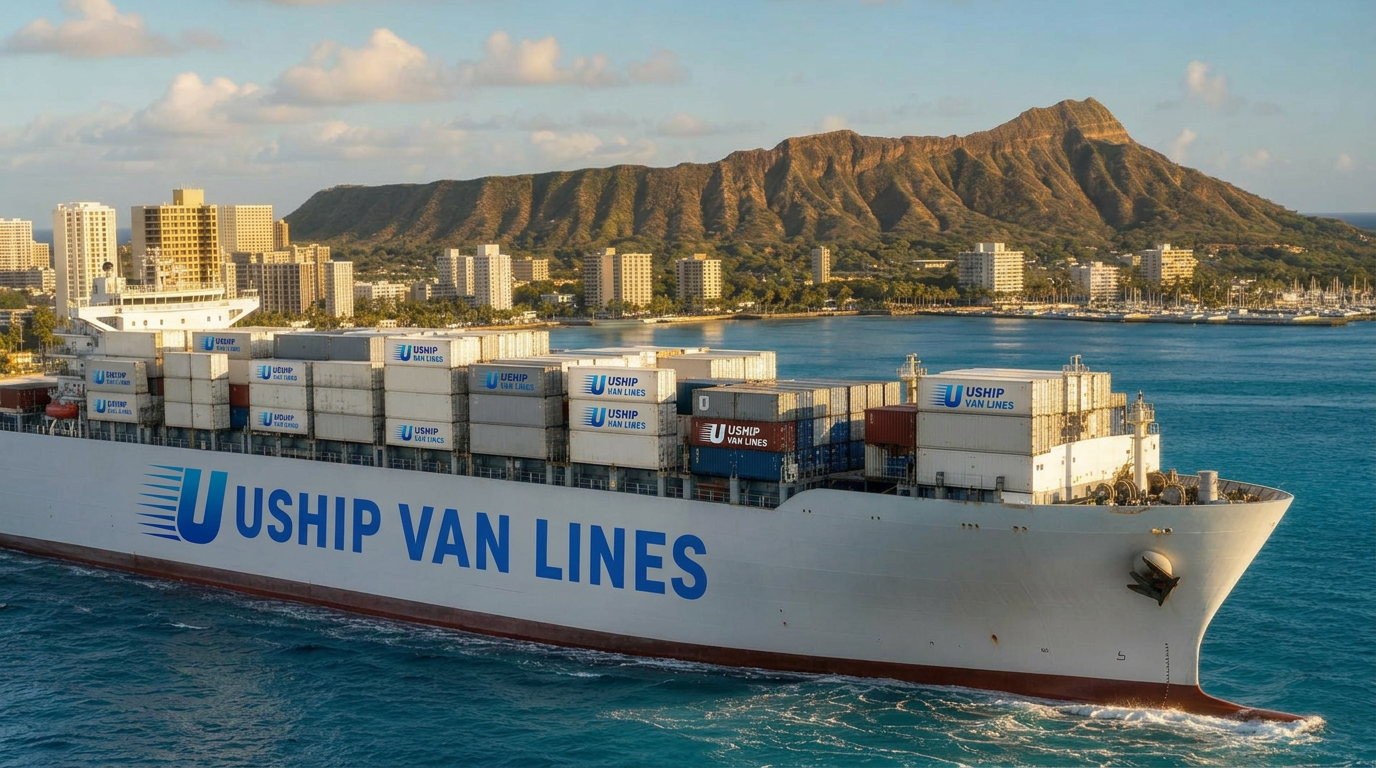
Moving from Connecticut to Hawaii
Moving from Connecticut to Hawaii means trading New England seasons for year-round tropical warmth—and coordinating one of the longest residential moves in the United States. Your belongings will travel roughly 5,100 miles from the Constitution State to the Aloha State, crossing the entire continent before shipping via ocean container from the West Coast.
Best Alaska & Hawaii Movers, powered by UShip Van Lines, specializes in this complex cross-country-plus-ocean route. We handle the complete chain: pickup in Connecticut, overland transit to Long Beach or Oakland, ocean container consolidation via Matson or Pasha, port clearance in Honolulu, and final delivery to your island address. Ready to start your island adventure? Request your free, no-obligation quote today.
Route overview
Connecticut to Hawaii: The Cross-Continental Ocean Move
Connecticut to Hawaii is a true transcontinental-ocean hybrid move. Your household goods first travel approximately 3,000 miles overland from Connecticut—whether you're leaving Hartford, New Haven, Stamford, or a smaller town—to West Coast ports in Long Beach or Oakland, California. This leg typically takes 5–7 days via dedicated long-haul trucking.
From California, your items are loaded into 20-foot or 40-foot ocean containers and shipped to Honolulu via Matson Navigation or Pasha Hawaii, the two primary carriers serving the Hawaiian Islands. Ocean transit adds 7–12 days. Once cleared through Honolulu port, belongings destined for Oahu are delivered directly; moves to Maui, Kauai, or the Big Island require inter-island barge transit (an additional 3–7 days) and final delivery from the neighbor island port.
Total door-to-door timelines average 3–5 weeks, depending on container sailing schedules, port processing times, and your destination island. This route demands careful coordination across multiple carriers and modes—precisely the kind of complex logistics Best Alaska & Hawaii Movers handles daily.
How the moving process works
How Your Connecticut to Hawaii Move Works: Step-by-Step
-
Free Consultation and In-Home or Virtual Survey – We assess your inventory (typically 2–3 bedrooms, garage, attic), discuss prohibited items (plants, certain foods, hazardous materials), and provide a detailed written estimate reflecting overland + ocean + island delivery costs.
-
Scheduling and Hawaii Paperwork Prep – We coordinate your pickup date in Connecticut and reserve container space on the next available Matson or Pasha sailing. You'll complete a Hawaii Department of Agriculture declaration form (AG-CBP-7001) and any required vehicle import documents if shipping cars.
-
Professional Packing and Connecticut Pickup – Our crew arrives at your Connecticut home, packs fragile items in double-walled cartons, wraps furniture in padded blankets, and loads everything into a climate-controlled long-haul truck. Inventory is documented with barcoded labels.
-
Overland Transit to California Port (5–7 Days) – Your shipment travels cross-country to our California consolidation facility near Long Beach or Oakland. Items are staged for container loading, grouped with other Hawaii-bound shipments if you're sharing a container.
-
Ocean Container Loading and Sailing (7–12 Days at Sea) – Your goods are loaded into a steel ocean container, sealed, and placed aboard a Matson or Pasha vessel. Sailing frequency is weekly from Long Beach, slightly less frequent from Oakland. Transit to Honolulu takes 7–12 days depending on weather and port schedules.
-
Honolulu Port Clearance and Customs/Agriculture Inspection (1–3 Days) – Container arrives at Sand Island (Honolulu). USDA and Hawaii Ag officials inspect for prohibited items (soil, certain seeds, pests). Most household goods clear quickly; restricted items are confiscated or fumigated at your expense.
-
Inter-Island Barge (If Needed) and Final Delivery – Oahu deliveries proceed directly from Honolulu. For Maui, Kauai, or Big Island, your container transfers to Young Brothers inter-island barge (3–7 additional days), then local trucks complete last-mile delivery to your new address. You'll schedule a delivery window; our crew unloads, places furniture, and removes packing debris.
Estimated moving costs
What Does a Connecticut to Hawaii Move Cost?
For a typical 2–3 bedroom household (7,000–10,000 lbs), expect total costs between $8,500 and $16,000 for a full-service move. Shared container loads (you pay only for your cubic footage) fall toward the lower end; exclusive-use 20-foot or 40-foot containers cost more but offer faster timelines and no commingling.
Key cost drivers:
- Overland mileage and labor: Connecticut pickup and 3,000-mile cross-country haul to California ports ($3,000–$5,000).
- Ocean freight: Container slot rates fluctuate seasonally. Summer peak season (June–August) commands premiums; winter off-peak (January–March) offers better rates. Shared container: ~$2,500–$4,500; exclusive 20-foot: ~$5,000–$7,000; 40-foot: ~$8,000–$11,000.
- Destination island: Oahu is least expensive (direct from Honolulu). Maui, Kauai, and Big Island add $800–$1,800 for inter-island barge and second last-mile delivery.
- Packing services: Full professional packing adds $800–$1,500; fragile-only or kitchen-only packing reduces cost if you pack clothing and linens yourself.
- Storage: If your Hawaii home isn't ready, California or Honolulu storage runs $150–$300/month.
- Insurance: Basic carrier liability (~$0.60/lb) is included; full-replacement-value coverage (highly recommended for Hawaii ocean moves) adds 1–2% of declared inventory value.
- Vehicle shipping: Cars travel separately via Matson/Pasha roll-on/roll-off service (~$1,200–$1,700 per vehicle, CT to Honolulu).
We never publish guaranteed prices online because every move is unique. Request a detailed quote with transparent line-item breakdowns—no hidden fees, no surprises.
Estimated transit times
How Long Does Connecticut to Hawaii Moving Take?
Typical door-to-door timeline: 21–35 days (3–5 weeks). Here's the breakdown:
- Connecticut pickup to California port arrival: 5–7 days overland.
- Container staging and sailing wait: 1–7 days (depends on sailing schedule; weekly departures from Long Beach mean minimal wait if timed well).
- Ocean transit to Honolulu: 7–12 days at sea.
- Honolulu port processing and clearance: 1–3 days.
- Inter-island barge and neighbor island delivery (Maui/Kauai/Big Island only): Add 3–7 days.
- Final delivery scheduling window: 1–2 days.
Oahu deliveries: Often complete in 21–28 days.
Neighbor island deliveries: Plan for 28–35 days total.
Summer moves (June–August) can extend timelines due to peak-season port congestion and higher container volumes. Winter and spring (November–April, excluding holidays) typically see faster processing. Hurricane season (June–November) rarely delays shipments, but severe storms can postpone sailings by 2–4 days.
We provide regular tracking updates—when your truck departs Connecticut, when your container is loaded, when it sails, when it clears Honolulu, and when final delivery is scheduled.
Regional logistics
Hawaii-Specific Moving Logistics You Must Know
Ocean Container Ports and Carriers: Your shipment sails from Long Beach (Port of Long Beach, Pier T) or Oakland (Matson Terminal, Outer Harbor) aboard Matson Navigation or Pasha Hawaii vessels. Both carriers offer weekly or near-weekly service; Matson has slightly more frequent Honolulu sailings. We select the optimal port and carrier based on your pickup date and cost.
Hawaii Department of Agriculture Restrictions: Hawaii enforces the strictest agricultural import rules in the U.S. to protect island ecosystems. Prohibited items include: soil, potted plants, fresh fruits/vegetables, seeds, certain woods, and any item with visible soil residue (gardening tools, shoes, sports equipment). Declutter and clean thoroughly before packing. Restricted items discovered at Honolulu inspection are confiscated or require expensive fumigation. Our pre-move consultation includes a detailed prohibited-items checklist.
Vehicle Shipping: Cars and motorcycles cannot travel inside household goods containers. They ship separately via Matson or Pasha roll-on/roll-off (RoRo) service from Long Beach, Oakland, or occasionally San Diego. Cost: ~$1,200–$1,700 per vehicle to Honolulu; add $200–$400 for neighbor islands. Vehicles must be cleaned (no dirt, no personal items inside), operable, and registered. Allow 2–3 weeks port-to-port, plus overland transit if you're not driving to California yourself.
Neighbor Island Deliveries (Maui, Kauai, Big Island): After Honolulu port clearance, containers transfer to Young Brothers inter-island barges. Barge schedules vary by island—Maui and Big Island see near-daily service; Kauai is 3–4x weekly. Final delivery is via local trucks from Kahului (Maui), Nawiliwili (Kauai), or Hilo/Kawaihae (Big Island). Narrow roads, gated communities, and unpaved driveways are common; confirm truck access with your Hawaii landlord or realtor.
Storage Options: If your Hawaii residence isn't ready, we offer short-term storage in California (before sailing) or Honolulu/neighbor island warehouses (after arrival). California storage is usually cheaper; Hawaii storage is convenient for phased deliveries or home-purchase delays.
Last-Mile Delivery Challenges: Many Hawaii neighborhoods have steep hills, narrow streets, or limited parking. Honolulu high-rises require freight elevator reservations and building COIs (certificates of insurance). Rural Big Island or Kauai addresses may need smaller shuttle trucks. We survey delivery addresses in advance and coordinate all building/HOA requirements.
Seasonal considerations
Best Times to Move from Connecticut to Hawaii (and Times to Avoid)
Winter/Spring (November–April): Off-peak season for Hawaii moves means better container rates, faster port processing, and easier delivery scheduling. Connecticut winters can complicate pickup if you're in a rural area prone to snow/ice—coordinate flexible pickup windows. This is the ideal cost-and-speed window.
Late Spring (May): Shoulder season. Rates begin climbing as summer approaches, but availability is still good. Weather is pleasant on both ends.
Summer (June–August): Peak moving season and peak Hawaii tourism/shipping season. Container space books weeks in advance; rates are highest. Port congestion in Long Beach and Honolulu adds 3–7 days to timelines. Hurricane season officially begins June 1, though major storms are rare before August. If you must move in summer, book 6–8 weeks ahead.
Early Fall (September–October): Hurricane season peaks (though Hawaii sees far fewer storms than the Gulf Coast). Rates begin to ease as families settle post-school-start. Generally good availability with moderate pricing.
Holiday Periods (Thanksgiving, Christmas/New Year): Reduced sailing schedules and skeleton port crews extend timelines. Avoid moves with delivery scheduled between December 20–January 5 unless you have flexible housing.
Pro tip: If your timeline is flexible, aim for a Connecticut pickup in late October or early November. You'll catch falling rates, avoid holiday chaos, and likely deliver to Hawaii before Thanksgiving.
Why choose Best Alaska & Hawaii Movers
Why Best Alaska & Hawaii Movers for Your Connecticut to Hawaii Move
-
Hawaii Specialists, Not Generalists: We focus exclusively on Alaska and Hawaii moves—this isn't a side service. We know Matson and Pasha sailing schedules, Hawaii Ag rules, and neighbor island logistics better than any national van line.
-
Transparent, All-Inclusive Quotes: You'll receive a detailed estimate covering overland pickup, ocean freight, port fees, inter-island barge (if applicable), and final delivery. No surprise fuel surcharges or