
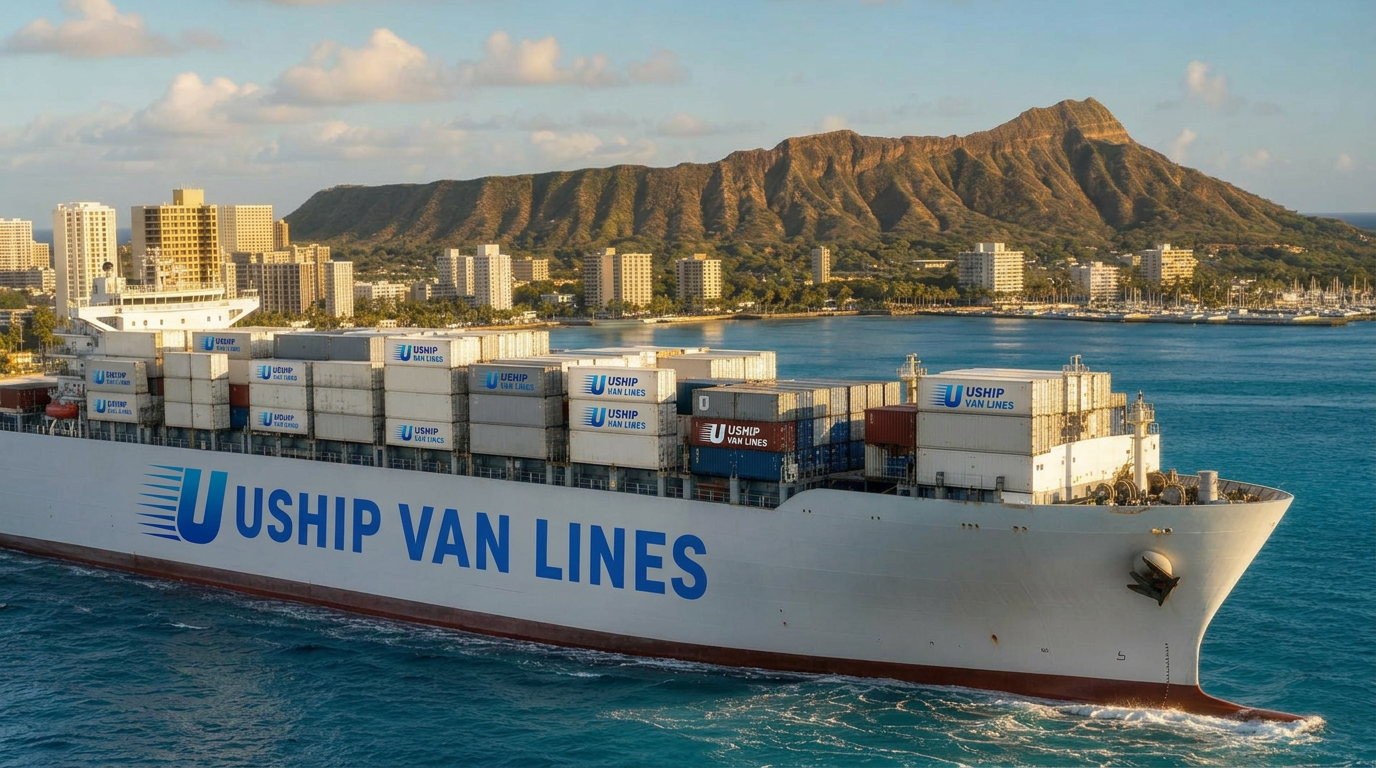
Moving from New Hampshire to Hawaii
Moving from New Hampshire's four seasons to Hawaii's year-round tropical climate is an exciting life change that requires careful planning and specialized logistics. Unlike a standard long-distance move, your household goods will travel over 5,000 miles—first by truck across the continental U.S., then by ocean container from the West Coast to the Hawaiian Islands.
Best Alaska & Hawaii Movers, powered by UShip Van Lines, coordinates every step of your New Hampshire-to-Hawaii relocation, from pickup in Manchester, Nashua, or Concord through final delivery to Honolulu, Maui, Kauai, or the Big Island. Request a detailed quote today to understand your timeline and costs before you commit.
Route overview
The New Hampshire to Hawaii Moving Route
Your move begins with ground transportation from your New Hampshire residence to a West Coast consolidation point, typically in California. This cross-country leg covers approximately 3,000 miles and takes 5–7 days depending on your exact origin city and the carrier's route.
From Long Beach or Oakland, your belongings are loaded into ocean containers shipped via Matson Navigation or Pasha Hawaii—the primary carriers serving the Hawaii trade lane. The ocean voyage to Honolulu takes 5–7 days under normal conditions. If your final destination is a neighbor island (Maui, Kauai, or Big Island), expect an additional 3–7 days for inter-island barge service and local delivery.
Total door-to-door transit typically ranges from 14 to 28 days, with the wide variance reflecting port schedules, container availability, weather conditions, and your specific pickup/delivery locations within New Hampshire and Hawaii.
How the moving process works
How Your New Hampshire to Hawaii Move Works
-
In-Home or Virtual Survey – A moving consultant evaluates your household inventory to provide an accurate cubic footage estimate and identify items prohibited or restricted in Hawaii (certain plants, soil, wood products, certain pets).
-
Cross-Country Ground Transport – A long-distance carrier picks up your belongings in New Hampshire and transports them to a West Coast port facility, typically in the Los Angeles/Long Beach or Oakland area.
-
Container Loading and Documentation – Your shipment is loaded into a 20-foot or 40-foot ocean container (shared or exclusive, depending on your volume) and customs/agricultural paperwork is prepared for Hawaii Department of Agriculture inspection.
-
Ocean Freight to Honolulu – The container sails from California to Honolulu Harbor aboard Matson or Pasha vessels, a voyage of approximately one week under normal sea conditions.
-
Hawaii Agricultural Inspection – All household goods entering Hawaii undergo agricultural inspection to prevent invasive species; shipments with prohibited items face delays, fines, or confiscation.
-
Inter-Island Transport (if applicable) – If your destination is Maui, Kauui, or Big Island, your container is transferred to an inter-island barge for the final ocean leg.
-
Final Delivery and Unpacking – A local Hawaii moving crew delivers your shipment to your new home, unloads, and can assist with unpacking and debris removal if you've selected those services.
Estimated moving costs
What a New Hampshire to Hawaii Move Costs
A typical 2-bedroom household (approximately 800–1,200 cubic feet) moving from New Hampshire to Oahu costs between $6,500 and $11,000, while a 3-bedroom home (1,500–2,000 cubic feet) generally runs $9,500 to $16,000. These are estimated ranges; your actual quote depends on precise volume, services, and timing.
Key cost drivers include:
- Shipment volume – Ocean freight is priced primarily by cubic footage or container space; a full 40-foot exclusive container costs significantly more than a shared-container partial load
- Packing services – Professional packing for fragile items, especially for ocean transit, adds $800–$2,500 depending on inventory
- Origin/destination accessibility – Long carries, stairs, or difficult access in New Hampshire or Hawaii increase labor costs
- Neighbor island delivery – Shipping to Maui, Kauai, or Big Island adds $800–$2,000 due to inter-island barge and additional handling
- Insurance and valuation – Full replacement value coverage costs approximately 1–2% of declared inventory value; basic carrier liability covers only 60¢ per pound
- Storage – If your Hawaii residence isn't ready, warehouse storage in Honolulu runs $150–$400 per month depending on volume
- Vehicle shipping – Adding a car to your move costs $1,200–$1,800 from the West Coast to Hawaii; coast-to-coast vehicle transport from New Hampshire is an additional $1,000–$1,500
We provide transparent, binding estimates after a thorough inventory assessment—never inflated quotes that change on moving day.
Estimated transit times
Realistic New Hampshire to Hawaii Moving Timelines
Plan for 14 to 28 days door-to-door for most New Hampshire to Hawaii moves, broken down as follows:
- New Hampshire pickup to West Coast port: 5–7 days of ground transportation across the continental U.S.
- Port processing and container loading: 1–3 days for consolidation, loading, and documentation at Long Beach or Oakland
- Ocean voyage to Honolulu: 5–7 days at sea under normal weather and sailing schedules
- Hawaii inspection and port clearance: 1–2 days for agricultural inspection and customs clearance
- Delivery on Oahu: Same day to 2 days after clearance, depending on scheduling and warehouse capacity
- Inter-island delivery (Maui, Kauai, Big Island): Add 3–7 days for barge transport and final delivery
Sailing schedules are not daily; Matson and Pasha typically operate 1–2 departures per week to Hawaii, so if your shipment misses a sailing, expect a 3–7 day delay. During peak summer months and winter holidays, port congestion and container shortages can extend timelines by an additional week.
We recommend setting your Hawaii arrival date at least 3–4 weeks after your New Hampshire departure to allow buffer time, and arrange temporary housing or extended-stay accommodations for your first weeks in the islands.
Regional logistics
Hawaii-Specific Moving Logistics You Must Know
Port Infrastructure: Your shipment will arrive at Honolulu Harbor (Oahu), then transfer to Kahului Harbor (Maui), Nawiliwili Harbor (Kauai), or Hilo/Kawaihae (Big Island) if needed. Port labor schedules and agricultural inspection capacity directly impact your delivery date—these are not under carrier control.
Agricultural Restrictions: Hawaii enforces strict biosecurity. Prohibited items include: most live plants, soil, certain seeds, fresh fruits/vegetables, live animals (except cats/dogs with advance permits), and untreated wood furniture or pallets. Violating these rules results in confiscation, fumigation fees ($300–$800), or shipment rejection. Review the Hawaii Department of Agriculture guidelines before packing.
Vehicle Shipping: Cars must be shipped separately from household goods. Vehicles are driven onto roll-on/roll-off (RoRo) vessels and must be operable, empty of personal items, and under a quarter-tank of fuel. The process requires separate booking, usually through the same carriers (Matson/Pasha). Expect 7–14 days port-to-port, plus ground transport from New Hampshire to the West Coast if you don't drive it yourself.
High-Rise and Condo Deliveries: Many Hawaii residences are high-rise condominiums with strict move-in rules: reserved elevator times, certificate of insurance requirements, weekend/evening prohibitions, and sometimes building access fees ($100–$300). Confirm your building's requirements at least two weeks before your scheduled delivery.
Storage Options: If your Hawaii residence isn't ready, short-term warehousing in Honolulu is available. Storage adds cost but prevents costly delivery reschedules. Climate-controlled facilities are recommended for electronics, artwork, and sensitive items in Hawaii's humid climate.
Insurance Considerations: Ocean transport carries different risk profiles than ground-only moves. Standard carrier liability (60¢ per pound) is inadequate for most households. Full replacement value coverage costs 1–2% of your declared inventory value but provides real protection against the rare but real risks of ocean transit.
Seasonal considerations
Best Times to Move from New Hampshire to Hawaii
Spring (March–May): Moderate demand and generally favorable ocean conditions make spring an ideal window for Hawaii moves. Ports are less congested than summer, and you'll avoid both New Hampshire's harsh winter weather and Hawaii's late-summer hurricane season.
Summer (June–August): Peak moving season brings higher demand, tighter container availability, and premium pricing—expect 10–20% higher costs. June is particularly busy as families relocate before the school year. Ocean conditions are typically calm, but this is also when port congestion is worst due to overall Pacific shipping volume.
Fall (September–November): Hurricane season peaks in September and October, occasionally disrupting sailing schedules or causing brief port closures, though major storms directly impacting Hawaii are rare. Demand drops after Labor Day, often bringing better rates and faster scheduling.
Winter (December–February): New Hampshire snowstorms can delay pickups, while winter is actually a pleasant time to arrive in Hawaii. Holiday weeks (Thanksgiving through New Year's) see reduced sailing schedules and port closures. January–February often offers the best combination of lower rates and good availability, though you'll need to navigate New England winter weather for your pickup.
Book 6–8 weeks in advance during peak season, 3–4 weeks minimum during off-peak periods to secure your preferred dates and pricing.
Why choose Best Alaska & Hawaii Movers
Why Choose Best Alaska & Hawaii Movers for Your New Hampshire to Hawaii Relocation
-
Hawaii Specialists, Not Generalists – We exclusively focus on Alaska and Hawaii moves, with established partnerships with Matson and Pasha Hawaii, ensuring your shipment gets priority handling and experienced logistics coordination that general moving brokers cannot match.
-
Transparent, Binding Estimates – Our quotes are based on thorough inventory assessments and include all foreseeable costs—port fees, fuel surcharges, Hawaii agricultural compliance—so you won't face surprise charges on delivery day.
-
End-to-End Coordination – One point of contact manages your entire move from New Hampshire pickup through Hawaii delivery, including agricultural paperwork, port scheduling, and inter-island transfers, eliminating the confusion of dealing with multiple carriers.
-
Realistic Timelines and Proactive Communication – We provide conservative timeline estimates and track your shipment at every stage, sending proactive updates about sailing schedules, port clearance, and delivery windows so you're never left wondering where your belongings are.
-
Powered by UShip Van Lines Infrastructure – Our partnership with UShip Van Lines provides access to nationwide carrier networks for your cross-country leg, vetted local crews in New Hampshire, and established Hawaii delivery teams who understand island logistics and building access requirements.