
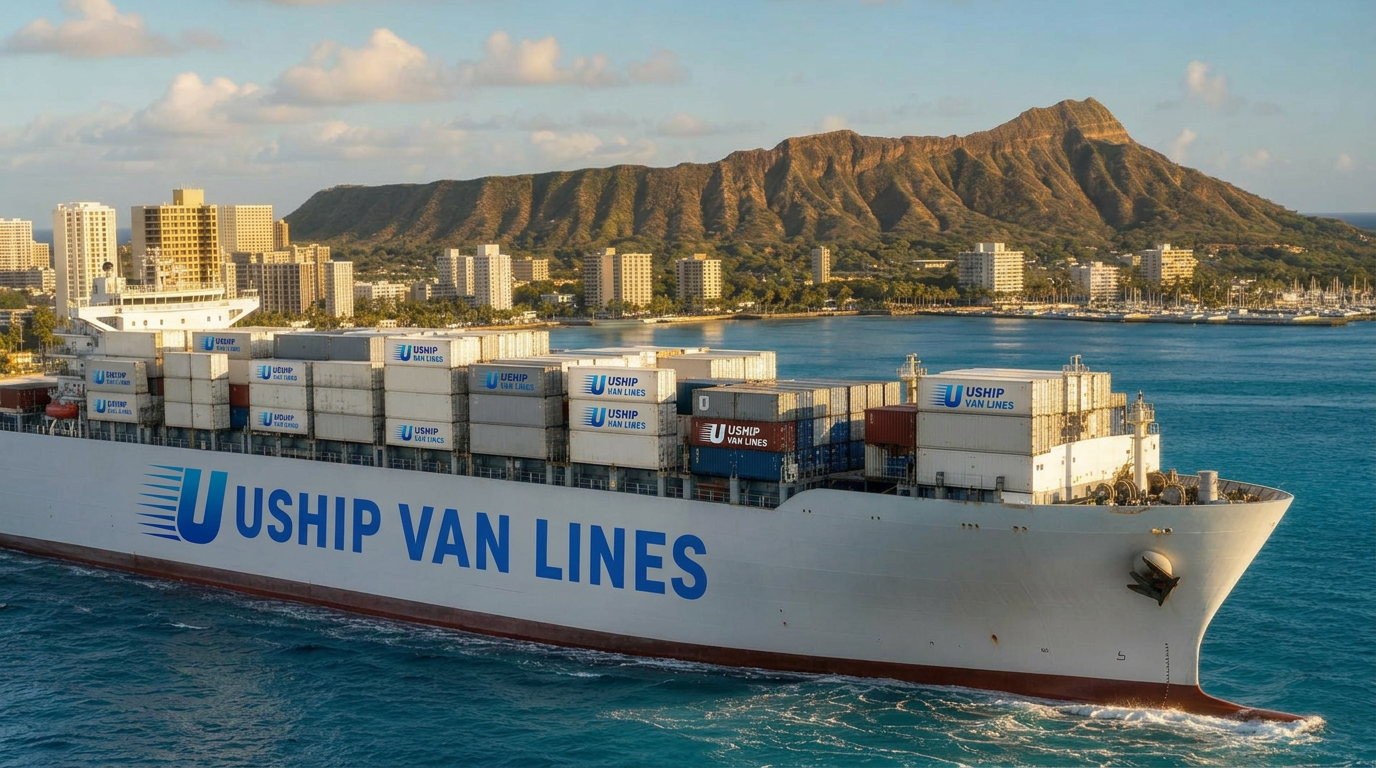
Moving from Hawaii to New Hampshire
Moving from the tropical islands of Hawaii to New Hampshire's four-season landscape is one of the most complex domestic relocations you can undertake. This cross-Pacific move requires ocean freight from Hawaiian ports to the West Coast, followed by transcontinental ground transport across 5,000+ miles to the Granite State—a journey that demands specialized expertise and careful planning.
Best Alaska & Hawaii Movers, powered by UShip Van Lines, coordinates every leg of your Hawaii-to-New Hampshire move. From containerized ocean shipping through Matson or Pasha Lines to final delivery in Portsmouth, Manchester, Nashua, or your New Hampshire destination, we manage the logistics so you can focus on your new chapter. Request a free quote to see how we make island-to-mainland moves straightforward and stress-free.
Route overview
Hawaii to New Hampshire: A Two-Ocean, Cross-Continent Journey
Your household goods begin their journey at a Hawaiian port—Honolulu Harbor on Oʻahu, Kahului Harbor on Maui, Nawiliwili Harbor on Kauaʻi, or Hilo/Kawaihae on the Big Island. Items are loaded into 20-foot or 40-foot ocean containers and shipped via Matson Navigation or Pasha Hawaii to West Coast ports, typically Long Beach or Oakland. This ocean leg alone takes 5–7 days of sailing time, plus port processing on both ends.
Once your container clears customs and inspection at the mainland port, contents are transferred to a traditional moving truck for the 3,000-mile overland journey to New Hampshire. The cross-country route typically follows I-80 east through Nevada, Wyoming, Nebraska, and Iowa, then northeast via I-90 through Illinois, Indiana, Ohio, Pennsylvania, and New York before entering New England. Your final destination might be Manchester, Nashua, Concord, Portsmouth, or one of the state's smaller towns and rural communities.
New Hampshire's compact geography—just 24 miles of Atlantic coastline—means most deliveries involve navigating New England's narrow roads, especially outside the I-93 and I-89 corridors. Winter weather, fall foliage traffic, and rural access roads all require experienced drivers familiar with Northeast conditions.
How the moving process works
How Your Hawaii to New Hampshire Move Works: Step by Step
-
Free Quote and Logistics Planning – Contact us with your origin island, New Hampshire destination, inventory list, and preferred timeline. We'll provide a detailed estimate covering ocean freight, overland transport, and any storage needs, plus discuss vehicle shipping if needed.
-
Container Selection and Packing – Based on your household size, we assign either a dedicated 20-foot container (studio to 1-bedroom) or 40-foot container (2+ bedrooms). You can pack yourself or use our professional packing services, which many customers prefer for fragile items making a 5,000+ mile journey.
-
Island Pickup and Port Delivery – Our Hawaiian partner picks up your packed container or loads your belongings at your residence. The container is transported to your departure port and staged for the next available Matson or Pasha sailing to the West Coast.
-
Ocean Transit to California – Your container sails 5–7 days to Long Beach or Oakland. Upon arrival, it undergoes agricultural inspection (USDA) and customs clearance, which typically adds 2–4 business days.
-
Cross-Country Overland Transport – Contents are transferred to a long-haul moving truck (or the container is loaded onto a chassis for rail/truck transport). The transcontinental leg takes 7–10 days depending on routing and weather, with drivers navigating through mountain passes and Midwest plains before reaching the Northeast.
-
Final Delivery in New Hampshire – Our delivery team contacts you 24–48 hours before arrival. They navigate New Hampshire's roads—from I-93 in the south to Routes 16, 302, and 112 in the White Mountains—and unload at your new residence, placing items in designated rooms.
-
Post-Move Support – We follow up to ensure everything arrived safely. Any damage claims are handled through our carrier insurance process, and we provide guidance on unpacking, debris removal, and settling into your new Granite State home.
Estimated moving costs
What You'll Pay: Hawaii to New Hampshire Moving Costs
A typical 2–3 bedroom household moving from Hawaii to New Hampshire costs $8,500–$14,500 door-to-door. Studio and 1-bedroom moves may range $5,500–$8,000, while larger 4+ bedroom homes can exceed $16,000–$22,000. These are estimates only; your actual price depends on inventory volume, packing services, timing, and specific pickup/delivery locations.
Key cost drivers include:
- Container size and type – Shared (consolidated) containers cost less but take longer; dedicated 20-foot or 40-foot containers offer faster transit and exclusive space but at premium rates
- Ocean freight rates – Matson and Pasha pricing fluctuates with fuel surcharges, seasonal demand, and port congestion; summer peak season (June–August) sees higher rates
- Distance and accessibility in New Hampshire – Urban deliveries to Manchester or Nashua are simpler than rural White Mountains addresses requiring smaller shuttle trucks on narrow roads
- Packing and specialty services – Professional packing, crating for artwork/antiques, appliance servicing, and piano moving add $1,200–$3,500
- Vehicle shipping – Adding a car to your move costs $1,400–$2,200 per vehicle via RORO (roll-on/roll-off) ocean shipping, plus mainland transport
- Storage – If your New Hampshire home isn't ready, warehouse storage runs $150–$350/month; some customers store on the mainland to avoid double ocean freight
- Insurance and valuation – Basic carrier liability is included; full-value protection costs 1–2% of declared inventory value for high-value households
Request a detailed quote with transparent line-item pricing—we never advertise guaranteed rates because ocean freight and fuel costs change, but we lock your price in writing once you book.
Estimated transit times
Timeline: How Long Does Hawaii to New Hampshire Take?
Door-to-door transit from Hawaii to New Hampshire typically takes 3–5 weeks (21–35 days), broken into these segments:
- Island pickup and port staging: 2–5 days, depending on your island and how quickly the container is loaded and transported to the departure port
- Ocean sailing to West Coast: 5–7 days sailing time for Honolulu–Long Beach/Oakland routes; neighbor island departures may add 1–3 days for inter-island barge to Oʻahu
- Port clearance and transfer: 2–4 days for USDA agricultural inspection, customs processing, and container unloading or chassis mounting
- Cross-country overland transport: 7–10 days for the 3,000-mile journey from California to New Hampshire, allowing for mandatory driver rest periods, weather, and routing
- Final delivery window: 1–2 days for scheduling and executing delivery to your New Hampshire address
Expedited options can shave 5–7 days by using air freight for a small shipment (under 1,000 lbs) or prioritizing express container slots and dedicated truck dispatch, though costs increase 40–60%. Most households choose standard service, balancing time and budget.
Delays to anticipate: Hurricane season (June–November) can disrupt Hawaiian port operations. Winter storms in the Rockies, Midwest, and Northeast (November–March) may delay the overland leg by 2–4 days. Holiday periods (Thanksgiving, Christmas/New Year) cause driver and port shortages, extending timelines by up to a week.
Regional logistics
Hawaii-Specific Logistics for Your New Hampshire Move
Port operations: Your container departs from Honolulu (Sand Island Container Terminal), Kahului (Maui), Nawiliwili (Kauaʻi), or Hilo/Kawaihae (Big Island). Matson and Pasha operate weekly sailings, but neighbor islands may require barge transfer to Oʻahu, adding 1–3 days. Port congestion peaks June–August and November–December.
Agricultural inspection (USDA): All shipments from Hawaii undergo mandatory inspection at mainland ports to prevent invasive species. Soil, plants, fresh foods, and certain woods are prohibited. Pack clean; dirty items cause delays. Inspections take 1–2 days but can extend to 5 days if issues arise.
Vehicle shipping: Cars and trucks ship separately via RORO vessels. You must deliver the vehicle to the port with ¼ tank of gas, no personal items inside, and clear title/registration. Transit matches household goods (5–7 days ocean + mainland transport), but vehicles often arrive 3–7 days earlier or later. Motorcycles, boats, and recreational vehicles require special arrangements.
New Hampshire delivery challenges: Outside the Manchester-Nashua-Concord triangle and I-93 corridor, many addresses involve narrow town roads, low bridges (10–12 feet clearance), and winter ice. Large trucks may require shuttle transfers to smaller vehicles for final delivery, adding $350–$750. White Mountains and North Country homes often need 4WD escorts in winter.
Prohibited and restricted items: Hazardous materials (propane, paint, ammunition), perishables, and houseplants (subject to USDA and New Hampshire Department of Agriculture rules) cannot ship. Firearms must be declared and packed per ATF regulations. New Hampshire has no sales tax, simplifying your move-in, but register vehicles within 60 days.
Storage options: If your New Hampshire home isn't ready, we can store your shipment in West Coast warehouses (cheaper) or New Hampshire facilities (more convenient). Climate-controlled units recommended for furniture and electronics arriving from tropical humidity into dry Northeast winters.
Seasonal considerations
Best Times to Move from Hawaii to New Hampshire
Spring (March–May): Excellent for Hawaii departures—calm seas, minimal hurricane risk, and moderate port traffic. New Hampshire arrivals before Memorial Day avoid summer tourist congestion and allow settling before warm weather. Mild temperatures ease unpacking.
Summer (June–August): Peak moving season on both ends. Hawaii faces early hurricane activity (official season starts June 1), though major storms are rare. New Hampshire experiences heavy I-93 traffic from Boston-area tourists heading to the Lakes Region and White Mountains. Book 8–10 weeks ahead; expect premium pricing (10–20% higher) and tighter container availability.
Fall (September–November): Hawaii's peak hurricane months (August–October) create port congestion and potential shipping delays. New Hampshire's spectacular fall foliage draws crowds to Routes 16, 112 (Kancamagus Highway), and I-93, complicating large truck access. Early November departures risk winter weather upon mainland arrival. However, post-Columbus Day rates drop slightly.
Winter (December–February): Off-peak for ocean freight—best rates and container availability. Hawaii departures are smooth with calm winter seas. However, New Hampshire deliveries face snow, ice, and nor'easters. I-93, I-89, and rural roads may be impassable during storms, delaying final delivery by days. Only recommended if your New Hampshire residence is ready and you can tolerate weather-related delays.
Optimal window: Late April through early June, or mid-September through mid-October for balanced weather, pricing, and logistics on both ends.
Why choose Best Alaska & Hawaii Movers
Why Best Alaska & Hawaii Movers for Your Hawaii–New Hampshire Move
-
Specialized Hawaii Expertise – We focus exclusively on Alaska and Hawaii moves, understanding the unique ocean freight logistics, port requirements, and USDA inspections that mainland-only movers often mishandle.
-
Transparent, All-Inclusive Pricing – Your quote covers ocean container, West Coast port fees, cross-country transport, and New Hampshire delivery—no surprise fuel surcharges or hidden port charges at the end.
-
Proven Carrier Network via UShip Van Lines – We leverage UShip's vetted long-haul carriers for the 3,000-mile overland leg, ensuring licensed, insured trucks and experienced drivers familiar with Northeast winter conditions.
-
Single Point of Contact – One coordinator manages your entire move from Hawaiian pickup through New Hampshire delivery, providing tracking updates, handling port clearances, and troubleshooting delays—you're never passed between departments.
-
Flexible Storage and Timing – Need to store while house-hunting in Portsmouth or waiting for a Manchester closing? We offer short- and long-term warehouse options at both West Coast ports and New Hampshire facilities, coordinating delivery when you're ready.