
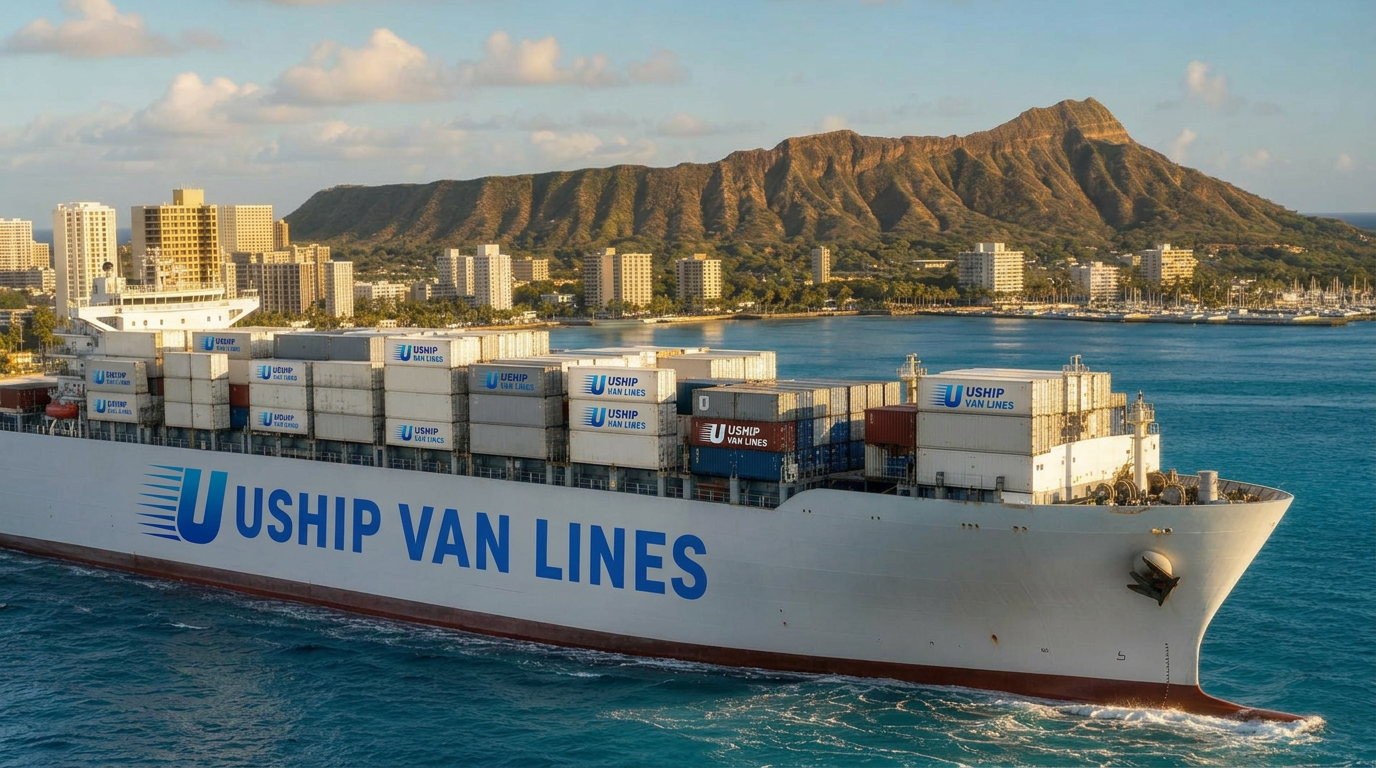
Moving from Hawaii to Florida
Relocating from the islands to the Sunshine State means coordinating ocean freight, mainland delivery, and thousands of miles of logistics. Whether you're leaving Honolulu for Miami, Maui for Tampa, or Kauai for Orlando, your household goods will travel by container ship to the West Coast, then overland across the continental United States.
Best Alaska & Hawaii Movers, powered by UShip Van Lines, handles the entire journey—port paperwork, container loading, cross-country trucking, and final delivery. Ready to start planning your Hawaii-to-Florida move? Request a free, no-obligation quote and get a clear timeline and cost breakdown tailored to your household.
Route overview
The Hawaii-to-Florida Moving Route
Moving from Hawaii to Florida requires multi-modal shipping: your belongings travel by ocean container from Honolulu, Hilo, Kahului, or Nawiliwili to West Coast ports (typically Long Beach or Oakland), then transfer to a long-haul truck for the 2,700–3,100-mile drive to Florida cities like Miami, Jacksonville, Tampa, or Orlando. This is one of the longest domestic moving routes in the United States, combining island origin logistics with transcontinental overland freight.
The Hawaii leg involves container or consolidated (shared) shipment via Matson Navigation or Pasha Hawaii, typically on a weekly sailing schedule. After customs clearance and West Coast unloading, your goods are loaded onto a commercial moving van and transported east via Interstate 10 or Interstate 40, depending on your Florida destination. Total door-to-door time ranges from 2–4 weeks, with seasonal and port congestion factors influencing both ocean and overland segments.
Florida's peninsular geography means delivery can vary by metro: South Florida (Miami-Dade, Broward) is roughly 3,100 miles from Los Angeles; Jacksonville is closer to 2,500 miles via I-10. Movers coordinate final delivery appointments carefully to ensure your household arrives safely after crossing desert, plains, and the Deep South.
How the moving process works
How the Hawaii-to-Florida Move Works: Step by Step
-
Free quote and in-home survey. You'll receive a detailed cost estimate based on your inventory, origin island, and Florida destination zip code. Virtual or in-person surveys help identify specialty items (pianos, artwork, surfboards) and confirm cubic footage or container size.
-
Packing and container loading in Hawaii. Professional movers arrive at your island residence to pack, wrap, and load your belongings into a 20-foot or 40-foot ocean container, or into a shared consolidation shipment if you have a smaller load. All items are secured against the motion of ocean transit.
-
Ocean freight to the mainland. Your container sails from your island port (Honolulu, Kahului, Nawiliwili, Hilo) to Long Beach or Oakland, typically on a Matson or Pasha vessel. Sailing schedules run weekly; transit time is 5–7 days to the West Coast.
-
Customs clearance and port unloading. Upon arrival, containers clear U.S. Customs (domestic shipment, but Hawaii-origin goods are inspected for agricultural compliance) and are unloaded at the terminal. Your mover coordinates drayage to a warehouse or direct-load facility.
-
Cross-country trucking to Florida. Your belongings transfer to a long-haul moving truck and head east via I-10 (southern route through Phoenix, San Antonio, Houston, New Orleans, Tallahassee) or I-40/I-95 (northern route through Albuquerque, Memphis, Atlanta). Transit time is 5–10 days depending on routing and seasonality.
-
Final delivery in Florida. The truck arrives at your new Florida address, and the crew unloads, places furniture, and removes packing debris. You inspect and sign off on delivery. Most movers offer unpacking services for an additional fee.
-
Claims and follow-up. If any items are damaged or missing, you file a claim within the mover's policy window (typically 9 months for interstate moves). Reputable carriers provide full-value or released-value insurance options, explained at booking.
Estimated moving costs
What Does It Cost to Move from Hawaii to Florida?
For a typical 2–3 bedroom household (approximately 5,000–8,000 pounds or 800–1,200 cubic feet), expect to pay $7,000–$14,000 for full-service door-to-door moving from Hawaii to Florida. Costs vary by island of origin, final Florida city, move size, seasonality, and service level.
Key cost drivers include:
- Container size and consolidation. Exclusive-use 20-foot containers cost more upfront but offer faster loading and delivery; shared consolidation saves money but may add 1–2 weeks to transit.
- Island and port accessibility. Moves from Oahu (Honolulu) tend to cost less than from outer islands (Maui, Kauai, Big Island) due to more frequent sailings and lower inter-island repositioning fees.
- Distance within Florida. Delivery to Jacksonville or Tallahassee (closer to I-10) is typically less expensive than delivery to Key West or Naples, which require additional mileage and toll roads.
- Packing and specialty services. Professional packing, crating for fragile items, and disassembly/reassembly of furniture add $500–$2,500 to the base quote.
- Season and demand. Summer (June–August) sees higher rates due to peak moving season and hurricane-related port disruptions; winter (November–February) often offers better pricing and shorter booking lead times.
- Vehicle shipping. If you're shipping a car from Hawaii to Florida, add $1,400–$2,200 for vehicle-only container or RORO (roll-on/roll-off) service to the West Coast, plus $800–$1,400 for overland auto transport to Florida.
We never guarantee prices without a detailed survey. Request a free quote to receive a binding or not-to-exceed estimate based on your actual inventory and move date.
Estimated transit times
How Long Does a Hawaii-to-Florida Move Take?
Door-to-door transit from Hawaii to Florida typically takes 14–28 days (2–4 weeks), broken down by segment:
- Island pickup to port departure: 1–3 days (depends on packing timeline and sailing schedule alignment).
- Ocean freight to West Coast: 5–7 days for Matson or Pasha sailings from Honolulu/outer islands to Long Beach or Oakland.
- Port unloading and customs clearance: 1–3 days (can extend during peak ag-inspection periods or port congestion).
- Cross-country trucking: 5–10 days for the 2,700–3,100-mile overland journey, depending on route, weather, and truck availability.
- Final delivery window: Movers typically offer a 1–3 day delivery window; you'll receive 24-hour notice before arrival.
Factors that extend transit time:
- Outer island origins. Moves from Maui, Kauai, or Big Island require inter-island barge or container repositioning to Honolulu, adding 2–5 days.
- Hurricane season disruptions. June–November can bring port closures or rerouted sailings in Hawaii or along the Gulf Coast (Florida).
- Shared consolidation. Consolidated shipments wait for full container loads, potentially adding 7–14 days compared to exclusive containers.
- Holiday and peak-season backlog. Memorial Day, Independence Day, and Labor Day weekends see heavy freight volume and slower port throughput.
Expedited service (exclusive container, priority truck dispatch) can shorten the timeline to 12–16 days but costs 20–35% more. Discuss timing with your move coordinator to align pickup and delivery dates with your housing transition.
Regional logistics
Hawaii-Specific Logistics and Florida Delivery Considerations
Ports and container handling: Your belongings depart from Honolulu Harbor (Oahu), Kahului Harbor (Maui), Nawiliwili Harbor (Kauai), or Hilo/Kawaihae (Big Island). Matson and Pasha operate the primary Hawaii-mainland container services, with weekly sailings to Long Beach (the most common West Coast gateway) and Oakland. Your mover books container space, handles terminal fees, and coordinates drayage to the trucking warehouse.
Agricultural and customs inspections: All shipments from Hawaii undergo U.S. Department of Agriculture inspection at the mainland port to prevent introduction of invasive species. Movers are familiar with prohibited items (soil, certain plants, fresh produce) and will advise on compliance. Delays are rare if your inventory is properly declared.
Vehicle shipping: If you're bringing a car from Hawaii, it ships separately via RORO (roll-on/roll-off) or private container to Long Beach or Oakland, then moves overland to Florida on an auto carrier. Total vehicle cost is $2,200–$3,600; transit time is similar to household goods. Motorcycles, boats, and ATVs require special quotes.
Inter-island moves: If you're moving from Maui, Kauai, or the Big Island, your container or consolidated load must first travel to Honolulu (the main export hub) via Young Brothers inter-island barge. This adds 2–5 days and $300–$800 to the total cost. Some movers offer direct outer-island booking, consolidating with other shipments to streamline logistics.
Florida delivery zones: Florida is large and geographically diverse. South Florida (Miami, Fort Lauderdale, West Palm Beach) is the farthest from the West Coast and may incur higher mileage charges. Central Florida (Orlando, Tampa) and North Florida (Jacksonville, Tallahassee) are closer via I-10. Coastal barrier islands and Keys destinations may require smaller shuttle trucks and additional delivery fees.
Storage options: If your Florida residence isn't ready when your shipment arrives, movers offer short-term and long-term storage in climate-controlled warehouses. Hawaii-origin goods are especially sensitive to humidity changes; climate control is recommended for electronics, wood furniture, and textiles. Storage costs $75–$200 per month per 1,000 pounds.
Last-mile delivery: Gated communities, high-rise condos, and historic neighborhoods in cities like Miami Beach or St. Augustine may have delivery restrictions (elevator reservations, parking permits, narrow streets). Communicate building requirements to your mover in advance to avoid delays or shuttle fees.
Seasonal considerations
Seasonal Factors for Hawaii-to-Florida Moves
Summer (June–August): Peak moving season for families relocating before the school year, plus the height of Pacific hurricane season (June–November). Tropical storms can delay sailings from Hawaii or cause port closures. Florida experiences its own Atlantic hurricane risk (peak in September), which can disrupt trucking and final delivery. Book 6–8 weeks ahead and expect premium pricing.
Fall (September–November): Hurricane season continues through November in both regions. Ocean freight remains reliable, but Gulf Coast ports (if your trucker routes through Mobile or New Orleans) can face weather delays. Demand softens slightly after Labor Day, offering moderate pricing and better availability.
Winter (December–February): Lowest demand and best pricing for Hawaii-to-Florida moves. Ocean sailings run on schedule; overland trucking through the southern states (I-10 corridor) avoids snow and ice. Florida's dry season means smooth final delivery. Book 3–4 weeks ahead for holiday moves; otherwise, 2–3 weeks is typical.
Spring (March–May): Moderate demand as snowbirds return north and new relocations begin. Weather is excellent in both Hawaii and Florida. Ocean and truck capacity tighten as the calendar approaches summer; book 4–6 weeks ahead to secure preferred dates and avoid Memorial Day weekend backlog.
Pro tip: If your timeline is flexible, schedule your Hawaii pickup in late fall or winter to avoid hurricane-related delays and benefit from off-peak rates. Coordinate final delivery in Florida after any lease or closing deadlines to prevent storage fees.
Why choose Best Alaska & Hawaii Movers
Why Choose Best Alaska & Hawaii Movers for Your Hawaii-to-Florida Move
-
Ocean and overland expertise. We coordinate every leg—island pickup, container booking with Matson/Pasha, West Coast port handling, cross-country trucking, and Florida delivery—under one point of contact. You won't juggle multiple vendors or worry about handoff gaps.
-
Transparent, binding estimates. Our quotes include all anticipated costs: packing, ocean freight, port fees, fuel surcharges, and overland mileage. No surprise charges at delivery. We explain the difference between binding, not-to-exceed, and non-binding estimates so you can budget confidently.
-
Full-service packing and specialty handling. Our crews are trained in Hawaii's unique packing requirements (humidity protection, saltwater corrosion prevention) and Florida's delivery environment (heat, humidity, hurricane preparedness). We crate pianos, pack artwork, disassemble king beds, and secure outdoor furniture.
-
Comprehensive insurance options. Choose full-value protection (mover liable for replacement cost) or released-value coverage (minimal liability, lower cost). We walk you through claims procedures and help document high-value items before packing.
-
Powered by UShip Van Lines. Our partnership with UShip Van Lines gives us access to a nationwide network of licensed, vetted carriers and real-time shipment tracking. You receive updates at every milestone: container loaded, vessel departed, port cleared, truck dispatched, delivery scheduled.
-
Dedicated move coordination. From your first quote request to final delivery sign-off, a single move coordinator manages your file, answers questions, and resolves issues. You'll have a direct phone number and email—no call center runaround.