
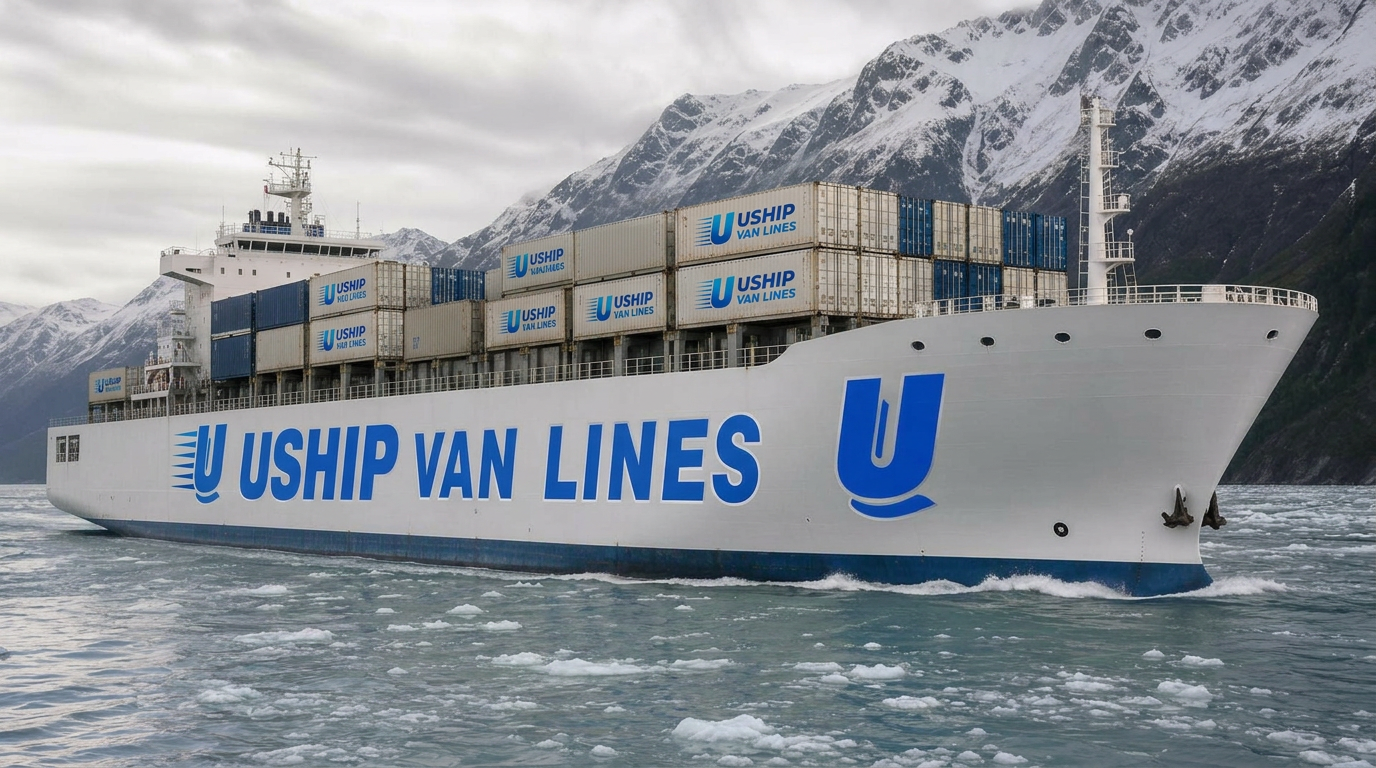
Moving from Alaska to Colorado
Relocating from Alaska to Colorado combines two distinct logistics challenges: marine barge transport from Alaska's ports to the Lower 48, followed by over-the-road delivery to the Front Range or mountain communities. Whether you're leaving Anchorage for Denver's urban energy, trading Fairbanks winters for Colorado Springs sunshine, or moving from the Mat-Su Valley to a mountain town, this route requires specialized coordination and realistic timeline planning.
Best Alaska & Hawaii Movers, powered by UShip Van Lines, manages every phase of your Alaska-to-Colorado move—from last-mile pickup in remote Alaska communities to barge consolidation in Tacoma or Seattle, cross-country highway transit, and final delivery to your Colorado doorstep. Ready to start planning? Request your free, no-obligation quote today and let our team handle the complexities while you focus on your next chapter in the Centennial State.
Route overview
Route Overview: Alaska to Colorado
Moving from Alaska to Colorado is a multi-modal journey that begins with barge transport from Alaska ports (typically Anchorage, Whittier, or Kodiak) to the Pacific Northwest consolidation hubs of Tacoma or Seattle. Your household goods travel by marine container across the Gulf of Alaska—a voyage that typically takes 5–7 days depending on weather and sailing schedules. Once your container reaches Washington, it's transferred to a long-haul truck for the 1,300–1,400 mile overland journey across the interior West to Colorado.
Colorado's diverse geography means final delivery logistics vary significantly. Moves to Denver, Colorado Springs, Fort Collins, and Front Range cities benefit from interstate highway access and year-round availability. Mountain communities like Vail, Breckenridge, Aspen, Telluride, or Durango require additional planning for seasonal road conditions, vehicle restrictions on mountain passes, and sometimes shuttle trucks for narrow access roads. Western Slope destinations such as Grand Junction add distance but remain accessible year-round via I-70.
This route attracts military families relocating from Joint Base Elmendorf-Richardson to Fort Carson or Peterson Space Force Base, oil and gas professionals moving between Alaska's North Slope and Colorado's energy corridor, retirees seeking lower cost of living with maintained outdoor access, and remote workers trading extreme winter isolation for Colorado's four-season climate and larger communities. The entire door-to-door process typically spans 14–28 days, with variability driven primarily by barge schedules, weather windows in Alaska, and seasonal road conditions in the Rockies.
How the moving process works
The Alaska-to-Colorado Moving Process
1. Initial Survey and Quote Your move begins with a detailed inventory assessment. Our team evaluates your household volume (typically measured in cubic feet or container size), special items requiring custom crating (firearms, artwork, fishing gear), vehicle shipping needs, and access conditions at both your Alaska origin and Colorado destination. We provide a transparent cost estimate covering barge fees, overland transport, insurance options, and any terminal handling charges.
2. Alaska Pickup and Consolidation On your scheduled pickup date, our Alaska-experienced crew loads your belongings into a dedicated container. If you're in Anchorage or the Mat-Su Valley, pickup is typically direct to our consolidation point. Remote locations like Fairbanks, Kenai Peninsula communities, or Southeast Alaska towns may require initial over-the-road transport to the Port of Anchorage or Whittier for barge loading. The container is sealed, documented, and prepared for marine transit.
3. Barge Transport to Tacoma/Seattle Your container is loaded onto a weekly or bi-weekly barge sailing from Alaska to Washington State. The Gulf of Alaska crossing takes 5–7 days in good weather, occasionally longer during winter storm seasons. Barge lines maintain regular schedules, but weather delays of 24–72 hours are not uncommon between October and March. Your container remains sealed throughout the ocean voyage.
4. Pacific Northwest Transfer and Highway Loading Upon arrival at the Port of Tacoma or Seattle terminal, your container clears customs (standard for all Alaska moves), undergoes inspection if required, and is transferred from marine chassis to a long-haul highway truck. This terminal dwell time typically adds 2–4 days to your transit. The truck is loaded, secured, and dispatched for Colorado.
5. Cross-Country Highway Transit The overland journey from Washington to Colorado covers approximately 1,300–1,400 miles via I-90 through Montana or I-84/I-80 through Idaho and Wyoming, then south on I-25 or west on I-70 depending on your destination. Professional drivers maintain electronic logs and rest schedules, typically completing this leg in 3–5 days of transit time under normal road conditions.
6. Colorado Delivery and Unload As your truck approaches Colorado, our dispatch team confirms your delivery window (typically a 2–3 day range, narrowed to same-day notification). The crew unloads your container, places furniture in designated rooms, reassembles major pieces, and removes packing materials. Mountain deliveries may require shuttle trucks if your home is accessed via narrow roads, steep grades, or seasonal weight restrictions on county roads.
7. Post-Delivery Support After unloading, you'll complete a delivery inventory checklist. Our team addresses any immediate concerns, provides claims guidance if needed, and ensures you're satisfied with the service. We remain available for follow-up questions as you settle into your new Colorado home.
Estimated moving costs
Cost Estimates for Alaska to Colorado Moves
A typical 2–3 bedroom household moving from Alaska to Colorado generally costs $6,500–$12,500 for full-service door-to-door transport. Studio or 1-bedroom moves may range $4,200–$6,800, while larger 4–5 bedroom homes with full garages can reach $14,000–$19,000 or more. These figures reflect the combined cost of Alaska last-mile pickup, barge transport, Pacific Northwest terminal handling, cross-country highway shipping, and Colorado delivery.
Key cost drivers include:
- Volume and weight: Barge fees are calculated by container size (20-foot or 40-foot) or cubic footage. More belongings mean larger containers and higher costs across all transport legs.
- Alaska origin access: Remote pickups in Fairbanks, Kenai, Southeast Alaska, or bush communities add significant trucking costs to reach barge ports. Anchorage and Mat-Su Valley origins are most economical.
- Colorado destination geography: Front Range deliveries (Denver, Colorado Springs, Fort Collins, Boulder) are straightforward. Mountain towns requiring shuttle trucks, seasonal timing, or extended drive time add $500–$1,500 to final delivery costs.
- Seasonal timing: Summer is peak moving season for Alaska, with higher barge demand and premiums of 15–25% over shoulder seasons. Winter moves benefit from lower rates but face weather delays and limited sailing schedules.
- Vehicle shipping: Adding a car or truck typically costs $1,400–$2,200 via the same barge route, with open-carrier overland transport to Colorado. Enclosed auto transport adds $800–$1,200.
- Packing services: Professional packing for a 3-bedroom home adds $800–$1,800; full-service unpacking in Colorado adds another $400–$800. Fragile-only packing is a cost-effective middle option at $300–$600.
- Storage: If your Colorado home isn't ready, storage at our Pacific Northwest facility runs $150–$350/month for a typical household, with Anchorage storage at $200–$450/month due to Alaska's higher facility costs.
- Insurance valuation: Basic coverage (60¢/pound) is included, but full-value protection typically adds 1–2% of your declared inventory value for comprehensive peace of mind.
We never guarantee pricing without a detailed inventory assessment, as every move has unique variables. Request your personalized quote to receive accurate cost projections based on your specific belongings, timing, and service preferences.
Estimated transit times
Realistic Transit Times: Alaska to Colorado
Door-to-door moves from Alaska to Colorado typically require 14–28 days from final pickup in Alaska to delivery at your Colorado destination. This timeline breaks down across several distinct phases:
Alaska Pickup to Barge Departure (1–5 days): If you're in Anchorage or the Mat-Su Valley, your container can be picked up and loaded onto the next available barge within 24–48 hours during peak season. Remote origins like Fairbanks, Soldotna, or Juneau may require 3–5 days of ground transport to reach the Port of Anchorage or Whittier in time for the sailing schedule. Barge lines typically sail weekly in summer, bi-weekly in spring and fall, with reduced winter schedules.
Barge Transit (5–7 days): The Gulf of Alaska crossing from Alaska ports to Tacoma or Seattle takes 5–7 days under normal conditions. Weather can extend this by 1–3 days, particularly October through March when North Pacific storms are common. Some sailings make intermediate stops (Kodiak, Dutch Harbor) which add time.
Terminal Processing (2–4 days): Once your container arrives at the Port of Tacoma or Seattle, it undergoes customs clearance (standard for all Alaska shipments), inspection if flagged, and transfer from marine to highway chassis. This terminal dwell averages 2–3 days but can stretch to 4–5 days during peak shipping periods or if customs requires additional documentation.
Highway Transit (3–5 days): The 1,300–1,400 mile over-the-road journey from Washington to Colorado takes 3–4 days of actual drive time, with an additional day for driver rest cycles, fuel stops, and route optimization. Mountain deliveries may add a day if shuttle coordination or weather windows are factors.
Delivery Window Coordination (1–2 days): Once your shipment reaches Colorado, we provide a narrow delivery window. Front Range destinations often receive same-day or next-day delivery from truck arrival. Mountain locations may require 1–2 days to coordinate shuttle trucks or favorable road conditions.
Expedited timelines are rarely feasible on this route due to fixed barge schedules, but choosing the earliest available sailing, booking well in advance, and maintaining flexible Colorado delivery dates can shave 3–5 days off the upper end of the range. Winter moves should add 3–7 days buffer for weather-related delays on either end of the journey.
Regional logistics
Alaska-Specific Logistics for Your Colorado Move
Barge Ports and Container Loading: Most Alaska-to-Colorado moves consolidate through the Port of Anchorage or the Port of Whittier (60 miles south of Anchorage, connected by highway and rail). If you're in Southcentral Alaska (Anchorage, Mat-Su Valley, Kenai Peninsula), your container is trucked to one of these ports for loading onto Alaska Marine Lines, Span Alaska, or Tote Maritime barges. Southeast Alaska residents (Juneau, Ketchikan, Sitka) typically use smaller feeder barges or Alaska Marine Highway ferries to connect to the main barge system. All containers are sealed and tracked via bill of lading throughout the marine leg.
Customs and Documentation: Even though Alaska is a U.S. state, all barge shipments routing through Canada's Inside Passage or originating from Alaska ports undergo standard customs documentation and inspection protocols in Tacoma or Seattle. You'll need a detailed household goods inventory, proof of residence, and sometimes vehicle titles if shipping cars. Our team handles all paperwork, but you should retain copies of valuable item documentation for insurance purposes.
Vehicle Shipping: Most Alaska residents moving to Colorado choose to ship at least one vehicle via the same barge route rather than drive the Alaska Highway in winter or pay for flights. Vehicles are loaded into enclosed containers or onto RoRo (roll-on/roll-off) barge decks, sailed to Tacoma, then driven or trucked to Colorado. Total vehicle shipping time mirrors household goods (14–21 days). Alternatively, some clients drive the Alaska Highway as a family adventure during summer months, meeting their household goods in Colorado.
Remote Alaska Pickups: If you're located in Fairbanks (350+ miles from Anchorage), the Kenai Peninsula (Soldotna, Homer, Seward), or truly remote communities (North Slope, Aleutian Chain, Interior bush), last-mile pickup to the barge port is a significant logistics component. Fairbanks moves require dedicated truck runs down the Parks Highway or winter ice roads if timing permits. Bush community moves sometimes involve initial air cargo to a road-connected hub, then container consolidation—this adds substantial cost and should be discussed during your quote process.
Colorado Mountain Delivery Logistics: If your final destination is a mountain town with narrow roads, steep grades, or seasonal weight limits, the standard 53-foot semi-truck may not be able to reach your home. We arrange shuttle trucks (smaller 24–26 foot box trucks) to transfer your goods from a lower-elevation staging area to your doorstep. This adds $400–$900 and one extra day but is often necessary for communities like Vail, Breckenridge, Telluride, Crested Butte, or mountain subdivisions with homeowner association vehicle restrictions. Communicate your Colorado address and access conditions clearly during booking so we can plan appropriately.
Storage Options: If your Colorado home purchase is delayed, your lease starts after your Alaska departure, or you need temporary storage for any reason, we offer flexible warehousing. Pacific Northwest storage (Tacoma area) is convenient as a mid-route holding point at $150–$350/month depending on volume. Front Range Colorado storage (Denver/Colorado Springs) is available at $180–$400/month for households waiting on mountain property access in winter. All facilities are climate-controlled, secured, and insured.
Military and Government Moves: If you're relocating from Joint Base Elmendorf-Richardson (JBER) to Fort Carson, Peterson Space Force Base, or Schriever Space Force Base, you may qualify for partial or full government reimbursement. We're experienced with military move protocols, weight allowances, and Defense Personal Property System (DPP) requirements. Provide your orders early in the process so we can coordinate with your transportation office and ensure smooth reimbursement paperwork.
Seasonal considerations
Seasonal Factors for Alaska-Colorado Moves
Summer (June–August): Peak moving season for Alaska departures. Barge schedules are most frequent (often weekly sailings), weather is most predictable, and Alaska road access is optimal even to remote areas. However, demand drives prices up 15–25%, and booking requires 4–6 weeks lead time for preferred dates. Colorado mountain deliveries are easiest during summer with all passes open and no weather restrictions. Expect the highest competition for truck capacity and crew availability at both ends.
Fall (September–November): Shoulder season offers moderate pricing and still-reliable barge schedules through mid-October. Alaska weather becomes increasingly variable in November with early snowstorms affecting Fairbanks and interior pickups. Colorado benefits from beautiful fall weather for Front Range deliveries, though high-elevation mountain towns may see early snows closing passes by late October. This is often the best value period—lower rates than summer, better weather than winter.
Winter (December–February): Off-peak season brings the lowest rates (20–35% below summer peaks) but comes with significant trade-offs. Barge schedules drop to bi-weekly or less, with weather delays of 3–7 days common in the Gulf of Alaska. Alaska pickups in Fairbanks, the Kenai, and rural areas face difficult road conditions and limited daylight. Colorado mountain deliveries become challenging or impossible without waiting for spring—mountain passes close periodically, county roads may have weight restrictions, and snow/ice create safety concerns for heavy trucks. If moving to Denver or Front Range cities, winter is manageable and economical. If headed to mountain communities, plan for spring delivery or temporary Colorado Springs/Denver storage.
Spring (March–May): Transition season with improving conditions and increasing barge frequency. Alaska roads thaw and become passable, though "breakup" season in April can create muddy, difficult conditions on unpaved routes. Barge schedules ramp up through April and May, with pricing gradually rising toward summer peaks. Colorado mountain access improves dramatically by mid-May when most passes reopen. This is an excellent compromise season—better availability than summer, improving weather, and moderate pricing. Book 3–4 weeks ahead for best dates and rates.
Why choose Best Alaska & Hawaii Movers
Why Choose Best Alaska & Hawaii Movers for Your Alaska-to-Colorado Move
-
Alaska Logistics Expertise: We specialize in the unique challenges of Alaska moves—barge scheduling, marine container logistics, remote pickup coordination, and weather contingency planning. Our team understands Gulf of Alaska sailing schedules, Port of Anchorage access, and how to navigate Alaska's limited road network efficiently.
-
End-to-End Coordination: From your Alaska doorstep to your Colorado destination, we manage every phase: last-mile pickup in Alaska, barge booking and tracking, Pacific Northwest terminal handling, cross-country highway transport, and final delivery including mountain shuttle coordination if needed. One point of contact, one bill of lading, no confusing handoffs between carriers.
-
Powered by UShip Van Lines: Best Alaska & Hawaii Movers operates on the trusted UShip Van Lines platform, giving you access to transparent pricing, real-time shipment tracking, and a network of vetted carriers. You get the personalized service of Alaska specialists backed by a proven national logistics infrastructure.
-
Realistic Timelines and Transparent Pricing: We never overpromise on speed or underprice to win your business, then hit you with surprise fees. Our quotes include all anticipated costs—barge, trucking, terminal fees, delivery. Our timelines account for real-world weather, barge schedules, and seasonal factors. You'll know what to expect from day one.
-
Flexible Service Options: Whether you need full-service packing and white-glove delivery, cost-effective container loading with self-pack, vehicle shipping, temporary storage, or specialty handling for high-value items, we tailor services to your budget and needs. Military families, retirees, and remote workers all have different priorities—we adapt to yours.