
Moving from Alaska to Nebraska
Relocating from Alaska to Nebraska involves a unique combination of marine freight and overland transport that few moving companies can coordinate effectively. Whether you're leaving Anchorage, Fairbanks, or a remote community, your household goods will travel by barge to the Lower 48 before continuing across the Great Plains to your Nebraska destination.
Best Alaska & Hawaii Movers, powered by UShip Van Lines, specializes in these complex Alaska-to-Continental moves. We handle the barge logistics, customs paperwork, and final delivery so you can focus on your transition. Request a free quote today to get accurate pricing for your specific route and inventory.
Route overview
Understanding the Alaska to Nebraska Moving Route
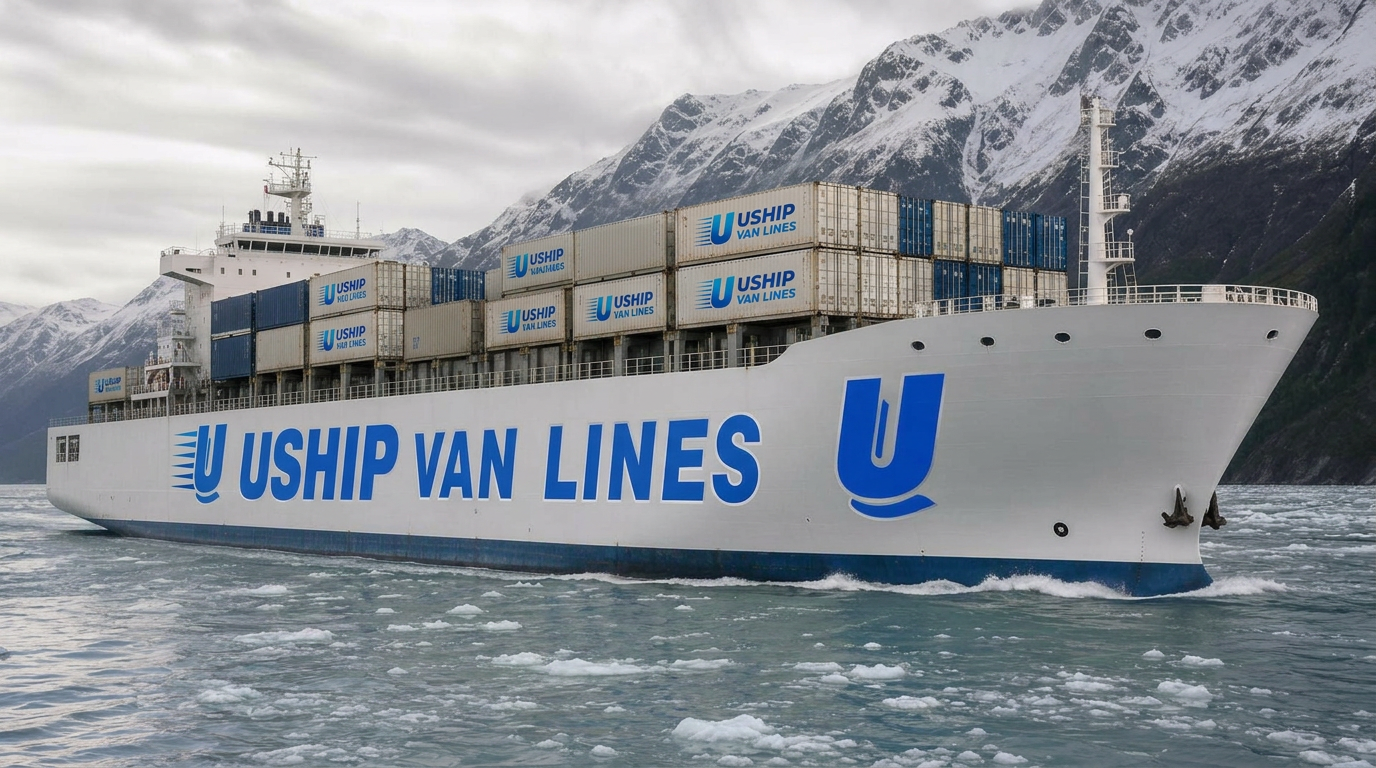
Your move from Alaska to Nebraska follows a multi-modal path that typically begins with household goods being containerized and loaded onto a barge at the Port of Anchorage, Whittier, or another Alaska departure point. The barge journey travels south along the Inside Passage to Seattle or Tacoma, where containers are offloaded and transferred to long-haul trucks. From the Pacific Northwest, your belongings travel approximately 1,400–1,600 miles east through Idaho, Wyoming, and into Nebraska—whether your destination is Omaha, Lincoln, Grand Island, or a smaller community.
This route requires careful coordination between marine carriers, port facilities, and overland trucking partners. Unlike a simple interstate move, Alaska relocations involve tide schedules, weather windows, port fees, and longshoreman handling. The distance and logistics make advance planning essential, particularly during Alaska's peak moving season from May through September when barge space fills quickly.
Nebraska's central location and well-maintained highway infrastructure make the final leg relatively straightforward once your shipment reaches the continental United States. Most Nebraska deliveries can be scheduled with precision once your container clears the Seattle-Tacoma port complex.
How the moving process works
How Your Alaska to Nebraska Move Works: Step by Step
-
Free Consultation and Survey – Contact Best Alaska & Hawaii Movers for a detailed inventory assessment. We'll discuss your origin location in Alaska, destination in Nebraska, timeline, and any special items like vehicles, boats, or temperature-sensitive belongings. This consultation establishes your quote and moving plan.
-
Container Selection and Booking – Based on your inventory, we determine whether you need a full 20-foot or 40-foot container, or if consolidation with other shipments makes sense. We reserve barge space according to your target move date, accounting for Alaska's weather windows and sailing schedules.
-
Professional Packing and Loading – Our Alaska-based crews pack and load your household goods into the container at your residence or a nearby staging facility. For remote locations, we coordinate smaller vehicles or air freight to reach your property. All items are inventoried and secured for the marine journey.
-
Barge Transit to Seattle/Tacoma – Your container travels by barge from Alaska to a Lower 48 port, typically taking 4–7 days depending on route, weather, and port calls. Marine carriers operate on published schedules, but weather delays can occur, particularly in fall and winter months.
-
Port Offloading and Customs Clearance – Once in Seattle or Tacoma, your container is offloaded, inspected if necessary, and cleared through any required documentation. Though Alaska is a U.S. state, some shipments undergo agricultural inspections to prevent pest transfer.
-
Overland Trucking to Nebraska – Your container is loaded onto a long-haul truck for the 1,400–1,600 mile journey across the Mountain West and into Nebraska. Transit takes 3–5 days depending on routing, driver schedules, and destination accessibility.
-
Final Delivery and Unloading – Our delivery team contacts you to schedule a precise delivery window. We unload your household goods at your Nebraska residence, verify the inventory, and ensure everything arrived in good condition. You inspect and sign off on delivery completion.
Estimated moving costs
What Does It Cost to Move from Alaska to Nebraska?
For a typical 2–3 bedroom household moving from Alaska to Nebraska, expect total costs between $6,500 and $12,500. This wide range reflects variables including exact origin and destination, shipment volume, season, and service level. A small apartment move from Anchorage to Omaha might fall toward the lower end, while a full 4-bedroom house from Fairbanks to rural Nebraska will approach or exceed the upper range.
Key cost drivers include:
- Container size and volume – A dedicated 20-foot container typically costs $4,000–$6,500 for the barge leg alone; 40-foot containers run $7,000–$10,000. Consolidated/shared container space reduces costs but extends timelines.
- Origin location logistics – Anchorage and Mat-Su Valley locations have straightforward port access; Fairbanks, Kenai, or bush communities require additional trucking or air freight to reach the port, adding $800–$3,500.
- Overland distance in Nebraska – Omaha and Lincoln deliveries are most economical; rural or Panhandle destinations may add $300–$800 in final-mile charges.
- Seasonal timing – Peak summer months (June–August) command premium rates due to high demand; winter moves can save 15–25% but face weather risks and reduced sailing frequency.
- Packing and insurance – Full-service packing adds $800–$2,200; comprehensive insurance (highly recommended) costs 1–3% of declared value.
- Vehicle shipping – Adding a vehicle costs $1,500–$3,200 depending on size; vehicles typically travel on the same barge as household goods.
We never guarantee prices without a detailed inventory and origin/destination survey. Request a personalized quote to receive accurate pricing for your specific move parameters.
Estimated transit times
How Long Does an Alaska to Nebraska Move Take?
Door-to-door transit from Alaska to Nebraska typically requires 14–28 days, with most moves completing in 18–21 days under normal conditions. This timeline encompasses packing, barge sailing, port processing, and overland trucking.
Timeline breakdown by segment:
- Packing and container loading: 1–3 days depending on household size and packing services selected.
- Ground transport to port (if needed): 0–3 days for locations outside Anchorage/Wasilla; Fairbanks adds 1–2 days.
- Barge transit to Seattle/Tacoma: 4–7 days of actual sailing time; add 1–3 days for port scheduling and offloading.
- Port processing and customs: 1–2 days for container offloading, inspection (if required), and transfer to truck chassis.
- Overland trucking to Nebraska: 3–5 days for the 1,400–1,600 mile journey across Idaho, Wyoming, and into Nebraska.
- Final delivery coordination: 1–2 days to schedule and complete delivery at your Nebraska residence.
Weather delays, mechanical issues, or peak-season congestion can extend timelines by 3–7 days. Winter moves face the highest risk of weather delays both on the marine leg and crossing Wyoming's high plains. We provide tracking updates at each major milestone and proactive communication if delays occur.
For time-sensitive moves, flying to Nebraska and staying in temporary housing while your shipment travels is common practice. Most customers arrive 1–2 weeks before their household goods to establish residence, secure housing, and start work or school.
Regional logistics
Alaska-Specific Moving Logistics You Need to Know
Port and Barge Operations: Most Alaska household goods ship through the Port of Anchorage or Whittier (closer for Seward Highway communities). The Port of Anchorage handles the majority of northbound and southbound container traffic. Barge lines like TOTE Maritime and Alaska Marine Lines operate on published schedules, typically with weekly or bi-weekly sailings to Seattle/Tacoma. Your container must arrive at the port 2–3 days before sailing for customs documentation, weight verification, and loading.
Required Documentation: While Alaska is a U.S. state and moves are technically domestic, you'll need a detailed inventory list, proof of residence, and sometimes agricultural inspection forms. Certain items like plants, soil, firewood, or uncleaned outdoor equipment may face restrictions or require USDA inspection to prevent invasive species transfer.
Vehicle Shipping Coordination: If you're shipping a vehicle, it typically travels on the same barge as your household goods, though on a separate deck. Vehicles must be clean (undercarriage power-washed to remove mud/soil), contain no more than 1/4 tank of fuel, and carry no personal items inside. Vehicle shipping adds $1,500–$3,200 to your move cost depending on size.
Remote Location Challenges: Moving from locations beyond the road system (bush communities, coastal villages) requires small aircraft or seasonal barge service to consolidate goods at a hub like Anchorage or Fairbanks before containerization. This adds significant cost ($2,000–$6,000+) and time (5–10 days) but is manageable with proper planning.
Storage Options: If your Nebraska residence isn't ready when your shipment arrives in the Lower 48, we offer climate-controlled storage near Seattle/Tacoma ports or in Nebraska. Storage costs $150–$400 per month depending on volume. Some customers store in Alaska before shipping during a preferred weather window.
Insurance Considerations: Marine freight involves unique risks including saltwater exposure, rough seas, and multiple handling points. We strongly recommend declared-value insurance covering 100% of replacement cost. Basic carrier liability covers only 60 cents per pound per article—inadequate for household goods. Comprehensive insurance costs 1–3% of declared value but provides peace of mind for the 2,500+ mile journey.
Seasonal considerations
Best Times to Move from Alaska to Nebraska
Summer (June–August): Peak moving season offers the most frequent barge sailings, best weather, and fastest processing times. However, demand is highest—expect premium pricing and the need to book 6–8 weeks in advance for preferred dates. Roads in Alaska and Wyoming are reliably clear. Ideal for families moving between school years.
Spring (April–May): Shoulder season with moderate pricing and good availability. Barge schedules increase from winter frequency. Alaska breakup season can create muddy conditions in rural areas, but major routes remain accessible. Wyoming mountain passes are usually clear by late April. Good balance of cost and reliability.
Fall (September–October): Another shoulder season with decreasing prices as demand drops. Early fall offers excellent weather, but late October brings increasing risk of early winter storms in both Alaska and the Mountain West. Barge schedules begin reducing frequency. Book 4–6 weeks ahead for best results.
Winter (November–March): Lowest prices and best availability, with potential savings of 15–25% compared to summer. However, weather presents significant challenges: winter storms in Alaska can delay port access, North Pacific seas are roughest, and Wyoming/Nebraska blizzards can halt trucking for days. Barge sailings are least frequent. Only recommended for flexible timelines and weather-tolerant customers.
Regardless of season, Alaska moves require more lead time than typical interstate relocations. Summer moves should be booked 8–12 weeks in advance; other seasons allow 4–6 weeks. Last-minute moves are possible but severely limit options and increase costs.
Why choose Best Alaska & Hawaii Movers
Why Choose Best Alaska & Hawaii Movers for Your Alaska to Nebraska Move
-
Alaska Expertise: We specialize exclusively in Alaska and Hawaii relocations, managing the complex marine logistics, port coordination, and weather contingencies that general moving companies simply don't understand. Our team knows barge schedules, Alaska port operations, and seasonal timing strategies.
-
End-to-End Coordination: You get a single point of contact managing every segment—Alaska packing, barge booking, port processing, overland trucking, and Nebraska delivery. No hand-offs between disconnected contractors who blame each other when problems arise.
-
Transparent Pricing: We provide detailed written estimates breaking down barge costs, trucking fees, port charges, and service options. No hidden fees, no surprise charges at delivery. You'll know exactly what you're paying for and why.
-
Powered by UShip Van Lines Infrastructure: Our partnership with UShip Van Lines gives us access to nationwide trucking networks, equipment resources, and technology systems while maintaining our specialized Alaska/Hawaii focus. You get boutique expertise with enterprise-level capabilities.
-
Proactive Communication: We provide tracking updates at every major milestone—container loaded, barge departed, port arrival, truck dispatched, delivery scheduled. If weather or logistics delays occur, you'll know immediately along with our revised timeline.