
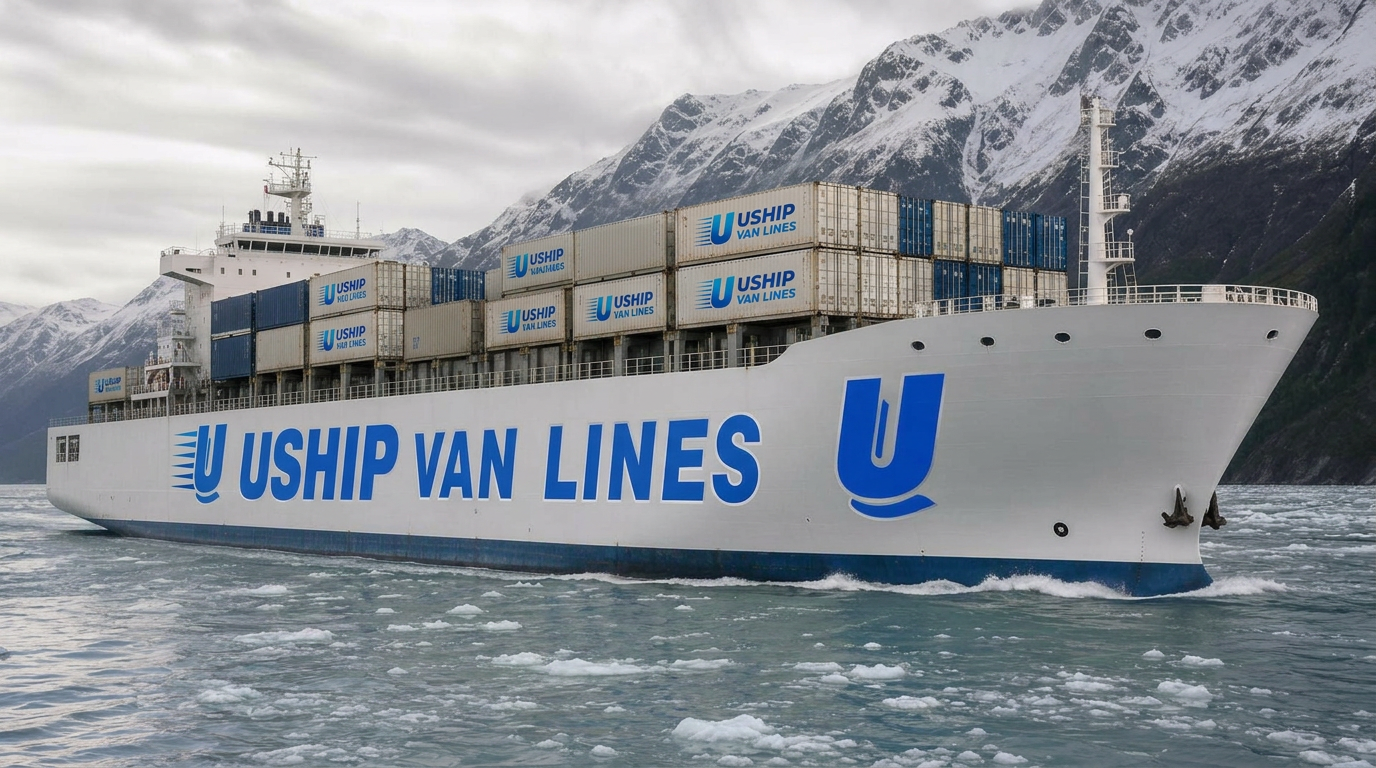
Moving from Alaska to St Petersburg, FL
Relocating from Alaska to St Petersburg, FL means navigating one of the longest domestic moving routes in the United States—a journey that combines barge logistics across the Pacific Northwest, cross-country ground transport, and delivery to Florida's sunny Gulf Coast. Whether you're leaving Anchorage, Fairbanks, Mat-Su Valley, Kenai Peninsula, or a bush community, this move requires specialized expertise in Alaska logistics and careful coordination across multiple transportation modes.
Best Alaska & Hawaii Movers, powered by UShip Van Lines, manages every phase of your Alaska-to-Florida relocation. We handle barge scheduling from the Port of Anchorage through Tacoma, overland transit across the Lower 48, and final delivery to your St Petersburg address—whether you're moving to downtown's vibrant waterfront, the Old Northeast historic district, or suburban communities like Pinellas Park and Seminole. Request your free quote today to get started with transparent pricing and realistic timelines.
Route overview
Understanding the Alaska to St Petersburg Route
The journey from Alaska to St Petersburg, FL spans approximately 4,400–4,800 road miles depending on your Alaska origin point, but the logistics are far more complex than a simple drive. Your household goods travel by barge from the Port of Anchorage to the Port of Tacoma (or Seattle), then transfer to long-haul trucks for a southern route across I-90, I-10, and I-275 into the Tampa Bay metropolitan area. This multimodal approach is the most cost-effective and reliable method for moving large household shipments from Alaska to the continental United States.
St Petersburg's location on Florida's Gulf Coast—with its Mediterranean-revival architecture, thriving arts scene, and year-round outdoor lifestyle—attracts many Alaska residents seeking warmer winters and a complete change of pace. The move crosses multiple climate zones, from subarctic conditions in Alaska through temperate Pacific Northwest, arid Southwest or Great Plains, humid South, and finally subtropical Florida. Understanding these transitions helps you plan what to ship, what to replace, and how to prepare your belongings for the journey.
Timing is critical for this route. Barge schedules from Anchorage operate year-round but with reduced frequency in winter. Ground transportation across the northern tier states faces weather delays November through March, while summer offers the most reliable transit windows but higher demand. Your move also involves coordinating Alaska last-mile pickup (which may require smaller trucks for residential access), barge loading deadlines, Tacoma warehouse transfer, cross-country scheduling, and St Petersburg delivery windows.
How the moving process works
How Your Alaska to St Petersburg Move Works
-
Initial Survey and Quote: We assess your inventory via video walkthrough or detailed list, noting items requiring special handling (antiques, artwork, firearms, outdoor equipment). You'll receive a binding estimate based on volume, weight, services required, and current barge/truck availability. Alaska pickups from rural areas, islands, or locations off the road system require additional coordination and may involve bush plane or ferry connections to reach the Port of Anchorage staging area.
-
Pre-Move Preparation and Scheduling: Book your barge space 4–8 weeks in advance, especially for summer moves when Alaska shipping peaks. We provide a packing timeline, customs/agricultural inspection requirements (if applicable), and checklist for items that cannot ship (hazardous materials, perishables, pressurized containers). If you're shipping vehicles, we arrange separate roll-on/roll-off barge space and handle all paperwork.
-
Alaska Pickup and Consolidation: Our Alaska team picks up your belongings from your residence—whether that's a downtown Anchorage condo, a Fairbanks home, a Mat-Su Valley property, or a Kenai Peninsula location. Items are inventoried, professionally packed if you've selected that service, and transported to our Anchorage-area consolidation facility. Everything is tagged, photographed, and prepared for barge loading with marine-grade wrapping and moisture barriers.
-
Barge Transit to Tacoma/Seattle: Your shipment loads onto a commercial barge for the 4–6 day ocean voyage to the Port of Tacoma or Seattle. These are enclosed, weatherproof containers designed for Alaska freight—not open-deck shipping. Barge schedules are published in advance; departures typically run weekly in summer, every 10–14 days in winter. Weather delays of 1–3 days are possible during stormy periods.
-
Tacoma Transfer and Overland Loading: Upon arrival in Tacoma, your shipment clears the port, transfers to our Tacoma-area warehouse, and loads onto a long-haul truck bound for Florida. This transfer process takes 1–3 business days. Your goods consolidate with other Florida-bound shipments to optimize routing and costs, while maintaining full inventory tracking and separation of your items.
-
Cross-Country Transit: The overland journey follows I-90 east through Washington, Idaho, Montana, South Dakota, and Minnesota, then south via I-35 or I-55 to connect with I-10 across the Deep South, entering Florida via I-75 or I-10 and reaching St Petersburg via I-275. This leg takes 6–9 days of drive time under normal conditions, with potential weather delays in winter months.
-
St Petersburg Delivery and Unloading: Our Florida delivery team contacts you 48 hours before arrival to confirm your delivery window. They'll navigate St Petersburg's mix of historic neighborhoods, waterfront high-rises, and suburban streets, placing items in designated rooms and reassembling basic furniture. Final walkthrough includes checking inventory against your original list and noting condition of all items before you sign the delivery receipt.
Estimated moving costs
What to Expect for Moving Costs
A typical 2–3 bedroom household move from Alaska to St Petersburg, FL ranges from $6,800 to $14,500 depending on volume, weight, services, and timing. This is a premium route due to the combination of Alaska logistics, barge transport, and cross-country distance. Studio and 1-bedroom moves may start around $4,200–$5,800, while 4+ bedroom homes or loads exceeding 12,000 lbs can reach $16,000–$22,000 or more.
Key cost drivers include:
- Volume and weight: Charged per cubic foot or per hundredweight (CWT). Alaska shipments average higher costs per pound than Lower 48 moves due to barge freight.
- Origin access: Anchorage and Wasilla pickups are standard; remote locations (Kenai, Soldotna, Palmer, bush communities) add $400–$1,800 for shuttle trucks, barge connections, or air freight to Anchorage.
- Packing services: Full-service packing runs $800–$2,200 for a 2–3 BR home; DIY packing with our materials ($200–$450) saves significantly.
- Specialty items: Pianos ($400–$900), hot tubs, gun safes (over 500 lbs), and fine art require custom crating and add to total cost.
- Vehicle shipping: Cars, trucks, and ATVs ship separately via Alaska auto barge at $1,400–$2,600 per vehicle to Tacoma, then overland car carrier to Florida adds $900–$1,600.
- Storage: If your St Petersburg home isn't ready, we offer 30-day storage in Tacoma or Florida at $150–$400/month for typical loads.
- Insurance: Basic carrier liability (60¢/lb) is included; full replacement value coverage adds 1.5–3% of declared shipment value.
- Seasonality: June–August Alaska moving season sees 12–18% higher rates due to demand; October–March offers better pricing but longer weather-related delays.
We never guarantee prices without a detailed inventory, as every move's cost depends on actual volume, services selected, and current market rates. Request a free quote with transparent line-item pricing and no hidden fees.
Estimated transit times
How Long Your Move Takes
Door-to-door transit from Alaska to St Petersburg, FL typically takes 16–28 days under normal conditions, broken down by leg:
- Alaska pickup to Port of Anchorage staging: 1–3 days (same-day for Anchorage/Eagle River; 2–3 days for Fairbanks, Mat-Su, Kenai; longer for bush locations requiring ferry or air freight connections).
- Barge transit Anchorage to Tacoma/Seattle: 4–6 days on the water, plus 1–2 days for port processing and loading/unloading.
- Tacoma warehouse transfer and truck loading: 1–3 business days to clear customs (if applicable), transfer to warehouse, and load outbound truck.
- Overland transit Tacoma to St Petersburg: 6–9 days of active driving time via I-90 and southern routes, covering approximately 3,300 road miles from Washington to Florida's Gulf Coast.
- Delivery window coordination: You'll receive a 2–3 day delivery window; drivers call 48 hours and again 24 hours before arrival.
Weather and seasonal factors significantly impact timing. Winter moves (November–March) should budget an extra 5–10 days for potential storm delays on barges, mountain pass closures on I-90, and ice storms across the South. Summer moves (June–August) offer the most predictable schedules but may face wildfire smoke or heat-related truck restrictions. Spring and fall shoulder seasons balance reliability and pricing.
Rush service isn't standard for Alaska moves due to fixed barge schedules, but we can prioritize truck dispatch from Tacoma for an additional fee, potentially reducing total transit by 3–5 days. Storage-in-transit is available if you need to delay delivery while closing on a St Petersburg home, securing an apartment, or managing temporary housing—simply let us know before pickup so we can plan accordingly.
Regional logistics
Alaska-Specific Moving Logistics
Port of Anchorage and Barge Operations: The Port of Anchorage is Alaska's primary freight hub, handling 95% of southbound household goods shipments. Barges operated by carriers like TOTE Maritime and Alaska Marine Lines run year-round to Tacoma and Seattle with published schedules. Your goods load into 20-foot or 40-foot containers with climate control and moisture barriers—not exposed to salt spray or open decking. We coordinate all port documentation, including bills of lading, customs forms (if you're a non-U.S. citizen), and agricultural inspections (rare for household goods, common for vehicles).
Last-Mile Alaska Pickup: Anchorage, Eagle River, and JBER are easily accessible with standard moving trucks. Wasilla, Palmer, and Mat-Su locations require similar access. Fairbanks adds 350+ miles of pickup transit but is on the road system. Kenai Peninsula (Kenai, Soldotna, Homer) and Southeast Alaska communities (Juneau, Ketchikan, Sitka) require either ferry connections or direct barge booking, adding 3–7 days and $600–$1,800 in fees. Bush communities off the road system (Bethel, Barrow/Utqiaġvik, Kotzebue, Nome, Kodiak Island) need bush plane cargo service or separate barge arrangements to Anchorage, significantly increasing costs and timelines.
Vehicle Shipping: Cars and trucks ship separately via Alaska Vehicle Transport (AVT) or similar roll-on/roll-off barge services. Vehicles must be clean (Alaska agricultural inspection), have less than 1/4 tank of fuel, and contain no personal items. Barge transit to Tacoma takes 4–6 days; overland auto carrier to St Petersburg adds 7–12 days. Total cost: $2,200–$4,000 per vehicle door-to-door. Motorcycles, ATVs, and snowmachines (which you likely won't need in Florida) can also ship in enclosed containers or via freight services.
Prohibited and Restricted Items: Federal and carrier rules prohibit hazardous materials (propane, gasoline, ammunition, paint, aerosols), perishables, and illegal substances. Alaska-specific considerations: fishing tackle with bait or scent must be cleaned; hunting trophies and mounts are allowed with proper documentation; firearms must be declared, unloaded, and packed separately per ATF regulations (Florida has permitless concealed carry as of 2023, but check current laws).
Documentation: You'll need a valid photo ID, destination address in St Petersburg, and contact information for delivery coordination. Non-U.S. citizens moving personal effects may need customs declarations. If shipping high-value items (jewelry, art over $5,000, collectibles), document with photos and appraisals for insurance purposes.
St Petersburg Delivery Access: St Petersburg's historic neighborhoods feature narrow streets, low-hanging oak canopy, and limited truck access. Downtown high-rises and waterfront condos often require freight elevator reservations and building insurance certificates—provide these details at booking. Gated communities and HOAs may need advance notice. Our Florida team is experienced with local delivery challenges and will coordinate parking permits or shuttle trucks as needed.
Seasonal considerations
Best Times to Move from Alaska to St Petersburg
Summer (June–August): Peak Alaska moving season coincides with the midnight sun, dry weather, and maximum barge frequency. You'll find weekly sailings from Anchorage and the most predictable transit times across all legs. However, demand drives prices 12–18% higher, and you must book 6–8 weeks ahead to secure your preferred dates. St Petersburg summers are hot and humid (highs 88–91°F, afternoon thunderstorms), but delivery teams are experienced with the climate.
Fall (September–October): Excellent shoulder season with cooling Alaska weather, lower rates (8–12% below peak), and still-reliable barge schedules. Fall colors make Alaska pickups scenic, and you'll arrive in St Petersburg during ideal weather (highs 82–88°F, lower humidity, minimal hurricane risk by October). Book 4–6 weeks ahead. Watch for early snow in interior Alaska after mid-October.
Winter (November–March): Lowest rates (15–25% below summer) but longest transit times. Barge frequency drops to every 10–14 days, and winter storms can delay sailings by 1–4 days. I-90 mountain passes (Snoqualmie, Lookout, Homestake) close periodically for avalanche control or blizzards, adding 1–3 days to overland transit. Alaska pickups in deep winter require extra care for frozen or extreme-cold conditions. St Petersburg winters are mild (highs 65–72°F) and pleasant for settling in, though occasional cold fronts dip into the 40s.
Spring (April–May): Second-best window with moderate pricing, increasing barge frequency, and Alaska's transition from snow to green-up. Book 4–5 weeks ahead. You'll miss Alaska's worst winter but arrive in St Petersburg before peak heat and humidity. Spring break (March–April) can congest Florida highways, but it's manageable. Watch for late-season Alaska snowstorms through mid-April in Anchorage, later in Fairbanks.
Hurricane considerations: Florida's Atlantic hurricane season runs June 1–November 30, peaking August–October. St Petersburg's Gulf Coast location sees fewer direct hits than the Atlantic coast, but tropical systems can disrupt delivery schedules. We monitor forecasts closely and will delay delivery or reroute trucks if necessary, communicating proactively with you. Never schedule rigid delivery deadlines during peak hurricane season without contingency plans.
Why choose Best Alaska & Hawaii Movers
Why Choose Best Alaska & Hawaii Movers for Your Alaska to St Petersburg Move
-
Alaska Logistics Expertise: We specialize in the unique challenges of Alaska moving—barge scheduling, Port of Anchorage coordination, last-mile pickup from remote areas, and weather contingency planning. Our Alaska team understands permafrost, winter access, and bush logistics that general movers don't handle.
-
Transparent Pricing, No Surprises: You'll receive a detailed, binding estimate with line-item costs for every service. We explain barge fees, overland mileage, fuel surcharges, and optional services upfront—never hidden charges at delivery. Our quotes reflect realistic timelines, not impossible promises.
-
Full-Service Coordination Across All Modes: From your Alaska doorstep through barge loading, Tacoma transfer, cross-country trucking, and St Petersburg delivery, one team manages the entire move. You get a dedicated move coordinator, real-time tracking updates, and a single point of contact—no handoffs between disconnected carriers.
-
Powered by UShip Van Lines' National Network: Best Alaska & Hawaii Movers leverages UShip Van Lines' vetted carrier network, technology platform, and quality standards. This means access to reliable long-haul trucks, competitive pricing through volume logistics, and accountability backed by a national brand.
-
Flexible Storage and Delivery Options: Need to store your shipment while you finalize your St Petersburg home purchase or rental? We offer secure warehousing in Tacoma or Florida with flexible terms. Delivery windows accommodate your schedule, and we'll work with your real estate closing dates, lease start, or temporary housing timeline.
-
Comprehensive Insurance and Claims Support: We offer full replacement value insurance beyond basic carrier liability, and our claims process is transparent and responsive. If damage occurs (rare, but possible on a 4,500-mile journey), we handle it professionally with documentation, fair assessment, and prompt resolution.