
Moving from Alaska to Green Bay, WI
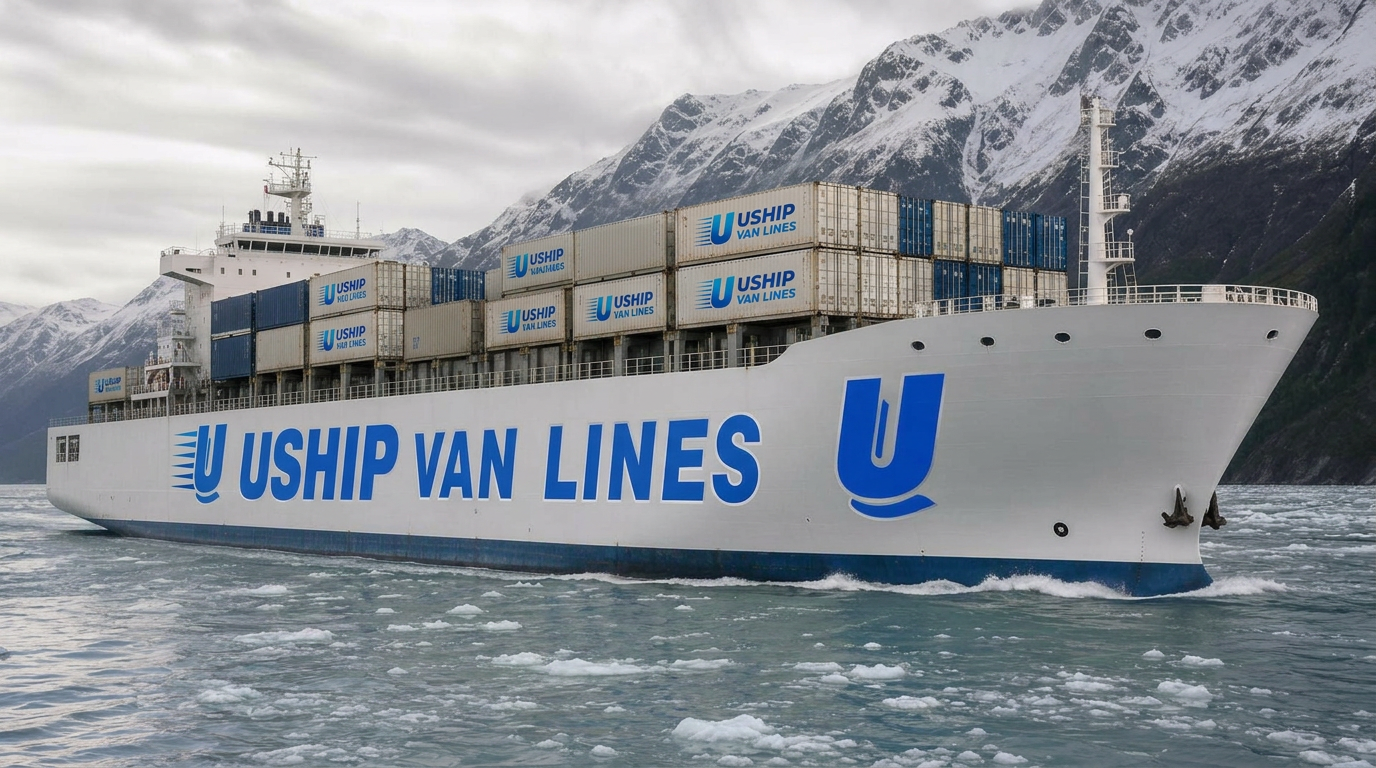
Relocating from Alaska to Green Bay, Wisconsin requires specialized logistics that most traditional moving companies can't handle. Your household goods will travel by barge from Alaska to the Port of Tacoma, transfer to over-the-road transport, and complete the journey across the Upper Midwest to Titletown.
Best Alaska & Hawaii Movers, powered by UShip Van Lines, coordinates every phase of this multi-modal move—from port scheduling and customs documentation to final delivery at your Green Bay home. Request a detailed quote today to understand your specific timeline and costs for this unique relocation.
Route overview
Understanding the Alaska to Green Bay Moving Route
The Alaska-to-Green Bay corridor is one of the most logistically complex domestic moves in the continental United States. Your belongings begin their journey from anywhere in Alaska—whether you're leaving Anchorage, Fairbanks, the Mat-Su Valley, Kenai Peninsula, or even remote bush communities—traveling overland to the Port of Anchorage or Whittier for barge loading.
Once containerized freight departs Alaska waters, it sails approximately 1,500 nautical miles to the Port of Tacoma in Washington State. After customs clearance and port processing, your shipment transfers to long-haul trucks for the 1,800-mile overland journey through Washington, Idaho, Montana, and across the northern tier to Wisconsin. The final leg navigates I-90 and connects to Green Bay via Highway 41, delivering to your new residence in this Fox River community of approximately 105,000 residents.
This route crosses multiple climate zones, two time zones, and requires coordination between marine shipping specialists, port authorities, trucking carriers, and local delivery teams. Transit involves oceanic barge schedules that run weekly during peak season but may be less frequent during Alaska's harsh winter months, making advance planning essential for anyone relocating to Green Bay's four-season climate.
How the moving process works
Your Step-by-Step Alaska to Green Bay Moving Process
1. Initial consultation and surveying
Your move begins with a detailed inventory assessment. Our team catalogs your household goods, noting items requiring special handling (firearms, hunting equipment, cold-weather gear) and evaluating your total cubic footage. We provide a binding or not-to-exceed estimate that accounts for Alaska pickup logistics, barge freight, overland transport, and Green Bay area delivery. Virtual surveys work well for most Alaska moves, though in-person assessments are available in major population centers.
2. Packing and Alaska pickup
Professional packers arrive at your Alaska residence 1–3 days before your scheduled pickup. They use marine-grade packing materials designed to withstand moisture and temperature fluctuations during barge transit. Your belongings are loaded into a dedicated moving container or shared freight space, depending on your shipment size. Pickup scheduling depends on your location—Anchorage and Fairbanks offer the most flexibility, while Mat-Su, Kenai, and bush locations may require specific weather windows.
3. Transport to Alaska port and barge loading
Your container travels overland to the Port of Anchorage or the Port of Whittier. At the marine terminal, freight undergoes customs pre-clearance documentation (even for domestic Alaska moves, certain protocols apply). Containers are loaded onto Alaska Marine Highway barges or commercial freight vessels. Barge schedules run most reliably from May through October; winter sailings face weather delays and reduced frequency.
4. Ocean transit to Port of Tacoma
The maritime leg takes 4–7 days depending on weather conditions, vessel routing, and port call schedules. Barges navigate the Inside Passage and Gulf of Alaska before reaching Puget Sound. Your shipment remains sealed in its container throughout the voyage, protected from saltwater exposure and temperature swings. Marine transit is the least controllable phase—storm systems can add 1–3 days to sailing time.
5. Port processing and overland transfer
Once your container arrives at the Port of Tacoma, it undergoes customs inspection, port authority clearance, and transfer to our overland trucking partners. This warehouse phase typically requires 2–4 business days. Freight is either kept in its original container for full truckload shipments or consolidated with other Wisconsin-bound cargo for partial loads. All items are re-inspected before departing Washington State.
6. Cross-country trucking to Wisconsin
Long-haul trucks depart Tacoma via I-90, traveling through Spokane, Missoula, Billings, and across the northern plains. The 1,800-mile overland journey takes 3–5 days of driving time, factoring in mandatory DOT rest periods, fuel stops, and potential weather delays crossing Montana's continental divide or Wisconsin's early-season snowbelts. Carriers typically avoid the most severe winter travel periods when possible.
7. Final delivery in Green Bay
Your shipment arrives at your Green Bay address with advance notice (typically 24–48 hours). Our delivery team unloads all items, places furniture according to your floor plan, and removes packing materials. You'll conduct a final walkthrough, noting any delivery damage on the Bill of Lading. Green Bay's historic neighborhoods (Astor, Courthouse Hill) may have narrow streets requiring smaller delivery trucks, while suburban areas like Ashwaubenon and De Pere offer easier access for full-size moving vans.
Estimated moving costs
What Does an Alaska to Green Bay Move Cost?
A typical 2–3 bedroom household moving from Alaska to Green Bay generally ranges from $6,800 to $14,500 for full-service door-to-door relocation. This estimate includes packing materials, Alaska pickup, port handling, barge freight, overland trucking, and Green Bay delivery. Your actual cost depends on several key variables.
Shipment volume is the primary cost driver. A 1,200-cubic-foot load (roughly a 2-bedroom apartment) costs significantly less than a 3,500-cubic-foot shipment from a larger Fairbanks home with garage equipment and outdoor gear. Many Alaska households have snowmachines, fishing equipment, and bulk storage items that increase volume.
Origin location within Alaska affects pickup costs substantially. Anchorage and Wasilla pickups carry standard rates, while Fairbanks adds $400–$800 due to the 360-mile positioning drive. Kenai Peninsula locations (Soldotna, Homer) add $300–$600. Remote bush communities accessible only by air or seasonal ice road can add $2,000–$5,000 in specialized logistics.
Seasonal timing impacts both barge availability and pricing. Peak summer months (June–August) see higher demand and premium rates, but guaranteed weekly sailings. Shoulder seasons (April–May, September–October) may offer lower rates but face weather unpredictability. Winter moves (November–March) can save 15–25% on barge costs but risk significant delays—some winters see 2–3 week barge schedule gaps.
Service level choices create wide price ranges. Self-packing and delivering boxes to a consolidation point might save $1,500–$2,500 versus full white-glove service. Shared container space (consolidation) costs less than dedicated containers. Flexible delivery windows (10–14 day ranges) cost less than guaranteed delivery dates.
Vehicle shipping adds $1,800–$3,200 per car when shipped via the same barge route. Many Alaska residents drive the Alaska-Canada Highway (ALCAN) to save costs, though the 2,400-mile drive from Anchorage to Green Bay takes 5–7 days and involves international border crossings.
Insurance coverage beyond standard carrier liability (60 cents per pound) typically adds 1–3% of declared shipment value. Given the marine transit component, most customers opt for full replacement value coverage.
We never guarantee prices without a detailed inventory review. Request your customized quote to receive accurate pricing for your specific Alaska-to-Green Bay move, including any special handling for firearms, taxidermy, artwork, or temperature-sensitive items common in Alaska households.
Estimated transit times
Alaska to Green Bay Moving Timeline
Door-to-door transit from Alaska to Green Bay typically requires 18–32 days under normal conditions. This timeline includes all phases from your Alaska pickup through final Green Bay delivery. Understanding each leg helps set realistic expectations.
Alaska pickup and port delivery (2–5 days): After loading at your residence, your container travels to the Port of Anchorage or Whittier. Anchorage-area pickups reach the port same-day or next-day. Fairbanks shipments require 1–2 days overland. Kenai Peninsula, Mat-Su Valley, and bush locations may need 2–5 days depending on weather and road conditions.
Port staging and barge loading (1–7 days): Once at the marine terminal, containers await the next scheduled barge departure. During peak season (May–September), sailings depart weekly, minimizing wait time. Off-season schedules may run every 10–14 days, adding a week to your timeline. Holiday periods and weather closures can extend port staging.
Ocean transit to Tacoma (4–7 days): The maritime voyage covers approximately 1,500 nautical miles through Alaska waters, the Inside Passage, and down to Puget Sound. Calm summer conditions allow for 4–5 day crossings. Fall and winter storms can extend voyages to 6–7 days or longer. Vessels may make intermediate port calls that add time.
Port of Tacoma processing (2–4 days): Upon arrival in Washington, your container undergoes customs inspection, port authority clearance, and transfer to trucking terminals. This warehouse phase involves unloading from marine carriers, documentation verification, and scheduling with overland trucking partners. Weekends and holidays pause this timeline.
Overland trucking to Wisconsin (4–6 days): The 1,800-mile cross-country haul follows I-90 through five states. Drivers average 500–600 miles daily, factoring in mandatory DOT rest periods. Winter weather crossing Montana or the Dakotas can add 1–2 days. Summer construction zones may cause minor delays but rarely add more than a day.
Final delivery scheduling (1–3 days): Once your shipment reaches Wisconsin, the local delivery team contacts you to schedule your delivery window. Most customers receive 24–48 hours' notice. Green Bay's manageable size means same-day or next-day delivery is common once freight arrives in the region.
Total timeline factors: The fastest Alaska-to-Green Bay moves (18–20 days) occur during peak summer season with Anchorage origins, immediate barge connections, and ideal weather throughout. The longest moves (28–35+ days) involve winter timing, remote Alaska origins, barge schedule gaps, and severe weather delays. Most customers experience 21–26 day timelines when booking 4–6 weeks in advance with flexible delivery windows.
Expedited service is extremely limited for Alaska moves due to the fixed barge schedules—air freight exists for small, urgent shipments but costs 5–10 times standard rates and isn't practical for household goods.
Regional logistics
Alaska-Specific Moving Logistics
Marine terminal and port requirements: Alaska household goods primarily ship through the Port of Anchorage (POA) or the Port of Whittier (closer for Kenai Peninsula and Prince William Sound residents). Both ports require advance documentation including shipper's declarations, inventory manifests, and customs pre-clearance forms even for domestic moves. Marine terminals have specific receiving hours—typically 8 AM–4 PM weekdays—and don't accept freight on weekends. Container sealing and security protocols are strict due to maritime regulations.
Vehicle shipping considerations: Most customers shipping vehicles from Alaska to Green Bay use the same barge route through Tacoma. Vehicles must be nearly empty (less than 1/4 tank fuel, minimal personal items) and properly documented. Alaska vehicle registration and title must be current. If you're driving the ALCAN Highway instead, remember that Canada requires proof of vehicle ownership, current insurance valid in Canada, and proper passport/documentation. The 2,400-mile Anchorage-to-Green Bay drive takes 5–7 days and crosses the international border twice (Alaska/Yukon and Alberta/Montana).
Remote Alaska origins: If you're moving from bush Alaska communities (Bethel, Nome, Kotzebue, Dillingham, etc.), logistics become more complex. These locations require either bush plane cargo flight to Anchorage or seasonal barge service (summer only for most communities). This adds 1–2 weeks and $2,000–$6,000 to your move cost. Some extremely remote locations may require winter ice road transport to connect with the main highway system.
Alaska weight and measurement systems: Alaska moving companies often quote by cubic feet rather than weight due to barge pricing structures. A typical full-size moving truck holds 1,000–1,200 cubic feet; Alaska homes with extensive cold-weather gear, hunting equipment, and bulk storage often exceed this. Accurate pre-move inventories are critical—underestimating by 500+ cubic feet can cause last-minute container changes and cost increases.
Firearms and restricted items: Alaska households frequently own firearms, hunting equipment, and taxidermy. These items can ship via household goods carriers but require specific documentation and packing protocols. Ammunition must be separated from firearms, with quantity limits. Some ammunition types require hazmat certification and may need separate transport. Inform your moving coordinator during initial inventory to ensure proper handling and legal compliance.
Climate-controlled concerns: While Alaska is cold, the barge journey and warehouse stages expose freight to much warmer temperatures. Electronics, musical instruments, artwork, and fine furniture benefit from climate-controlled options, though this adds 15–25% to shipping costs. Standard containers experience temperature swings from Alaska's below-zero loading to Tacoma's 50–60°F maritime climate to summer heat in Montana and Wisconsin.
Storage options: Many Alaska-to-Wisconsin relocations require storage, either because your Green Bay home isn't ready or you need to stage belongings during the transition. Storage is available at three points: Alaska (before barge departure), Tacoma (between marine and overland legs), or Green Bay area (after arrival). Tacoma storage is often most cost-effective for 1–3 month needs, as your container can remain at the port facility. Storage adds $150–$400 monthly depending on volume.
Insurance and liability: Standard carrier liability covers 60 cents per pound per article—inadequate for most household goods. Full-value replacement protection typically costs 1–3% of your declared shipment value (usually $30,000–$80,000 for a 2–3 bedroom move). The marine transit component makes comprehensive insurance particularly important, as saltwater exposure, storm damage, and container handling create unique risks not present in standard overland moves.
Seasonal considerations
When Should You Move from Alaska to Green Bay?
Summer season (June–August) represents peak moving time for Alaska relocations. Barge schedules run most reliably with weekly sailings, road conditions throughout Alaska are optimal, and weather delays are minimal. However, this is also the most expensive period, with rates 20–30% higher than off-season. Green Bay summers are warm and humid (80s–90s°F) compared to Alaska, and this is peak tourist season around Lambeau Field and Door County, making temporary housing competitive.
Spring shoulder season (April–May) offers a strategic window for Alaska moves. Barge schedules resume more frequent sailings as winter ice clears, but rates haven't reached summer peaks. You'll save 10–15% compared to July moves. Alaska weather becomes more predictable, though spring breakup can create muddy road conditions in some areas. Green Bay springs are cool (40s–60s°F) and may still see late snow, but the housing market starts opening up before peak summer demand.
Fall shoulder season (September–October) provides another cost-effective option with moderate weather and good barge availability. Rates drop 15–20% from summer peaks as demand declines. Alaska's early winter creates some unpredictability—September is generally safe, but October moves risk early snowstorms, especially for Fairbanks and interior locations. Green Bay's fall is beautiful (football season!) with comfortable temperatures in the 50s–70s°F, though late October can bring first frost.
Winter season (November–March) presents the most challenging but potentially cheapest moving window. Barge schedules become sporadic, with some companies suspending Alaska service entirely during the darkest months. When available, rates can be 25–35% below summer pricing. However, weather delays are almost guaranteed—winter storms affect both Alaska loading and Great Lakes region delivery. Alaska's extreme cold complicates packing and loading. Green Bay winters are harsh by Lower 48 standards (frequently below zero, heavy snow) though milder than interior Alaska.
Booking lead time recommendations: Summer moves require 8–12 weeks advance booking to secure preferred dates and barge space. Spring and fall moves need 6–8 weeks. Winter moves can sometimes be arranged with 4–6 weeks' notice due to lower demand, but expect significant flexibility in your timeline. Last-minute Alaska moves (under 4 weeks) are possible but severely limit your options and typically carry premium pricing.
Holiday considerations: Avoid booking final delivery around Thanksgiving week or late December—both Alaska and Wisconsin experience weather delays, and carrier availability is limited. Green Bay's proximity to major Midwest cities makes the post-New Year period (January–February) surprisingly workable if you can tolerate cold-weather delivery, with excellent cost savings.
Why choose Best Alaska & Hawaii Movers
Why Choose Best Alaska & Hawaii Movers for Your Green Bay Relocation
-
Alaska marine shipping expertise: We coordinate barge schedules, port documentation, and maritime logistics daily, understanding the unique complexities of Alaska's freight system that traditional moving companies can't match. Our established relationships with Port of Anchorage and Port of Tacoma terminals ensure smooth container transfers and minimal port delays.
-
True door-to-door service: Unlike brokers who hand off your shipment between multiple carriers, we manage your entire move from Alaska pickup through Green Bay delivery. One point of contact, one coordinated timeline, one accountability chain—even though your belongings travel by truck, barge, and truck again.
-
Powered by UShip Van Lines infrastructure: Our partnership with UShip Van Lines provides the nationwide trucking network, warehouse facilities, and carrier capacity to handle the Lower 48 portion of your move with the same professionalism as the Alaska segment. This integration eliminates the handoff problems that plague multi-carrier moves.
-
Realistic timeline and cost transparency: We provide honest transit time estimates that account for barge schedules, weather variables, and seasonal factors—no unrealistic promises. Our quotes break down costs by segment (Alaska pickup, marine freight, overland trucking, delivery) so you understand exactly where your money goes.
-
Flexible service levels: Whether you need full white-glove packing or prefer to handle packing yourself to reduce costs, we accommodate your budget and preferences. Shared container consolidation reduces costs for smaller shipments, while dedicated containers suit larger households needing faster, more secure transport.