
Moving from Green Bay, WI to Alaska
Moving from Green Bay to Alaska represents one of the most dramatic relocations you can make—from Wisconsin's lakeshore communities to America's Last Frontier. This route requires specialized logistics including overland transport to Seattle-Tacoma ports, barge shipping to Alaska's marine highway, and last-mile delivery to your final destination whether that's Anchorage, Fairbanks, the Matanuska-Susitna Valley, or beyond.
Best Alaska & Hawaii Movers, powered by UShip Van Lines, coordinates every phase of your Wisconsin-to-Alaska move. We handle the continental leg, partner with reliable Alaska Marine Lines barges, and arrange final delivery across the state. Request your free quote today to get started with realistic timelines and transparent pricing for your unique move.
Route overview
Understanding the Green Bay to Alaska Moving Route
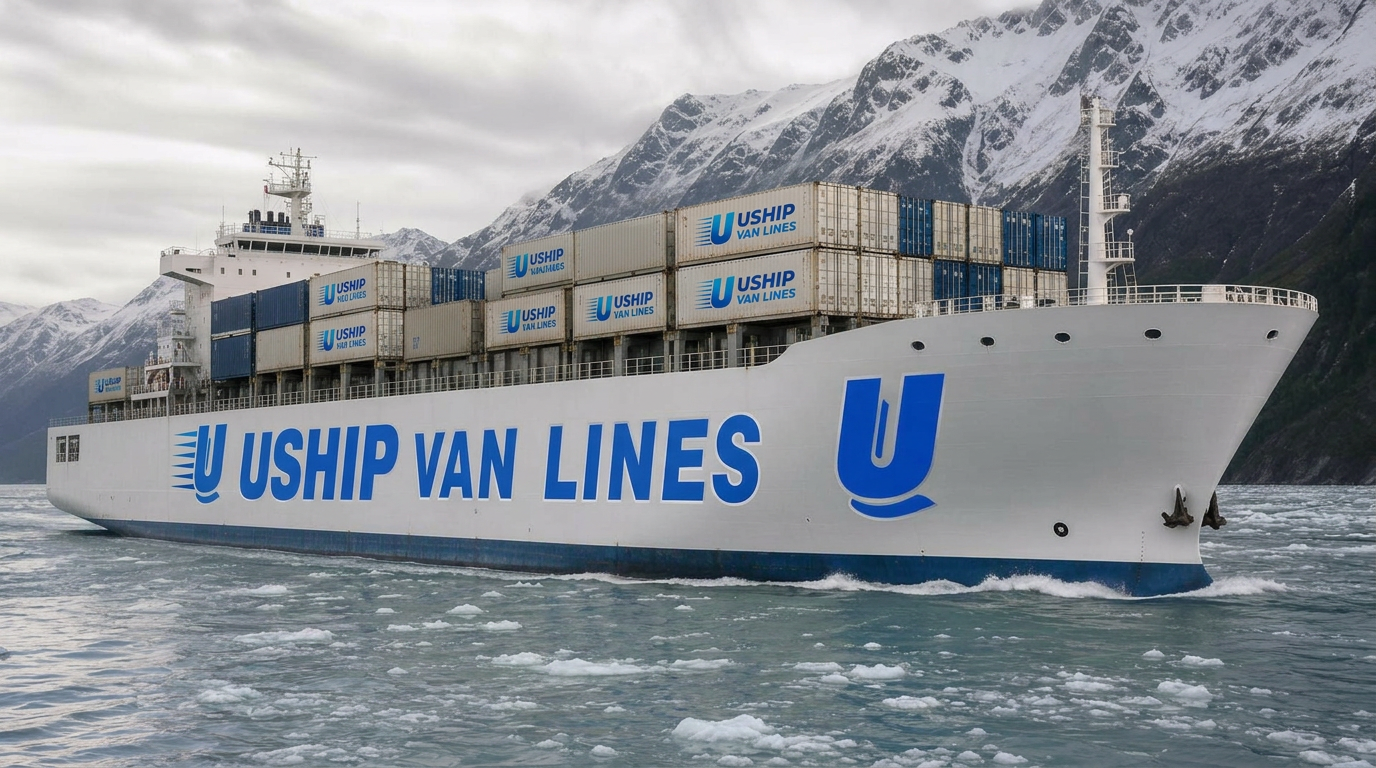
Your household goods will travel approximately 2,200 miles overland from Green Bay to the Port of Tacoma, followed by 1,400+ nautical miles via commercial barge to the Port of Anchorage (or Whittier for some shipments). The entire journey typically spans 2–4 weeks door-to-door, depending on barge schedules, consolidation timing, and your final Alaska destination.
Green Bay sits in northeastern Wisconsin along the bay of the same name, with established trucking routes west through Minneapolis and across Montana to Washington State. Once your shipment reaches Tacoma's container terminals, it's loaded aboard Alaska-bound barges operated by carriers like Totem Ocean Trailer Express (TOTE) or Alaska Marine Lines. These vessels run year-round on published schedules, sailing multiple times per week during peak season (May–September) and less frequently in winter.
Final delivery within Alaska depends entirely on your destination. Anchorage and the Mat-Su Valley (Wasilla, Palmer) are straightforward truck deliveries. Fairbanks adds 360 miles via the Parks Highway. Kenai Peninsula communities require an additional leg down the Seward or Sterling Highway. Remote or off-road-system locations may need air freight, smaller barges, or seasonal ice-road access—each adding cost and complexity that we'll help you navigate upfront.
How the moving process works
How Your Green Bay to Alaska Move Works: Step-by-Step
-
Free consultation and route assessment – We evaluate your inventory, final Alaska destination, timeline preferences, and any special items (vehicles, boats, oversized cargo). You'll receive a detailed quote breaking down each leg of the journey.
-
Pre-move preparation in Green Bay – Our Wisconsin-area partners provide packing services if needed, or we guide your DIY packing. We schedule pickup during your preferred window, coordinating around closing dates or lease terms.
-
Overland transport to Tacoma – Your household goods load onto a temperature-controlled moving van for the cross-country haul. This leg typically takes 4–7 days depending on weather and routing through the northern tier states.
-
Containerization and barge booking – At the Tacoma port facility, your shipment transfers into ocean-rated containers or RO/RO (roll-on/roll-off) trailers. We book space on the next available Alaska-bound barge matching your timeline and budget.
-
Barge transit to Alaska – Vessels sail from Tacoma to Anchorage in 3–5 days under normal conditions. Winter crossings may take slightly longer. You'll receive tracking updates and estimated arrival windows.
-
Alaska port clearance and unloading – Once the barge docks in Anchorage (or Whittier), containers are offloaded, customs paperwork is processed if applicable, and your goods transfer to local Alaska trucks.
-
Final delivery to your Alaska home – Our Alaska-based delivery partners complete the last-mile leg to Anchorage metro, Fairbanks, Mat-Su, Kenai, or other road-accessible communities. We coordinate delivery appointments to match your arrival and housing availability.
Estimated moving costs
What Does a Green Bay to Alaska Move Cost?
Budget $8,500–$16,000 for a typical 2–3 bedroom household moving from Green Bay to the Anchorage area. Smaller 1-bedroom or studio moves may cost $5,000–$8,000, while large 4-bedroom homes with full garages can exceed $20,000. These estimates include overland transport, barge freight, standard liability coverage, and ground delivery within the Anchorage bowl.
Key cost drivers for this route:
- Distance to port – Green Bay to Tacoma is over 2,000 miles, representing significant fuel and driver costs even before the barge leg begins.
- Volume and weight – Barge rates are calculated per cubic foot or per container. A full 20-foot container holds roughly 1,100 cubic feet; a 40-foot container approximately 2,300 cubic feet. Heavier items (pianos, safes, machinery) add weight surcharges.
- Barge schedule and season – Summer peak season (June–August) commands premium rates due to high demand from seasonal Alaskans. Shoulder seasons (April–May, September–October) offer better pricing and faster consolidation. Winter moves (November–March) can be cheapest but face weather delays.
- Final Alaska destination – Delivery to Fairbanks adds $1,200–$2,000 due to the additional 360-mile haul. Kenai Peninsula locations add $600–$1,200. Remote bush communities require case-by-case quotes for air freight or seasonal barge service.
- Vehicle shipping – If you're shipping a car, truck, or SUV alongside household goods, expect $1,800–$3,200 for the same Tacoma-to-Anchorage barge route. Vehicles travel via RO/RO service and must be clean, operable, and meet Alaska emissions standards.
- Packing and specialty handling – Full-service packing in Green Bay costs $800–$2,000 depending on home size. Crating for fragile items (art, antiques, electronics) adds $200–$800 per piece.
We provide transparent, itemized quotes with no hidden fees. Prices vary by season and capacity, so request your personalized estimate early in your planning process.
Estimated transit times
How Long Does Green Bay to Alaska Moving Take?
Plan for 14–28 days door-to-door for most Green Bay to Alaska household moves. Timelines vary significantly based on barge schedules, consolidation needs, and final destination logistics.
Typical timeline breakdown:
- Pickup and overland leg (5–8 days) – Crew loads your belongings in Green Bay, drives west through Wisconsin, Minnesota, North Dakota, Montana, Idaho, and Washington to the Port of Tacoma. Weather, truck availability, and routing affect timing.
- Port consolidation and barge wait (3–10 days) – Your shipment may consolidate with other Alaska-bound loads to optimize container space. During peak summer season, barges sail almost daily. In winter, you might wait 7–10 days for the next scheduled sailing.
- Ocean transit (3–5 days) – The barge voyage from Tacoma to Anchorage takes approximately 60–72 hours under normal sea conditions. Winter storms can add 1–2 days.
- Port processing and local delivery (2–5 days) – After docking in Anchorage, containers offload, clear any inspections, and transfer to local delivery trucks. Final delivery scheduling depends on your availability and address accessibility.
Fairbanks deliveries add 1–2 days for the interior Alaska haul. Kenai Peninsula addresses add similar time. Remote or off-road locations may require weekly barge schedules or bush plane logistics, extending timelines to 4–8 weeks.
Winter moves (November–March) can face delays from Midwest snowstorms, mountain pass closures in Montana or Washington, and rough Gulf of Alaska seas. Summer moves benefit from optimal weather but compete for limited barge capacity during Alaska's busy season. We recommend booking 6–8 weeks ahead for summer moves, 4–6 weeks for shoulder seasons.
Regional logistics
Alaska-Specific Moving Logistics from Wisconsin
Port operations and container options: Your goods will process through the Port of Tacoma's Alaska terminals. Most household moves use 20-foot or 40-foot shipping containers ("cans" in industry terms) or enclosed RO/RO trailers. Containers offer maximum protection from salt air and weather. Partial loads consolidate with other shipments heading to the same Alaska region—this saves money but requires flexible timing.
Vehicle shipping requirements: Alaska auto transport runs on the same barges as household goods. Vehicles must be clean inside and out (Alaska enforces strict agricultural inspection—no dirt, seeds, or plant material). Gas tanks should be 1/4 full or less. Remove all personal items except spare tire, jack, and car seats. Inoperable vehicles incur surcharges or denial of service. Confirm your vehicle meets Alaska emissions standards if it's an older model.
Documentation and customs: Alaska is a U.S. state, so there are no customs duties for domestic moves. However, if you're shipping firearms, alcohol beyond personal limits, or commercial goods, declare them upfront. Barge carriers require detailed inventory lists (bill of lading) for insurance and tracking. Keep copies of all paperwork accessible during your own travel to Alaska.
Final-mile delivery challenges: Anchorage, Eagle River, Wasilla, and Palmer are straightforward truck deliveries on paved roads. Fairbanks requires crossing the Matanuska and Alaska Ranges via the Parks Highway—a well-maintained but long haul. Kenai Peninsula deliveries (Soldotna, Kenai, Homer) add the Seward or Sterling Highway leg. Remote communities off the road system (like Kodiak, Dutch Harbor, Nome, Barrow) require separate barge or air freight arrangements—often doubling or tripling costs. We'll assess your final address during quoting and provide realistic delivery options.
Storage options: If your Alaska housing isn't ready when your shipment arrives, we can arrange short-term storage in Anchorage-area climate-controlled facilities. Costs run $150–$400 per month depending on volume. Alternatively, we can delay barge booking or hold goods at the Tacoma port (subject to port storage fees).
Insurance and liability: Standard moving liability covers $0.60 per pound per item—insufficient for valuable belongings. We strongly recommend full-value protection insurance, which covers replacement cost for damaged or lost items. Cost is typically 1–2% of your declared shipment value. Alaska's long route and multiple handling points increase risk compared to continental moves, making adequate coverage essential.
Seasonal considerations
Best Time to Move from Green Bay to Alaska
Spring (April–May): Excellent window for Alaska moves. Barge schedules ramp up from winter lows, rates remain reasonable, and you'll arrive in Alaska as the state awakens from winter. Green Bay weather improves, reducing packing/loading complications from snow and ice. Book early—many Alaskans target April–May moves to settle before summer.
Summer (June–August): Peak moving season for Alaska. Barge capacity is maxed out with seasonal workers, military families, and tourists shipping vehicles and goods north. Expect premium rates and longer consolidation times. However, weather is optimal across the entire route—no snow in Wisconsin, clear mountain passes, calm Gulf of Alaska seas. If you must move in summer, book 8–10 weeks ahead and be flexible on exact dates.
Fall (September–October): Ideal for cost-conscious movers. Demand drops after Labor Day as seasonal Alaskans head south and tourism wanes. Barge rates fall 15–25% compared to summer peaks. Weather remains mostly favorable through September, though October can bring early snow to Wisconsin and Alaska alike. Alaska's fall colors and Northern Lights make this a rewarding time to arrive.
Winter (November–March): Lowest rates and most available capacity, but highest risk of delays. Green Bay winters are harsh—subzero temperatures and heavy snow complicate packing and loading. Mountain passes in Montana and Washington close during storms. Gulf of Alaska winter storms can delay barges or make crossings uncomfortable for vehicles. Barge schedules reduce to 1–2 sailings per week. Choose winter only if you have flexible timelines and significant budget savings outweigh delay risks. Many Alaskans prefer to ship goods in fall, then fly up later once settled.
Why choose Best Alaska & Hawaii Movers
Why Best Alaska & Hawaii Movers for Your Wisconsin to Alaska Move
-
Specialized Alaska route expertise – We focus exclusively on Alaska and Hawaii moves, with deep partnerships across barge lines, Alaska trucking companies, and port logistics providers. We know the Tacoma-Anchorage lane inside-out and proactively manage the complexities that surprise general moving companies.
-
Transparent pricing with no hidden fees – You'll receive an itemized quote breaking down overland transport, barge freight, fuel surcharges, and delivery costs. We explain seasonal rate variations and help you choose the most cost-effective timing for your budget.
-
End-to-end coordination – One point of contact manages your entire move from Green Bay pickup through final Alaska delivery. You're not handed off between multiple carriers or left to coordinate barge bookings yourself.
-
Flexible scheduling for Alaska's unique timelines – We accommodate barge schedule realities and Alaska's seasonal constraints. If delays occur, we communicate proactively and adjust plans without surprise fees.
-
Powered by UShip Van Lines' trusted network – Our carrier network spans the continental U.S. and Alaska, ensuring reliable equipment, experienced drivers, and accountability at every stage. We've successfully moved thousands of households to Alaska and understand what it takes to arrive intact and on time.