
Moving from Lowell, MA to Alaska
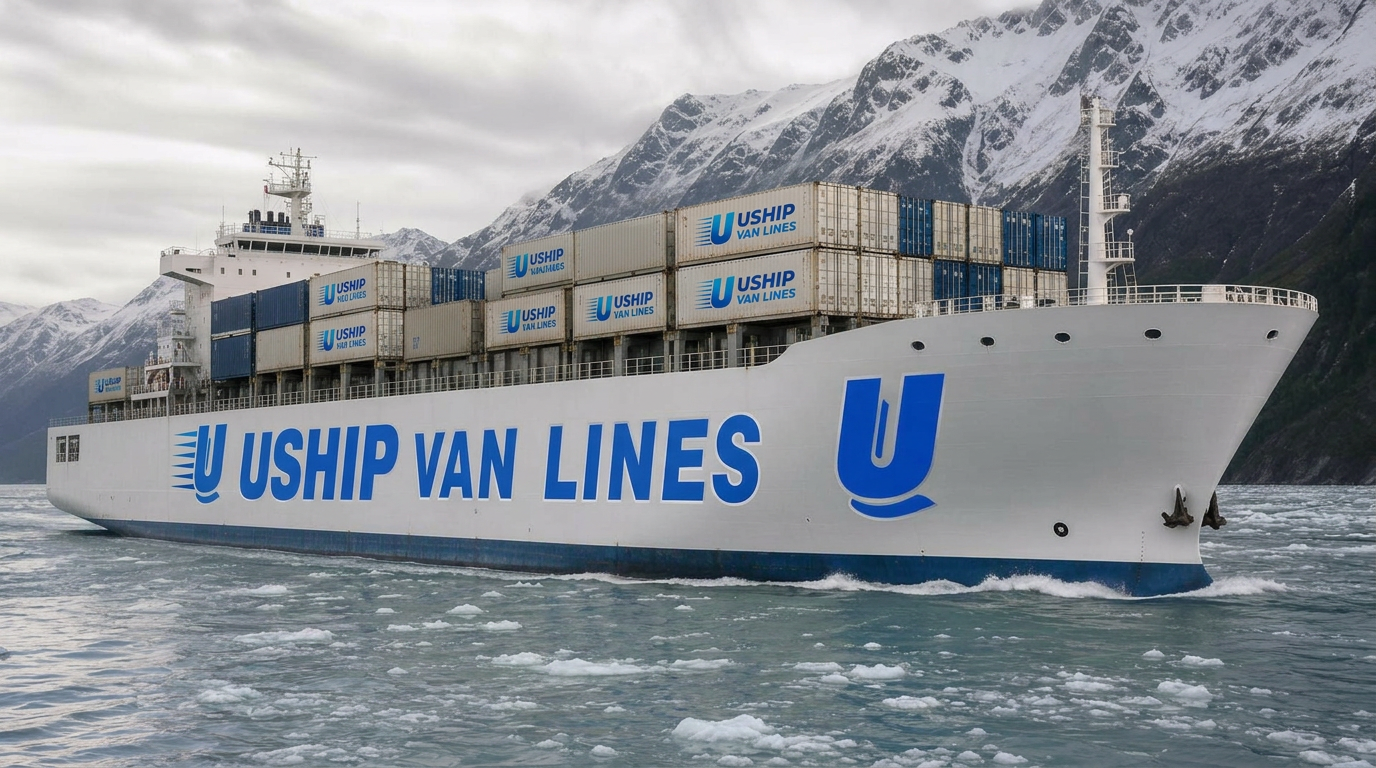
Moving from Lowell, Massachusetts to Alaska represents one of the most logistically complex domestic relocations you can make. This cross-country move requires coordination between professional van lines for your overland haul to the West Coast, ocean barge freight to Alaska's port system, and final delivery across the Last Frontier's challenging terrain.
Best Alaska & Hawaii Movers, powered by UShip Van Lines, specializes in this exact route—managing every handoff from your Lowell neighborhood through Tacoma's port facilities to your new Alaska home. Whether you're heading to Anchorage, Fairbanks, the Matanuska-Susitna Valley, or a remote bush community, we'll provide a transparent quote and handle the intricate coordination this move demands.
Route overview
Understanding the Lowell, MA to Alaska Moving Route
Your household goods begin their 3,500+ mile journey with a professional loading crew in Lowell, typically staging out of Greater Boston or Worcester-area terminals. The overland segment crosses the continental United States via interstate highways—I-90 West through New York, the Great Lakes states, and the northern tier to Washington State. This cross-country haul takes 5–8 days depending on dispatch schedules and consolidation requirements.
Once your shipment reaches the Port of Tacoma (the primary gateway for Alaska freight), items transfer to containerized marine freight for the barge voyage. The Alaska Marine Highway's commercial barge system sails weekly during peak season, connecting Tacoma to the Port of Anchorage in 5–8 days of ocean transit. From Anchorage, last-mile delivery extends to interior destinations like Fairbanks (another 360 miles north), Mat-Su communities (Palmer, Wasilla), Kenai Peninsula towns, or remote locations requiring bush planes and ice-road logistics.
This multi-modal route requires specialized carriers who understand USDA inspection protocols for Hawaii-Alaska freight, fumigation requirements for wood furnishings, customs-like agricultural clearances, and coordination with Alaska's limited road network. Your shipment may cross three time zones, two climate regimes, and require weatherproofing against moisture during the ocean leg.
How the moving process works
The 7-Step Lowell to Alaska Moving Process
-
Pre-Move Survey & Quote (6–10 weeks before move date): A virtual or in-home survey catalogs your inventory, identifies items requiring special handling (guns, alcohol, perishables prohibited on barges), and generates a binding or binding-not-to-exceed estimate. You'll receive detailed paperwork explaining barge schedules, transit windows, and Alaska delivery zones.
-
Purge & Pack (4–6 weeks out): Downsize aggressively—Alaska moves cost $1.50–$2.50/lb for small shipments. Professional packing services (highly recommended) weatherproof boxes against moisture, use maritime-grade materials, and inventory every carton for barge manifests. Fragile items get double-boxing; electronics receive anti-static wrap.
-
Loading in Lowell (move week): A two- or three-person crew loads your belongings into a 26' or 53' van, completing a detailed inventory with condition photos. The truck departs for a regional consolidation terminal (often in Massachusetts, Connecticut, or New Jersey) where your goods join other westbound shipments.
-
Cross-Country Transit (5–8 days): Your consolidated shipment travels I-90 or I-80 to the Pacific Northwest. During this phase, tracking updates are sporadic—drivers focus on safe, legal hauls across 2,500 miles of highway. The van arrives at Tacoma's port warehouse for deconsolidation.
-
Port Processing & Barge Loading (2–5 days): Goods transfer into 20' or 40' marine containers, undergoing mandatory USDA agricultural inspection (furniture, boxes, and crates checked for soil, pests, untreated wood). Containers load onto the next Alaska-bound barge—weekly sailings April–October, bi-weekly November–March.
-
Ocean Barge Transit (5–8 days): The barge sails from Tacoma through Puget Sound, the Inside Passage, and the Gulf of Alaska to Anchorage. Weather can delay sailings by 24–48 hours; winter storms occasionally extend transit by a day.
-
Alaska Delivery (1–10 days after port arrival): In Anchorage and Mat-Su, delivery typically occurs within 2–4 days of port arrival. Fairbanks adds 2–3 days for the 360-mile interior haul. Remote destinations (Kenai, Homer, Kodiak, bush villages) require specialized carriers, bush planes, or seasonal ice-road access, adding 1–3 weeks and substantial cost.
Estimated moving costs
Realistic Cost Expectations for Lowell to Alaska Moves
A 2-bedroom apartment (roughly 4,000–6,000 lbs) from Lowell to Anchorage typically costs $7,500–$12,000 for full-service door-to-door moving. A 3-bedroom home (8,000–11,000 lbs) ranges $12,000–$18,500. These estimates include overland van transport, barge freight, standard delivery in Anchorage, and basic liability coverage.
Key cost drivers:
- Weight & volume: Alaska moves price by the pound and cubic foot. Every 1,000 lbs adds approximately $1,500–$2,000 to your total.
- Distance within Alaska: Anchorage delivery is baseline. Fairbanks adds $1,500–$2,500. Kenai Peninsula adds $800–$1,800. Remote bush locations can add $3,000–$10,000+ due to air freight or seasonal access.
- Barge season: Peak summer sailings (June–August) move faster but may carry slight premium pricing due to demand. Winter barges (December–February) are less frequent, sometimes adding $500–$1,000 for expedited container space.
- Packing services: Professional full-pack adds $800–$1,800 for a 2BR, $1,500–$3,000 for a 3BR—but significantly reduces damage risk on this moisture-exposed, multi-modal route.
- Valuation coverage: Basic liability (60¢/lb/item) is included. Full-value protection runs 1–2% of declared shipment value (e.g., $300–$600 for a $30,000 shipment).
- Vehicle shipping: Adding a car (via separate auto transport barge) costs $1,800–$2,800 Tacoma-to-Anchorage; it's often cost-effective to drive the Alaska Highway if you have time.
**Never trust
Estimated transit times
How Long Does Lowell to Alaska Moving Take?
Door-to-door transit from Lowell to Anchorage typically requires 18–28 days under normal conditions. Breaking down each leg:
- Lowell loading to Tacoma arrival: 5–8 days (2,800+ highway miles with consolidation)
- Tacoma port processing: 2–5 days (deconsolidation, agricultural inspection, container loading, waiting for next scheduled barge)
- Barge sailing Tacoma to Anchorage: 5–8 days (ocean transit via Inside Passage, subject to weather)
- Anchorage port to final delivery: 2–4 days for Anchorage/Mat-Su, 4–7 days for Fairbanks, 7–21 days for remote areas
Peak season (May–September) offers the fastest service: weekly barge sailings, optimal weather, and abundant trucking capacity in Alaska. You might complete the move in 18–22 days if everything aligns.
Winter moves (November–March) extend timelines to 25–35 days due to bi-weekly barge schedules, weather delays in the Gulf of Alaska, and reduced Alaska trucking availability as drivers focus on ice-road freight. Some bush destinations become inaccessible until spring thaw or require expensive air freight.
Plan for variability. Always arrange temporary housing or extended hotel stays on both ends. Ship 4–6 weeks before your absolute "must arrive" date to accommodate the inevitable delay (missed barge sailing, port congestion, surprise snowstorm in Fairbanks).
Regional logistics
Alaska-Specific Logistics You Must Understand
Port of Anchorage operations: Anchorage is Alaska's freight lifeline. Your container clears U.S. customs-equivalent agricultural inspection upon arrival—inspectors check for invasive pests, untreated wood, and soil. Delays here are rare but possible if your shipment is flagged. The port operates year-round but with reduced weekend/holiday staffing in winter.
Interior and remote delivery: Anchorage, Eagle River, and Mat-Su Valley (Palmer, Wasilla) are straightforward—paved highways, regular trucking. Fairbanks requires a 6–8 hour drive north on the Parks Highway (AK-3); most carriers deliver within a week of Anchorage arrival. Kenai Peninsula towns (Soldotna, Homer, Seward) add 2–4 days and $800–$1,500. Bush Alaska (Bethel, Nome, Kotzebue, Barrow) requires air cargo, winter ice roads, or summer barge to village—adding weeks and $5,000–$15,000.
Vehicle shipping: If you're bringing a car, it typically ships separately via dedicated auto barge (Anchorage or Whittier). Cost: $1,800–$2,800 from Tacoma. Many families drive the Alaska Highway (ALCAN)—a 2,200-mile adventure from the Lower 48 through Canada, requiring passport, vehicle prep, and 4–6 days of driving. Winter ALCAN driving demands serious preparation (studded tires, emergency supplies, mechanical readiness).
Prohibited and restricted items: Barges prohibit hazardous materials (paint, propane, aerosols, gasoline), perishable food, and houseplants (USDA restrictions). Firearms and alcohol have strict manifesting requirements. Expect to personally transport medications, important documents, jewelry, and irreplaceable items.
Warehousing and storage: If your Alaska home isn't ready, many carriers offer storage in Anchorage warehouses (often at port-adjacent facilities). Rates run $150–$300/month for a small shipment. Avoid long-term storage if possible—Alaska's climate (humidity swings, extreme cold) can affect goods even in "climate-controlled" facilities.
Paperwork: You'll complete a household goods inventory, bill of lading, declared-value form, and USDA agricultural declaration. If you're military (common on this route due to Joint Base Elmendorf-Richardson), work with your transportation office for DITY/PPM move coordination—our team has extensive military move experience.
Seasonal considerations
Season-by-Season Timing for Your Alaska Move
Spring (April–May): Barge schedules ramp up from winter's reduced frequency to weekly sailings by late May. Weather in the Gulf of Alaska remains unpredictable—late-season storms can delay sailings. Anchorage emerges from winter; interior roads (to Fairbanks) are fully passable but watch for spring breakup (mud season) on rural routes. Booking 8–10 weeks ahead is wise as summer demand builds.
Summer (June–August): Peak moving season for Alaska. Weekly barge sailings, the most reliable weather, 20+ hours of daylight for delivery crews, and full access to remote areas. Expect the highest demand—book 10–12 weeks in advance. Costs may run 5–10% higher, but speed and reliability are maximized. Ideal if you have school-age children (align with the academic calendar) or need to start a job by a fixed date.
Fall (September–October): Shoulder season offers a sweet spot: still-weekly barges through mid-October, moderate weather, lower demand (10–15% cost savings possible), and Alaska's stunning autumn colors upon arrival. By late October, barge frequency drops and winter weather becomes a factor. Book 6–8 weeks ahead.
Winter (November–March): Most challenging season. Barges sail every 10–14 days; Gulf storms routinely delay sailings by 24–72 hours. Snow and ice affect both Tacoma port operations and Alaska last-mile delivery. Some rural areas (much of the Kenai, all bush villages without winter ice roads) become unreachable. However, costs drop 10–20%, and if you have flexible timelines and are moving to Anchorage or Fairbanks (on the year-round road system), it's feasible. Expect 28–40 day door-to-door timelines and plan accordingly.
Why choose Best Alaska & Hawaii Movers
Why Best Alaska & Hawaii Movers for Your Lowell-to-Alaska Move?
- Multi-modal expertise: We coordinate the full chain—vetted van lines for your Lowell pickup, trusted barge freight partners with weekly Tacoma-Anchorage sailings, and Alaska-based delivery crews who know the Last Frontier's roads, weather, and rural logistics.
- Transparent pricing: You'll receive a detailed estimate breaking out overland, barge, and last-mile costs—no surprise fees when your container arrives in Anchorage. We explain exactly what drives your price and where you can save.
- Dedicated move coordination: A single point of contact manages your shipment from Lowell loading through Alaska delivery, proactively communicating barge schedules, port clearances, and delivery windows. You won't chase down three different companies.
- Alaska delivery network: Our partnerships extend beyond Anchorage—we arrange Fairbanks interior hauls, Kenai Peninsula delivery, and even bush village logistics (air cargo, seasonal ice roads) that general moving companies won't touch.
- Realistic timelines: We set honest expectations (18–28 days Anchorage, longer for remote areas) and build buffer into your schedule, so you're never caught without your belongings when Alaska winter arrives.