
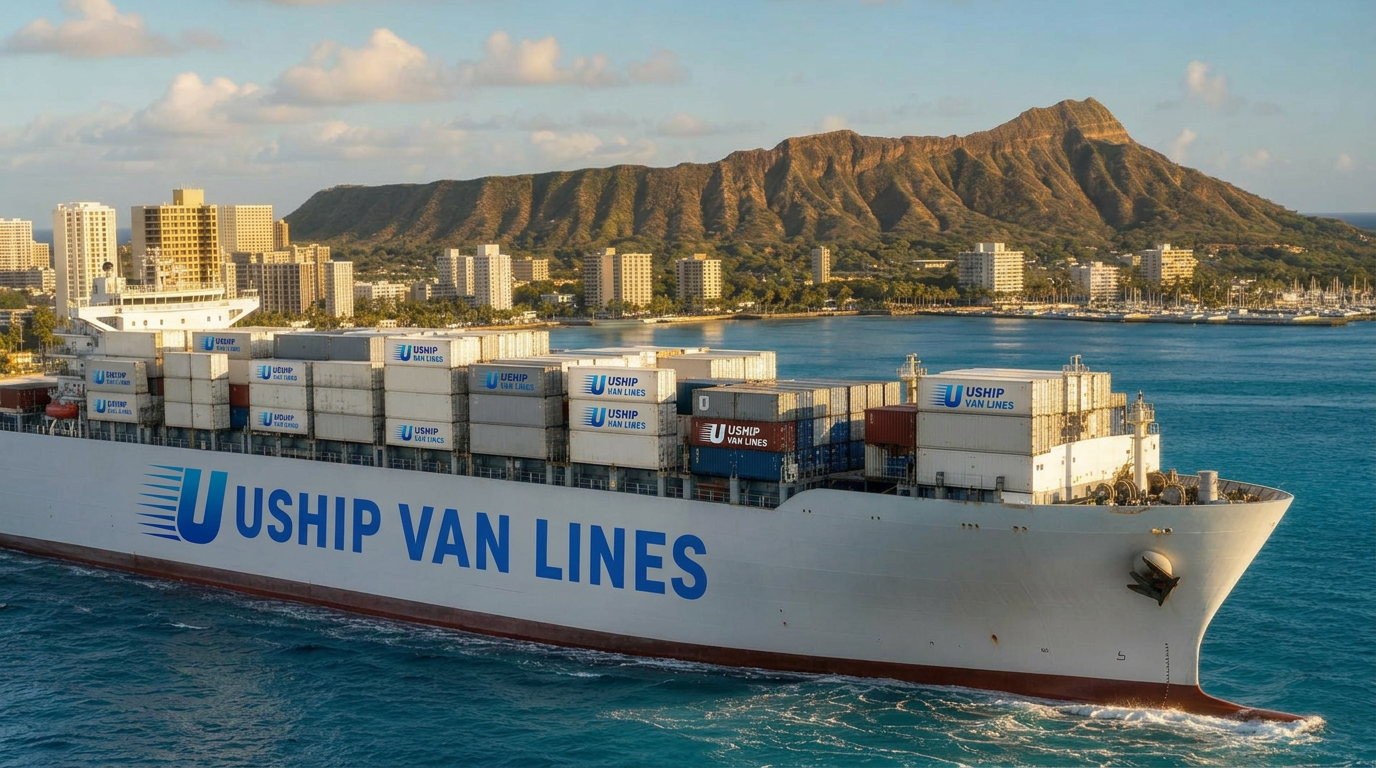
Moving from Green Bay, WI to Hawaii
Relocating from Green Bay's Great Lakes shores to Hawaii's Pacific islands requires specialized logistics that go far beyond a typical mainland move. Your household goods will travel approximately 4,400 miles—first overland to a West Coast port, then across the Pacific Ocean in a sealed container, and finally to your new island home.
Best Alaska & Hawaii Movers, powered by UShip Van Lines, coordinates every segment of this complex journey. We handle the mainland pickup, container loading, ocean freight booking, customs paperwork, and final island delivery. Ready to start planning your Green Bay to Hawaii relocation? Request your personalized quote today and work with a team that specializes in these unique cross-Pacific moves.
Route overview
Understanding the Green Bay to Hawaii Moving Route
Your belongings will first travel by truck from Green Bay to either Long Beach or Oakland, California—the two primary West Coast ports serving Hawaii. This initial leg covers approximately 2,000–2,100 miles and typically takes 3–5 days depending on weather and routing through the Midwest and Mountain West.
From the California port, your container joins a Matson Navigation or Pasha Hawaii vessel bound for Honolulu. These dedicated Hawaii shipping lines operate on reliable weekly schedules, with ocean transit taking 5–7 days to Oahu. If your destination is Maui, Kauai, or the Big Island, add 3–7 additional days for inter-island barge service and final delivery coordination.
The complete door-to-door timeline typically spans 14–28 days, with variables including port congestion, container availability, sailing schedules, and your specific island destination. Port delays are most common during peak summer months and around major holidays when shipping volume increases substantially.
How the moving process works
How Your Green Bay to Hawaii Move Works: Step-by-Step
-
Free In-Home or Virtual Survey: Our specialist assesses your inventory, discusses Hawaii's import restrictions (plants, certain foods, some furniture materials), and provides a detailed quote covering all segments—Green Bay pickup, mainland transit, ocean freight, and island delivery.
-
Mainland Pickup and Container Loading: Professional movers arrive at your Green Bay home, carefully pack and load your items onto a truck destined for the California port. Your goods may be consolidated with other Hawaii-bound shipments or loaded into a dedicated container depending on volume.
-
Port Processing and Container Stuffing: At Long Beach or Oakland, your shipment transfers to a 20-foot or 40-foot ocean container. Our logistics team handles all port paperwork, USDA agricultural inspections (mandatory for Hawaii), and container booking with Matson or Pasha.
-
Ocean Voyage to Hawaii: Your sealed container boards a container ship for the 5–7 day Pacific crossing to Honolulu. Ocean carriers maintain climate-controlled holds, though some humidity exposure is normal during tropical voyages.
-
Hawaii Port Clearance: Upon Honolulu arrival, your container clears U.S. Customs (a formality for domestic moves) and Hawaii Department of Agriculture inspection. This typically takes 1–3 business days but can extend during high-volume periods.
-
Inter-Island Transfer (if needed): If moving to a neighbor island, your container or deconsolidated goods board a Young Brothers barge for the final ocean leg. Schedules vary by island—Maui receives 4–6 barges weekly, while Molokai and Lanai have less frequent service.
-
Final Delivery and Unpacking: Island-based delivery crews bring your belongings to your new home, unpack as requested, and remove all packing materials. Most carriers offer unpacking services and furniture assembly to help you settle in quickly.
Estimated moving costs
What Does a Green Bay to Hawaii Move Cost?
For a typical 2–3 bedroom household (approximately 7,000–10,000 pounds or 800–1,200 cubic feet), expect total costs between $8,500 and $16,000. Studio or 1-bedroom moves may run $5,500–$8,000, while larger 4-bedroom homes can exceed $18,000–$25,000.
Your final price depends on several key factors:
- Shipment volume: Charges are typically per cubic foot or by container share; a full 40-foot container (dedicated) costs more than a consolidated partial load but offers faster transit and less handling
- Island destination: Oahu delivery is least expensive; Maui adds $800–$1,500; Kauai and Big Island add $1,200–$2,500; Molokai/Lanai carry significant surcharges due to limited barge schedules
- Accessibility: Homes in rural areas, on unpaved roads, or requiring shuttle trucks due to narrow streets incur additional fees ($300–$1,200)
- Season: Summer peak season (June–August) commands 15–25% premiums over winter off-season; book early to secure better rates
- Packing services: Full professional packing adds $1,500–$3,500 but provides superior protection for the multi-leg journey and may be required for insurance coverage
- Vehicle shipping: Adding a car runs $1,200–$1,800 Green Bay to Oahu (vehicles ship separately via RORO vessel from the same ports)
- Storage: If you need warehousing on either end while awaiting housing availability, expect $150–$400 per month
We never quote guaranteed prices sight-unseen. Accurate estimates require a detailed inventory assessment, current fuel surcharges, and real-time container availability. Request your personalized quote to receive a binding estimate based on your specific circumstances.
Estimated transit times
How Long Does Green Bay to Hawaii Moving Take?
Plan for 14–28 days door-to-door for most Green Bay to Hawaii relocations. Here's the realistic breakdown:
Mainland Segment (Green Bay to California Port): 3–5 days depending on route, weather, and driver hours-of-service regulations. Winter storms crossing the Rockies can add 1–2 days; summer construction zones through Chicago and mountain passes may cause minor delays.
Port Staging and Container Loading: 1–3 days for container stuffing, agricultural inspection, and vessel booking. During peak seasons or when space is tight, this can extend to 5–7 days.
Ocean Transit to Honolulu: 5–7 days once your container boards a Matson or Pasha vessel. These carriers maintain predictable schedules with weekly departures, but occasional weather delays (tropical storms, high surf at Honolulu harbor) can add 1–2 days.
Hawaii Port Clearance: 1–3 business days for customs, agriculture inspection, and container off-loading. Expect longer waits during summer peak volume or around holidays when inspection staff is reduced.
Inter-Island Transit (Neighbor Islands Only): Add 3–7 days for barge service to Maui, Kauai, or Big Island. Molokai and Lanai may require 7–12 days due to less frequent barge schedules.
Final Delivery Scheduling: Once cleared and on your destination island, most carriers deliver within 1–3 business days based on driver availability and your schedule.
Expedited service is rarely available for Hawaii moves due to fixed sailing schedules and mandatory inspections. The fastest realistic timeline is approximately 12–14 days for Oahu delivery with optimal connections. Neighbor island moves under 18 days should be considered excellent service.
Regional logistics
Hawaii-Specific Moving Logistics You Must Know
Port Selection: Long Beach handles the majority of Hawaii shipments with multiple weekly Matson departures. Oakland serves as the secondary port with slightly less frequent service but can offer better rates when Long Beach is congested. Your carrier chooses based on current conditions and consolidation schedules.
Agricultural Inspections: All Hawaii shipments undergo mandatory USDA and Hawaii Department of Agriculture inspection for invasive species and prohibited items. You cannot ship most live plants, fresh fruits, certain vegetables, soil, used outdoor furniture with dirt/debris, or items contaminated with seeds. Wooden furniture must be clean and inspected. Inspectors can refuse or require fumigation (at your expense) for questionable items. Budget 1–3 additional days for this process.
Container Types: Most household moves use shared 40-foot containers (consolidation) unless you have 1,200+ cubic feet warranting a dedicated container. Shared containers cost less but require coordination with other shipments and add 2–4 days for consolidation/deconsolidation. Climate control is not available—containers experience some humidity during tropical ocean transit.
Vehicle Shipping: Cars and trucks ship separately via roll-on/roll-off (RORO) vessels from the same California ports. Vehicles must be clean (undercarriage steam-cleaned to remove soil), operable, and registered. You can include about 100 pounds of household items inside (though officially discouraged) but nothing valuable—these vessels are not secure. Vehicle transit takes 7–14 days Green Bay to Oahu.
Storage Options: If your Hawaii housing isn't ready, most carriers offer warehouse storage on Oahu. Neighbor island storage is limited and expensive. Rates run $150–$300/month for typical household volumes. Consider timing your shipment to arrive after you have housing secured—you'll avoid storage fees and double-handling charges.
Delivery Restrictions: Many Hawaii neighborhoods have narrow streets, low-hanging trees, or weight-restricted bridges that prevent full-size semi access. Carriers use smaller "pup" trailers or shuttle trucks, adding $300–$800 to costs. Condominiums often require advance booking of freight elevators and have strict delivery time windows. Rural Big Island and Maui locations may require 4WD delivery vehicles with additional surcharges.
Insurance: Standard carrier liability (60 cents per pound) is inadequate for Hawaii's multi-leg journey with extensive handling. Purchase full-value protection or separate moving insurance covering $50,000–$100,000+ in replacement value. Policies should explicitly cover ocean transit, container damage, and storm delays.
Seasonal considerations
Best Times to Move from Green Bay to Hawaii
Winter (December–February): Off-peak season offers the best rates (15–20% below summer) and more flexible scheduling. However, winter storms can delay the Green Bay pickup or Midwest-to-California transit. Ports typically operate smoothly with lower congestion. Ocean conditions are generally rougher with higher swells, though modern container ships handle these well.
Spring (March–May): Excellent window with moderate pricing, improving Midwest weather, and manageable port volumes. Book early as snowbirds and early summer movers begin filling vessel space by mid-April. Ocean conditions calm considerably by April. This is often the sweet spot for cost versus convenience.
Summer (June–August): Peak moving season coincides with school breaks and peak Hawaii tourism. Expect 20–30% rate premiums, tighter container availability, longer port wait times, and 3–4 week minimum transit times due to volume. Book 8–12 weeks in advance. June 1–November 30 is official hurricane season; while direct hits are rare, tropical storms can delay sailings by 2–5 days.
Fall (September–November): Volume drops after Labor Day, bringing better rates and availability. September remains in hurricane season with occasional storm delays. Late October through November offers excellent value with minimal weather risk. Thanksgiving week is challenging due to reduced port operations and driver shortages.
Hurricane Season Note: Hawaii's hurricane risk peaks August–September. While Honolulu harbor is well-protected, tropical storms can delay vessel departures or arrivals. Carriers will hold containers rather than risk at-sea damage, potentially adding 3–7 days to your timeline. Consider moving insurance with storm coverage during these months.
Port Congestion: Long Beach and Oakland can experience 3–7 day container backups during Chinese New Year (late January–February) when trans-Pacific volume surges, and during summer peak. These mainland delays affect Hawaii sailings indirectly through container and chassis shortages.
Why choose Best Alaska & Hawaii Movers
Why Best Alaska & Hawaii Movers for Your Green Bay to Hawaii Relocation
-
Specialized Hawaii Logistics Expertise: We coordinate Alaska and Hawaii moves exclusively, working daily with Matson, Pasha, West Coast ports, and island delivery networks—not a once-a-year novelty route for us
-
Single-Point Coordination: One team manages your entire journey from Green Bay pickup through ocean freight to island delivery, eliminating the finger-pointing that happens when multiple carriers hand off responsibility
-
Transparent Container Pricing: We explain exactly how your shipment is priced (cubic feet vs. container share vs. dedicated), what consolidation means for your timeline, and all potential surcharges before you book—no surprise fees at delivery
-
Proactive Agricultural Compliance: Our Green Bay crews are trained on Hawaii's import restrictions and will flag questionable items during packing, preventing costly delays or rejected shipments at Honolulu inspection
-
Real-Time Shipment Tracking: Receive updates at each milestone—mainland departure, port arrival, vessel loading, Hawaii port clearance, and delivery scheduling—so you're never wondering where your belongings are during the 3–4 week journey
-
Powered by UShip Van Lines: Our partnership with UShip Van Lines' national network ensures reliable mainland pickup from Green Bay while our Hawaii specialists handle the complex Pacific logistics
Request your detailed quote today and experience the difference that dedicated Hawaii moving expertise makes.