
Moving from Alaska to Virginia
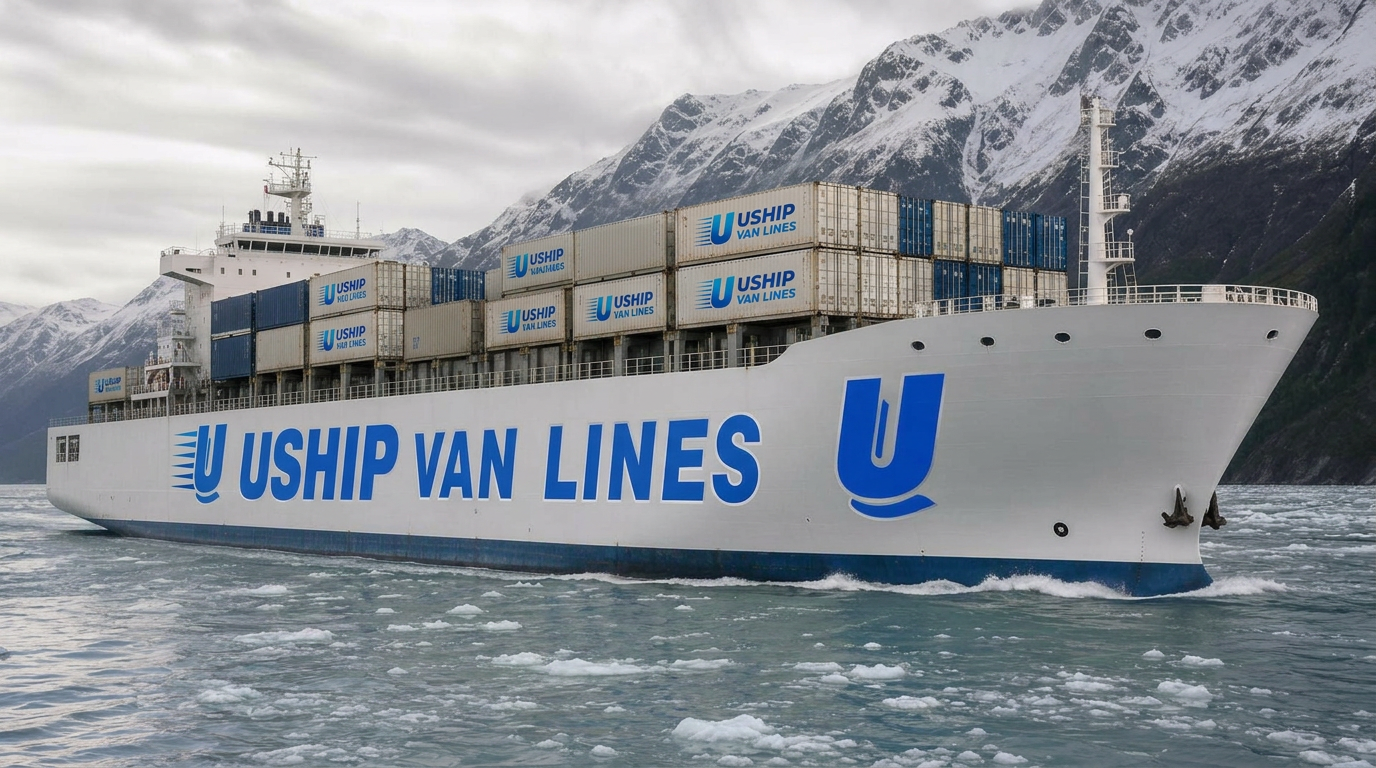
Moving from Alaska to Virginia means coordinating barge transport from the Port of Anchorage or Whittier to Tacoma, then overland shipment across nearly 3,000 miles to the East Coast. Whether you're relocating from Anchorage to Virginia Beach, Fairbanks to Richmond, or the Mat-Su Valley to Northern Virginia, this route requires specialized logistics and careful planning.
Best Alaska & Hawaii Movers, powered by UShip Van Lines, handles the entire multi-modal journey—barge scheduling, containerized loading, cross-country transport, and final delivery to your Virginia home. Ready to simplify your Alaska-to-Virginia move? Request your free, no-obligation quote today.
Route overview
Route Overview: Alaska to Virginia
The Alaska-to-Virginia corridor combines marine and ground transportation across two time zones and diverse climates. Your household goods travel by barge from Alaska ports (Anchorage, Whittier, or Fairbanks via truck to port) to the Port of Tacoma in Washington State, then transfer to long-haul trucks for the 2,800+ mile journey across the northern or central United States to Virginia.
Virginia destinations vary widely—from coastal cities like Virginia Beach and Norfolk to the dense Northern Virginia suburbs (Arlington, Alexandria, Fairfax) near Washington D.C., to western mountain communities like Roanoke and Blacksburg. Each destination requires different final-mile considerations, from high-rise apartment restrictions in urban areas to rural access roads in the Shenandoah Valley.
This route sees steady demand from military families (Joint Base Langley-Eustis, Naval Station Norfolk, Pentagon assignments), federal employees, retirees seeking milder climates, and professionals relocating to Virginia's growing tech corridor. Peak season runs May through September when barge schedules are most frequent and weather is most predictable.
How the moving process works
The Alaska-to-Virginia Moving Process
-
Initial Survey & Quote – Schedule a virtual or in-home assessment of your Alaska residence. We evaluate volume (typically 400–1,200 cubic feet for 2–3 bedrooms), special items (vehicles, boats, ATVs), and access conditions. You receive a detailed estimate within 24–48 hours.
-
Barge Reservation & Scheduling – We book your space on the next available Alaska Marine Lines, Totem Ocean Trailer Express (TOTE), or Lynden barge sailing from Anchorage/Whittier to Tacoma. Sailings run 1–2 times weekly in summer, less frequently October–April. Your moving date determines the earliest possible departure.
-
Packing & Containerized Loading – Professional crews pack and load your belongings into weatherproof containers or shared van space at your Alaska home. All items are inventoried, wrapped, and secured for the multi-leg journey. Vehicles (if shipping separately) are prepped and documented.
-
Barge Transit to Tacoma – Your shipment sails 1,400 nautical miles from Alaska to Washington State. Transit takes 4–7 days depending on weather, port calls, and vessel schedule. Containers remain sealed throughout the voyage.
-
Port Transfer & Cross-Country Haul – At Tacoma, containers transfer to long-haul trucks. The overland journey to Virginia covers 2,800+ miles via I-90/I-80 or southern routes, taking 5–7 days for direct transport or 7–14 days for consolidated shipments with multiple stops.
-
Final Delivery & Unloading – Your shipment arrives at your Virginia address. Crews unload, place furniture, and remove packing materials. You conduct a final inventory check and sign delivery paperwork.
-
Post-Move Support – We follow up within 48 hours to ensure satisfaction and address any concerns. Claims for damage or loss are handled through our carrier protection program.
Estimated moving costs
Cost Estimate: Alaska to Virginia
A typical 2–3 bedroom household move from Alaska to Virginia ranges from $7,500 to $14,500 depending on volume, services, and timing. Studio or 1-bedroom moves may cost $4,500–$7,000, while larger 4+ bedroom homes can exceed $18,000.
Key cost drivers include:
- Volume and weight – Priced per cubic foot or per pound; average 3-bedroom home = 700–1,000 cubic feet
- Barge sailing fees – Fixed marine transport from Alaska ports to Tacoma ($2,500–$4,500 baseline)
- Distance to final Virginia destination – Northern Virginia (closer to I-81/I-64 corridors) may cost less than remote southwestern Virginia locations
- Packing services – Full-service packing adds $800–$2,000; self-packing saves money but increases risk
- Seasonal demand – Summer moves (May–September) cost 15–25% more than off-season (October–April) due to barge frequency and demand
- Vehicle shipping – Adding a car/truck to the barge adds $1,500–$2,800 per vehicle
- Storage – If your Virginia home isn't ready, warehouse storage runs $150–$400/month
- Specialty items – Pianos, gun safes, hot tubs, or fragile antiques require custom crating
We provide itemized, binding estimates with no hidden fees. Final cost is confirmed in writing before any work begins. Insurance coverage (60¢/lb basic or full-value protection) is quoted separately.
Estimated transit times
Transit Time: Alaska to Virginia
Door-to-door transit from Alaska to Virginia typically takes 14–28 days, broken down as follows:
Barge leg (Alaska to Tacoma): 4–7 days sailing time, plus 1–3 days for port loading/unloading. Summer sailings are most frequent (1–2 per week); winter sailings may be spaced 7–10 days apart, adding wait time.
Cross-country truck leg (Tacoma to Virginia): 5–7 days for dedicated/expedited transport; 7–14 days for consolidated shipments that make multiple pickups or deliveries en route. Routes via I-90 (northern) or I-80 to I-76 (central) are fastest; southern routes via I-40 may add 1–2 days.
Buffer time: Plan for 2–4 additional days for port transfers, customs/agricultural inspections (Alaska exports require USDA clearance for certain items), weather delays, or scheduling adjustments.
Expedited service is available for military or employment hard deadlines, compressing total time to 12–16 days at premium cost. Off-season moves (October–March) may experience longer barge intervals, extending total time to 3–5 weeks. Always book 4–6 weeks ahead of your target delivery date to secure preferred barge sailings.
Regional logistics
Alaska-Specific Logistics for Your Virginia Move
Port Options: Most Alaska shipments depart from the Port of Anchorage (closest to the state's population center) or Whittier (alternate port for Southcentral Alaska). Fairbanks and interior moves require trucking to Anchorage first, adding 1–3 days and $400–$800. Southeast Alaska (Juneau, Ketchikan) uses separate barge services via Prince Rupert or direct Tacoma sailings.
Vehicle Shipping: If shipping a car or truck on the same barge, it's driven into a roll-on/roll-off (RoRo) vessel or loaded into a container. Vehicles must be clean (Alaska agriculture inspection), operable, and contain no personal items (insurance exclusion). Registration and title documents are required. Plan to be without your vehicle for 2–3 weeks.
Paperwork & Inspections: Alaska exports require USDA inspection for plants, firewood, soil, and certain food items (state quarantine rules). All wooden furniture, crates, and pallets are examined for invasive species. Virginia has no additional agricultural restrictions for mainland shipments. Military moves require orders and weight allowance documentation.
Container vs. Shared Van: Exclusive container service (20' or 40' steel container) offers maximum protection and no mixing with other shipments, but costs 30–50% more. Shared van space (your goods consolidated with other Virginia-bound shipments) is the standard, cost-effective option with proper padding and separation.
Last-Mile Delivery in Virginia: Urban Northern Virginia (Arlington, Alexandria) often has narrow streets, parking restrictions, and high-rise buildings requiring elevator reservations and COIs (certificates of insurance). Coastal areas (Virginia Beach, Norfolk) are more accessible. Rural western Virginia may require smaller trucks or shuttle services if your driveway is unpaved or steep. Always communicate access details during booking.
Storage Options: If your Virginia home isn't ready (closing delays, renovation), we offer climate-controlled storage in Tacoma or Virginia warehouses. First 30 days are often included in premium quotes; extended storage is billed monthly.
Seasonal considerations
Seasonal Considerations for Alaska-to-Virginia Moves
Summer (May–September): Peak moving season with the most frequent barge sailings (often 2x weekly), warmest weather, and longest daylight. Demand is highest, increasing costs 15–25%. Book 6–8 weeks in advance. Ideal for families moving before the school year or military PCS cycles.
Fall (October–November): Shoulder season with moderate pricing and weekly barge schedules. Weather becomes unpredictable in Alaska (early snow, freeze-up in interior regions) and mountain passes between Tacoma and Virginia may see early winter storms. Good value if you have flexible timing.
Winter (December–March): Off-peak season with the lowest costs (10–20% below summer) but least frequent barge sailings—sometimes only 1–2 per month. Severe weather in Alaska (ice fog, extreme cold in Fairbanks, coastal storms) and across the northern U.S. (I-90 closures, blizzards) can cause delays. Virginia destinations experience milder winters, but ice storms along I-81 and I-64 mountain sections can slow final delivery. Best for budget-conscious moves with very flexible timelines.
Spring (April–May): Transition season as barge frequency increases. "Breakup" season in Alaska (muddy roads, flooding in rural areas) can complicate pickup logistics. Pricing rises as summer approaches. Mountain passes in the Rockies and Cascades may still require chain laws. Book early to lock in pre-peak rates.
Why choose Best Alaska & Hawaii Movers
Why Choose Best Alaska & Hawaii Movers for Your Alaska-to-Virginia Move
-
Alaska-Specific Expertise – We specialize in the unique logistics of Alaska barge shipping, port transfers, and cross-country coordination. Our team understands Anchorage access, Fairbanks winter conditions, and Mat-Su Valley routes.
-
Nationwide Delivery Network – Powered by UShip Van Lines, we seamlessly connect Alaska marine transport to professional overland carriers serving every Virginia city—from Northern Virginia suburbs to Shenandoah Valley towns.
-
Transparent, Binding Quotes – No surprise fees or hidden charges. Your written estimate reflects the final cost, itemized by service. We explain every line item and adjust for your specific needs.
-
White-Glove Service Options – Full packing, furniture disassembly/reassembly, custom crating for valuables, vehicle prep, and unpacking services in Virginia. You choose your level of involvement.
-
Real-Time Tracking & Communication – Know where your shipment is from barge departure to Virginia doorstep. Dedicated move coordinators provide updates at every leg and respond quickly to questions.