
Moving from Alaska to Myrtle Beach, SC
Moving from Alaska to Myrtle Beach, SC combines the logistical complexity of overseas-style barge transport with a cross-country haul to South Carolina's Grand Strand. Whether you're shipping household goods from Anchorage, Fairbanks, or a Mat-Su Valley community, your belongings will travel by containerized barge from Alaska to the Port of Tacoma, then overland more than 3,000 miles to the Atlantic coast.
Best Alaska & Hawaii Movers, powered by UShip Van Lines, specializes in these multi-modal routes. We coordinate barge schedules, port handling, long-haul trucking, and last-mile delivery so you don't juggle three vendors. Request a free, no-obligation quote today and see how smooth an Alaska-to-South-Carolina move can be.
Route overview
How the Alaska to Myrtle Beach, SC Route Works
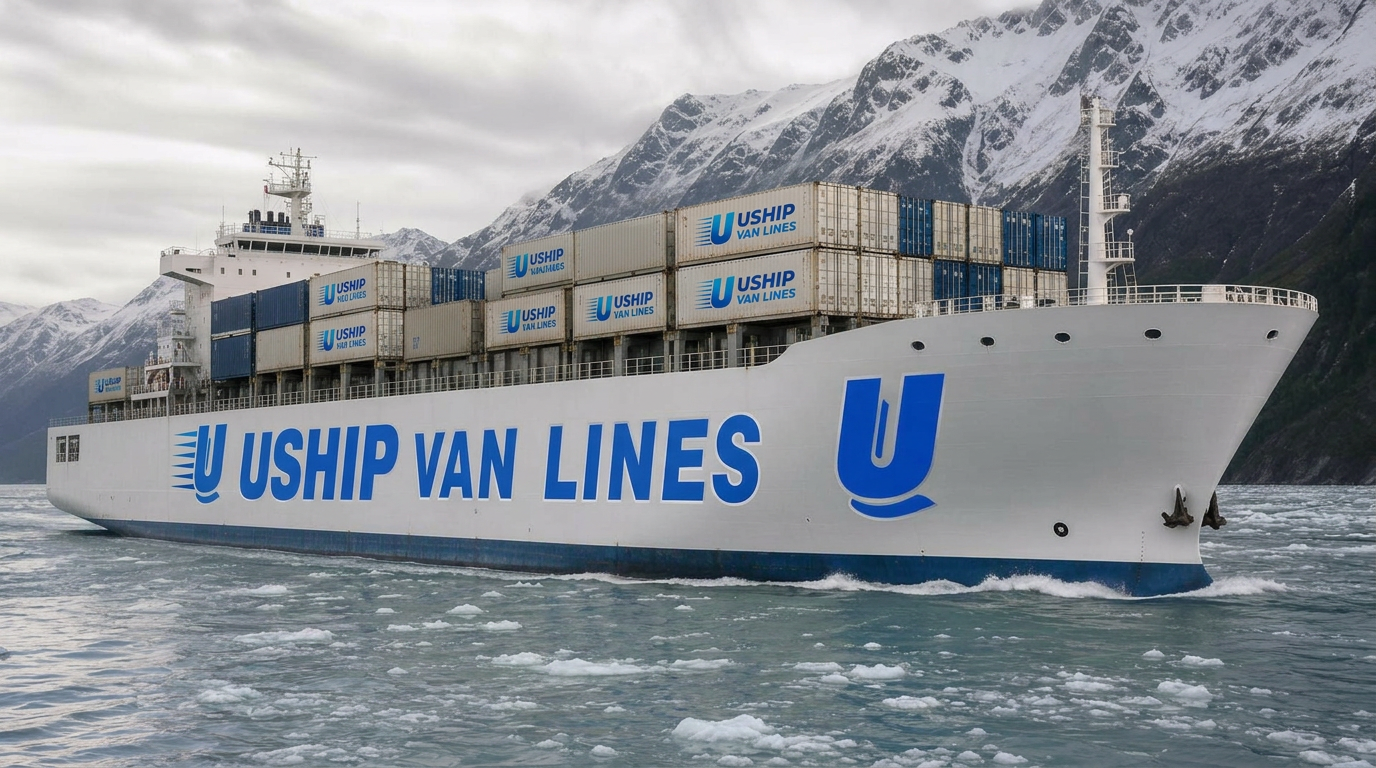
This move begins with a domestic "international-style" leg: your furniture, boxes, and vehicles are loaded into a 20-foot or 40-foot ocean container in Alaska—typically at the Port of Anchorage or nearby consolidation warehouses. That container rides a weekly or bi-weekly barge south through the Inside Passage to Tacoma, Washington, a voyage that takes 4–7 days depending on weather and the vessel's port-call schedule.
Once your container clears U.S. Customs (even domestic Alaska cargo is inspected) at Tacoma, a long-haul carrier picks it up for the 3,100-mile overland journey. The truck crosses the Cascades into Idaho, cuts southeast through Wyoming or Montana, drops into the Great Plains, and finally rolls through the Midwest and Mid-Atlantic into the Carolinas. Myrtle Beach sits along U.S. 17 and U.S. 501, making final delivery straightforward for experienced drivers.
Total door-to-door transit usually spans 14–21 days. Barge frequency, port dwell time, and over-the-road transit each contribute roughly equal thirds to that window. Weather delays—especially in fall and winter—can stretch the timeline, so flexible move dates help.
How the moving process works
Step-by-Step: Your Alaska to Myrtle Beach, SC Move
-
Request a quote and book early. Barge space fills weeks in advance during summer peak season (May–September). Provide a detailed inventory—furniture dimensions, appliance counts, specialty items—so the estimator assigns the right container size and quotes accurately.
-
Schedule your Alaska packing and pickup. Professional packers will wrap furniture, box fragile items, and label everything. If you're in Anchorage or Wasilla, pickup is usually same-day. Fairbanks, Kenai, and bush communities may require a shuttle truck to Anchorage first, adding 1–2 days and modest extra cost.
-
Container loading and port delivery. Your goods are loaded into a steel ocean container at a secure warehouse, the container is sealed, and a truck delivers it to the Port of Anchorage. The shipper files a vessel booking and provides you a bill of lading number for tracking.
-
Barge transit to Tacoma. The container sails south, typically aboard a Totem Ocean Trailer Express (TOTE) or similar vessel. GPS tracking is limited at sea, but you'll receive departure and estimated-arrival notifications.
-
Port clearance and Customs inspection. In Tacoma, U.S. Customs and Border Protection inspects a percentage of containers. Have your inventory list and any required declarations ready. Most clears in 24–48 hours.
-
Cross-country trucking. A contracted long-haul carrier picks up your container and drives it to Myrtle Beach. Updates come via phone or app; expect 5–7 days of over-the-road time under normal weather.
-
Delivery and unloading in Myrtle Beach. The driver will call 24–48 hours out to confirm your delivery window. Movers unload, place furniture in rooms, and remove packing debris. Inspect everything before signing the delivery receipt and note any damage immediately for insurance purposes.
Estimated moving costs
What Does Moving from Alaska to Myrtle Beach, SC Cost?
A typical 2-bedroom apartment or small house (roughly 5,000–7,000 pounds) runs $6,800–$10,500 door-to-door. A 3-bedroom home (8,000–12,000 pounds) generally falls between $9,500–$14,000. These estimates include packing materials, labor, barge freight, Tacoma port fees, long-haul trucking, and standard liability coverage.
Key cost drivers:
- Container size. A 20-foot container holds about 1–2 bedrooms; a 40-foot container accommodates 3–4 bedrooms. Sharing container space (consolidated shipping) can save money if your schedule is flexible.
- Alaska pickup location. Anchorage and Mat-Su Valley are cheapest. Fairbanks adds $400–$800 for the shuttle. Bush and remote communities may add $1,000+ due to barge-to-barge or air-freight legs.
- Vehicle shipping. Cars and trucks can ride in the same container (if space permits) or ship separately via roll-on/roll-off barge. Expect $1,200–$2,000 per vehicle Alaska-to-Tacoma, then $800–$1,200 Tacoma-to-Myrtle Beach.
- Season. Summer peak (June–August) carries premium rates. Off-peak fall and spring bookings often save 10–15 percent.
- Packing services. Full professional packing adds $800–$1,800; fragile-only or partial packing is a middle-ground option.
Best Alaska & Hawaii Movers never publishes "guaranteed" prices online—every move is custom-quoted based on your exact inventory, dates, and services. Request a detailed estimate to see transparent line-item pricing.
Estimated transit times
How Long Does Alaska to Myrtle Beach, SC Take?
Plan for 14–21 days door-to-door under normal conditions. Here's the breakdown:
- Packing and container loading (Alaska): 1–2 days, plus up to 2 more if you're outside Anchorage and need a shuttle truck.
- Barge sailing (Alaska to Tacoma): 4–7 days, depending on the vessel's port-call schedule and weather in the Gulf of Alaska.
- Port dwell and Customs (Tacoma): 1–3 days. Delays are rare but can happen if Customs flags your container for physical inspection.
- Cross-country trucking (Tacoma to Myrtle Beach): 5–7 days. Drivers must comply with federal hours-of-service rules, so the 3,100-mile haul takes nearly a week even without delays.
- Final delivery window: Most carriers offer a 1–3 day delivery window. You'll receive 24-hour notice once the truck is in South Carolina.
Weather and schedule buffers: Winter storms in Alaska, mountain passes in the Rockies, and ice events in the Midwest can each add 1–3 days. If you have a firm closing date or lease start in Myrtle Beach, book at least three weeks ahead and communicate deadline constraints upfront.
Regional logistics
Alaska-Specific Logistics You Need to Know
Port of Anchorage and container consolidation: Most Alaska shipments originate at or near the Port of Anchorage, the state's primary deep-water terminal. If you live in Fairbanks, Mat-Su, Kenai, or farther afield, your goods are trucked to an Anchorage-area warehouse, loaded into a container, then delivered to the port. Bush communities (Bethel, Nome, Kodiak, etc.) often require an initial barge or air leg to Anchorage first, adding cost and time.
U.S. Customs and agricultural inspection: Even though Alaska is a U.S. state, cargo moving through Tacoma undergoes the same inspections as international freight. Customs checks for prohibited items; the USDA inspects for invasive species, untreated wood, and soil. Never pack fresh produce, plants with soil, firewood, or untreated wooden crates. Violations can result in fines, disposal, or quarantine delays.
Vehicle shipping in the same container: A standard sedan or small SUV can share a 40-foot container with household goods, saving you the cost of a separate roll-on/roll-off booking. The car must be clean (no mud, no seeds), have less than a quarter-tank of fuel, and be properly blocked and strapped. Motorcycles, ATVs, and boats are also common co-loads on Alaska moves.
Delivery considerations in Myrtle Beach: Myrtle Beach's coastal roads are truck-accessible year-round, but some beach-side neighborhoods have narrow streets, low-hanging live oaks, or HOA restrictions on large commercial vehicles. If you're moving into a condo or gated community, confirm delivery-window policies and any required certificates of insurance ahead of time.
Storage options: If your Myrtle Beach home isn't ready, your container can be held in Tacoma or at a South Carolina warehouse. Monthly storage fees run $150–$300 depending on the facility and how long you need. Communicate storage needs when booking so the mover can arrange bonded warehouse space.
Seasonal considerations
Best Times to Move from Alaska to Myrtle Beach, SC
Spring (April–May): Barge schedules ramp up as ice clears from Alaska ports. Rates are moderate, and you'll dodge both winter weather and summer peak. Cross-country highways are generally clear, though spring snowstorms can still hit the Rockies. Book 4–5 weeks out.
Summer (June–August): Peak season for Alaska moves. Barge space is tight, and rates climb 15–25 percent. Families move before the school year, so container slots fill fast. Weather is optimal across the entire route—no ice, no blizzards—but you'll pay a premium and need 6–8 weeks' lead time.
Fall (September–October): One of the best windows. Rates drop post-Labor Day, barge frequency remains high, and highways are clear. Early October is ideal; by November, Alaska ports face shorter daylight and occasional freezes. Book 3–4 weeks ahead.
Winter (November–March): Off-peak rates offer the deepest discounts—sometimes 20 percent below summer—but weather adds risk and delays. Barges run less frequently (often every 10–14 days instead of weekly), and winter storms in Alaska, the Rockies, and the Midwest can each push delivery back. Only move in winter if your timeline is highly flexible and you want maximum savings.
Why choose Best Alaska & Hawaii Movers
Why Best Alaska & Hawaii Movers for Your Alaska-to-Myrtle-Beach Move?
- Single-source accountability. We own the entire process—Alaska packing, barge booking, port coordination, cross-country trucking, and Myrtle Beach delivery—so you have one point of contact, one timeline, and one invoice.
- Alaska expertise, nationwide reach. Powered by UShip Van Lines, we combine deep Alaska-barge knowledge with a nationwide carrier network that handles the 3,100-mile overland leg efficiently and safely.
- Transparent, itemized quotes. No hidden fuel surcharges, no surprise port fees. You'll see exactly what you're paying for—packing materials, labor hours, freight, insurance—before you commit.
- Flexible scheduling and container-sharing. Tight budget? We can consolidate your shipment with another customer's to share container costs. Firm deadline? We'll book dedicated space and expedite every leg.
- Real-time tracking and proactive communication. You'll receive barge departure/arrival alerts, trucking GPS updates, and delivery-window confirmations via text, email, or phone—whichever you prefer.