
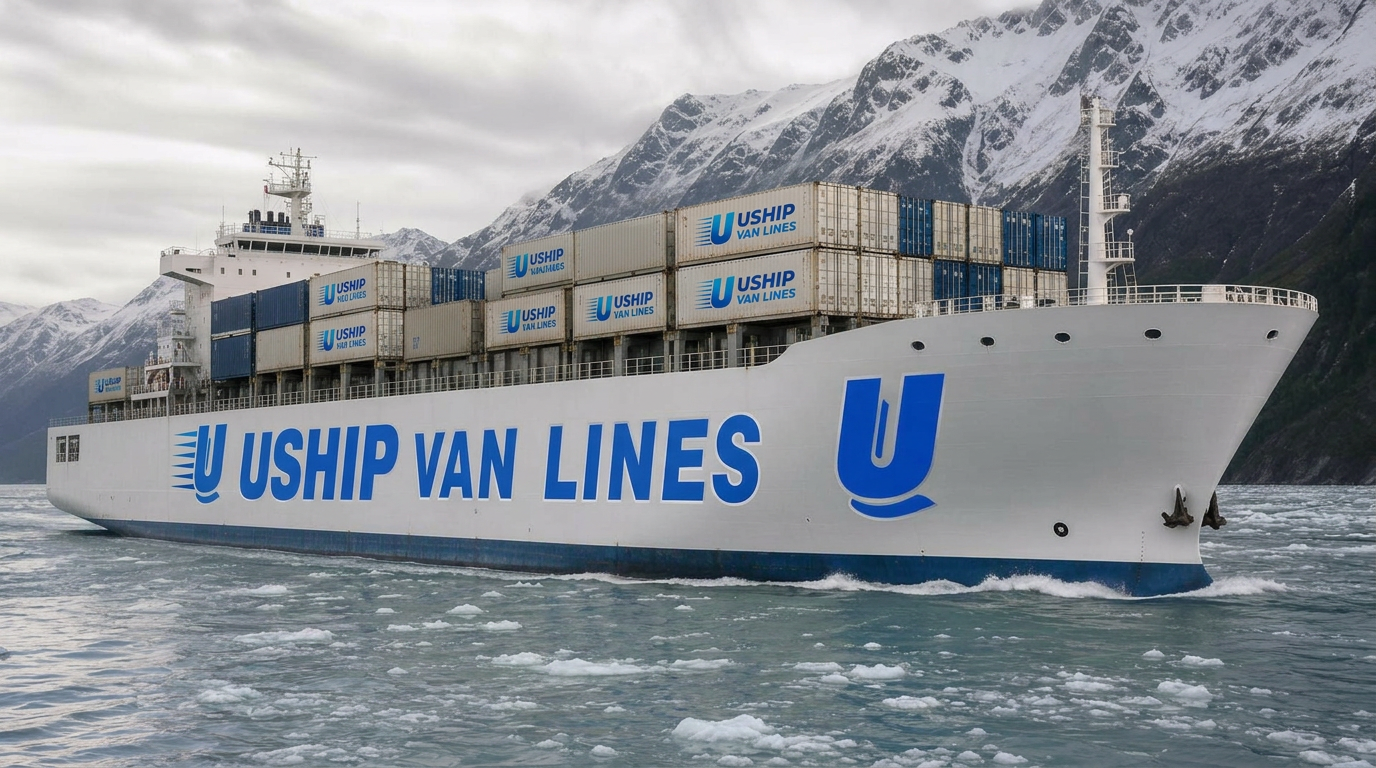
Moving from Alaska to Summerville, SC
Moving from Alaska to Summerville, South Carolina, means coordinating a complex multimodal journey spanning over 3,800 miles. Your household goods will travel by truck to an Alaska port (typically Anchorage), cross the Pacific by barge to the Port of Tacoma, then move overland through the continental U.S. to the charming Lowcountry town of Summerville.
Best Alaska & Hawaii Movers, powered by UShip Van Lines, specializes in these challenging Alaska-to-Lower-48 relocations. We handle barge bookings, customs documentation, and seamless coordination between ocean and ground carriers. Request your free quote today to get started with accurate pricing tailored to your inventory and timeline.
Route overview
Understanding the Alaska to Summerville Route
This transcontinental move combines Alaska Marine Highway logistics with cross-country overland trucking. Most shipments originate in Anchorage, Fairbanks, the Mat-Su Valley, or Kenai Peninsula communities. Your belongings travel by local truck to the Port of Anchorage or Whittier, then sail approximately 1,450 nautical miles to Tacoma, Washington—a voyage typically taking 5–7 days depending on weather and barge schedule.
From Tacoma, a long-haul truck carries your goods roughly 2,900 miles southeast through Idaho, Wyoming or Montana, across the Great Plains, and into the Southeast. The final stretch brings your shipment into South Carolina's Lowcountry, where Summerville sits just northwest of Charleston. This picturesque town offers historic charm, azalea-lined streets, and proximity to beaches—a dramatic climate shift from Alaska's subarctic conditions.
Total door-to-door transit averages 3–5 weeks, with summer months offering the most predictable schedules. Winter barge sailings face delays from storms in the Gulf of Alaska, while late spring and early fall provide the best balance of reliable service and manageable temperatures at both ends of the journey.
How the moving process works
Step-by-Step Moving Process: Alaska to Summerville
-
Initial Survey and Quote (Week 1): Contact Best Alaska & Hawaii Movers for a detailed in-home or virtual survey of your household goods. We assess volume, special items (firearms, artwork, outdoor gear), and vehicle shipping needs to provide an accurate estimate covering barge fees, overland transport, and insurance.
-
Booking and Scheduling (Weeks 2–3): Once you accept the quote, we reserve space on the next available barge sailing and coordinate pickup dates. Summer sailings (May–September) book quickly; winter moves require flexibility for weather delays. We file all required customs paperwork for Alaska exports.
-
Packing and Local Pickup (Week 4): Professional movers arrive at your Alaska residence to pack, wrap, and load your belongings into a containerized trailer or lift van. Items are inventoried, labeled, and secured for the barge journey. If shipping a vehicle separately, it's delivered to the port at this stage.
-
Port Staging and Barge Loading (Week 4–5): Your shipment moves to the Port of Anchorage or Whittier staging area, where it's loaded onto a commercial barge. Sailings typically occur weekly in summer, biweekly in winter. Weather holds can add 3–7 days during storm season.
-
Ocean Transit to Tacoma (Days 5–10 of transit): The barge crosses the Gulf of Alaska and navigates the Inside Passage to Puget Sound. This leg accounts for the majority of your transit time variability—calm seas mean 5 days, rough weather can extend to 10 days.
-
Port Transfer and Overland Loading (Days 11–14): At the Port of Tacoma, your shipment clears customs (if applicable), transfers from barge to long-haul truck, and begins the cross-country drive. Consolidated loads may include one intermediate transfer at a hub in the Midwest.
-
Delivery in Summerville (Days 21–35): The truck arrives at your new South Carolina address within the scheduled delivery window. Movers unload, place furniture in rooms, and verify inventory. You inspect for damage and sign the bill of lading. Vehicle shipments typically arrive within 1–3 days of household goods.
Estimated moving costs
Cost Expectations for Alaska to Summerville Moves
A typical 2–3 bedroom household moving from Alaska to Summerville costs $6,800–$12,500 for full-service packing, barge transport, and overland delivery. Studio or 1-bedroom apartments generally range $4,200–$6,500, while larger 4+ bedroom homes can exceed $15,000.
Key cost drivers include:
- Volume and weight: Barge freight is priced by cubic feet or weight; the average 3-bedroom home ships 800–1,200 cubic feet
- Packing services: Full professional packing adds $800–$1,800; self-packing saves money but increases risk
- Seasonality: Peak summer moves (June–August) cost 10–20% more than shoulder seasons due to demand
- Vehicle shipping: Adding a car or truck runs $1,400–$2,200 extra via roll-on/roll-off barge service
- Insurance: Full-value protection costs 1–2% of declared value; basic released-value coverage is included but offers minimal protection
- Specialty items: Pianos, gun safes, ATVs, and large freezers require custom crating and handling fees
Remote Alaska locations (Fairbanks, Kenai, Homer) add $500–$1,200 for longer pickup drives. Summerville delivery is straightforward, though narrow historic district streets may require shuttle fees if a full semi can't access your address. Always request a detailed written estimate before committing—verbal quotes are not binding, and hidden fees undermine budgets.
Estimated transit times
Realistic Transit Times: Alaska to Summerville
Door-to-door transit from Alaska to Summerville typically requires 21–35 days, broken down as follows:
- Local pickup to port staging: 1–3 days (longer from remote areas like Fairbanks or Kenai)
- Port staging and barge loading: 2–7 days (weather-dependent; winter holds can extend this)
- Barge sailing to Tacoma: 5–10 days (Gulf of Alaska conditions are the primary variable)
- Port offload and truck loading: 2–3 days (customs clearance for certain items adds time)
- Overland trucking to Summerville: 7–10 days (2,900 miles at regulated driving speeds)
- Final delivery window: 2–3 day spread (you'll receive 48-hour advance notice)
Summer moves (May–September) cluster toward the faster end of this range due to calmer seas and more frequent barge sailings. Winter relocations (November–March) often require 28–35 days or longer, as storms delay departures and crossings. Spring and fall offer moderate timelines with fewer weather disruptions.
If you have firm deadlines—military orders, job start dates, school enrollment—communicate these upfront. We can prioritize express barge bookings (when available) or arrange temporary storage in Tacoma if the overland leg needs to wait for your Summerville residence to be ready. Vehicle shipments generally parallel household goods timelines but may arrive 1–3 days earlier or later depending on carrier routing.
Regional logistics
Alaska-Specific Moving Logistics
Port Options and Access: Most Alaska shipments route through the Port of Anchorage (for Mat-Su, Wasilla, Palmer) or the Port of Whittier (for Kenai Peninsula, Seward, Homer). Fairbanks and Interior moves truck to Anchorage—a 6–8 hour drive that adds pickup costs. Whittier requires transit through the Anton Anderson Memorial Tunnel, which operates on a timed schedule; movers coordinate this carefully to avoid delays.
Barge vs. Air Freight: Barge is the standard for household moves due to cost-effectiveness. Air freight exists but costs 3–5× more and is limited to high-value, low-volume shipments (documents, jewelry, essential clothing). We recommend flying irreplaceable items and mailing important papers separately rather than paying air cargo rates.
Vehicle Shipping Logistics: Cars and trucks ship via roll-on/roll-off (RoRo) barge service, typically on the same sailing as household goods or within a few days. Vehicles must be operable, under ¼ tank of fuel (maritime regulation), and empty of personal belongings. Oversized vehicles (lifted trucks, RVs) incur surcharges. You can drive your vehicle to the port or pay for pickup service. Shipping a second vehicle is cost-effective—often only $900–$1,200 additional rather than $1,400+ for the first.
Customs and Documentation: Household goods moving from Alaska to the Lower 48 do not cross international borders, so formal customs isn't required. However, USDA restrictions apply to certain food items, plants, and some outdoor gear that may harbor invasive species. Firearms must be declared and properly packed; Alaska residents moving to South Carolina should verify SC's gun laws differ significantly. We handle all required paperwork and advise on restricted items during your survey.
Last-Mile Delivery in Summerville: Summerville's historic downtown features narrow streets and mature tree canopies that can restrict large truck access. If your new home is in a historic neighborhood (Old Town, Summerville Historic District), a shuttle truck may be required to transfer goods from the full semi to a smaller vehicle—this typically adds $200–$400. Newer subdivisions (Nexton, Cane Bay Plantation) have modern infrastructure that accommodates full-size moving trucks without issue.
Storage Options: If your Summerville residence isn't ready when your shipment arrives, we offer short-term storage at climate-controlled facilities near Charleston. Storage costs $150–$300 per month depending on volume. Coordinate delivery timing carefully to avoid these fees, but know the option exists for flexibility.
Seasonal considerations
Seasonal Factors for Alaska to Summerville Moves
Summer (May–September): Peak moving season with weekly barge sailings and the most predictable weather. The Gulf of Alaska is calmest June–August, minimizing delays. However, demand drives prices 10–20% higher, and booking requires 4–6 weeks advance notice. South Carolina summers are hot and humid—plan for dehumidifiers and climate-controlled storage if delivery dates slip.
Fall (October–November): Shoulder season offers moderate pricing and still-reliable barge schedules. Early October is ideal before storm frequency increases. Fall in Summerville is pleasant (70s–80s°F), making move-in comfortable. Book 3–4 weeks ahead as snowbirds and military families also relocate during this window.
Winter (December–March): Off-peak season with the lowest rates but highest risk of delays. Gulf of Alaska storms can postpone barge departures by a week or more. Winter moves work best if you have flexible timelines and aren't under contract deadlines. Summerville winters are mild (40s–60s°F), so delivery conditions remain favorable even if Alaska pickup faces snow and ice.
Spring (April–May): Transition period as barge frequency ramps up. Early April can still see weather delays; late May is nearly summer-reliable. Pricing sits between winter lows and summer peaks. Summerville springs are gorgeous—azaleas bloom, humidity is manageable—making this an excellent arrival season if you can time it.
Always ask your coordinator about the specific sailing schedule for your target month. Barge operators publish schedules 6–8 weeks out, but storms, mechanical issues, or port labor actions can disrupt plans. Build a 1–2 week buffer into your moving timeline, especially for winter relocations.
Why choose Best Alaska & Hawaii Movers
Why Choose Best Alaska & Hawaii Movers for Your Alaska to Summerville Relocation
-
Alaska Barge Expertise: We coordinate multiple Alaska sailings weekly and maintain direct relationships with barge operators at Anchorage and Whittier ports, ensuring priority booking and real-time tracking throughout the ocean leg of your journey.
-
Single-Source Accountability: Unlike brokers who hand off your shipment to unknown carriers, we manage the entire move from Alaska pickup through Summerville delivery, so you have one point of contact and clear responsibility at every stage.
-
Transparent Pricing: Our written estimates detail every cost component—barge fees, fuel surcharges, packing materials, insurance options—with no surprise charges at delivery. We explain what drives pricing and where you can save money through smart choices.
-
Customized Timelines: We understand Alaska moves require flexibility around weather and barge schedules. Your coordinator builds realistic timelines with buffer days, keeps you updated on any delays, and proactively adjusts plans when storms or port issues arise.
-
Proven Lower 48 Network: Powered by UShip Van Lines, we leverage a nationwide carrier network for the overland leg, selecting vetted trucking partners with strong safety records and on-time delivery performance across the 2,900-mile route to South Carolina.
-
Comprehensive Insurance: We offer multiple coverage tiers, including full-value protection that reimburses repair or replacement costs for damaged items—critical for a 4,000-mile journey involving ocean and road transport. We walk you through options so you choose the right protection level for your belongings.