
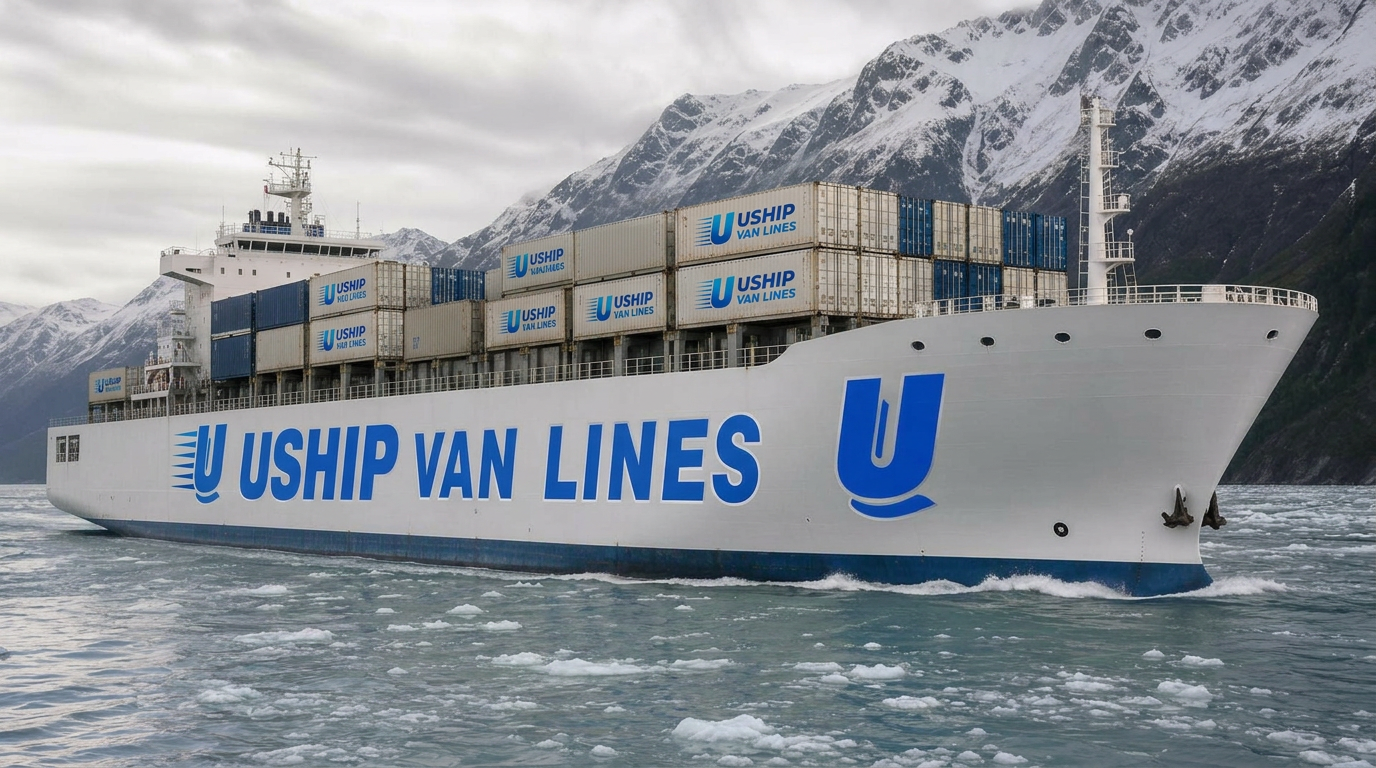
Moving from Alaska to Bristol, CT
Moving from Alaska to Bristol, Connecticut, requires specialized coordination that standard moving companies can't provide. This route combines barge freight from Alaska ports to the Lower 48 with overland transportation to central Connecticut—a multi-modal journey spanning roughly 3,500 miles that demands experienced logistics management and careful planning.
Best Alaska & Hawaii Movers, powered by UShip Van Lines, manages the entire process from pickup anywhere in Alaska to final delivery in Bristol. Whether you're relocating from Anchorage, Fairbanks, the Mat-Su Valley, or a remote Alaska community, we coordinate barge schedules, containerization, mainland trucking, and last-mile delivery so you experience one seamless move. Request your free quote today to get started.
Route overview
Alaska to Bristol, CT: Understanding This Unique Moving Lane
The Alaska-to-Bristol route serves families, military personnel, retirees, and professionals relocating from the Last Frontier to Connecticut's central corridor. Bristol sits in Hartford County, roughly equidistant from Hartford and Waterbury, offering small-city amenities with convenient access to New York and Boston metro areas. Most Alaska-to-Connecticut movers are leaving for career opportunities, family reasons, or cost-of-living adjustments, trading Alaska's frontier lifestyle for New England's established infrastructure.
This route requires barge transport from Alaska ports (typically Anchorage via the Port of Alaska, though Whittier, Seward, and Kodiak are also used) to Tacoma, Washington, followed by transcontinental trucking across nearly 3,000 additional miles to Bristol. Unlike straightforward interstate moves, Alaska relocations involve containerization, marine shipping schedules, customs-like documentation (despite being domestic), and weather-dependent port operations.
Successful Alaska-to-Connecticut moves depend on understanding barge sailing schedules (typically weekly from major ports), container loading protocols, seasonal weather windows, and coordinating ground transportation timing. Bristol's relatively compact residential areas mean careful planning for large truck access in historic neighborhoods, though most modern subdivisions accommodate standard moving equipment without difficulty.
How the moving process works
How Your Alaska to Bristol, CT Move Works: Step-by-Step
-
Initial survey and booking (4–6 weeks before desired move date): We conduct a detailed inventory via video call or in-person assessment in Alaska, evaluate your household goods volume, discuss any special items (vehicles, boats, ATVs common in Alaska households), confirm your Bristol delivery address and any access restrictions, and lock in your barge sailing date. Early booking is critical—summer sailings fill quickly.
-
Pre-move preparation and packing (1–2 weeks before pickup): Professional packing services are strongly recommended for Alaska moves due to the complexity and distance. Our team uses marine-grade materials, properly prepares items for humidity changes and temperature fluctuations, creates detailed inventories for customs documentation, and ensures proper labeling for containerized shipping. You'll receive preparation guidelines for non-allowable items (fuels, propane, ammunition, perishables).
-
Alaska pickup and container loading: Our Alaska crew arrives at your home in Anchorage, Fairbanks, Mat-Su, or other location with appropriate equipment. We load your belongings into a dedicated freight container (20-foot or 40-foot depending on volume), secure everything for marine transport vibration and movement, complete Bill of Lading documentation, and transport the sealed container to the departure port (typically Port of Alaska in Anchorage).
-
Barge transport to Tacoma (5–7 days sailing time): Your container boards a weekly Alaska Marine Lines or TOTE Maritime barge service to Tacoma, Washington. This ocean leg typically takes 5–7 days depending on weather and exact route. Containers remain sealed throughout the voyage. We track your shipment and communicate any delays due to weather or port congestion.
-
Tacoma port processing and container transfer (1–3 days): Upon arrival at the Port of Tacoma, your container clears port processing, undergoes any required inspections, and transfers to our mainland trucking partner. This port dwell time typically runs 1–3 business days. We handle all documentation and coordinate the handoff so you don't manage multiple vendors.
-
Transcontinental trucking to Connecticut (5–7 days): Your container loads onto a truck chassis for the cross-country journey—roughly 2,900 miles via I-90 and I-84 corridors through Washington, Idaho, Montana, South Dakota, Wisconsin, Illinois, Indiana, Ohio, Pennsylvania, New York, and into Connecticut. Transit time averages 5–7 days depending on weather and routing.
-
Bristol delivery and unloading: Our delivery crew contacts you 24–48 hours before arrival to confirm your delivery window. We navigate to your Bristol address (coordinating any narrow street or parking concerns in advance), unload and place items room-by-room per your direction, reassemble any furniture we disassembled in Alaska, remove packing debris, and have you sign off on delivery completion. You inspect for any transit damage and we document any claims immediately.
Estimated moving costs
What an Alaska to Bristol, CT Move Costs
A typical 2-bedroom household (approximately 5,000–7,000 lbs) moving from Alaska to Bristol, CT, generally ranges between $6,800–$11,500 for full-service door-to-door moving. A larger 3-bedroom home (8,000–12,000 lbs) typically costs $10,500–$16,500. These estimates include Alaska pickup, professional packing materials, containerization, barge freight, mainland trucking, and Bristol delivery with basic liability coverage.
Several factors significantly impact your final cost. Volume and weight are primary—every additional 1,000 lbs adds roughly $800–$1,200 to your total. Origin location within Alaska matters considerably: Anchorage and Mat-Su Valley pickups cost less than Fairbanks (which may require positioning trucks) or remote communities requiring barge/air combination logistics. Seasonal timing affects pricing, with May–September being peak season (15–25% premium) while October–April offers better rates but narrower weather windows.
Packing services add $800–$2,200 depending on household size and fragility of items—but are worth every dollar for Alaska moves given the journey complexity. Vehicle shipping is a common add-on for Alaska relocations; shipping one vehicle in the same container as household goods adds roughly $1,800–$3,200 depending on vehicle size. Storage at either end costs $150–$300 per month if timing doesn't align perfectly. Full-value insurance beyond basic carrier liability adds 1–2% of declared value but provides real protection for a journey of this magnitude.
We provide transparent, written estimates with no hidden fees. Request your personalized quote today—pricing depends on your specific inventory, exact addresses, and timing, so we'll give you accurate numbers, not broad guesses.
Estimated transit times
How Long Does Alaska to Bristol, CT Moving Take?
Door-to-door transit time from Alaska to Bristol typically ranges 14–21 days from pickup to delivery, though this varies by season, exact origin, and barge schedule alignment. Understanding the timeline breakdown helps you plan temporary housing, travel arrangements, and work start dates realistically.
Alaska pickup to port delivery usually takes 1–2 days for Anchorage, Mat-Su, and Kenai Peninsula origins, since these are relatively close to the Port of Alaska. Fairbanks and Interior Alaska pickups may require 2–3 days of ground transport to reach Anchorage or Whittier ports. Port dwell time before sailing runs 1–4 days depending on when your container arrives relative to the next scheduled barge departure—weekly sailings mean careful coordination to minimize wait time.
Barge sailing from Alaska to Tacoma takes 5–7 days under normal conditions. Winter storms or mechanical issues occasionally add 1–2 days, though carriers maintain reliable schedules year-round. Tacoma port processing after arrival requires 1–3 business days for container offloading, customs-style documentation clearance, and transfer to truck chassis.
Cross-country trucking from Tacoma to Bristol averages 5–7 days for the 2,900-mile journey. Trucking companies typically make steady progress via I-90 and I-84, with drivers rotating to maintain legal hours-of-service compliance. Winter weather through mountain passes (Snoqualmie, Montana Rockies) or Midwest blizzards can add 1–3 days during December–March.
Total realistic timeline: If everything aligns perfectly—you're ready when the truck arrives, you catch a sailing immediately, weather cooperates, and trucking flows smoothly—14 days is achievable. More typically, count on 16–19 days. Building in a 21-day buffer protects you from the inevitable weather delay or port congestion. We provide tracking updates at each transition point so you're never wondering where your belongings are.
Regional logistics
Alaska-Specific Moving Logistics You Need to Know
Port options and access: Most Alaska-to-Lower-48 moves utilize the Port of Alaska in Anchorage due to frequency of barge service and proximity to the state's population center. Whittier serves as an alternative with rail connection advantages for certain Interior Alaska origins. Seward and Kodiak serve their regional areas. Your origin address determines optimal port selection—we handle this routing decision based on cost-efficiency and schedule alignment.
Container types and shared shipping: We use 20-foot or 40-foot weatherproof steel containers depending on your household size. Smaller moves (studio to small 2-bedroom) may qualify for shared container service where your goods share space with another non-competing shipment, reducing costs by 20–30%. Larger homes typically require dedicated containers. All containers are sealed after loading and remain sealed until final destination, ensuring security throughout the journey.
Vehicle shipping integration: Alaska households often own multiple vehicles, ATVs, boats, or RVs. We can ship one vehicle inside your household goods container (maximizing space efficiency) or arrange separate roll-on/roll-off vehicle shipping via the same barge. Vehicle-in-container works well for standard cars and small SUVs; larger trucks or vehicles with fluid concerns ship separately. All fluids must be drained to quarter-tank or less per maritime regulations.
Documentation requirements: While Alaska-to-Connecticut is a domestic move, the marine component requires detailed paperwork similar to international shipments. We prepare your Bill of Lading, container packing lists, and any required port authority documents. You'll need to document high-value items (jewelry, electronics, art) for insurance purposes. Active-duty military moves require additional DD forms—we're experienced with military relocation protocols.
Last-mile delivery considerations in Bristol: Bristol's mix of historic neighborhoods (Federal Hill, Forestville) with narrow streets and modern subdivisions requires delivery planning. We survey your destination address in advance, identify any truck access limitations (low-hanging wires, tight turns, permit requirements), and coordinate appropriately sized delivery vehicles. Most Bristol locations accommodate standard moving trucks without difficulty, but advance planning prevents day-of-delivery complications.
Storage options: If your Bristol residence isn't ready when your shipment arrives, or if you're traveling during transit and need delivery delayed, we offer secure warehousing in Connecticut. Climate-controlled storage protects your belongings from Connecticut's humidity swings. Storage costs $150–$300 monthly depending on volume. We can also provide storage at the Alaska origin or Tacoma transfer point if needed to align schedules.
Seasonal considerations
Best Times to Move from Alaska to Bristol, CT
Summer (June–August): Peak moving season for Alaska relocations. Barge schedules run most frequently, weather is most predictable for both ocean sailing and Alaska road conditions, and you avoid snow complications in both Alaska and Connecticut. Demand drives prices up 15–25%, and booking 6–8 weeks ahead is essential to secure your preferred dates. Bristol's humid Connecticut summers mean your belongings transition from Alaska's dry climate to moisture—proper packing prevents mildew during transit and storage.
Fall (September–November): Excellent moving window with lower demand and better pricing (10–15% below peak). September and early October offer stable weather in Alaska before heavy snow, reliable barge schedules, and pleasant conditions in Connecticut. Late November introduces winter weather risks in both locations. This is ideal timing for retirees or anyone with scheduling flexibility who wants to save money without sacrificing reliability.
Winter (December–February): Off-peak season with the best pricing (20–30% below summer rates) but significant weather considerations. Barge schedules continue year-round, but Alaska winter storms occasionally delay port operations or road access. Cross-country trucking faces potential delays through mountain passes and Midwest weather. If you're winter-moving, budget an extra 3–5 days in your timeline and ensure your Bristol residence is ready (heating, snow-cleared driveway) for delivery. Ideal for budget-conscious movers who can tolerate uncertainty.
Spring (March–May): Shoulder season with moderate pricing and improving weather. Barge reliability returns to summer levels by late April. Alaska road conditions improve significantly as snow melts, though breakup season (late April–May) can create muddy, difficult access in rural areas. Connecticut spring weather is unpredictable—late snow or rain—but generally workable. Good balance of cost savings and reasonable conditions. Book 4–6 weeks ahead as demand builds toward summer.
Why choose Best Alaska & Hawaii Movers
Why Choose Best Alaska & Hawaii Movers for Your Alaska to Bristol, CT Move
-
Alaska specialists, not general movers trying to figure it out: We handle Alaska and Hawaii relocations exclusively, which means we know barge schedules, port protocols, Alaska road conditions, seasonal weather patterns, and containerization requirements that standard moving companies learn on your dime. Our teams have moved thousands of households on this exact route.
-
True door-to-door service, one point of contact: You work with one coordinator from initial quote through Bristol delivery, even though your move involves Alaska pickup crews, port logistics, barge lines, mainland trucking, and Connecticut delivery teams. We manage all the handoffs, tracking, and communication so you're not playing telephone between multiple vendors when questions arise.
-
Transparent pricing with no hidden fees: Your written estimate includes all standard costs—pickup, packing materials, container fees, barge freight, trucking, delivery, and basic insurance. No surprise fuel surcharges, port fees, or "administration costs" that appear on your final bill. If scope changes (you add items, request storage, change dates), we discuss pricing adjustments up front.
-
Real-time tracking and proactive communication: We provide tracking updates at every major milestone—container loaded, departed Alaska port, arrived Tacoma, in transit to Connecticut, delivery scheduled. If weather delays a barge sailing or a winter storm slows trucking, you hear from us before you have to ask. Our customer portal gives 24/7 shipment visibility.
-
Powered by UShip Van Lines' mainland network: While we specialize in Alaska and Hawaii logistics, UShip Van Lines' extensive Lower 48 infrastructure ensures your belongings receive professional handling from Tacoma to Bristol. This combination delivers specialized Alaska expertise plus reliable continental trucking capacity and customer service.