
Moving from Alaska to Waterloo, IA
Moving from Alaska to Waterloo, Iowa requires specialized expertise that goes far beyond a typical long-distance relocation. Your household goods will travel by barge from Alaska's port system through Tacoma, then overland across the continental United States to Iowa's Cedar Valley. This unique route demands careful coordination, maritime shipping knowledge, and experience with Alaska's seasonal logistics.
Best Alaska & Hawaii Movers, powered by UShip Van Lines, has built our reputation on mastering these complex Alaska-to-Lower 48 relocations. Whether you're leaving Anchorage, Fairbanks, the Mat-Su Valley, or a remote bush community, we handle every step from pickup to final delivery in Waterloo. Ready to start planning your move? Request your free quote today and speak with our Alaska moving specialists.
Route overview
Understanding the Alaska to Waterloo Moving Route
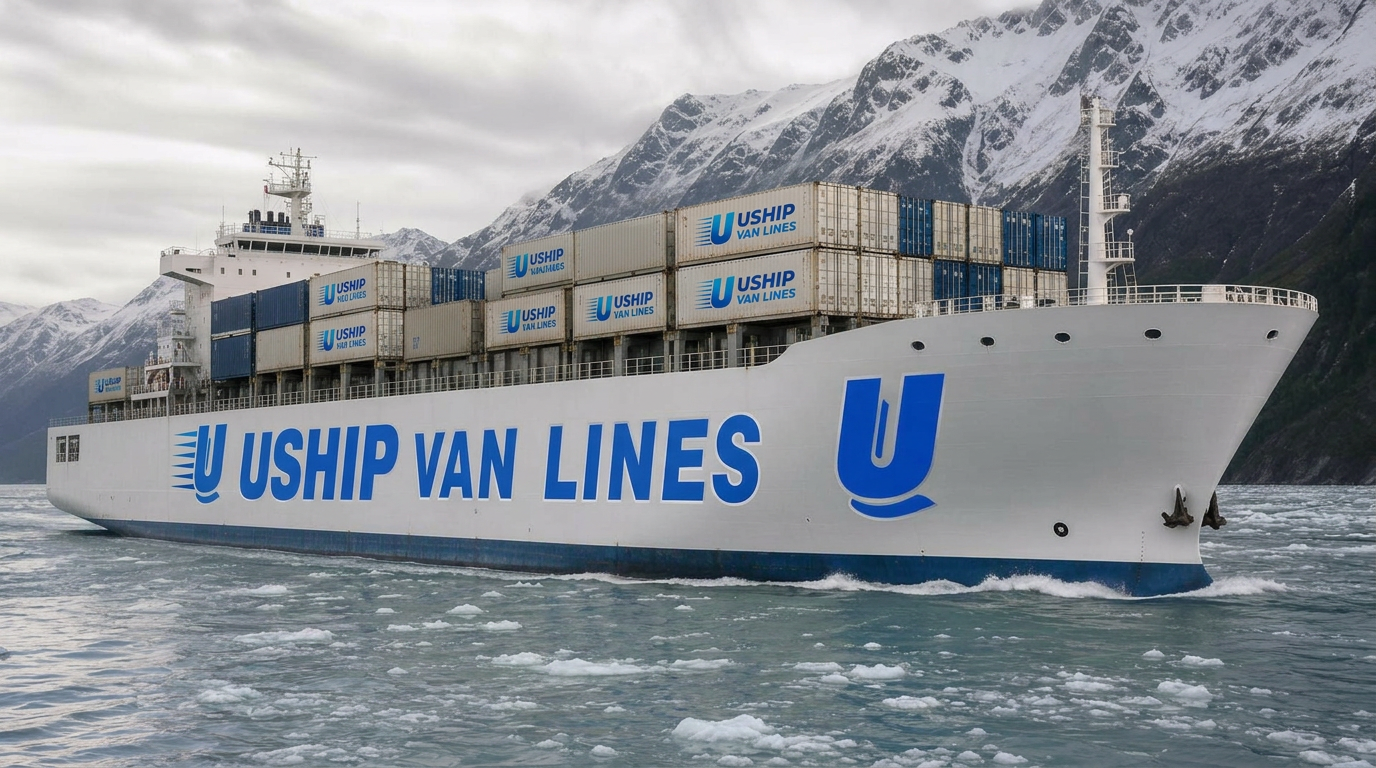
Your move from Alaska to Waterloo, IA covers approximately 3,000–3,400 road miles (depending on your exact Alaska origin), but the true complexity lies in the multi-modal journey. Household goods departing from Anchorage, Fairbanks, or surrounding communities first travel overland to Alaska's port system—typically the Port of Anchorage or occasionally Whittier. From there, your belongings board a barge for the maritime leg to the Port of Tacoma, Washington, where they're offloaded and transferred to long-haul trucks for the cross-country drive to Waterloo.
Waterloo sits in Black Hawk County along the Cedar River, roughly 130 miles northeast of Des Moines. The city's location at the intersection of U.S. Highway 218 and Interstate 380 provides straightforward truck access from western routes. Once your shipment reaches Iowa, delivery into Waterloo's neighborhoods—from the Historic Fourth Ward to growing areas near Crossroads Mall—is generally uncomplicated, with good street access for moving trucks.
This route requires meticulous planning around Alaska Marine Highway schedules, weather windows, and the realities of barge transit. Moves from bush communities add another layer, often requiring bush plane or seasonal ice road transport to reach the main highway system before even beginning the southbound journey.
How the moving process works
How Your Alaska to Waterloo Move Works: Step by Step
-
Initial consultation and survey: Contact us for a detailed consultation where we assess your inventory, origin location in Alaska (road-accessible or bush community), and any special items like vehicles, boats, or oversized furniture. We'll provide a transparent timeline based on current barge schedules and a detailed cost estimate.
-
Scheduling and barge coordination: We coordinate your packing and pickup dates around Alaska barge sailings, which typically run weekly during summer months but less frequently in winter. Your moving date works backward from available barge space and your desired Waterloo delivery window.
-
Professional packing and Alaska pickup: Our team packs your household goods using marine-grade materials designed for barge transit—extra padding, moisture barriers, and reinforced containers. We pick up from your Alaska home, whether that's a downtown Anchorage condo or a rural Wasilla property.
-
Overland transport to Alaska port: Your packed goods travel by truck to the departure port (usually Anchorage). For remote locations, this may involve multiple legs—bush plane to a hub community, then truck to the port city.
-
Barge transit to Tacoma: Your shipment sails from Alaska to the Port of Tacoma, a journey of 4–7 days depending on weather, sea conditions, and the specific barge route. Your goods travel in secured containers designed for marine transport.
-
Port offloading and truck transfer: At Tacoma, containers are offloaded, cleared through port logistics, and loaded onto long-haul trucks. This transfer typically takes 1–3 business days depending on port congestion and customs processing.
-
Cross-country delivery to Waterloo: Your shipment travels east via I-90 or I-80, crossing Washington, Idaho, Montana or Wyoming, South Dakota, and into Iowa. The truck leg covers roughly 1,800 miles and takes 3–5 days of transit time, plus any scheduled stops.
-
Final delivery and placement: We deliver to your Waterloo address, unload all items, and place furniture in rooms per your direction. We'll remove packing materials and do a final walkthrough to ensure everything arrived as expected.
Estimated moving costs
What Does an Alaska to Waterloo Move Cost?
For a typical 2–3 bedroom household moving from Alaska to Waterloo, IA, expect costs ranging from $7,500 to $14,000, depending on several key factors. A smaller 2-bedroom apartment with minimal furniture might fall toward the lower end, while a full 3-bedroom house with garage items, multiple vehicles, and specialty items will reach the higher range or beyond.
Primary cost drivers include:
- Volume and weight: Barge shipping is priced by container space and weight. A 2-bedroom typically requires a 20-foot container; larger homes may need a 40-foot container or multiple units.
- Origin accessibility: Moves from road-accessible areas like Anchorage or the Mat-Su Valley cost significantly less than bush community relocations requiring small aircraft or seasonal access.
- Barge season: Summer sailings (May–September) offer more frequent departures and competitive rates. Winter moves face limited schedules and potential weather surcharges.
- Vehicle shipping: Adding a car or truck to your shipment increases costs by $1,500–$3,500 depending on vehicle size and whether it ships on the same barge or separately.
- Packing services: Full professional packing adds $1,200–$2,800 but provides proper marine-grade protection and often proves essential for barge transit.
- Storage needs: If barge and truck schedules don't align perfectly, temporary storage in Tacoma or along the route may be necessary, adding $200–$600 per month.
- Insurance coverage: Comprehensive marine and transit insurance typically costs 1–2% of declared shipment value but provides crucial protection for this complex journey.
We provide detailed, binding estimates after a thorough inventory assessment. Costs are never guaranteed until we complete a full survey, but our quotes include all legs of the journey with no hidden fees. Request your personalized estimate to get exact pricing for your specific move.
Estimated transit times
How Long Does the Alaska to Waterloo Move Take?
Door-to-door transit from Alaska to Waterloo typically requires 14–28 days, with timing heavily dependent on barge schedules, your Alaska origin point, and seasonal factors.
Transit breakdown by leg:
- Alaska pickup to port: 1–3 days for road-accessible locations (Anchorage, Eagle River, Wasilla, Palmer). Remote bush communities may add 3–10 days depending on weather and seasonal access.
- Port staging and barge loading: 1–4 days as your shipment waits for the next scheduled sailing and completes loading procedures.
- Barge transit (Alaska to Tacoma): 4–7 days of ocean travel, sometimes longer in winter weather or if the barge makes intermediate port stops.
- Tacoma port processing: 1–3 days for offloading, customs clearance (if applicable), and truck transfer logistics.
- Cross-country truck transit: 3–5 days for the 1,800-mile overland journey from Tacoma to Waterloo, including mandatory driver rest periods.
- Waterloo delivery window: 1–2 days for final delivery scheduling and placement in your new home.
Summer moves (May through September) generally hit the faster end of this range due to frequent barge sailings and favorable weather. Winter relocations can extend to 35+ days when barges run on reduced schedules, weather causes delays, or ice conditions affect Alaska ports. Moves from Fairbanks add 1–2 days for the initial truck leg to Anchorage.
We provide a detailed timeline with your quote, working backward from your desired Waterloo delivery date to determine optimal Alaska pickup timing. Early booking—ideally 6–10 weeks ahead—gives you the best selection of barge dates and ensures your shipment doesn't wait for the next available sailing.
Regional logistics
Alaska-Specific Logistics for Your Waterloo Move
Port and barge considerations
Most Alaska-to-Lower 48 moves route through the Port of Anchorage, Alaska's primary deep-water port. Your goods are loaded into marine containers—typically 20-foot or 40-foot units—that remain sealed throughout the barge journey. These containers protect against salt spray, moisture, and rough seas. The Port of Whittier serves as an alternative, particularly for shipments originating in southcentral Alaska or Valdez area. Container availability is limited during peak season, making early booking essential. We handle all port documentation, container reservations, and coordination with barge operators.
Vehicle shipping options
If you're bringing your vehicle from Alaska to Iowa, you have two primary options. First, drive it yourself via the Alaska Highway (the ALCAN)—a 2,200+ mile journey from Anchorage through Canada to the Lower 48, taking 4–6 days of driving plus border crossings. Second, ship it on the same barge as your household goods, then have it transported by auto carrier from Tacoma to Waterloo. Shipping is more expensive ($1,500–$3,500) but eliminates wear, mileage, and the logistics of a multi-day northern drive. Most vehicles require minimal preparation for barge shipping beyond cleaning and securing loose items, but we'll provide a complete prep checklist.
Last-mile Alaska logistics
If you're moving from Anchorage, Eagle River, Wasilla, Palmer, or other road-connected communities, pickup logistics are straightforward—we bring a truck to your door. Bush communities and remote locations require specialized planning. Smaller shipments may fly out on cargo planes to Anchorage. Larger moves from places like Bethel, Kotzebue, or Dillingham often wait for winter ice roads or summer barge access to remote ports, then transfer to the main shipping route. We've coordinated moves from across Alaska's remote regions and will develop a custom logistics plan for your specific origin.
Paperwork and documentation
While moving within the United States doesn't require customs clearance, barge shipping does involve maritime documentation—bills of lading, container manifests, and port authority paperwork. We handle all documentation, but you'll need to provide an accurate household inventory and declared value for insurance purposes. If shipping vehicles, you'll need clear title or lienholder authorization. For international items (if you originally brought belongings into Alaska from abroad), be prepared to provide proof of previous import or ownership documentation.
Insurance and protection
This multi-modal journey involves unique risks: ocean transit, multiple transfers, and long-distance trucking. We strongly recommend comprehensive coverage that includes marine transit insurance, not just standard moving insurance. Marine policies cover wave damage, salt exposure, and maritime-specific risks. Expect to pay 1–2% of your shipment's declared value for full coverage, but this protection proves invaluable for a route involving both barge and truck legs. We'll walk you through coverage options and help you choose appropriate protection levels.
Seasonal considerations
Seasonal Timing for Your Alaska to Waterloo Move
Summer (May–September): Prime moving season
Summer offers the most reliable Alaska moving conditions. Barge sailings run frequently (often weekly), weather is cooperative for both ocean transit and Alaska road conditions, and scheduling flexibility is maximized. This is peak season, so book early—many movers fill summer slots 8–12 weeks in advance. Expect competitive pricing due to higher volumes, but also the fastest, most predictable timelines. Road access to bush communities improves significantly, and you'll avoid the complications of ice, snow, and extreme cold.
Fall (October–November): Shoulder season transition
Early fall remains workable, though barge schedules begin reducing frequency by mid-October. Weather becomes more unpredictable—early snowstorms can affect Alaska road conditions and occasional storms impact barge transit times. Pricing may be slightly lower than summer peaks. If moving from interior Alaska (Fairbanks, North Pole), be prepared for snow by October. This season works well if you have flexibility on exact dates and can accommodate potential weather delays of 2–5 days.
Winter (December–March): Most challenging period
Winter Alaska moves face significant challenges. Barge sailings reduce to 1–2 per month or pause entirely at some ports. Extreme cold affects packing materials and loading operations. Roads may be impassable for days after storms, particularly for bush community access. However, winter moves are possible and sometimes necessary for job relocations. Expect longer timelines (25–35+ days), potential weather surcharges, and the need for heated storage if your shipment misses a barge connection. Book 10–14 weeks ahead to secure limited winter sailing slots.
Spring (April–early May): Breakup season
Spring in Alaska means "breakup"—the challenging transition from winter to summer when ice melts, frost heaves damage roads, and rural routes become muddy and sometimes impassable. Barge schedules increase but aren't yet at summer frequency. This is often the least predictable season for Alaska moves. If possible, delay until late May when roads have dried and summer schedules fully resume. If you must move during breakup, build extra time into your schedule and prepare for potential delays accessing remote properties.
Why choose Best Alaska & Hawaii Movers
Why Choose Best Alaska & Hawaii Movers for Your Alaska to Waterloo Relocation
-
Alaska moving specialists: We focus exclusively on Alaska and Hawaii relocations, giving us deep expertise in barge logistics, port coordination, and the unique challenges of non-contiguous state moves that general moving companies simply don't have.
-
Multi-modal coordination mastery: Your move requires seamless coordination between Alaska pickup teams, port operations, barge lines, Tacoma logistics partners, and cross-country truckers—we manage every connection so you don't have to chase down five different companies.
-
Transparent, binding estimates: We provide detailed quotes that break down every cost component—barge fees, port charges, truck transport, and services—with no hidden fees or surprise charges when your shipment arrives in Waterloo.
-
Year-round Alaska capabilities: Whether you're moving during peak summer season or need a challenging winter relocation, we maintain Alaska operations and relationships twelve months a year, ensuring your move happens when you need it.
-
UShip Van Lines partnership: Powered by UShip Van Lines' extensive carrier network, we combine Alaska specialization with nationwide logistics capabilities, ensuring quality service from your Alaska doorstep to your new Waterloo home.